• KZT/USD = 0.00223
  • TJS/USD = 0.10860
  • UZS/USD = 0.00008
  • TMT/USD = 0.29850
  • KZT/USD = 0.00223
  • TJS/USD = 0.10860
  • UZS/USD = 0.00008
  • TMT/USD = 0.29850
  • KZT/USD = 0.00223
  • TJS/USD = 0.10860
  • UZS/USD = 0.00008
  • TMT/USD = 0.29850
  • KZT/USD = 0.00223
  • TJS/USD = 0.10860
  • UZS/USD = 0.00008
  • TMT/USD = 0.29850
  • KZT/USD = 0.00223
  • TJS/USD = 0.10860
  • UZS/USD = 0.00008
  • TMT/USD = 0.29850
  • KZT/USD = 0.00223
  • TJS/USD = 0.10860
  • UZS/USD = 0.00008
  • TMT/USD = 0.29850
  • KZT/USD = 0.00223
  • TJS/USD = 0.10860
  • UZS/USD = 0.00008
  • TMT/USD = 0.29850
  • KZT/USD = 0.00223
  • TJS/USD = 0.10860
  • UZS/USD = 0.00008
  • TMT/USD = 0.29850
08 November 2026

Viewing results 1 - 6 of 2

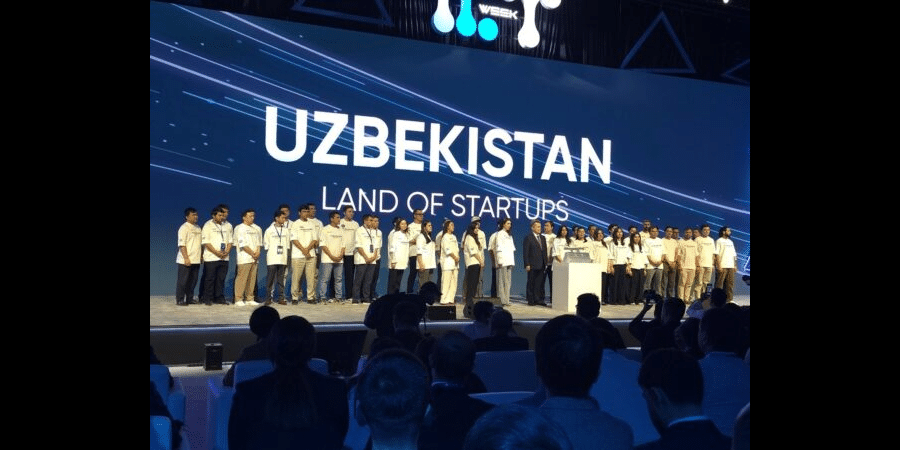
IT Park Uzbekistan Named Asia-Pacific’s Best Knowledge Zone

IT Park Uzbekistan won the Knowledge Zone of the Year – Asia-Pacific category at the Global Free Zones of the Year Awards 2026, organized by fDi Intelligence, a publication of the Financial Times Group. The awards assess economic zones on their ability to attract businesses and investment. The publication considered 16 knowledge zones worldwide, with Dubai Silicon Oasis in the United Arab Emirates winning the global title. According to Uzbekistan's Ministry of Digital Technologies, IT Park has more than 4,100 resident companies, including over 1,200 with foreign participation. Together, they employ more than 56,000 people. More than 1,100 companies export services to 102 countries, while IT Park companies exported $392.5 million in services in the first half of 2026, an increase of $90.3 million compared with the same period last year. IT Park statistics for the first half of 2026 show that North America was the largest export market for its resident companies, accounting for 54% of exports. Commonwealth of Independent States countries and other markets accounted for 22%, the European Union and the United Kingdom for 16%, and the Middle East and North Africa for 8%. In 2017, the export network covered just eight countries. The government has also invested in technology training. According to official figures, 1.7 million young people have participated in the One Million Uzbek Coders program, while 1.3 million have taken part in Five Million AI Leaders, an initiative focused on artificial intelligence (AI). More than 18 billion Uzbek soums (approximately $1.5 million) have been allocated to reimburse expenses for international information technology certification and training, benefiting 4,926 young professionals. Another 3.17 billion soums (approximately $263,000) was provided to educational institutions through the IT Talents program for training graduates who secured jobs with companies exporting digital services. In late 2025, the government launched the AI initiative, which provides free online courses. Universities are also establishing AI laboratories, with 20 currently operating. Other initiatives support young people and women in technology, including the ICT4Girls programming competition and startup incubators. Based on its Global Startup Ecosystem Index 2026, StartupBlink named Uzbekistan Country of the Year and identified it as the world's fastest-growing startup ecosystem. Its score in the ranking increased by 227.3% over the previous year, reflecting improvements in measures such as startup activity and the business environment rather than growth in employment or revenue. The country climbed 31 places over two years to rank 79th globally, while Tashkent placed 229th among cities. Analytics platform Dealroom estimated the combined value of the country's venture-backed startups at $4.3 billion. What remains unclear is how many participants in the government's training programs go on to find work in the technology sector. The 56,000 people employed by IT Park companies represent only part of the industry, while the training initiatives cover different levels of education and skills. The ministry's announcement offers no overall figures on participants' subsequent employment or earnings, making it difficult to assess the impact of these large-scale programs.

How Kazakhstan Became Central Asia’s Digital Hub

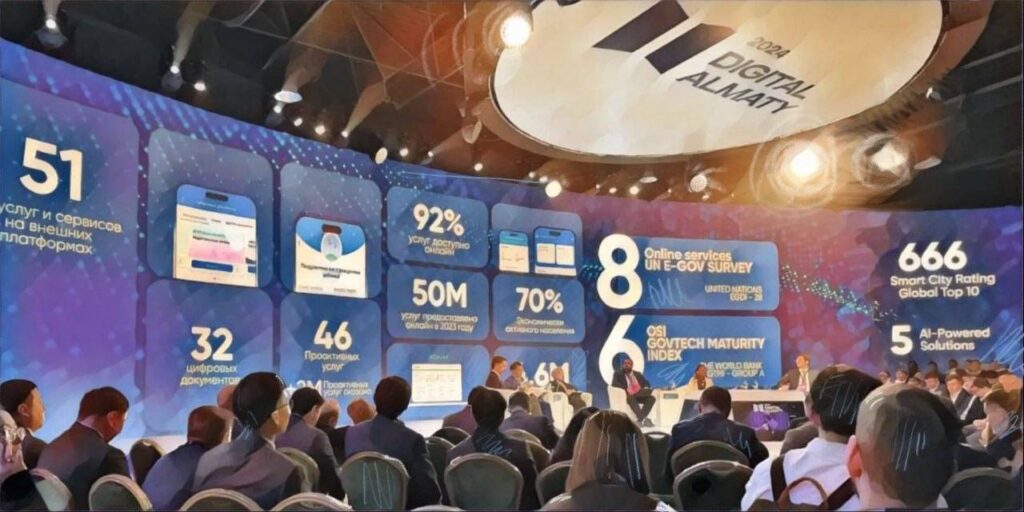
From October 1 to 3, Astana will host the AI & Digital Bridge conference, which is expected to draw more than 20,000 participants and over 100 technology companies. The wider AI Month begins on September 23 with HackAlem AI powered by OpenAI. Earlier editions of Digital Bridge have drawn a total of more than 127,000 participants from over 100 countries. Kazakhstan can bring such a gathering together because two decades of development have created the institutional and commercial base for its present AI strategy. Advanced computing capacity and large-scale technological investment now reinforce that base. Building the Digital Base Well before artificial intelligence became a central policy concern, Kazakhstan began building the digital-state capacity that underpins its current position. The e-government program dates from the mid-2000s. The 2017 Digital Kazakhstan program broadened that effort by linking the transition to a digital state with four other priorities: digitalization of economic sectors, development of the Digital Silk Road, human-capital development, and the creation of an innovation ecosystem. Startup formation thereby entered policy not as a one-off technology initiative but as part of a wider program of institutional and economic digitization. Kazakhstan ranked 24th globally in the UN E-Government Development Index in 2024. By 2025, about 90% of public services were available online. By then, the eGov portal had more than 15 million registered users, while its mobile application had more than 11 million. Large-scale digital interaction between citizens and the state had thus become a daily fact of life before the present AI push began. Public services inhabit the same digital environment as ordinary commercial transactions. Kaspi.kz reported 15.7 million average monthly active users in Kazakhstan at the end of 2025 and about 764,000 active merchants. Its Super App integrates payments with finance and commerce; it also carries government services. Digitalization has become part of everyday consumer behavior. In July 2026, internet and mobile banking accounted for 77.6% of non-cash transactions by number and 89.6% by value. Commercial adoption has accustomed much of the population to carrying out both routine transactions and more significant business transfers through digital systems. Infrastructure spending alone would not have produced the same result without the surrounding policy and commercial environment. Almaty supplies the financial and corporate side of the ecosystem, complementing Astana’s policy and startup institutions. Together, the two cities anchor an economy accounting for more than half of Central Asia’s GDP. Kazakhstan also holds roughly two-thirds of the region’s inward foreign investment stock, according to TCA’s Central Asia Balance Sheet. Institutional Concentration These developments acquired an institutional center through Astana Hub, established in 2018. It brings firms and founders into the same network as investors. Participation brings concrete operating advantages, including tax preferences and simplified arrangements for hiring foreign specialists. Companies may hire such specialists without a numerical limit, with work visas available for up to five years. They can also enter incubation or acceleration programs and obtain access to financing mechanisms. A 2026 World Bank appraisal described Kazakhstan as having built a credible technology-driven...