
• KZT/USD = 0.00219
  • TJS/USD = 0.10810
  • UZS/USD = 0.00009
  • TMT/USD = 0.29850
  • KZT/USD = 0.00219
  • TJS/USD = 0.10810
  • UZS/USD = 0.00009
  • TMT/USD = 0.29850
  • KZT/USD = 0.00219
  • TJS/USD = 0.10810
  • UZS/USD = 0.00009
  • TMT/USD = 0.29850
  • KZT/USD = 0.00219
  • TJS/USD = 0.10810
  • UZS/USD = 0.00009
  • TMT/USD = 0.29850
  • KZT/USD = 0.00219
  • TJS/USD = 0.10810
  • UZS/USD = 0.00009
  • TMT/USD = 0.29850
  • KZT/USD = 0.00219
  • TJS/USD = 0.10810
  • UZS/USD = 0.00009
  • TMT/USD = 0.29850
  • KZT/USD = 0.00219
  • TJS/USD = 0.10810
  • UZS/USD = 0.00009
  • TMT/USD = 0.29850
  • KZT/USD = 0.00219
  • TJS/USD = 0.10810
  • UZS/USD = 0.00009
  • TMT/USD = 0.29850
06 September 2026

Viewing results 1 - 6 of 10

Uzbekistan Day on Capitol Hill Highlights Deepening Ties With the U.S.

On July 23, the U.S. Capitol hosted “Uzbekistan Day,” a significant event co-organized by the Congressional Uzbekistan Caucus to reaffirm growing ties between Uzbekistan and the United States. More than a hundred participants — including lawmakers, diplomats, officials from the State Department and Pentagon, business leaders, and journalists — gathered to engage with the Uzbek delegation and explore new areas for bilateral cooperation. The forum focused on Uzbekistan’s ongoing political and socio-economic reforms and its foreign policy vision centered on regional stability and international cooperation. A central priority discussed was Uzbekistan’s accession to the World Trade Organization (WTO), with officials framing it as a vital step to ensuring long-term reform and global market integration. U.S. Lawmakers Praise Reforms At the event, Congressman Trent Kelly, Co-chairman of the Caucus on Uzbekistan, praised President Shavkat Mirziyoyev’s leadership, stating, “I want to express my gratitude to President Shavkat Mirziyoyev. He is a bold reformer, a reliable partner, and a sincere friend of the U.S. Under his leadership, Uzbekistan is confidently moving along the path of change. Human rights are being strengthened, democratic institutions expanded, and opportunities for international cooperation opened. These achievements inspire all of us.” On a more personal note, Kelly added, “I have had the opportunity to visit Uzbekistan four times, and each visit left a deep impression on me. I was moved by the kindness of the Uzbek people, the richness of their cultural heritage, and the hospitality of your country. Music, cuisine, and deep traditions — all of this makes Uzbekistan truly unique… We will soon remove the Jackson-Vanik Amendment from our agenda because Uzbekistan is doing everything right and carrying out reforms,” he concluded. Senator Steve Daines, Co-chairman of the Caucus on Central Asia, described himself as a “sincere friend of Uzbekistan.” Reflecting on his March 2024 trip to Tashkent, he said, “I felt at home and among friends. This meeting strengthened my desire to continue supporting the Central Asian countries.” [caption id="attachment_34350" align="aligncenter" width="2560"] Montana Senator Steve Daines, Co-chairman of the Caucus on Central Asia[/caption] Congresswoman Carol Miller, also part of the March delegation, spoke of her personal connection to Uzbekistan’s heritage. “Uzbekistan, with its ancient history, has long aroused my professional interest, since I am a historian by education. The opportunity to see the country’s unique historical and cultural heritage in person was an invaluable experience.” Miller emphasized that, “The conversation took place in a trusting and open atmosphere. The topics raised during the meeting were not only relevant but also extremely promising from the viewpoint of the future development of Uzbek-American relations.” [caption id="attachment_34351" align="aligncenter" width="1020"] West Virginia Congresswoman Carol Miller[/caption] Miller underscored her commitment to concrete legislative goals: “The removal of the Jackson-Vanik Amendment regarding our country and support for Uzbekistan’s accession to the WTO are priority tasks. I am currently working closely with members of Congress to accelerate these issues.” Economic Cooperation and Business Confidence The event also featured remarks from American business leaders highlighting Uzbekistan’s economic potential. Peter Flanagan, Senior Vice President...
Congressman Trent Kelly and Ambassador Furkat Sidikov Drive U.S.-Uzbekistan Trade and Investment Progress

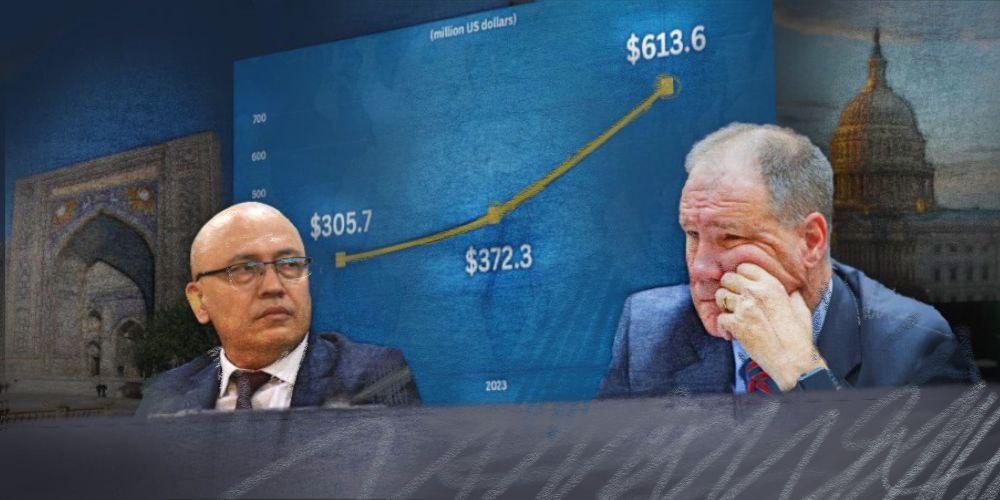
On March 26, 2025, Ambassador Furkat Sidikov hosted a Congressional Breakfast featuring Congressman Trent Kelly (R, Mississippi), Co-Chair and founding member of the U.S.-Uzbekistan Caucus. The event focused on the theme of trade, investment, and U.S.-Uzbekistan relations. Business leaders and policy experts also joined to discuss the evolving economic landscape and the future of U.S.-Uzbekistan relations. Ambassador Sidikov highlighted the presence of over 300 American companies in Uzbekistan and expressed optimism about bilateral trade soon surpassing $1 billion annually. The Ambassador emphasized the strengthening of multifaceted partnership with the U.S. over economic and security partnerships, alongside ongoing reforms in democracy and human rights. Congressman Kelly praised the strong partnership between the United States and Uzbekistan, highlighting the country’s reforms and its openness to U.S. business and trade. He expressed deep admiration for the Uzbek people and their government, emphasizing the growing ties fostered through the State Partnership Program with Mississippi. Congressman Kelly voiced strong support for removing the Jackson-Vanik Amendment (a Cold War-era provision that restricts trade with certain countries), stating that the time was right for such action. He noted ongoing collaboration with congressional and senatorial colleagues to advance this effort. Referring to Uzbekistan Day on the Hill as a growing tradition, he encouraged stronger connections between the two nations, underscoring Uzbekistan's vibrant culture, abundant resources, and welcoming spirit. [caption id="attachment_30169" align="aligncenter" width="1280"] Ambassador Furkat Sidikov, Congressman Trent Kelly (R, Mississippi), and Congresswoman Carol Miller (R, West Virginia) display the Uzbekistan Normalized Trade Act, H.R. 2329[/caption] The Uzbekistan Caucus was established in 2018 to strengthen bilateral relations between the United States and Uzbekistan by encouraging dialogue on issues such as trade, security, governance, and cultural exchange. While bilateral caucuses are often seen as ceremonial with limited tangible outcomes, the Uzbekistan Caucus has proven to be an exception by driving meaningful progress in U.S.-Uzbekistan relations. This success reflects the contributions of both officials. Ambassador Sidikov has served as Uzbekistan's ambassador to the United States since 2023, playing a key role in strengthening bilateral ties. During his tenure, he facilitated the signing of the Customs Mutual Assistance Agreement (CMAA), streamlining trade and enhancing border security, and supported Uzbekistan’s reforms to align with World Trade Organization (WTO) standards, fostering a more open and competitive economic environment. These efforts have not only expanded market access, such as enabling U.S. meat and poultry exports to Uzbekistan, but also fostered deeper economic and strategic ties between the two nations. Congressman Kelly's 36 years of military service, including his role as a brigadier general, two Bronze Star Medals, and deployments to Iraq, have been instrumental in advancing collaboration with Uzbekistan through the State Partnership Program. His efforts have supported joint training, disaster preparedness, and modernization initiatives, providing valuable U.S. expertise and strengthening defense ties between the two nations. Uzbekistan ranks 58th in the Global Firepower Index, which ranks countries by military strength.

Jackson-Vanik: One Step Away from Repeal

The U.S. Senate has confirmed Marco Rubio as Secretary of State, raising hopes among Central Asian leaders - particularly in Kazakhstan - that his recent comments regarding the Jackson-Vanik amendment may soon translate into concrete action to repeal this outdated policy, which continues to hinder mutual trade. Passed in 1974 as part of the Trade Act under President Gerald Ford, the Jackson-Vanik amendment was designed to penalize countries with non-market economies that restricted emigration, particularly targeting the Soviet Union. The amendment specifically sought to pressure the USSR to allow its Jewish population to emigrate freely, while also protesting the suppression of Judaism and other religious practices. The amendment achieved a measure of success by 1989, when the Iron Curtain fell and Soviet Jews were permitted to emigrate in large numbers, primarily to Israel and the United States. However, the policy remained in place, even after the dissolution of the USSR, applying to the newly independent Central Asian republics despite their vastly different political and economic landscapes. On January 15, Rubio delivered a nearly five-hour confirmation speech during a Senate hearing for his nomination as Secretary of State under the Donald Trump administration. Among the topics discussed was the Jackson-Vanik amendment. Senator Steve Daines specifically asked Rubio for his position on the amendment, emphasizing that its repeal could normalize U.S. trade relations with Kazakhstan and Uzbekistan. Rubio described the amendment as “an absurd relic of the past,” asserting that it no longer serves any meaningful purpose in pressuring Central Asian countries on human rights. He warned that continued use of such measures could push nations like Kazakhstan and Uzbekistan closer to Russia’s sphere of influence. Rubio singled out Kazakhstan, noting that the country had “successfully met the conditions” to transition to a market economy, as evidenced by its accession to the World Trade Organization several years ago. He pledged to work with lawmakers to repeal the Jackson-Vanik amendment, signaling a shift in U.S. policy toward fostering deeper economic ties with the region. Why Central Asia Was Left Behind The continued application of the Jackson-Vanik amendment to Central Asia can be partially explained by the differing domestic policies of its key players - Kazakhstan and Uzbekistan. Under Nursultan Nazarbayev, Kazakhstan quickly abandoned Soviet-era restrictions on emigration and took steps to promote religious tolerance and interfaith harmony. By contrast, Uzbekistan under Islam Karimov maintained many of the Soviet Union’s repressive practices, including restrictions on religious minorities. This disparity in policies contributed to Washington’s perception of the region as monolithic and resistant to reform, discouraging efforts to lift the amendment. Recent Developments and Challenges In recent years, there have been efforts to lower trade barriers between the U.S. and Central Asia, particularly through initiatives like the B5+1 dialogue, which aims to attract greater Western investment to the region. However, the Jackson-Vanik amendment complicates these efforts, as countries must secure an annual waiver from the U.S. President to maintain normal trade relations. Kazakhstan has emerged as the frontrunner in advocating for the amendment’s repeal. An...

Trump Nominee Marco Rubio Signals Support for Normalizing Central Asia Trade

U.S. President-elect Donald Trump’s nominee for secretary of state says the Jackson-Vanik amendment, a 50-year-old law that imposes some restrictions on trade with several countries in Central Asia, is “a relic of an era that’s passed.” U.S. Senator Marco Rubio, a Florida Republican who spoke on Wednesday during a confirmation hearing in the Senate Foreign Relations Committee, also described China, a key economic partner in Central Asia, as a threat and an adversary. Rubio, known as a hawk on national security issues, had harsh words too for what he called chaos-sowing “dictators” in Moscow, Tehran and Pyongyang. Tough language aside, Rubio’s interactions with his fellow senators were relatively smooth, suggesting his path to the secretary of state job is open as the United States prepares for Trump’s inauguration on Jan. 20. Central Asian nations have been watching for what to expect when Trump returns for a second term in the White House, and they got an encouraging glimpse in Rubio’s testimony. In the Washington hearing, Senator Steve Daines, a Montana Republican, told Rubio that he and Senator Gary Peters, a Michigan Democrat, have been working to rescind the Jackson-Vanik amendment in Central Asia. The 1974 law, passed at the height of the Cold War, aimed to promote human rights in countries that were part of the Soviet bloc by preventing normal trade relations with “non-market economies” that restrict emigration. But Daines argued that it is outdated in the former Soviet republics of Kazakhstan and Uzbekistan, especially as Central Asia becomes more important because of its energy resources and geopolitical influence. “I realize you have a lot of priorities on your plate when you will be confirmed as our secretary,” Daines said to Rubio. He added that rescinding the amendment in the region would be a big step “that Central Asia needs right now to grow.” In response, Rubio said that permanent removal of the amendment in Central Asia would require legislative approval and he mentioned an initiative by Senators Chris Murphy (Connecticut Democrat) and Todd Young (Indiana Republican) that also seeks to peal the measure for Tajikistan, Kazakhstan and Uzbekistan. “I think this is a relic of an era that’s passed,” Rubio said of the Jackson-Vanik amendment. “There are some that argue that we should use it as leverage for human rights concessions, or leverage to get them to go stronger in our way” against Russia, he said. However, the Florida senator said, Kazakhstan is a market economy and therefore meets conditions for removal from the amendment’s restrictions. He added: “So we will work with you on this because I think it’s important.” Kazakhstan became a member of the World Trade Organization in 2015, two years after Tajikistan joined the group. Uzbekistan has been signing individual agreements with countries and hopes to join the WTO by 2026. Kyrgyzstan, Ukraine and Russia are among former Soviet states that were subject to the Jackson-Vanik amendment but later achieved normal trade relations status with the United States. Russia, however, is currently under Western...
