• KZT/USD = 0.00211
  • TJS/USD = 0.10810
  • UZS/USD = 0.00008
  • TMT/USD = 0.29760
  • KZT/USD = 0.00211
  • TJS/USD = 0.10810
  • UZS/USD = 0.00008
  • TMT/USD = 0.29760
  • KZT/USD = 0.00211
  • TJS/USD = 0.10810
  • UZS/USD = 0.00008
  • TMT/USD = 0.29760
  • KZT/USD = 0.00211
  • TJS/USD = 0.10810
  • UZS/USD = 0.00008
  • TMT/USD = 0.29760
  • KZT/USD = 0.00211
  • TJS/USD = 0.10810
  • UZS/USD = 0.00008
  • TMT/USD = 0.29760
  • KZT/USD = 0.00211
  • TJS/USD = 0.10810
  • UZS/USD = 0.00008
  • TMT/USD = 0.29760
  • KZT/USD = 0.00211
  • TJS/USD = 0.10810
  • UZS/USD = 0.00008
  • TMT/USD = 0.29760
  • KZT/USD = 0.00211
  • TJS/USD = 0.10810
  • UZS/USD = 0.00008
  • TMT/USD = 0.29760

Viewing results 1 - 6 of 28

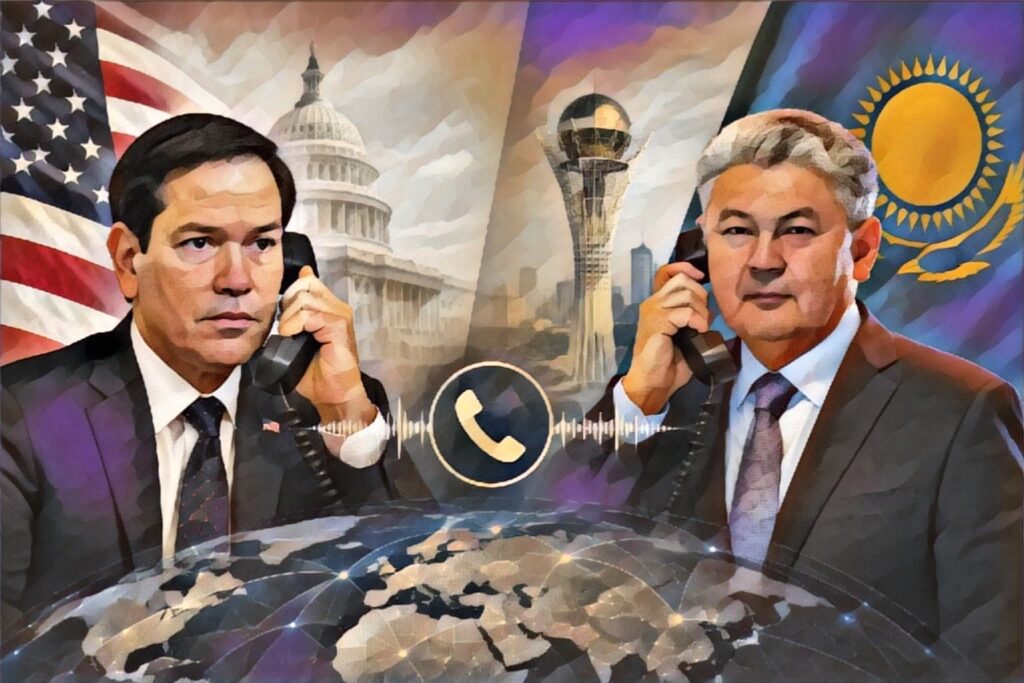
Rubio and Kosherbayev Discuss CPC Ahead of Tokayev’s U.S. Visit

U.S. Secretary of State Marco Rubio held a telephone conversation with Kazakhstan’s Foreign Minister Yermek Kosherbayev on 29 July. The discussion focused on the situation surrounding the Caspian Pipeline Consortium, energy cooperation, critical minerals, trade and investment ties, and current international issues. According to the U.S. Department of State, Rubio and Kosherbayev discussed the importance of energy security, including the “reliable and uninterrupted” export of Kazakhstan-origin oil through the CPC system. Rubio also thanked Kazakhstan for supporting President Donald Trump’s peace initiatives and expressed interest in deepening bilateral economic cooperation. Kazakhstan’s Ministry of Foreign Affairs said the two ministers discussed in detail the situation surrounding the Caspian Pipeline Consortium, cooperation in the energy, transport and logistics sectors, supplies of critical minerals, efforts to attract U.S. investment, and coordination in international organisations. The ministry said the conversation also covered preparations for President Kassym-Jomart Tokayev’s forthcoming visit to the United States for the G20 summit. The telephone call took place shortly after Kazakhstan resumed crude oil exports through the CPC system. The pipeline carries the vast majority of crude exports from the Tengiz oilfield, whose largest shareholders include the U.S. companies Chevron and ExxonMobil. Kazakhstan’s Foreign Ministry said the two ministers reaffirmed their commitment to maintaining regular political dialogue. The conversation followed President Kassym-Jomart Tokayev’s meeting with U.S. Senator Steve Daines on 8 July, when the two sides discussed expanding trade and economic cooperation, attracting investment and strengthening cooperation in the energy sector. On 28 July, The Times of Central Asia reported that Kazakhstan had resumed oil exports through the CPC system after a week-long disruption at the consortium’s Black Sea marine terminal near Novorossiysk. The interruption more than halved oil production at Tengiz and again highlighted Kazakhstan’s dependence on its principal oil export route.

Kazakhstan Says Iranian President’s Statement is Step to Easing Mideast Tensions

Kazakhstan has welcomed a statement by Iranian President Masoud Pezeshkian about ending Iranian missile and drone attacks on neighboring countries, though some Gulf Arab states reported continuing attacks on Saturday. President Kassym-Jomart Tokayev of Kazakhstan noted the statement by Pezeshkian, “who conveyed the decision of the Interim Governing Council to renounce attacks on neighboring countries,” said Aibek Smadiyarov, spokesman for Kazakhstan’s presidency. Tokayev “considers this an important step aimed at easing tensions in the Middle East,” Smadiyarov said. In a video message, Pezeshkian apologized “on my own behalf” for Iranian attacks on neighboring countries, including Azerbaijan, where two drones struck near an airport and a school. The Iranian president said Iran should not attack those countries unless they attack Iran. Iran has been governed by an interim council since Supreme Leader Ali Hosseini Khamenei was killed in an air strike at the start of the war a week ago. U.S. and Israeli forces have kept up intense bombardments since then and President Donald Trump is demanding that the Iranian government unconditionally surrender. Pezeshkian rejected Trump’s demand in his message on Saturday.

Opinion: Multi-Vectorism 2.0 – Kazakhstan Seeks Balance in a Shifting Geopolitical Landscape

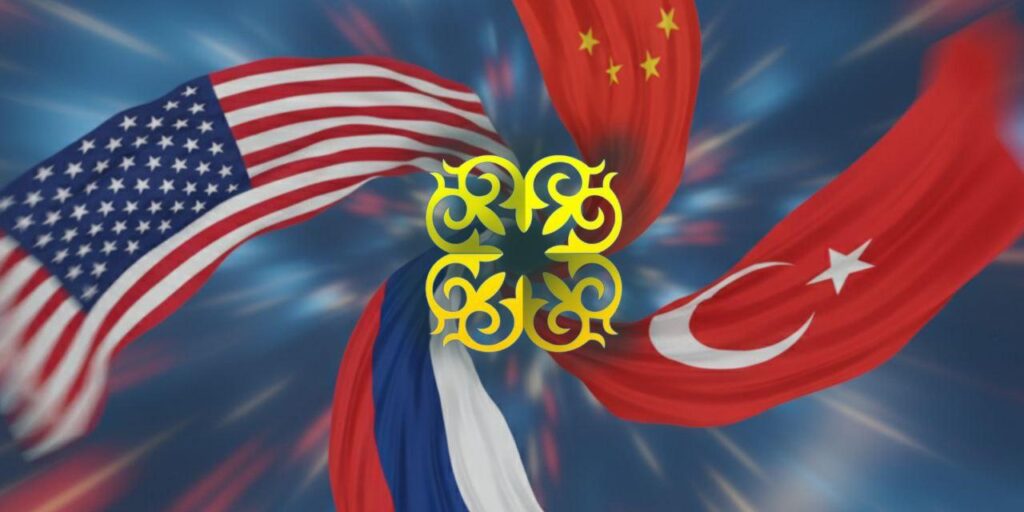
The world is reverting to the logic of bloc confrontation. Sanctions regimes, technological barriers, and deepening mistrust between major powers are compelling medium-sized states to chart independent courses. Kazakhstan stands at the center of this evolving geopolitical matrix. While Moscow remains a vital partner in defense and energy, Astana is simultaneously cultivating strong ties with other global power centers, including China, the U.S., Turkey, the European Union, and the Gulf states. Yet Kazakhstan refuses to align with any single bloc, adhering instead to a strategy of "flexible autonomy", cooperating broadly while preserving its sovereignty. Russia: Alliance with Strategic Boundaries On November 11-12, 2025, President Kassym-Jomart Tokayev met with Russian President Vladimir Putin in Moscow. The two leaders signed a declaration on a comprehensive strategic partnership and alliance, reaffirming cooperation on security, energy, and logistics projects. Key discussions included the gasification of border regions, the modernization of energy infrastructure, and the transit of Russian energy via Kazakhstan. Tokayev emphasized Kazakhstan’s interest in a stable and prosperous Russia, calling Putin a “statesman of global stature.” Still, this alignment does not supplant Kazakhstan’s multi-vector policy. The Moscow visit directly followed Tokayev’s talks in Washington, underscoring that Astana views relations with Russia as one of several strategic pillars. The U.S.: Investment and Critical Minerals Diplomacy During Tokayev’s visit to the U.S. in early November 2025, he and President Donald Trump oversaw the signing of 29 agreements totaling approximately $17 billion. The deals spanned industry, energy, digitalization, education, and innovation. Highlights in recent collaboration between Kazakhstan and the U.S. include a $2.5 billion John Deere production facility in Kostanay and Turkestan, a $1.1 billion development of tungsten deposits, and over $1 billion in digital infrastructure cooperation with companies such as Hewlett Packard Enterprise, Oracle, and Starlink. Leading global funds also pledged roughly $1 billion in new investments. These agreements reflect growing trust and a shared commitment to investment-driven, high-tech cooperation. China: Strategic Synergy and Technological Convergence China remains Kazakhstan’s largest trading partner and a cornerstone of its eastern vector. During Tokayev’s October 17, 2023 visit to Beijing, he and President Xi Jinping reaffirmed a “comprehensive strategic partnership” built on political trust and economic cooperation. In June 2025, Xi Jinping visited Astana for the second China-Central Asia Summit, where he and Kassym‑Jomart Tokayev reinforced their countries’ “comprehensive strategic partnership”, oversaw deals spanning energy, infrastructure, agriculture, and digital technology. Later that year, at the Shanghai Cooperation Organisation summit in Tianjin, the two leaders used the platform to deepen cooperation within a multilateral framework, promoting connectivity and regional trade under the Belt and Road Initiative. Turkey: Civilizational Ties and Strategic Growth Ties between Kazakhstan and Turkey are underpinned by shared cultural and historical foundations. At the fifth High-Level Strategic Cooperation Council meeting in Ankara on July 29, 2025, President Recep Tayyip Erdoğan welcomed Tokayev, reaffirming Turkey’s role as a major investor and educational partner. More than 12,000 Kazakh students are enrolled in Turkish universities. Defense cooperation is expanding under the Organization of Turkic States (OTS), and tourism and...

Kazakhstan Maintains Diplomatic Balance Following Gaza Ceasefire

On Monday, the Palestinian group Hamas handed over the final 20 surviving hostages to Israel in a two-stage exchange, reportedly mediated with the involvement of Qatari representatives. By midweek, the outcome of the latest ceasefire attempt between Israel and Hamas may become clearer. On October 13, U.S. President Donald Trump addressed the Knesset in Israel, before traveling to Egypt for a summit. The hostages had been held for more than two years, mirroring the duration of Israel’s military campaign that has reverberated across the region. The two-stage exchange formed part of a broader ceasefire framework backed by the United States, Egypt, and Qatar. Washington has framed the deal as a cornerstone of its renewed Middle East peace initiative, which aims to establish a long-term truce and pave the way for gradual reconstruction in Gaza. Trump described the agreement as the "beginning of a new security architecture for the region,” though analysts caution that deep mistrust between the parties could still derail implementation. The ongoing war in the Middle East is impacting Kazakhstan, as it is across Central Asia. Anti-Israeli sentiment has grown in this majority-Muslim country, though the government continues to advocate for a balanced and diplomatic approach. For Astana, maintaining neutrality amid the polarized reactions to the war is not just a matter of diplomacy, but also a matter of regional stability. Kazakhstan’s leadership views itself as a potential bridge between Muslim-majority nations and Western partners, drawing on its history of multivector foreign policy. Officials stress that Astana’s engagement is guided by the principles of dialogue and international law rather than religious or ideological alignment. A Delicate Diplomatic Position Kazakhstan has consistently supported international peacekeeping efforts. On September 30, President Kassym-Jomart Tokayev backed Trump's Gaza peace plan, and on October 9, Tokayev welcomed the ceasefire agreement in the Gaza Strip and the release of hostages, as announced by his press secretary, Ruslan Zheldibay. Tokayev commended the mediation efforts of Egypt, Qatar, and Turkey, and acknowledged the contributions of the United States and President Trump in advancing peace negotiations in the region. Kazakhstan recognized the State of Palestine in 1992 and established diplomatic ties. While economic relations remain minimal, the recognition holds symbolic political significance. At the same time, Kazakhstan maintains relatively strong relations with Israel, with a notable volume of bilateral trade. The country's longstanding diplomatic stance emphasizes the principle of “two states for two peoples.” Bilateral trade between Kazakhstan and Israel exceeded $450 million in 2023, driven primarily by exports of Kazakh metals and imports of Israeli technology and agricultural products. Cooperation in water management, healthcare, and defense technologies has continued despite regional instability. Kazakh officials have also emphasized the importance of Israeli investment in innovation and renewable energy sectors. Kazakhstan's diplomatic position has been reiterated consistently. In November 2023, the Ministry of Foreign Affairs reaffirmed that the only sustainable solution to the conflict lies in the creation of two sovereign states. Amid intensified hostilities in October 2023, Israel imposed a blockade on Gaza. At that time, 76...

Billion-Dollar Agreements and a Boeing Deal: Inside Mirziyoyev’s Visit to New York

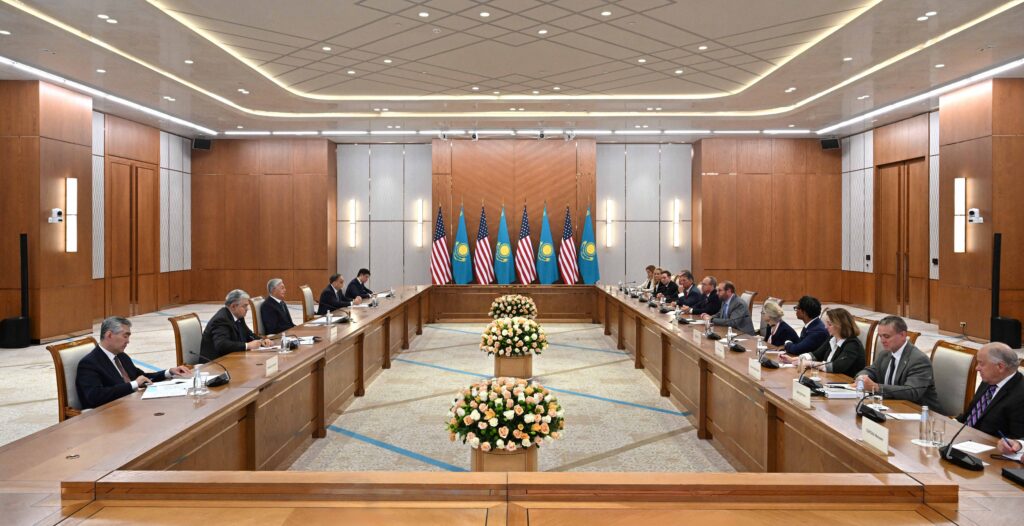
On September 20, President of Uzbekistan Shavkat Mirziyoyev arrived in New York to participate in events marking the 80th session of the UN General Assembly. At John F. Kennedy Airport, he was welcomed by Paolo Zampolli, Special Envoy of the U.S. President for Global Partnerships, Carolyn Lamm, Chair of the American-Uzbekistan Chamber of Commerce, and other officials. Finance and Critical Minerals Cooperation On September 22, Mirziyoyev held a series of high-level meetings with executives from leading corporations and international institutions. Uzbekistan is seeking to position itself as a reliable supplier in the global critical minerals chain. With reserves of copper, gold, uranium, and rare earths, officials have prioritized foreign partnerships to accelerate exploration and processing capacity, while also ensuring environmental and governance standards are met. In talks with IMF Managing Director Kristalina Georgieva, the two sides discussed expanding cooperation on monetary policy, statistical reform, and educational programs. Georgieva commended Uzbekistan’s economic reforms and reaffirmed the Fund’s support. A $1 billion package of initiatives was finalized with Traxys, the Colorado School of Mines, FLSmidth, McKinsey, and Go Green Partners. These projects focus on critical minerals mining and processing, alongside the creation of a Competence Center in Uzbekistan. Discussions with BlackRock board member Adebayo Ogunlesi centered on establishing a joint infrastructure fund. With Citigroup Chairman John Dugan, the president addressed IPOs of state-owned enterprises, Eurobond issuance, and trade finance mechanisms. Franklin Templeton CEO Jenny Johnson confirmed agreements related to the transformation of state-owned companies and the development of the Tashkent Stock Exchange. President Brian Friedman of the New York-based global investment banking and capital markets firm, Jefferies, meanwhile, expressed interest in helping attract strategic investors to Uzbekistan’s National Investment Fund. Franklin Templeton’s management of Uzbekistan’s $1.7 billion National Investment Fund signals growing trust in U.S. asset managers. Meanwhile, Jefferies’ potential involvement in attracting strategic investors highlights the rising role of global capital markets in Uzbekistan’s privatization and modernization agenda. NASDAQ CEO Adena Friedman discussed the modernization of the Tashkent Stock Exchange and the introduction of a government bond trading platform. Oppenheimer Holdings CEO Robert Lowenthal pledged support for Uzbekistan’s private sector and participation in Eurobond issuance. [caption id="attachment_36462" align="aligncenter" width="1280"] Image: president.uz[/caption] Strategic Agreements Signed A signing ceremony was held in the presence of President Mirziyoyev and U.S. Presidential Special Envoy Sergio Gor. Agreements were exchanged with Boeing, FLSmidth, Cleveland Clinic, Citigroup, Cargill, Pangea Filtration Technology, SLB, Biologic International, and others. During a meeting with WTO Director-General Ngozi Okonjo-Iweala, Mirziyoyev reaffirmed Uzbekistan’s commitment to aligning its legislation with international standards, with the goal of completing WTO accession by 2026. Uzbekistan’s WTO accession is being closely watched in Central Asia, as its success could set a precedent for other countries still outside the organization. For investors, WTO membership would mean greater legal predictability and integration into global trade frameworks. The president also met with Air Products CEO Eduardo Menezes. The company has already invested over $1 billion in Uzbekistan, with projects at the GTL plant, Ferghana Refinery, and “Navoiazot.” Both parties agreed to...

Tokayev at the UN Underscores Kazakhstan’s New Diplomacy

Kazakhstan’s international visibility is reaching a peak this late summer and early autumn of 2025. In August, UN Secretary-General António Guterres visited Astana, praising the country’s role as a stabilizing influence in Central Asia and a supporter of multilateral institutions. In a few days, President Kassym-Jomart Tokayev will address the UN General Assembly in New York, presenting Kazakhstan as a reliable partner in peacekeeping, sustainable development, and nonproliferation. This upcoming UN speech marks a departure from past appearances, signaling Astana’s intent not only to balance powers but also to set global agendas. Together, these events signify the country’s ascent as a state no longer defined solely by the art of survival between great powers, but one that now seeks to set agendas, convene adversaries, and project norms beyond its borders. This dual UN moment illustrates the broader transformation of Kazakhstan’s foreign policy over the past year: the shift from multi-vector balancing, an inheritance of the Nazarbayev era, toward a more assertive mode of multi-actor entrepreneurship. Framed through the UN stage, Kazakhstan’s diplomacy now aspires to translate regional initiatives into a global narrative. Rather than oscillating between Moscow, Beijing, Brussels, and Washington, Astana has begun to use its accumulated diplomatic capital to initiate, mediate, and institutionalize regional and global frameworks. From Balance to Initiative For three decades after independence, Kazakhstan’s “multi-vector” foreign policy served as a model of survival in a region shaped by the clash of external rivalries. The doctrine emphasized equidistance between Russia, China, and the West, with an overlay of pragmatic economic engagement. In practice, this often meant leveraging one relationship to offset pressure from another while securing steady inflows of trade and investment. Today, however, the war in Ukraine, the erosion of European security, and the sharper contest between Beijing and Washington have undermined the viability of simple balancing. In response, Tokayev’s government has shifted its approach, seeking to overlay a more agenda-setting dynamic on multi-vectorism by positioning Kazakhstan as a regional hub for diplomacy and connectivity. At the UN, this shift might be presented as Kazakhstan’s evolution from passive survival to a more proactive approach to international diplomacy. Astana’s task is to transform such declarations into a durable strategy. Central Asia and the South Caucasus The clearest evidence of Kazakhstan’s new role comes from Central Asia itself. Relations with Uzbekistan, once characterized by rivalry, have been recast as a cornerstone of functional regionalism. Over the past twelve months, Astana and Tashkent have concluded demarcation agreements, expanded electricity grid interconnections, and coordinated positions on water resource management. The consultative meetings of Central Asian leaders, which Kazakhstan has championed, now serve as regularized platforms for joint initiatives, from infrastructure to practical economic integration, with attempts to reduce Russian and Chinese influence. At the UN, this shift may be framed as Kazakhstan’s evolution from mere survival to actively pioneering new approaches in international diplomacy. For Kazakhstan, the partnership with Uzbekistan provides buffering against external pressure and multiplies regional influence. Astana has also made use of the UN Regional Centre...