• KGS/USD = 0.01143 -0%
  • KZT/USD = 0.00198 -0%
  • TJS/USD = 0.10899 0.65%
  • UZS/USD = 0.00008 -0%
  • TMT/USD = 0.28490 -0.28%
  • KGS/USD = 0.01143 -0%
  • KZT/USD = 0.00198 -0%
  • TJS/USD = 0.10899 0.65%
  • UZS/USD = 0.00008 -0%
  • TMT/USD = 0.28490 -0.28%
  • KGS/USD = 0.01143 -0%
  • KZT/USD = 0.00198 -0%
  • TJS/USD = 0.10899 0.65%
  • UZS/USD = 0.00008 -0%
  • TMT/USD = 0.28490 -0.28%
  • KGS/USD = 0.01143 -0%
  • KZT/USD = 0.00198 -0%
  • TJS/USD = 0.10899 0.65%
  • UZS/USD = 0.00008 -0%
  • TMT/USD = 0.28490 -0.28%
  • KGS/USD = 0.01143 -0%
  • KZT/USD = 0.00198 -0%
  • TJS/USD = 0.10899 0.65%
  • UZS/USD = 0.00008 -0%
  • TMT/USD = 0.28490 -0.28%
  • KGS/USD = 0.01143 -0%
  • KZT/USD = 0.00198 -0%
  • TJS/USD = 0.10899 0.65%
  • UZS/USD = 0.00008 -0%
  • TMT/USD = 0.28490 -0.28%
  • KGS/USD = 0.01143 -0%
  • KZT/USD = 0.00198 -0%
  • TJS/USD = 0.10899 0.65%
  • UZS/USD = 0.00008 -0%
  • TMT/USD = 0.28490 -0.28%
  • KGS/USD = 0.01143 -0%
  • KZT/USD = 0.00198 -0%
  • TJS/USD = 0.10899 0.65%
  • UZS/USD = 0.00008 -0%
  • TMT/USD = 0.28490 -0.28%
07 December 2025

Viewing results 1 - 6 of 10

U.S. State Department: No Improvement in Turkmenistan’s Human Rights Record

The U.S. State Department’s annual report on Turkmenistan for 2024 concludes that “no significant changes in the human rights situation in the country have been observed.”  Death in Custody and Pressure on Journalists The report cites the death of Allamurat Khudayramov, from Mary region, who reportedly died from torture while in custody. Journalists also remain under pressure. On August 13, former Radio Azatlyk correspondent Khudayberdi Allashov died in Koneurgench. Independent journalist Soltan Achilova reported harassment by authorities in video messages on July 11 and December 10. In November, she was barred from traveling to Geneva for the second time to receive an international award for her human rights work. The government continues to enforce strict media censorship and control of the internet, blocking websites, social media platforms, and VPN services. Security services reportedly summoned citizens who used VPNs for questioning, though more people are finding ways to bypass restrictions. Labor Rights Violations The report details widespread abuses in the workplace. Employers, including state agencies, compelled employees to work 10-hour days or six-day weeks without overtime pay. Many civil servants were required to work Saturdays. Penalties for labor law violations remain light compared with other crimes, and enforcement mechanisms are weak. Only 327 labor inspectors were responsible for monitoring compliance nationwide. The Ministry of Labor reported 2,269 violations as of September 1, 2024. Workers in the cotton industry faced health risks from chemical exposure but could not refuse unsafe tasks without risking dismissal. The report also documents the use of child labor, with children from low-income families engaged in heavy work in markets and agriculture. Restrictions on Freedom and Repression Abroad The organization Show Them Alive! recorded 162 cases of prisoner disappearances. While no new cases were identified in 2024, existing cases remain unresolved. Courts reportedly prevent detainees from challenging their arrest, and families are often unaware of prisoners’ whereabouts. Torture continues to be reported. The State Department also notes Turkmenistan’s involvement in transnational repression. On November 11, Human Rights Watch warned that Turkmen citizens critical of the government face arrest and torture if they return from abroad. Exit bans remain in force: some citizens are prevented from leaving the country even after renewing passports. In August, Turkmen News editor Ruslan Myatiev was denied entry to Turkey, where he was labeled a “threat to national security.” Turkmen activists abroad have also faced detention. Several opposition figures were arrested in Turkey at Ashgabat’s request, with some deported, including Merdan Mukhamedov, who now faces up to 25 years in prison.

‘No Complaints,’ Says Tajikistan Ombudsman Amid Allegations of Journalist Mistreatment

Representatives from the Office of the Human Rights Ombudsman in Tajikistan stated they have met with several imprisoned journalists and received no formal complaints from them. The announcement was made by Khusniddin Nidoev, deputy head of the department for civil and political rights protection, during a press conference on August 4. Visit to the Detention Facility According to Nidoev, he personally visited the “First Soviet” correctional colony on May 5, where he met with journalists Daler Emomali, Zavkibek Saidamin, Abdullo Gurbati, and Ahmad Ibrohim, editor-in-chief of the regional newspaper Paik. “We are in constant contact with them. Even during phone conversations with the heads of institutions, we ask about their condition, especially those whose names are widely covered in the media,” Nidoev said. He added that the journalists expressed satisfaction with their conditions and did not report any grievances. Relatives Raise Concerns However, relatives of other imprisoned journalists have reported troubling circumstances. The family of Abdusattor Pirmuahmadzoda, a blogger and former employee of Radio Sadoi Dushanbe, said they have had no contact with him since March. His brother, Abdukarim, told Asia-Plus that Abdusattor was placed in solitary confinement after he publicly questioned why his name was excluded from a list of candidates for amnesty during an official visit to the prison. Since then, neither his wife nor his children have been able to visit him, despite repeated requests. Nidoev confirmed that the ombudsman’s office met with Pirmuahmadzoda in 2024 while he was held in a Khujand prison but acknowledged that no such visit has occurred this year. He promised to investigate his current status. In a separate case, the wife of Zavkibek Saidamin, Mahfirat Khudoynazarova, reported in early July that her husband is suffering from a nervous condition and experiencing pain in his spine and eyes. “We sent him medicine. He is taking it. They said he was examined by an eye doctor and treated. But he still doesn’t feel well,” she told Asia-Plus. Meanwhile, the families of Daler Emomali and Ahmad Ibrohim have said their relatives are in stable condition, although they continue to object to their imprisonment. Sentences and Human Rights Reactions The prison terms for the journalists range from seven to over ten years. Ahmad Ibrohim was sentenced to 10 years and 4 months, Daler Emomali to 10 years, Abdullo Gurbati to 7.5 years, and both Abdusattor Pirmuahmadzoda and Zavkibek Saidamin to 7 years each. Appeals filed by defense lawyers and relatives have been rejected by higher courts, leaving the sentences in force. International human rights organizations, including Reporters Without Borders, have repeatedly condemned the imprisonments as politically motivated and called for the journalists’ immediate release. To date, Tajik authorities have not responded publicly to these demands. Since 2022, at least six journalists have been arrested and sentenced to lengthy prison terms in Tajikistan.

Legal Media Center to Sue Kazakh Foreign Ministry Over Journalist Accreditation Refusal

The Legal Media Center, a media-focused human rights organization, has announced plans to file a lawsuit against Kazakhstan’s Ministry of Foreign Affairs (MFA) over its refusal to accredit seven journalists from Radio Azattyq, the Kazakh service of Radio Free Europe/Radio Liberty (RFE/RL). According to Gulmira Birzhanova, head of the center’s legal department, the new regulations on foreign media introduced in 2024 have created a restrictive legal framework that infringes on journalists’ constitutional rights. “By delaying their response and failing to provide concrete grounds for the MFA’s refusal to extend accreditation, the Ministry created conditions that violate journalists’ constitutional rights and legal protections. We remind the authorities that our journalists work for a media outlet already accredited in Kazakhstan,” Birzhanova said in a statement posted to Facebook. The updated rules prohibit foreign media outlets from operating in Kazakhstan without official MFA accreditation. The Legal Media Center argues that these provisions constitute a de facto professional ban and conflict with both Kazakhstan’s Constitution and international press freedom standards. The organization also claims that the restrictions appear to be selectively enforced, with Radio Azattyq being specifically targeted. In January 2024, the MFA denied accreditation to several RFE/RL journalists, some of whom had not had their credentials renewed since late 2022. Radio Azattyq subsequently filed a lawsuit, which resulted in a mediation agreement in April. At the time, RFE/RL President Stephen Capus welcomed the outcome. “All we have ever asked for is that our journalists be allowed to do their jobs safely and without pressure. We remain committed to providing the Kazakh audience with independent and reliable information,” he said. The Times of Central Asia previously interviewed Kazakh journalist Asem Tokayeva, a long-time contributor to RFE/RL. In that interview, she described internal challenges and disagreements within the media organization, raising broader concerns about the future of independent journalism in Central Asia.

“Day J”: Kazakhstan’s Top Journalists Honored in Almaty

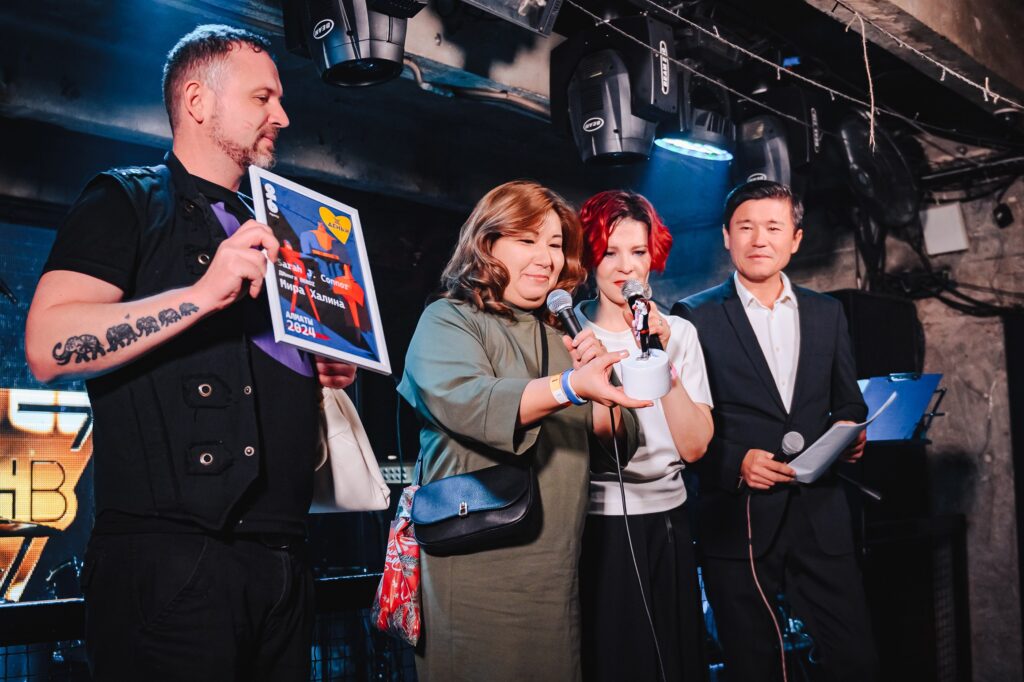
On June 27, Almaty hosted the annual “Day J” celebration, marking Kazakhstan’s professional holiday for media workers. Organized by the communications company, 2BAgency, the event brought together journalists, PR professionals, and media representatives to recognize excellence across the country’s media and communications industry. The highlight of the evening was the presentation of the “Day J” Awards, which featured five primary categories. Both nominees and jury members were selected through open voting on social media by members of the media community. 2025 “Day J” Award Winners: Best Reporter - Pyotr Trotsenko Best Business Journalist - Olga Fominskikh Best Investigative Journalist - Altynshash Smagulova Best Blogger - Rashit Ilyasov Best Host - Marzhan Elshibayeva [caption id="attachment_33561" align="aligncenter" width="2438"] Image: Mikhail Karpov[/caption] The event also featured a special Grand Prix category, awarded annually to a media figure whose work has made a lasting impact. This year’s Grand Prix went to Nadezhda Plyaskina, a journalist, director, blogger, and actress with over 30 years of experience. “The Grand Prix is our way of honoring remarkable talent and professional excellence,” said Tatiana Bendz, Director of 2BAgency. “Nadya Plyaskina is a journalist, blogger, actress, and director, a true master of transformation. She’s one of the most vibrant creative figures in Kazakhstan’s media scene, and we’re proud to award her this year’s Grand Prix.” Special Contests and Media Recognition In addition to the main awards, two special contests were held during the evening. Earlier this year, Eurasia Insurance Company and 2BAgency launched a competition for the best media coverage of CASCO auto insurance. The winners were announced at the June 27 event: Best Publication in Kazakh - Gaziza Uzak Best Publications in Russian - Irina Ledovskikh, Zhadyra Turgumbayeva, and Tatyana Batisheva [caption id="attachment_33562" align="aligncenter" width="2163"] Image: Mikhail Karpov[/caption] Media Partners The event was supported by a wide range of media outlets, including: Tribune, CheckPoint, BesMedia, Shishkin_like, Profit, BlueScreen, Finratings, The Times of Central Asia, Newtimes, Offside, Aleminform, Optimism, and Bizmedia.

Kyrgyz Authorities Step Up Pressure on Kloop: Searches, Arrests, and International Outcry

In late May, Kyrgyz security forces conducted coordinated raids on the homes of eight current and former employees of the independent media outlet Kloop. Operatives from the State Committee for National Security (GKNB) simultaneously entered apartments in Bishkek and Osh. Video journalist Alexander Alexandrov and former cameraman Joomart Duulatov were detained and remain in custody on charges of “public calls for mass unrest” under Article 278 of the Criminal Code. The other six individuals were released after hours of interrogation but were compelled to sign non-disclosure agreements. According to Kloop’s editorial staff, five minutes before the raids began, the outlet received an anonymous email with the subject line: “You have crossed the line.” The incident drew swift condemnation from human rights groups. The Committee to Protect Journalists (CPJ) demanded an immediate end to what it described as persecution, while other international organizations called for the charges to be dropped. From Student Project to Investigative Powerhouse Founded in 2007 by journalists Bektur Iskender and Rinat Tukhvatushin, Kloop began as a training platform for aspiring reporters. The outlet gained prominence during its around-the-clock reporting on the 2010 uprising. It later evolved into a leading investigative publication, exposing high-profile cases such as the 2017 “Samaragate” voter data scandal and the 2019 financial network linked to customs official Raiymbek Matraimov. Despite legal threats, including lawsuits from the Matraimov family that were later withdrawn, Kloop’s reporting bolstered its credibility and amplified its visibility, making it increasingly unwelcome in official circles. Escalating Crackdown Tensions escalated in August 2023 when the Bishkek Prosecutor’s Office filed a lawsuit to dissolve the Kloop Media Foundation, accusing it of “negative coverage of government activities.” The Oktyabrsky District Court approved the request in February 2024, and the Supreme Court upheld the decision that July in a closed session. The ruling remained classified for a month. The Ministry of Culture subsequently ordered Kloop’s website to be blocked within Kyrgyzstan, despite assurances that the foundation’s removal from the official register would not impede freedom of expression. In response, the editorial team relocated servers abroad and registered a new legal entity. Nevertheless, the authorities resumed the pressure in January 2024 with searches targeting other independent outlets, including Temirov Live and 24.kg. By May, the security forces were back at Kloop. The investigation now alleges that Kloop continued to operate illegally post-liquidation, publishing materials purportedly aimed at “inciting public discontent.” This echoes the case against Temirov Live, where several journalists were imprisoned, including director Makhabat Tazhibek Kyzy, who is serving a six-year sentence. Human rights advocates argue the charges are part of a broader strategy to criminalize dissent. International Reactions The arrests have provoked international condemnation. Amnesty International, Human Rights Watch, Civil Rights Defenders, and Reporters Without Borders were among more than a dozen NGOs that issued a joint statement decrying a “new wave of repression” threatening the future of independent journalism in Kyrgyzstan. The statement urged the immediate release of detained journalists and called on international partners, particularly the European Union, to adopt a...

Kazakhstan Marks Media Workers’ Day with “Day J” Festivities

Kazakhstan will celebrate Media Workers' Day on June 28, a professional holiday honoring everyone in the media industry, including reporters, editors, producers, technicians, and executives. Established by presidential decree, the date commemorates the launch of Turkestan Vedomosti, the first official print publication on the territory of modern-day Kazakhstan. It began publishing in Orenburg on June 28, 1870. For the past decade, “Day J” has brought together journalists and PR professionals to recognize outstanding achievements in Kazakhstani media in a creative, informal atmosphere. This year’s event, timed to coincide with Media Workers’ Day, will be held in Almaty on June 27. The Times of Central Asia is proud to serve as an information partner for “Day J,” an initiative inspired and organized by the communications agency 2BAgency. Theme: Romance of the ’90s This summer’s “Day J” will take participants back to the 1990s, an analog era remembered for cassette-recorded interviews, pager messages, single-cigarette purchases, denim-on-denim fashion, and a shared sense of optimism about the future. A highlight of the evening will be the annual Day J Awards, honoring professionals in five categories: Best Reporter Best Business Journalist Best Investigative Journalist Best Blogger Best Presenter Nominees and jury members were selected via the “Day J” Telegram channel and social media, reflecting recognition from within the journalistic community. Partners and Support As in previous years, the event is made possible by key partners. Sponsors of this year’s celebration include: Forte, a systemically important Kazakh bank Eurasia Insurance Company, a market leader Munchen Pub, renowned for its hospitality KazMinerals, one of the country’s top mining firms Tickets.kz, a leading travel platform ARTиШОК, the acclaimed independent theater RG Brands, producers of ASU and AVA beverages First Brewery, makers of Zhiguli Barnoe beer Additional media and organizational support comes from CheckPoint, BesMedia, Shishkin Like, Tribune, Profit, BlueScreen, Finratings, newtimes.kz, Offside.kz, aleminform.kz, optimism.kz, and bizmedia.kz. Following the event, The Times of Central Asia will publish coverage of the Day J Award winners and explore how this year’s celebration contributes to the evolving story of Kazakhstan’s media landscape.