• KZT/USD = 0.00223
  • TJS/USD = 0.10860
  • UZS/USD = 0.00008
  • TMT/USD = 0.29850
  • KZT/USD = 0.00223
  • TJS/USD = 0.10860
  • UZS/USD = 0.00008
  • TMT/USD = 0.29850
  • KZT/USD = 0.00223
  • TJS/USD = 0.10860
  • UZS/USD = 0.00008
  • TMT/USD = 0.29850
  • KZT/USD = 0.00223
  • TJS/USD = 0.10860
  • UZS/USD = 0.00008
  • TMT/USD = 0.29850
  • KZT/USD = 0.00223
  • TJS/USD = 0.10860
  • UZS/USD = 0.00008
  • TMT/USD = 0.29850
  • KZT/USD = 0.00223
  • TJS/USD = 0.10860
  • UZS/USD = 0.00008
  • TMT/USD = 0.29850
  • KZT/USD = 0.00223
  • TJS/USD = 0.10860
  • UZS/USD = 0.00008
  • TMT/USD = 0.29850
  • KZT/USD = 0.00223
  • TJS/USD = 0.10860
  • UZS/USD = 0.00008
  • TMT/USD = 0.29850
12 November 2026

Viewing results 1 - 6 of 2

Opinion: Kazakhstan and South Korea Need Investment, Not More Memoranda, for Alatau City

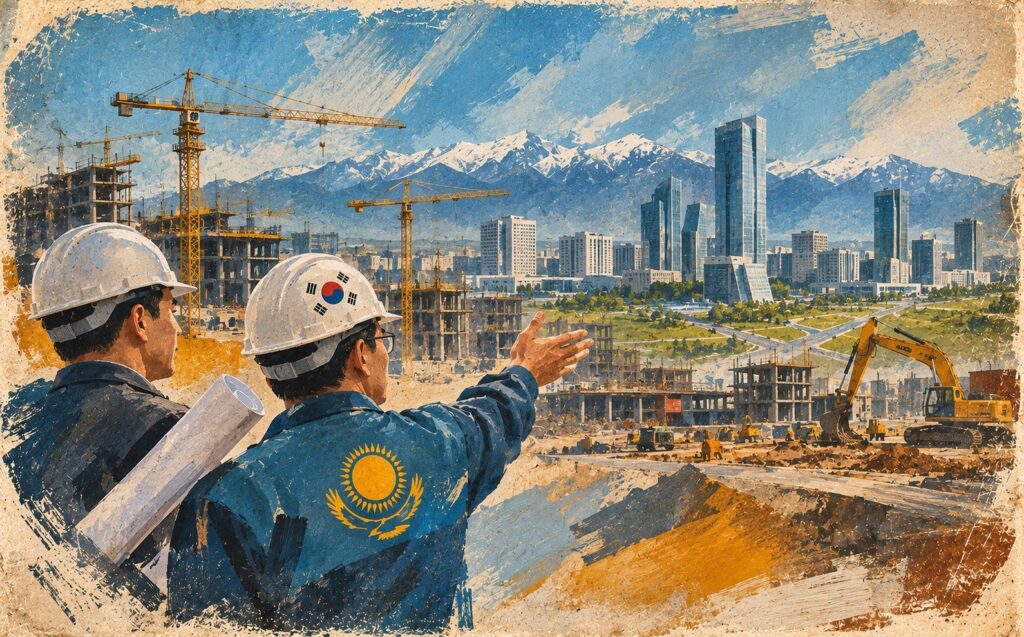
There is no shortage of elegant phrases to describe relations between Kazakhstan and South Korea: “strategic partnership,” “immense potential,” “new prospects,” and “mutual interest.” What is still missing is South Korean investment on the scale sought for Alatau City and K-PARK, the international cultural and business center planned for the city. For years, the Korean community in Kazakhstan has been called a “living bridge” between the two countries. But even a golden bridge fulfills its purpose only when it connects both sides. It would be unfair to claim that South Korea is doing nothing. The Korea Overseas Infrastructure & Urban Development Corporation (KIND) is involved in planning, the K-Smart Town concept is being developed, and Korean companies and institutions are discussing possible participation. During President Kassym-Jomart Tokayev’s September 2026 visit to Seoul, Kazakhstan presented joint initiatives with KIND, the Korea Advanced Institute of Science and Technology, and Korea Airports Corporation. They covered urban development, research and education, digital technologies, and urban air transport. These are meaningful steps. But initial interest, a memorandum, project design, financial commitments, and actual foreign direct investment are different stages. We should not present progress at one stage as proof that the next has been achieved. Kazakhstan Is Selling a Vision. Investors Need Projects. The first problem is the gap between what Kazakhstan offers and what investors are prepared to finance. We have become adept at presenting the future. On screen, Alatau City has skyscrapers, smart districts, environmentally friendly neighborhoods, universities, medical centers, advanced transport systems, and AI. After the presentation, Korean businesses ask different questions. Who owns the land? Who pays for electricity, water, and other essential infrastructure? What are the utility tariffs? How are investors protected against changes in legislation? Where will disputes be settled? What return can they expect, and when will they recover their capital? At that point, an attractive rendering must give way to a carefully prepared spreadsheet. This is one of the weaknesses of our investment diplomacy. We too often sell a concept rather than an investable product. A company cannot simply invest “in the city.” It invests in a power plant, hotel, or data center, with a defined site, infrastructure arrangements, and a clear allocation of risks. The second problem is the scale of the undertaking. Alatau is being developed as an entirely new urban and economic environment. Investors must assess more than the prospects of a single enterprise. They must consider future population growth, demand, transport flows, energy and water supplies, and the stability of the regulatory framework. Kazakhstan has already adopted a special legal regime for Alatau City. The constitutional law, adopted on May 8, 2026, establishes a distinct framework for the city’s accelerated development, investment, governance, and economic activity. That is an important institutional step. Yet the existence of a law does not eliminate the need for predictable implementation. An investor must understand how the rules will operate over the next 10 or 15 years. Capital is more conservative than diplomacy. A minister can sign a...

K-PARK: A Space for Memory, Gratitude, and Cooperation

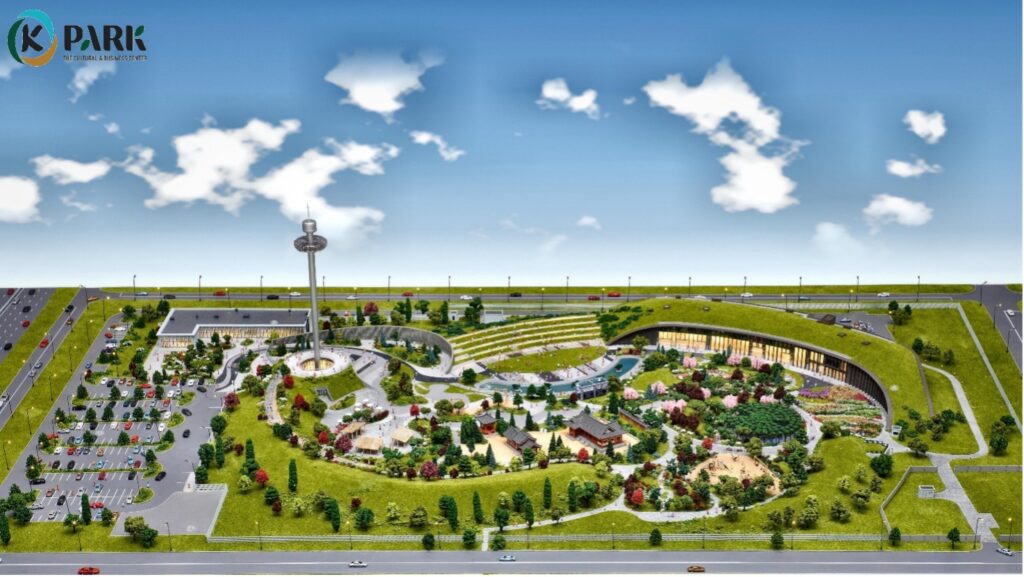
In the history of every nation, some places come to mean more than their architecture, squares, or parks. They become part of a country’s collective memory, preserving the experiences of previous generations while looking toward the future. K-PARK, an international cultural and business center under development in Alatau City, is designed to be such a space. The foundation stone was laid on September 12, 2025. The project was initiated by the Association of Koreans of Kazakhstan and is timed to coincide with the 90th anniversary of the Korean presence in Kazakhstan, marked in 2027. K-PARK is the first investment project in this new city, weaving the history of one of Kazakhstan’s ethnic groups into the fabric of a city still being built. Memory of an Arduous Journey The history of the Koryo-saram in Kazakhstan is inseparable from the tragic deportation of 1937, when most were forcibly relocated from the Soviet Far East to Central Asia. For the first generation of deportees, Kazakhstan was an unknown land to which they arrived against their will. Over subsequent generations, the Koreans of Kazakhstan became an integral part of the country’s society, contributing to agriculture and industry as well as to science and medicine. They became active in education and culture, in business and civic life. The approaching 90th anniversary is an opportunity to reflect on this journey, and K-PARK is designed to give that memory a spatial form. Plans include a memorial of gratitude to the Kazakh people and a Garden of Identity. A dedicated Koryo-saram area would use historical reconstructions and a traditional Korean hanok house to tell the community’s story; museum and exhibition spaces would offer further context. Gratitude as a Component of Historical Memory The collective memory of Kazakhstan’s Koryo-saram community preserves many stories from the early years following the deportation, including accounts of harsh living conditions and of help from the local population. The project’s creators describe K-PARK as a symbol of respect and gratitude toward the Kazakh people and Kazakh land. Remembering the deportation therefore has another dimension: the solidarity of those who helped the displaced and the capacity of different peoples to coexist. K-PARK seeks to preserve the memory of a traumatic past and show how an ordeal endured can become a foundation for mutual respect and constructive action. From Ethnic Park to Open Public Space K-PARK is not intended to be solely a Korean ethno-cultural site. The planned cultural and business center will accommodate conferences and exhibitions. Its library and interactive museum would offer other ways to encounter the community’s history. Outside, a 5,000-seat amphitheater and sports and children’s playgrounds would provide space for performances and recreation. The official concept also envisions public events and international gatherings. For Koryo-saram, it can serve as a place to preserve historical memory and pass it on to new generations. For other Kazakhstanis, it offers a space to learn about the history of the country’s Korean community and its place in Kazakhstan’s wider history. In September 2026, Yuriy Tskhay, chairman...