• KGS/USD = 0.01144 0%
  • KZT/USD = 0.00206 0%
  • TJS/USD = 0.10833 -0.09%
  • UZS/USD = 0.00008 0%
  • TMT/USD = 0.28490 0%
  • KGS/USD = 0.01144 0%
  • KZT/USD = 0.00206 0%
  • TJS/USD = 0.10833 -0.09%
  • UZS/USD = 0.00008 0%
  • TMT/USD = 0.28490 0%
  • KGS/USD = 0.01144 0%
  • KZT/USD = 0.00206 0%
  • TJS/USD = 0.10833 -0.09%
  • UZS/USD = 0.00008 0%
  • TMT/USD = 0.28490 0%
  • KGS/USD = 0.01144 0%
  • KZT/USD = 0.00206 0%
  • TJS/USD = 0.10833 -0.09%
  • UZS/USD = 0.00008 0%
  • TMT/USD = 0.28490 0%
  • KGS/USD = 0.01144 0%
  • KZT/USD = 0.00206 0%
  • TJS/USD = 0.10833 -0.09%
  • UZS/USD = 0.00008 0%
  • TMT/USD = 0.28490 0%
  • KGS/USD = 0.01144 0%
  • KZT/USD = 0.00206 0%
  • TJS/USD = 0.10833 -0.09%
  • UZS/USD = 0.00008 0%
  • TMT/USD = 0.28490 0%
  • KGS/USD = 0.01144 0%
  • KZT/USD = 0.00206 0%
  • TJS/USD = 0.10833 -0.09%
  • UZS/USD = 0.00008 0%
  • TMT/USD = 0.28490 0%
  • KGS/USD = 0.01144 0%
  • KZT/USD = 0.00206 0%
  • TJS/USD = 0.10833 -0.09%
  • UZS/USD = 0.00008 0%
  • TMT/USD = 0.28490 0%

Viewing results 1 - 6 of 11

Kazakhstan to Improve Investor Protections and Accelerate Digital Reforms

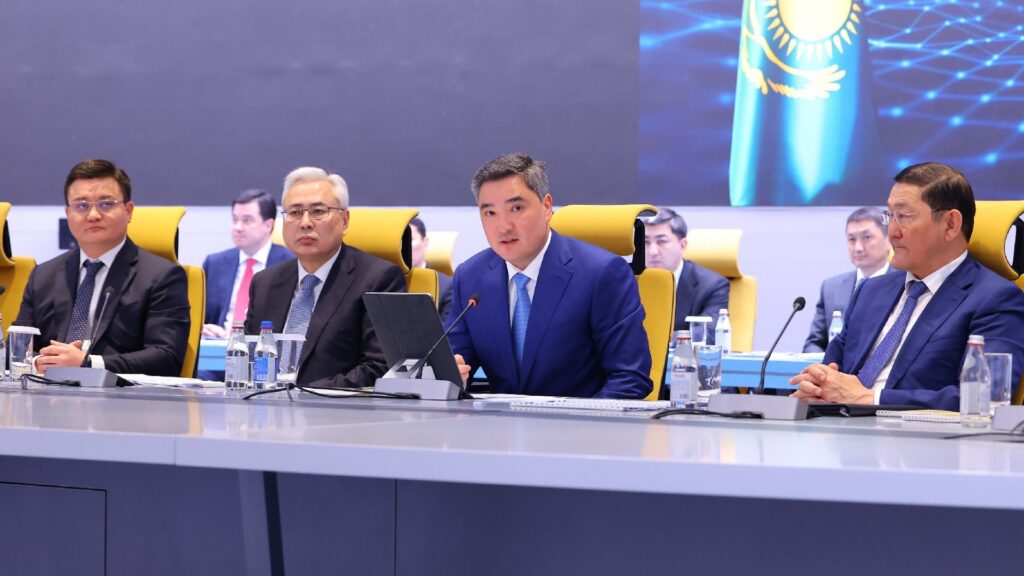
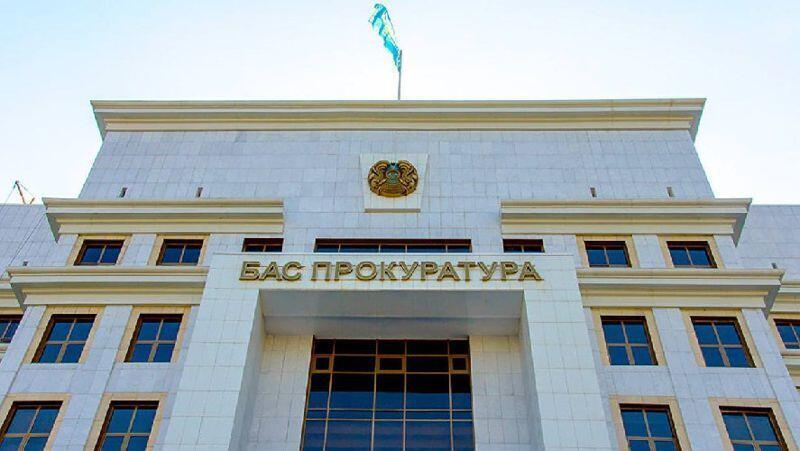
Kazakhstan Prime Minister Olzhas Bektenov has instructed government agencies to accelerate the removal of administrative barriers for investors and expand the digitalization of investment procedures amid intensifying global competition for capital. Speaking at a meeting on investor rights protection attended by government officials, prosecutors, business representatives, and the Atameken National Chamber of Entrepreneurs, Bektenov said improving the investment climate remains a government priority. “Just last week, a presidential decree was signed on improving migration policy, aimed at creating a better environment for attracting investors, entrepreneurs, and highly qualified specialists,” Bektenov said. According to the government, Kazakhstan’s Investment Headquarters reviewed 44 projects worth approximately $25.5 billion during the first quarter of 2026. Prosecutor General Berik Asylov said the number of criminal cases against businesses has fallen fourfold over the past three years. “We are overseeing more than 3,000 investment projects. We maintain direct communication and continuous monitoring with investors and the business community,” he said. According to the Foreign Ministry, investors submitted 273 appeals during the first quarter of the year, with around half resolved positively. The main concerns related to tax administration, customs procedures, and land issues. Baurzhan Yeraly, chairman of the Committee for the Protection of Investors’ Rights under the General Prosecutor’s Office, said the rights of around 600 investors had already been protected this year, with complaints handled directly rather than transferred between agencies. Officials cited several successful cases, including the connection of a major energy project in the Atyrau region to engineering infrastructure and the inclusion of a paper products manufacturer in the national registry of domestic producers. Bektenov criticized what he described as a formalistic approach by some state bodies in dealing with businesses. “Every request from an investor is a signal behind which stand decisions on capital allocation, the launch of new production facilities, and the creation of jobs,” he said. The prime minister warned that officials and managers in the quasi-state sector responsible for bureaucratic delays would face “the strictest measures.” He also pointed to systemic problems, including weak coordination between agencies, delays in public service delivery, and insufficient oversight at the regional level. Particular attention was given to the role of local administrations, which were instructed to supervise key investment projects directly and accelerate the allocation of land, infrastructure, and permits. The government also plans to speed up development of the National Digital Investment Platform. More than 3,000 projects worth around $200 billion have already been integrated into the system, though more than 400 projects have yet to be uploaded. “In the context of global competition for investment, we must ensure a stable and favorable investment climate,” Bektenov said. Asset Irgaliyev, chairman of the Agency for Strategic Planning and Reforms, said the agency is developing a “regulatory intelligence” platform using artificial intelligence to identify excessive requirements and administrative barriers. Authorities also plan to expand the overseas network of Kazakh Invest. According to company head Sultangali Kinzhakulov, representative offices in the United States, Germany, China, Russia, Turkey, Malaysia, and Qatar will operate as “one-stop...

Kazakh Science Ministry Expands Strategic Partnership with AstraZeneca

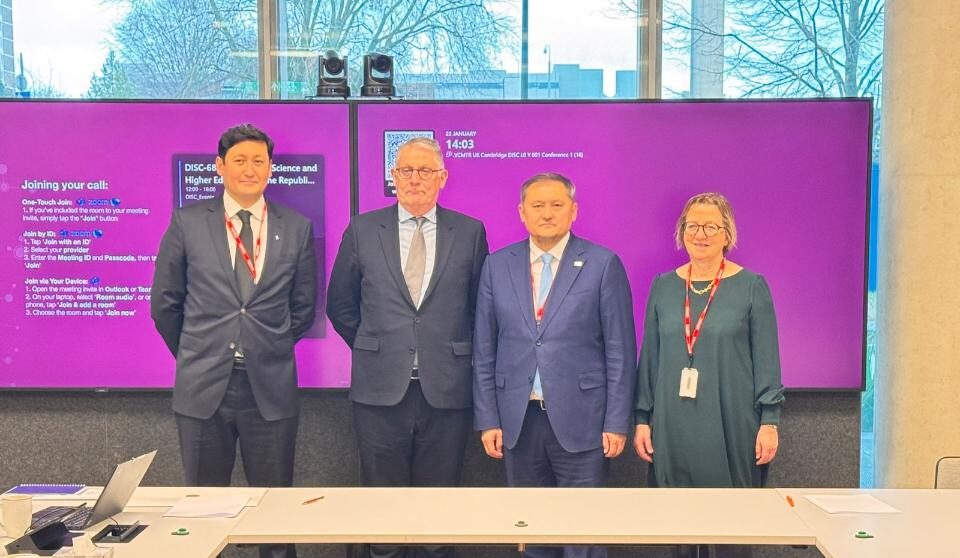
Kazakhstan has entered a new phase of cooperation with British-Swedish pharmaceutical giant AstraZeneca, expanding the partnership beyond healthcare into science, education, and innovation. On January 26, Minister of Science and Higher Education Sayasat Nurbek visited AstraZeneca’s Discovery Centre in Cambridge, the company’s largest global research and innovation hub, where a memorandum of understanding was signed with AstraZeneca Kazakhstan. According to the ministry, the agreement paves the way for new areas of collaboration aimed at strengthening national scientific capacity, introducing advanced medical technologies, and enhancing the long-term sustainability of Kazakhstan’s healthcare system. The partnership will focus on several strategic areas: Real-World Data (RWD) and Real-World Evidence (RWE): Development of advanced data analytics tools to support scientific research, clinical decision-making, and evidence-based healthcare policy. Expansion of the Young Health Program: Prevention of non-communicable diseases among youth and the promotion of responsible health behaviors. Sustainable Development and Economic Diversification: Joint initiatives in environmental protection, green technologies, and sustainable business practices. Early Diagnosis and Healthcare Resilience: Implementation of modern screening methods, specialist training, and development of diagnostic infrastructure. Nurbek highlighted that the memorandum creates new opportunities to integrate research, education, and real-world clinical practice. “It is important not only to develop fundamental science, but also to ensure the transfer of advanced technologies and data into everyday medical practice. This partnership strengthens Kazakhstan’s scientific and biomedical potential,” he said. AstraZeneca has steadily expanded its operations in Kazakhstan in recent years. In April 2024, the Ministry of Healthcare, the Almaty city administration, national investment agency Kazakh Invest, and AstraZeneca signed an agreement on the contract manufacturing of biotechnological products. The initiative supports Kazakhstan’s strategic goal of increasing the share of domestically produced medicines to 50%. In July 2024, AstraZeneca and the state pharmaceutical distributor SK-Pharmacy signed a long-term agreement on local production and technology transfer. According to Maria Shipuleva, CEO of AstraZeneca Kazakhstan, the company’s innovative medicines will be produced at the Nobel Almaty Pharmaceutical Factory. The production portfolio includes treatments for diabetes, chronic heart failure, chronic kidney disease, multiple forms of leukemia, and cancer therapies for breast, ovarian, prostate, and pancreatic cancers.

Italian Agricultural Group Considers Launching Industrial Hemp Project in Kazakhstan

The Italian agricultural organization Unione Coltivatori Italiani (UCI) is exploring a project to cultivate and process industrial hemp in Kazakhstan for applications in the textile, construction, and pharmaceutical industries. The initiative was announced by the national investment promotion agency Kazakh Invest. During a recent meeting in Astana, Kazakh Invest Deputy Chairmen Azamat Kozhanov and Madiyar Sultanbek held talks with UCI President Mario Serpillo. The Italian delegation shared its experience in sustainable agriculture and closed-loop production systems using hemp, including the manufacture of fibers, oil, and biomaterials. A Phased Rollout with International Standards According to the statement, the project will begin with pilot plots of up to 100 hectares in various regions of Kazakhstan, where agricultural technologies will be tested. If successful, the initiative will be scaled up. Only industrial hemp varieties compliant with international standards for tetrahydrocannabinol (THC) content, no more than 0.3%, will be used. This ensures the hemp has no psychoactive effects and qualifies as a technical raw material. Kazakhstan first proposed cultivating industrial hemp in 2016, but the idea failed to materialize. In spring 2025, however, a renewed effort gained legislative support. A bill legalizing the cultivation of non-narcotic hemp under strict state control was introduced and passed in June, allowing production for industrial use only. Modern Technologies and Regulatory Oversight The proposed project will employ advanced agricultural technologies to produce textiles, biocomposites, and pharmaceutical products. The Italian side emphasized the importance of regulatory compliance, including certification, licensing, and cooperation with research institutions in fields such as medicine, cosmetology, sustainable agriculture, and construction materials. Founded in the 1920s, UCI is one of Italy’s oldest agricultural organizations and has a long-standing commitment to sustainable development. Kazakhstan’s Ministry of Agriculture previously announced plans to use domestically grown industrial hemp to produce high-security paper for identity documents. As previously reported by The Times of Central Asia, this development indicates the potential for multiple hemp cultivation and processing projects to emerge across the country.

Chinese Company to Invest Over $12 Billion in Kazakhstan’s Non-Ferrous Metals Sector

China’s East Hope Group (EHG), a global leader in aluminum and silicon production, plans to invest more than $12 billion in a large-scale non-ferrous metals production and processing project in Kazakhstan. The project was discussed last week during a meeting between Yerzhan Yelekeyev, Chairman of the Board of Kazakh Invest, and Changjun Meng, General Director of EHG. According to Kazakh Invest, EHG plans to build a large industrial park in Kazakhstan, incorporating advanced technologies in non-ferrous metallurgy. The facility will focus on deep metal processing and the production of finished goods for export to the European Union, Central Asia, and China. The project is expected to create up to 10,000 jobs at various stages of implementation. According to Changjun Meng, EHG has already registered a subsidiary in Kazakhstan, which will serve as the project's main operational center. The company has completed preliminary geodetic and hydrogeological studies of land plots across several Kazakh regions and plans to begin a detailed site assessment in the near future. Yelekeyev pledged comprehensive government support for the investment project, emphasizing its significance for Kazakhstan’s industrial sector. "Attracting major strategic investors like East Hope Group opens new opportunities for Kazakhstan," Yelekeyev stated. "We see this project not only as a large investment but also as a way to introduce advanced technologies, create new jobs, and localize production. It will strengthen Kazakhstan’s position in the global non-ferrous metals supply chain and significantly expand finished product exports." EHG has expressed its readiness to sign an investment framework agreement with Kazakhstan’s Ministry of Foreign Affairs and the Ministry of Industry and Construction, marking a significant step forward in the project’s development.

Chinese Company to Develop Low-Altitude Technologies and Intelligent Manufacturing in Kazakhstan

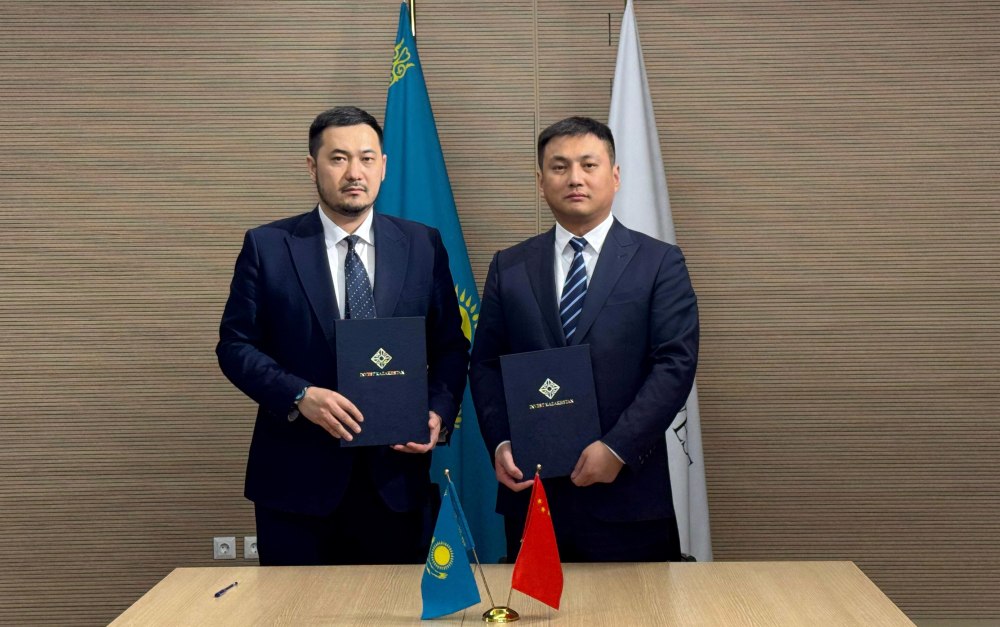
Kazakh Invest, Kazakhstan’s national investment company, has signed a memorandum of understanding (MoU) with China's Polyking New Horizons Technology Industry Co. Ltd. The agreement focuses on collaboration in the emerging field of low-altitude economy and intelligent manufacturing. As part of the partnership, the companies plan to establish an industrial park in Kazakhstan, which will integrate drone technologies, smart city solutions, and advanced manufacturing systems. The $200 million project is expected to create 1,000 new jobs, according to Kazakh Invest. Expanding High-Tech Opportunities The MoU also includes provisions for developing projects in the chemical industry and innovative technologies. These initiatives aim to strengthen Kazakhstan's position as a hub for high-tech production and innovation in Central Asia. Azamat Kozhanov, Managing Director of Kazakh Invest, highlighted the vast potential for low-altitude technologies in various sectors, including agriculture, energy, construction, and infrastructure management. “The advanced technologies and expertise of Polyking will bring new momentum to the development of this field in Kazakhstan,” Kozhanov stated. He also noted the significant economic opportunity tied to this sector, adding: “By 2050, the global low-altitude economy market is expected to reach $8.8 trillion. Therefore, we are actively creating platforms to develop new industries and providing comprehensive support.” Broader Trends in Low-Altitude Technology Kazakhstan has already taken steps to integrate drone production into its economy. The Times of Central Asia recently reported on a $12 million project by Yesil Technology Company, a subsidiary of China’s Shaanxi Kaizhuo Electronic Technology Co. Ltd., to establish an industrial drone manufacturing facility in the country. This collaboration underscores Kazakhstan’s strategic focus on becoming a leader in the low-altitude economy, a field that includes drones, unmanned aerial vehicles (UAVs), and other advanced technologies that operate at low altitudes. The partnership between Kazakh Invest and Polyking New Horizons Technology marks another milestone in Kazakhstan’s push to diversify its economy through high-tech industries. The planned industrial park, along with complementary projects like drone manufacturing, positions Kazakhstan to capitalize on the growing global market for low-altitude technologies and intelligent manufacturing. If successfully implemented, these initiatives could transform the country into a regional leader in cutting-edge technology and innovation.

China to Build a Trade and Industrial Park in Astana

Last week, Xinjiang Hengyuan Investment Management Co., Ltd., based in the Chinese city of Baiyang, and Kazakh Invest signed a memorandum to implement the construction of a trade and industrial park, spanning 50 hectares, in Astana. As reported by Kazakh Invest, the project is expected to positively impact the development of critical sectors of Kazakhstan's economy, including logistics, warehousing, processing, trade, and real estate management. The project will also attract Chinese trade and manufacturing companies to operate in Kazakhstan. Yan Wang, Deputy Mayor of Baiyang, commented: "We are entering this project with great enthusiasm, seeing the enormous potential of Kazakhstan as a key logistics hub in the region. Creating the Kazakhstan-China Trade and Industrial Park in Astana will significantly expand the country's logistics capabilities and strengthen its role as an important transit corridor between East and West. We believe this project will catalyze attracting new trade flows and manufacturing." Yerzhan Yelekeyev, Chairman of the Board of Kazakh Invest, added: "This project opens up new horizons for cooperation between Kazakhstan and China. The creation of the Kazakhstan-China Trade and Industrial Park in Astana will not only accelerate the development of key sectors of our economy -but-also create numerous new jobs.”