
• KGS/USD = 0.01144 0%
  • KZT/USD = 0.00211 0%
  • TJS/USD = 0.10515 0.48%
  • UZS/USD = 0.00008 0%
  • TMT/USD = 0.28530 0%
  • KGS/USD = 0.01144 0%
  • KZT/USD = 0.00211 0%
  • TJS/USD = 0.10515 0.48%
  • UZS/USD = 0.00008 0%
  • TMT/USD = 0.28530 0%
  • KGS/USD = 0.01144 0%
  • KZT/USD = 0.00211 0%
  • TJS/USD = 0.10515 0.48%
  • UZS/USD = 0.00008 0%
  • TMT/USD = 0.28530 0%
  • KGS/USD = 0.01144 0%
  • KZT/USD = 0.00211 0%
  • TJS/USD = 0.10515 0.48%
  • UZS/USD = 0.00008 0%
  • TMT/USD = 0.28530 0%
  • KGS/USD = 0.01144 0%
  • KZT/USD = 0.00211 0%
  • TJS/USD = 0.10515 0.48%
  • UZS/USD = 0.00008 0%
  • TMT/USD = 0.28530 0%
  • KGS/USD = 0.01144 0%
  • KZT/USD = 0.00211 0%
  • TJS/USD = 0.10515 0.48%
  • UZS/USD = 0.00008 0%
  • TMT/USD = 0.28530 0%
  • KGS/USD = 0.01144 0%
  • KZT/USD = 0.00211 0%
  • TJS/USD = 0.10515 0.48%
  • UZS/USD = 0.00008 0%
  • TMT/USD = 0.28530 0%
  • KGS/USD = 0.01144 0%
  • KZT/USD = 0.00211 0%
  • TJS/USD = 0.10515 0.48%
  • UZS/USD = 0.00008 0%
  • TMT/USD = 0.28530 0%

Viewing results 1 - 6 of 10

Kazakhstan Calls on Partners to Ensure Safe Transportation of Caspian Oil

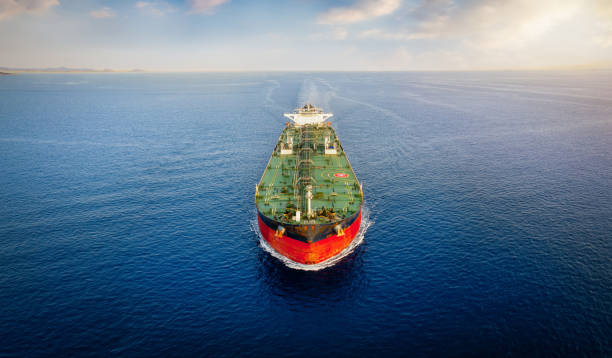
Kazakhstan’s Ministry of Foreign Affairs has expressed deep concern over recent drone attacks on oil tankers en route to the Caspian Pipeline Consortium’s (CPC) marine terminal in the Black Sea. During emergency consultations with ambassadors from several European countries, as well as discussions with the U.S. and other foreign partners, Kazakh diplomats urged the adoption of effective measures to safeguard hydrocarbon transport routes, including maritime corridors, in full compliance with international law. The Foreign Ministry emphasized that Kazakhstan is not a party to any armed conflicts and plays a crucial role in supporting global and European energy security by ensuring uninterrupted oil supplies in accordance with its international obligations. It was noted that all the targeted tankers were operating legally, with the required permits and standard identification systems. According to the ministry, the rising number of such incidents signals a growing threat to the integrity of international energy infrastructure. Kazakhstan called for deeper cooperation with partner countries to develop joint mechanisms aimed at preventing future attacks. Earlier, the Ministry of Energy stated that export volumes had not been directly affected: some of the vessels were empty, and others remained seaworthy. However, the fact that these attacks occurred near one of Kazakhstan’s key export hubs has increased concerns among market participants about the reliability of supply chains. Reuters, citing unnamed sources, reported that up to three tankers may have been hit. Among the affected vessels were ships operated by the U.S. energy giant Chevron and others flying Greek flags, raising the stakes in what is becoming a significant geopolitical issue. Kazakh MP Aidos Sarym remarked that ensuring the security of the CPC, where Russia is a major shareholder, should be a shared responsibility. "I believe Chevron is one of the largest shareholders. We also know Ukraine relies heavily on U.S. support. Chevron is not a minor player globally. I think the U.S. and our other partners must jointly urge Ukraine to reconsider its targeting priorities," Sarym said. Amid these developments, Bloomberg reported that Kazakhstan’s oil exports via the CPC could fall by as much as 45% in January due to ongoing disruptions at the terminal.
U.S. Eases Sanctions on Key Kazakh Oil Projects

The Caspian Pipeline Consortium (CPC), oil producer Tengizchevroil (TCO), and the Karachaganak field have been granted permission to resume services and conduct transactions related to their operational activities, following a United States Treasury Department decision to ease sanctions. The Tengiz and Karachaganak fields are located in Kazakhstan, and Kazakh oil is exported through the CPC system. In October, the U.S. Treasury added Russian oil giants Lukoil and Rosneft, along with 34 of their subsidiaries, to its latest package of sanctions. However, experts now suggest that the exemption of key projects in Kazakhstan could have a stabilizing effect on the country's oil sector and its broader economy. The U.S. Treasury’s Office of Foreign Assets Control (OFAC) issued General License No. 124B, allowing services and other transactions required to maintain the operations of the CPC, Tengizchevroil, and the Karachaganak project, even when sanctioned entities such as Lukoil and Rosneft are involved. The license does not permit any transactions related to the sale or transfer of shares in these projects. Kazakhstan’s Minister of Energy, Yerlan Akkenzhenov, confirmed on November 12 that the government is working to have the Karachaganak field fully exempt from the U.S. sanctions regime. The CPC system links oil fields in western Kazakhstan and parts of Russia with a marine terminal in Novorossiysk on Russia’s Black Sea coast. It remains the main export route for Kazakh oil, carrying more than 80% of the country’s crude. The system has an annual capacity of about 83 million tons. CPC shareholders include Kazakhstan, holding a combined 20.75% through KazMunayGas (19%) and Kazakhstan Pipeline Ventures LLC (1.75%). Other shareholders include Chevron Caspian Pipeline Consortium Company (15%), Lukoil International GmbH (12.5%), Mobil Caspian Pipeline Company (7.5%), Rosneft-Shell Caspian Ventures Limited (7.5%), BG Overseas Holdings Limited (2%), Eni International N.A. N.V. (2%), and Oryx Caspian Pipeline LLC (1.75%). The Russian government and Transneft also hold significant stakes. Tengizchevroil LLP, the operator of the Tengiz field, is a joint venture between Chevron (50%), ExxonMobil Kazakhstan Ventures Inc. (25%), KazMunayGas (20%), and Lukoil (5%). Tengiz is one of Kazakhstan’s largest oil fields, with reserves estimated at 3.1 billion tons. The Karachaganak field is among the world’s largest, with development carried out by the Karachaganak Petroleum Operating consortium. Shell and Eni serve as joint operators, and the partnership also includes Chevron (18%), Lukoil (13.5%), and KazMunayGas (10%). On November 13, it was reported that KazMunayGas is considering acquiring Lukoil’s stake in the Karachaganak project, reflecting efforts to manage shifting ownership dynamics under the sanctions environment.

Germany Increases Imports of Kazakh Oil Amid Shift Away from Russian Supplies

Germany has significantly increased its imports of Kazakh oil, receiving 225,000 tons via the Druzhba pipeline in October, 25% more than in September, according to Deutsche Welle. Regular deliveries of Kazakh crude to Germany began in 2023, following Berlin’s decision to halt Russian oil imports in response to the war in Ukraine and EU sanctions. In 2024, Germany imported 1.5 million tons of oil from Kazakhstan. By the end of 2025, Berlin aims to raise that figure to 1.7 million tons, with potential growth to 2.5 million tons annually. In October, KazMunayGas (KMG) Chairman Askhat Hasenov and Johannes Bremer, CEO of Rosneft Deutschland GmbH, signed an agreement extending the oil supply arrangement through the end of 2026. The updated deal increases monthly volumes from 100,000 to 130,000 tons. The additional crude will come from the Karachaganak field, with Germany also set to begin receiving oil from the Kashagan field in 2024 and the Tengiz field in 2025. According to KMG, approximately 1.5 million tons of Kazakh oil were delivered to Germany’s Schwedt refinery between January and September 2025. Rosneft Deutschland GmbH, which manages a stake in the Schwedt refinery and ranks as Germany’s third-largest oil refiner, is currently under German government control. The move was part of Berlin’s strategy to reduce reliance on Russian energy following the invasion of Ukraine. The Druzhba pipeline, which originates in Samara, Russia, splits after Bryansk and Mozyr. Its northern branch runs through Belarus to Poland and Germany, while the southern branch passes through Ukraine to Hungary, Slovakia, and the Czech Republic.

Kazakhstan’s Oil Exports Uninterrupted Despite Caspian Pipeline Consortium Berth Suspensions

Despite the suspension of two out of three offshore berths operated by the Caspian Pipeline Consortium (CPC), Kazakhstan’s oil exports are proceeding without disruption, according to the Ministry of Energy of the Republic of Kazakhstan. The ministry stated that there are currently no restrictions on the receipt or shipment of oil through the CPC system. Transshipment is being carried out on schedule via VPU-3, the third remote mooring unit, which has been in operation since 2014. “Shipments are proceeding normally and according to schedule through the VPU-3 offshore mooring device, which remains operational,” the Ministry of Energy announced. Temporary Suspension of VPU-1 and VPU-2 Earlier, CPC announced the temporary suspension of VPU-1 and VPU-2 following an unscheduled inspection conducted by Russia’s Rostransnadzor. The inspections are part of a broader review of marine infrastructure safety across the Azov-Black Sea basin, launched in the wake of an oil product spill in the Kerch Strait in December 2024. Following the inspection, regulatory authorities issued protocols and directives mandating the temporary shutdown of the two berths until the violations identified are addressed. In the meantime, all CPC shipments have been consolidated through VPU-3. Consortium shareholders have been formally notified of the developments. Similar Measures at Transneft Facility The crackdown on safety violations has extended beyond the CPC. The eighth oil-loading berth operated by JSC Novorossiysk Commercial Sea Port (NCSP Group), part of Russia’s Transneft, has also been suspended for 90 days. The suspension followed the identification of safety violations related to the handling of hazardous cargo. Transneft has been ordered to correct the deficiencies by June 30. Strategic Significance of CPC The CPC is Kazakhstan’s most critical export route for crude oil, linking the giant Tengiz Field with the Yuzhnaya Ozereyevka Terminal on the Black Sea. The pipeline stretches 1,510 kilometers, including 452 kilometers within Kazakhstan, and has an annual capacity of up to 81.5 million tons. In 2024, Kazakhstan exported 54.9 million tons of oil via CPC, accounting for approximately 80% of the country's total oil exports. Security Concerns: Drone Attacks Raise Alarms Security concerns continue to loom over the CPC infrastructure. In February, the Kropotkinskaya station was targeted by seven drones. While the Ministry of Energy reassured that oil deliveries remained unaffected, the incident heightened concerns about operational stability. Although Russia and Ukraine later agreed not to target CPC facilities, Russia alleges that its air defense systems intercepted another drone attack on March 24, the third such incident in a month. Oil market analyst Olzhas Baidildinov voiced skepticism about the durability of the ceasefire arrangement. “We shouldn’t count on an end to attacks on CPC infrastructure,” Baidildinov said. “There’s unwarranted optimism in Kazakh media and among some experts, especially against the backdrop of record oil output in February-March. A decline in both oil production and exports seems inevitable, along with a drop in KazMunayGas’ dividend income from CPC and budget revenues.” He also warned that irregular operations could damage infrastructure designed for continuous, stable use. “Oil pipelines are engineered for consistent operational...
