• KZT/USD = 0.00219
  • TJS/USD = 0.10810
  • UZS/USD = 0.00009
  • TMT/USD = 0.29850
  • KZT/USD = 0.00219
  • TJS/USD = 0.10810
  • UZS/USD = 0.00009
  • TMT/USD = 0.29850
  • KZT/USD = 0.00219
  • TJS/USD = 0.10810
  • UZS/USD = 0.00009
  • TMT/USD = 0.29850
  • KZT/USD = 0.00219
  • TJS/USD = 0.10810
  • UZS/USD = 0.00009
  • TMT/USD = 0.29850
  • KZT/USD = 0.00219
  • TJS/USD = 0.10810
  • UZS/USD = 0.00009
  • TMT/USD = 0.29850
  • KZT/USD = 0.00219
  • TJS/USD = 0.10810
  • UZS/USD = 0.00009
  • TMT/USD = 0.29850
  • KZT/USD = 0.00219
  • TJS/USD = 0.10810
  • UZS/USD = 0.00009
  • TMT/USD = 0.29850
  • KZT/USD = 0.00219
  • TJS/USD = 0.10810
  • UZS/USD = 0.00009
  • TMT/USD = 0.29850
04 September 2026

Viewing results 1 - 6 of 12

Trump’s New Threat Against Iran Collides With Central Asia’s Economic Interests

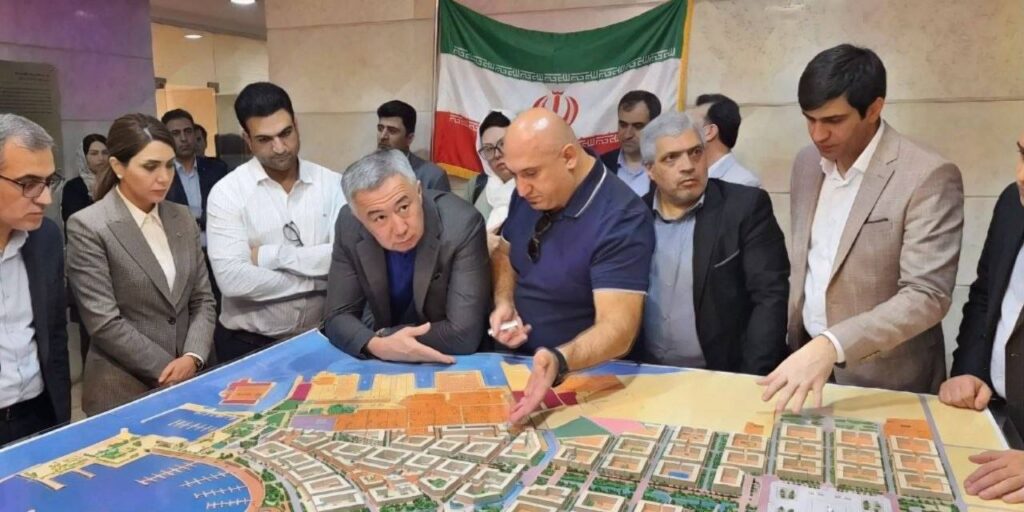
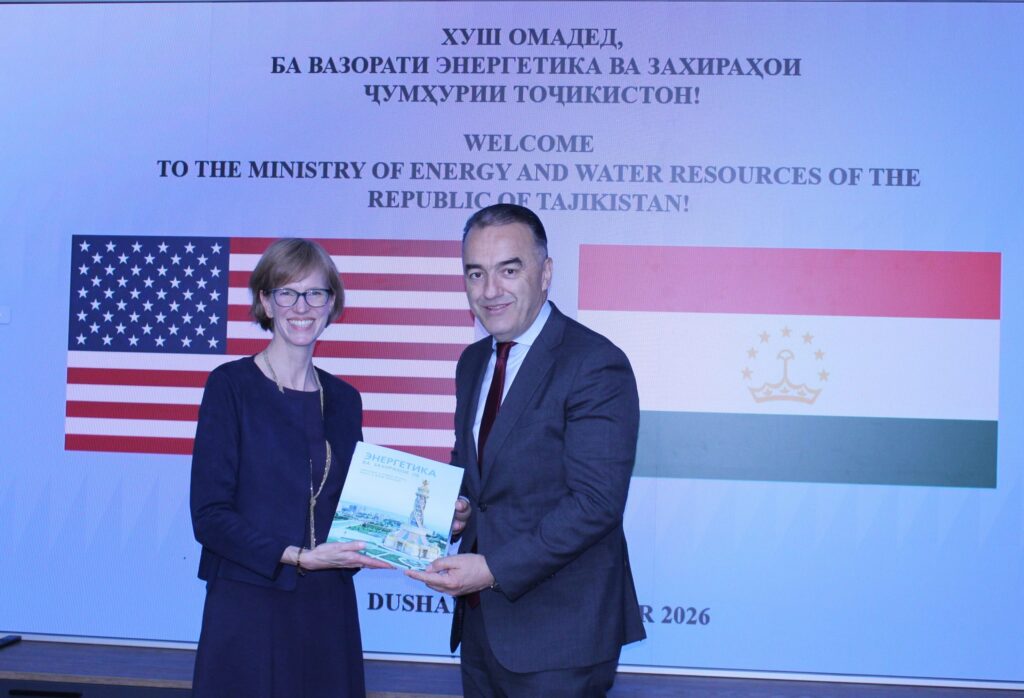
U.S. President Donald Trump has threatened economic consequences for any country that continues to provide support to Iran, promising Tehran “Economic Warfare and Isolation on an unprecedented scale.” Washington has not yet announced specific new measures. For Central Asia, the warning comes as economic and transport links with Iran are developing. Kazakhstan is building its own terminal at Iran’s largest port, Tajikistan is discussing fuel purchases and new transport routes, Uzbekistan is trying to protect trade that passes through Iran, and Turkmenistan is expanding transport and energy cooperation with Tehran. Each country has its own reasons for developing these ties, but they share one concern: for landlocked Central Asia, Iran provides one of the few overland routes to the Persian Gulf and the Indian Ocean. Washington’s attempt to tighten Iran’s economic isolation therefore affects not only the region’s relations with Tehran, but also its own plans to diversify trade and transit. None of this means that Central Asian governments are prepared to disregard U.S. sanctions or enter into a political confrontation with Washington on Tehran’s behalf. The threat of secondary restrictions could cause banks, carriers, and private companies to withdraw from individual transactions even without formal decisions by their governments. Trump has not yet explained exactly what instruments he intends to use to enforce the isolation he announced. Kazakhstan Looks to the Persian Gulf Iran intensified its work with Central Asia well before Trump’s latest threat. In mid-June, the Iranian Minister of Roads and Urban Development Farzaneh Sadegh visited Astana. In talks with Kazakhstan’s Deputy Prime Minister Serik Zhumangarin, the two sides noted that bilateral trade had increased by 26.4% in 2025 to $430.2 million. Astana and Tehran now want to raise it to $3 billion, using, among other things, the free trade agreement between Iran and the Eurasian Economic Union, of which Kazakhstan is a member. The plans go beyond trade. Freight traffic along the International North-South Transport Corridor, which links Russia and Central Asia with Iran and Persian Gulf ports, rose by 12% in 2025 to 3.5 million metric tons. Rail freight between Kazakhstan and Iran also increased by 69%. Astana’s main interest lies even farther south. Iran has allowed Kazakhstan to establish its own transport and logistics terminal at Shahid Rajaee in Bandar Abbas, the country’s largest commercial port. On June 28, the two sides signed a Build-Operate-Transfer agreement. It runs for 27 years, with two years allocated for construction and another 25 for operation. Commercial operations are scheduled to begin in the project’s third year. For Kazakhstan, this is more than simply an overseas terminal. Its Foreign Ministry explicitly links the project to opening access for Kazakh cargo to markets in the Persian Gulf, South and Southeast Asia, and East Africa. In July, Foreign Minister Yermek Kosherbayev again reaffirmed Astana’s interest in the project during a visit to Iran. The ministry also cited a 26.4% increase in bilateral trade in 2025 to $430.2 million. Astana is also considering another Iranian port, Chabahar, on the Indian Ocean....

U.S. Sanctions Uzbek Citizen Over Alleged Cybercrime Links

The U.S. Department of the Treasury’s Office of Foreign Assets Control (OFAC) has imposed sanctions on an Uzbek citizen over alleged involvement in cybercrime activities linked to Russian actors, according to an official press release published on the agency’s website. OFAC reported that Azizjon Mamashoyev, a citizen of Uzbekistan born in 1987, was added to the sanctions list under regulations related to Russia-linked activities. U.S. authorities allege that he participated in cyber operations and maintained connections with individuals suspected of conducting malicious cyber activities. The announcement included identifying details, listing Mamashoyev’s date of birth as February 20, 1987, and confirming his Uzbek nationality. The designation was issued under the Ukraine-/Russia-Related Sanctions Regulations and forms part of measures targeting cyber-enabled threats. According to OFAC, Mamashoyev is linked to Sergey Zelenyuk, who has also been associated with cybercrime investigations. The sanctions were introduced pursuant to authorities under the Countering America’s Adversaries Through Sanctions Act (CAATSA) and a cyber-related sanctions program identified as CYBER4. The U.S. Treasury also designated Advance Security Solutions, a company reportedly connected to Mamashoyev. The firm, described as operating in computer programming, is registered in Dubai’s Jumeirah Living Marina Gate area and also lists operations in Tashkent. U.S. officials stated that the company was established in 2025 and may have engaged in activities posing secondary sanctions risks. Under OFAC sanctions, designated individuals and entities are generally subject to asset freezes within U.S. jurisdiction, and U.S. persons are typically prohibited from engaging in transactions with them.

U.S. Waiver of Sanctions on Iran’s Chabahar Port is Good News for Central Asia

U.S. sanctions on Iran’s Chabahar Port on the Gulf of Oman have been on again/off again since 2013, when the U.S. Congress passed the Iran Freedom and Counter-Proliferation Act (IFCA) to curb Iran’s regional influence and strategic capabilities through targeted economic pressure, aka sanctions. In the decade following IFCA’s passage, Washington’s sanctions on Chabahar had a negative impact on Central Asia, largely by complicating its efforts to deepen economic ties with South Asia and the Gulf. But geopolitics are shifting. Washington is increasing its involvement in Central Asia and India, and is doing the same in Afghanistan. These factors may well induce the U.S. Department of State to keep the waiver in place. Washington first waived its sanctions on Chabahar in 2018—a strategic move to support India's role in Afghanistan's post-war development and to provide a crucial trade route for that landlocked country. Six years later, India's Indian Ports Global Limited secured a 10-year deal with Iran to manage Chabahar port, in part, to offset Pakistan’s Gwadar port at the end of the China-Pakistan Economic Corridor, a mere 100 miles from Chabahar. For all the fanfare, Central Asia held little real priority in Washington in those years. Seven years later, the U.S. changed course. It announced on September 16, 2025, much to Central Asia’s surprise and concern, that “the State Department has revoked the sanctions exception issued in 2018 under the IFCA”, making individuals involved in Iran’s Chabahar port operations subject to penalties, resulting in another snag in Central Asia’s desire for a southern breakout route. And then, in a swift reversal, the U.S. restored India’s sanctions waiver some six weeks later, on October 30. Whatever might explain the sudden change, Central Asia breathed a sigh of relief, and, by all accounts, now feels confident that the waiver will be evergreened. Time will tell if this confidence is justified. The U.S. waiver enables India to work to enhance Chabahar’s infrastructure and functionality, offering Central Asian exporters a more direct and profitable trade route than those via China, Russia, or the Middle Corridor, which stretches from East Asia to Europe via Kazakhstan, the Caspian Sea, Azerbaijan, Georgia, and Türkiye. As a result, goods like minerals, cotton, and energy products can reach regional and global markets faster. Central Asian capitals are quietly reveling in Washington’s flexible realpolitik in the face of convulsive U.S.-Iranian relations and heated Indo-Pakistan tensions. Without fear of punitive measures, India can now continue its work at Chabahar.  To be sure, the waiver affirms India’s rising global presence and accelerates New Delhi’s drive into Central Asia, including Afghanistan. Washington’s decision signaled to traders, investors, and think tankers that it has no intention of spoiling India’s export ambitions and Central Asia’s desire for north-south economic integration. The waiver shows Washington’s pragmatism—and is welcomed by those who have little or no use for Washington’s penchant for foreign policy moralism. Chabahar Port complements not only the Trans-Caspian corridor—a multimodal trade route connecting Asia and Europe by linking China to Europe through Central...

Lukoil ‘Garage Sale’ – Uzbekistan Bows Out, Kazakhstan Keeps Its Options Open

The story of the disposal of foreign assets by Lukoil, which has fallen under U.S. sanctions, is reaching its closing stages. A shortlist of potential buyers has already emerged, and in Kazakhstan intrigue remains: will the country’s national oil and gas company capitalise on the opportunity to acquire Lukoil’s shares in major projects? A recent Reuters report noted that potential buyers of Lukoil’s assets face two key complications: first, U.S. firms, such as Carlyle, Chevron, and Exxon, are seen by analysts as more likely to get licensed, meaning deals will only be recognised after proper U.S. licence approval. Second, Lukoil itself had preferred to sell its assets as a package deal rather than piecemeal.  However, after a deal to offload assets to Guvnor collapsed, several analyses now say a full package sale is unlikely and that piecemeal deals are more realistic or even more profitable. A new negotiation deadline has now been set for December 13, 2025, for the completion of authorised transactions.  Kazakhstan-based oil and gas market observer Oleg Chervinsky suggests that this could increase the likelihood of a “twostage process”. “Most likely, a single buyer with sufficient resources will purchase all of Lukoil’s foreign assets at a significant discount, then sell them off in parts,” Chervinsky said. Some media reports point to the U.S. investment firm Carlyle Group as showing interest in Lukoil’s assets. The firm is considered a plausible main buyer due to its former ties to U.S. presidents Bush senior and junior. In this scenario, Carlyle would act both as buyer and organiser of the subsequent 'garage sale' of individual assets. Other firms, such as Chevron Corporation and ExxonMobil, have already been linked in reports with interest in Lukoil’s Kazakh stakes in the Tengiz and Karachaganak oil fields, while Abu Dhabi National Oil Company (ADNOC) has shown interest in Lukoil’s Uzbek gas projects.  Meanwhile, three weeks ago, Uzbekistan made its position clear: it will not participate in the acquisition of Lukoil’s assets. Uzbekneftegaz Chairman Bahodir Sidikov said that "Buying out Lukoil’s assets in Uzbekistan is not on the table right now.”  In Kazakhstan, energy sector experts believe that this moment presents a real window of opportunity to acquire Lukoil’s shares in systemically important oil and gas projects. “Why hasn’t our Ministry of Energy asked: does the Ministry approve changes in the shareholder structure under the terms of the stabilized contracts for Tengiz and Karachaganak? These shares (if a sale takes place) should go to KazMunayGas. If KMG doesn’t have the cash, then the Chinese state-owned CNPC should be brought in. To balance interests, it would be optimal for one of the world’s largest oil corporations to enter Tengiz and Karachaganak,” argues specialist Olzhas Baidildinov. Baidildinov cited a review by Norway’s Rystad Energy estimating that Lukoil’s net cash flow from its Tengiz stake over the next five years will total $2.8 billion, and from Karachaganak $2.1 billion. However, Kazakhstan’s Energy Minister Erlan Akkenzhenov recently stated that the government is not considering a purchase of Lukoil’s shares. At the same time,...

U.S. Eases Sanctions on Key Kazakh Oil Projects

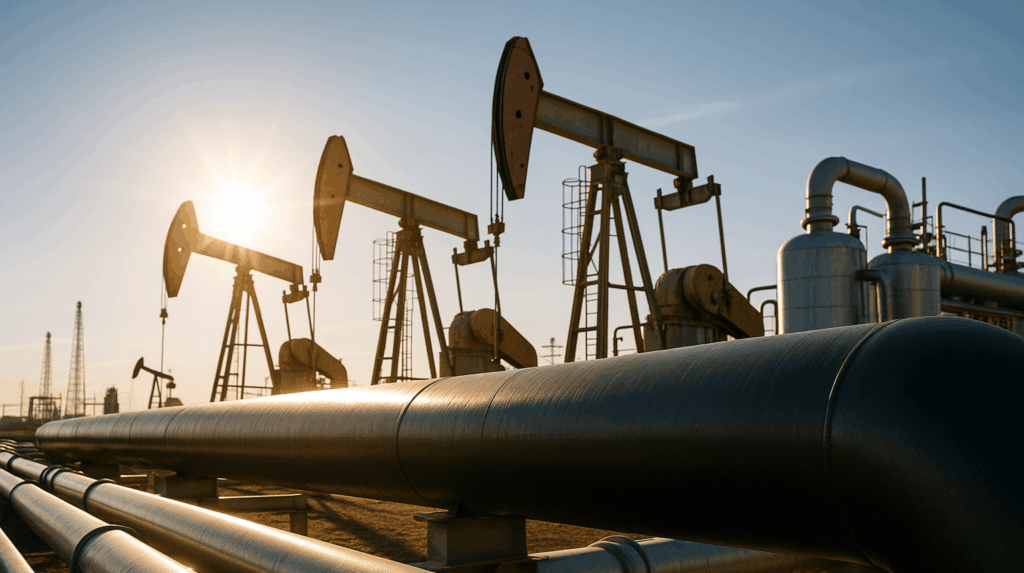
The Caspian Pipeline Consortium (CPC), oil producer Tengizchevroil (TCO), and the Karachaganak field have been granted permission to resume services and conduct transactions related to their operational activities, following a United States Treasury Department decision to ease sanctions. The Tengiz and Karachaganak fields are located in Kazakhstan, and Kazakh oil is exported through the CPC system. In October, the U.S. Treasury added Russian oil giants Lukoil and Rosneft, along with 34 of their subsidiaries, to its latest package of sanctions. However, experts now suggest that the exemption of key projects in Kazakhstan could have a stabilizing effect on the country's oil sector and its broader economy. The U.S. Treasury’s Office of Foreign Assets Control (OFAC) issued General License No. 124B, allowing services and other transactions required to maintain the operations of the CPC, Tengizchevroil, and the Karachaganak project, even when sanctioned entities such as Lukoil and Rosneft are involved. The license does not permit any transactions related to the sale or transfer of shares in these projects. Kazakhstan’s Minister of Energy, Yerlan Akkenzhenov, confirmed on November 12 that the government is working to have the Karachaganak field fully exempt from the U.S. sanctions regime. The CPC system links oil fields in western Kazakhstan and parts of Russia with a marine terminal in Novorossiysk on Russia’s Black Sea coast. It remains the main export route for Kazakh oil, carrying more than 80% of the country’s crude. The system has an annual capacity of about 83 million tons. CPC shareholders include Kazakhstan, holding a combined 20.75% through KazMunayGas (19%) and Kazakhstan Pipeline Ventures LLC (1.75%). Other shareholders include Chevron Caspian Pipeline Consortium Company (15%), Lukoil International GmbH (12.5%), Mobil Caspian Pipeline Company (7.5%), Rosneft-Shell Caspian Ventures Limited (7.5%), BG Overseas Holdings Limited (2%), Eni International N.A. N.V. (2%), and Oryx Caspian Pipeline LLC (1.75%). The Russian government and Transneft also hold significant stakes. Tengizchevroil LLP, the operator of the Tengiz field, is a joint venture between Chevron (50%), ExxonMobil Kazakhstan Ventures Inc. (25%), KazMunayGas (20%), and Lukoil (5%). Tengiz is one of Kazakhstan’s largest oil fields, with reserves estimated at 3.1 billion tons. The Karachaganak field is among the world’s largest, with development carried out by the Karachaganak Petroleum Operating consortium. Shell and Eni serve as joint operators, and the partnership also includes Chevron (18%), Lukoil (13.5%), and KazMunayGas (10%). On November 13, it was reported that KazMunayGas is considering acquiring Lukoil’s stake in the Karachaganak project, reflecting efforts to manage shifting ownership dynamics under the sanctions environment.

How U.S. and EU Sanctions Are Rippling Through Central Asia

Russia’s economy has faced renewed pressure following a fresh round of sanctions imposed this past week by both the European Union and the United States. After abruptly canceling a planned meeting with Vladimir Putin in Budapest, President Donald Trump shifted to a more hardline stance, announcing new sanctions. While these sanctions may not cripple Moscow, they are already having secondary effects on Central Asia, particularly on Kazakhstan’s banking and energy sectors. The EU's 19th sanctions package, adopted on October 22, introduces a phased ban on Russian liquefied natural gas (LNG). According to Reuters, short-term contracts will be terminated within six months, while long-term contracts are to expire by January 1, 2027. The package also includes a total ban on transactions with Russian oil giants Rosneft and Gazprom Neft, an expanded blacklist of so-called "shadow fleet" vessels, and sanctions against 45 companies in Russia and third countries supplying military-related technologies. Of growing concern in Central Asia is the inclusion of several regional financial institutions in the EU's sanctions list. These include the Kazakh branch of Russia’s VTB Bank, Kyrgyz banks Tolubai and Eurasian Savings Bank, and Tajik banks Dushanbe City Bank, Kommertsbank of Tajikistan, and Spitamen. These restrictions are scheduled to take effect between November and December 2025. Both Kyrgyzstan’s President Sadyr Japarov and the nation's Foreign Ministry have publicly expressed dismay over the sanctions, with Japarov urging Western leaders to stop “politicizing the economy.” In his speech at the UN General Assembly in New York in September, Japarov criticized the impact of unilateral sanctions, while the Foreign Ministry has stated that the country adheres to its international obligations and maintains an open dialogue with the EU to prevent risks associated with possible sanctions circumvention. The ministry has proposed launching an independent, internationally recognized audit and forming a joint “Kyrgyzstan-European Union” technical working group to facilitate data exchange, transaction monitoring, and risk assessments. In Kazakhstan, the National Bank downplayed the impact of sanctions against VTB. Deputy Chairman Yerulan Zhamaubayev noted that the bank had already been under nominal restrictions, and handles few transactions. “VTB does not affect the country’s financial stability, and we do not expect serious risks for the economy,” Zhamaubayev stated. However, the latest U.S. sanctions may prove more consequential for Kazakhstan, particularly amid efforts to strengthen bilateral trade with the United States, including through the repeal of the Jackson-Vanik amendment. The U.S. Treasury Department has sanctioned Russian oil majors Rosneft and Lukoil. The latter has deep economic ties with Kazakhstan. Just days before the announcement, on October 14, President Kassym-Jomart Tokayev personally attended the 30th anniversary of Lukoil’s operations in Kazakhstan, awarding CEO Vagit Alekperov the Order of Barys, first class. Oil and gas journalist Oleg Chervinsky reported that the joint venture Kalamkas-Khazar Operating LLP, co-owned by Lukoil and KazMunayGas, is directly affected. “Only the Tengiz and CPC projects, which Lukoil operates with American partners, have been exempted from the sanctions,” Chervinsky noted. A final investment decision for Kalamkas-Khazar was expected in December 2025. Yerkanat Abeni, a member of...