• KZT/USD = 0.00218
  • TJS/USD = 0.10800
  • UZS/USD = 0.00008
  • TMT/USD = 0.29850
  • KZT/USD = 0.00218
  • TJS/USD = 0.10800
  • UZS/USD = 0.00008
  • TMT/USD = 0.29850
  • KZT/USD = 0.00218
  • TJS/USD = 0.10800
  • UZS/USD = 0.00008
  • TMT/USD = 0.29850
  • KZT/USD = 0.00218
  • TJS/USD = 0.10800
  • UZS/USD = 0.00008
  • TMT/USD = 0.29850
  • KZT/USD = 0.00218
  • TJS/USD = 0.10800
  • UZS/USD = 0.00008
  • TMT/USD = 0.29850
  • KZT/USD = 0.00218
  • TJS/USD = 0.10800
  • UZS/USD = 0.00008
  • TMT/USD = 0.29850
  • KZT/USD = 0.00218
  • TJS/USD = 0.10800
  • UZS/USD = 0.00008
  • TMT/USD = 0.29850
  • KZT/USD = 0.00218
  • TJS/USD = 0.10800
  • UZS/USD = 0.00008
  • TMT/USD = 0.29850
28 November 2026

Viewing results 1 - 6 of 2

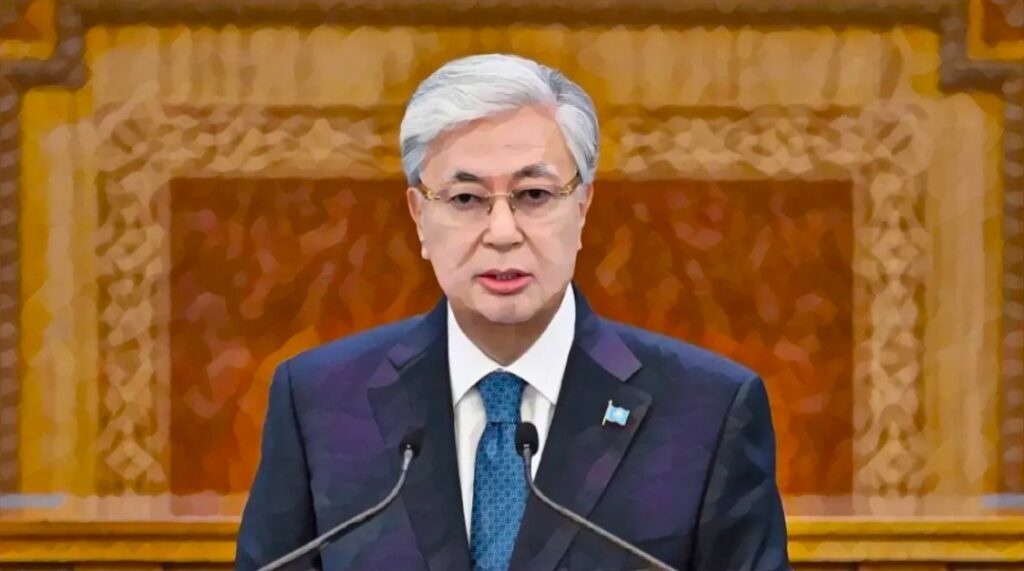
Tokayev Names 33-Member Panel to Advise on Kazakhstan’s Development Strategy

President Kassym-Jomart Tokayev has appointed a 33-member expert group to advise him on Kazakhstan’s long-term development priorities. Under the November 23 order, the group will assess development strategies and review research on social trends and possible future scenarios. Vice President Erlan Karin will chair the group. His deputies are Aida Balayeva, deputy chair of Kazakhstan’s Security Council, and Aset Irgaliyev, a presidential adviser who heads the Agency for Strategic Planning and Reforms. Minister of Science and Higher Education Sayasat Nurbek sits on the group alongside members of the People’s Council of Kazakhstan and lawmakers from the Kurultai, the national parliament. The group also draws on expertise outside government, with seats for independent experts, heads of public opinion research centers, economic analysts, political scientists, and business executives. The Kazakhstan Institute for Strategic Studies under the President of the Republic of Kazakhstan will coordinate the group’s work. Members will meet at least once a month and may invite government officials, researchers, representatives of business and civil society, and other specialists to attend. In a November 23 Telegram post, Aidos Sarym, a Kurultai lawmaker who sits on the group, linked its creation to Tokayev’s October 28 address to the nation. Tokayev called for a critical review of national plans and strategies as Kazakhstan entered what he described as a new period in its history. He gave his administration and Irgaliyev’s agency a year to draw up a document setting out the country’s long-term priorities. “I would like to emphasize that developing a comprehensive national development strategy is not the exclusive responsibility of this expert group. No one intends to shut themselves away in ivory towers and make decisions on behalf of society. Rather, the experts will need to gather a wide range of opinions, expert assessments, proposals, and ideas developed by different groups and institutions across society, and try to bring them together into a coherent framework that will form the basis of a major strategic document,” Sarym wrote. Members, he added, “should become ambassadors who will engage with a wide range of groups and segments of society, particularly expert communities at the national, sectoral, and regional levels.” He proposed an online platform for public submissions and said the group could hold its first meeting that week. Fellow Kurultai lawmaker Nikita Shatalov wrote that Kazakhstan’s earlier strategies had “a planning horizon spanning decades,” but officials drew them up behind closed doors. He expects the new strategy to look just as far ahead, with public input from the outset. “This is inherent in the very structure of the group. Its responsibilities are defined not in terms of preparing a final text, but in terms of developing approaches through expert analysis and discussing the findings of analytical, sociological, and foresight studies – in other words, data on how citizens themselves envision the future and which scenarios are realistic for the country.” “Strategy ceases to be the product of a narrow circle of officials and becomes the subject of regular professional and public discussion, with others...


Kazakhstan Prepares New Visa System for Migrant Workers and Investors

Kazakhstan is preparing to introduce a differentiated visa system for foreign workers and investors as authorities seek to attract highly skilled specialists while tightening oversight of labor migration. The new migration model was presented by Yerbol Tuyakbayev, first vice minister of labor and social protection during a roundtable discussion at the Center for Labor Resources Development. According to Tuyakbayev, the government plans to divide foreign nationals coming to Kazakhstan for work into four categories: business immigrants, highly qualified specialists, mid-level skilled workers, and labor migrants hired by private households for domestic work. “Each category will have a separate visa regime based on the purpose of entry, qualification level, and duration of stay,” Tuyakbayev said. A central element of the reform will be the possibility of transitioning from a temporary work or investment visa to long-term resident status. According to officials, holders of such status would gain access to a range of rights and services similar to those available to citizens of Kazakhstan, including tax incentives, financial services, healthcare, and education. Authorities also plan to simplify administrative procedures for foreigners, reduce application processing times, and introduce a “single-window” system. As part of the reform, Kazakhstan plans to launch the QazETA digital platform, which will include an e-Residency module and a separate e-Residency Invest program. The new system will also include the Altyn Visa, or “Golden Visa,” program, aimed at investors, entrepreneurs, and highly qualified specialists. The government expects the initiative to become one of the key tools of Kazakhstan’s new migration policy and to help retain both international talent and investment capital. The Altyn Visa program is expected to launch before the end of 2026. Experts say Kazakhstan is attempting to strengthen its position in the competition for global talent amid worldwide shortages of qualified labor and growing migration mobility across Eurasia. Anna Alshanskaya, head of economic policy analysis at the Kazakhstan Institute for Strategic Studies, said the country has the potential to take a “proactive position” as a regional hub for attracting specialists. The initiative has also received support from the International Organization for Migration. Aliya Belonosova, acting head of the organization’s mission in Kazakhstan, said the new system would create additional opportunities not only for attracting international specialists and investment, but also for preparing Kazakhstan’s youth for the labor market of the future. The migration reform comes amid growing demand for foreign labor in Kazakhstan. The Times of Central Asia previously reported that Chinese citizens currently make up the largest group of migrant workers in the country.