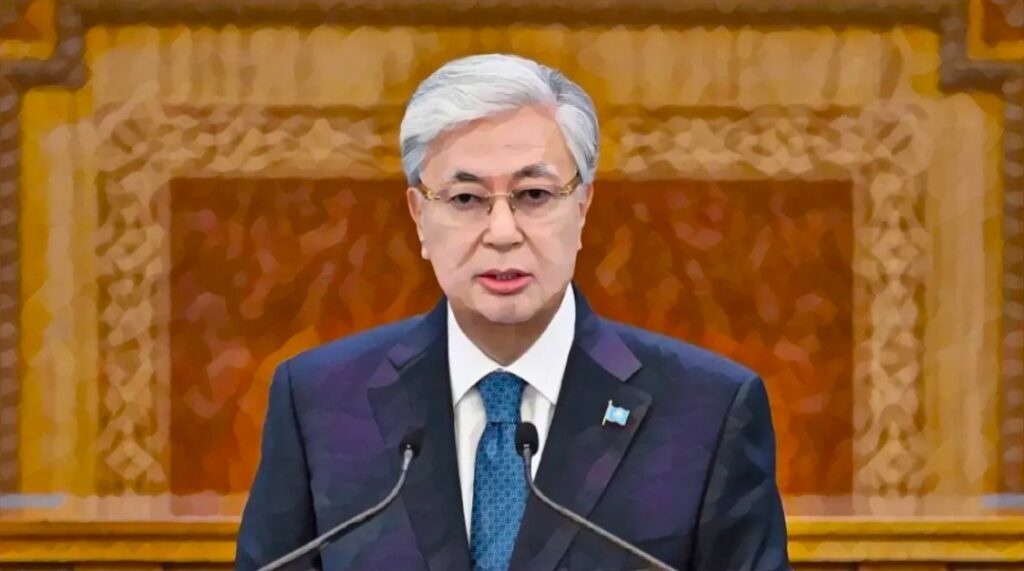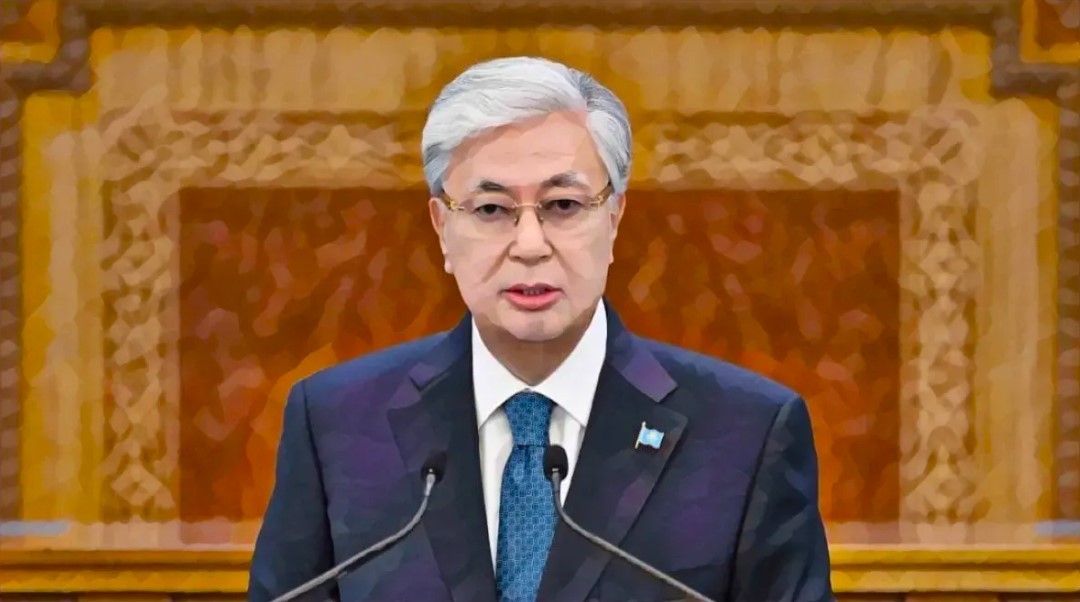
President Kassym-Jomart Tokayev has appointed a 33-member expert group to advise him on Kazakhstan’s long-term development priorities. Under the November 23 order, the group will assess development strategies and review research on social trends and possible future scenarios.
Vice President Erlan Karin will chair the group. His deputies are Aida Balayeva, deputy chair of Kazakhstan’s Security Council, and Aset Irgaliyev, a presidential adviser who heads the Agency for Strategic Planning and Reforms.
Minister of Science and Higher Education Sayasat Nurbek sits on the group alongside members of the People’s Council of Kazakhstan and lawmakers from the Kurultai, the national parliament. The group also draws on expertise outside government, with seats for independent experts, heads of public opinion research centers, economic analysts, political scientists, and business executives.
The Kazakhstan Institute for Strategic Studies under the President of the Republic of Kazakhstan will coordinate the group’s work. Members will meet at least once a month and may invite government officials, researchers, representatives of business and civil society, and other specialists to attend.
In a November 23 Telegram post, Aidos Sarym, a Kurultai lawmaker who sits on the group, linked its creation to Tokayev’s October 28 address to the nation. Tokayev called for a critical review of national plans and strategies as Kazakhstan entered what he described as a new period in its history. He gave his administration and Irgaliyev’s agency a year to draw up a document setting out the country’s long-term priorities.
“I would like to emphasize that developing a comprehensive national development strategy is not the exclusive responsibility of this expert group. No one intends to shut themselves away in ivory towers and make decisions on behalf of society. Rather, the experts will need to gather a wide range of opinions, expert assessments, proposals, and ideas developed by different groups and institutions across society, and try to bring them together into a coherent framework that will form the basis of a major strategic document,” Sarym wrote.
Members, he added, “should become ambassadors who will engage with a wide range of groups and segments of society, particularly expert communities at the national, sectoral, and regional levels.” He proposed an online platform for public submissions and said the group could hold its first meeting that week.
Fellow Kurultai lawmaker Nikita Shatalov wrote that Kazakhstan’s earlier strategies had “a planning horizon spanning decades,” but officials drew them up behind closed doors. He expects the new strategy to look just as far ahead, with public input from the outset.
“This is inherent in the very structure of the group. Its responsibilities are defined not in terms of preparing a final text, but in terms of developing approaches through expert analysis and discussing the findings of analytical, sociological, and foresight studies – in other words, data on how citizens themselves envision the future and which scenarios are realistic for the country.”
“Strategy ceases to be the product of a narrow circle of officials and becomes the subject of regular professional and public discussion, with others becoming co-authors of the document,” he added after describing who could attend the meetings.
“A strategy whose priorities are publicly discussed and whose development involves the business community provides an early indication of where the economy is headed and what rules will govern it. For investors committing capital to the country over the long term, this signals that the country’s long-term course will not be abruptly revised,” Shatalov wrote.
He compared this approach to the drafting of Kazakhstan’s new constitution, describing it as a continuation of Tokayev’s policy of “moving decision-making out of closed offices and into the public sphere.” He argued that greater public participation in strategic planning could offer a model for other countries in Central Asia and the former Soviet Union.
The presidential announcement did not specify whether the group would open its meetings to the public or publish its findings.
Analyst and China scholar Adil Kaukenov offered a comparison with China, where “strategic planning draws on the work of government research centers, universities, and industry experts.”
“Five-year plans are aligned with long-term objectives, and different development scenarios are discussed well before final decisions are made. Of course, this model cannot simply be transplanted to Kazakhstan, but the practice of systematically planning for the future deserves attention,” he wrote.
Kaukenov argued that inviting “specialists from different fields” would allow the group “to take into account not only the government’s agenda but also the practical experience of people working in science, business, and civil society.”
“The most important thing is for the expert group to become a forum for substantive discussions, where alternative scenarios can be explored, risks identified, and concrete solutions proposed. After all, the value of the expert community lies not only in its ability to explain events already unfolding but also in its capacity to anticipate emerging problems. Strategic planning is essential precisely because Kazakhstan needs to do more than react to changes in the world – it needs to determine its own place in the future,” he wrote.