
• KZT/USD = 0.00210
  • TJS/USD = 0.10820
  • UZS/USD = 0.00008
  • TMT/USD = 0.29760
  • KZT/USD = 0.00210
  • TJS/USD = 0.10820
  • UZS/USD = 0.00008
  • TMT/USD = 0.29760
  • KZT/USD = 0.00210
  • TJS/USD = 0.10820
  • UZS/USD = 0.00008
  • TMT/USD = 0.29760
  • KZT/USD = 0.00210
  • TJS/USD = 0.10820
  • UZS/USD = 0.00008
  • TMT/USD = 0.29760
  • KZT/USD = 0.00210
  • TJS/USD = 0.10820
  • UZS/USD = 0.00008
  • TMT/USD = 0.29760
  • KZT/USD = 0.00210
  • TJS/USD = 0.10820
  • UZS/USD = 0.00008
  • TMT/USD = 0.29760
  • KZT/USD = 0.00210
  • TJS/USD = 0.10820
  • UZS/USD = 0.00008
  • TMT/USD = 0.29760
  • KZT/USD = 0.00210
  • TJS/USD = 0.10820
  • UZS/USD = 0.00008
  • TMT/USD = 0.29760

Viewing results 1 - 6 of 2

U.S. Strikes on Iranian Rail and Coastal Infrastructure Put Central Asia’s Southern Routes Under Pressure

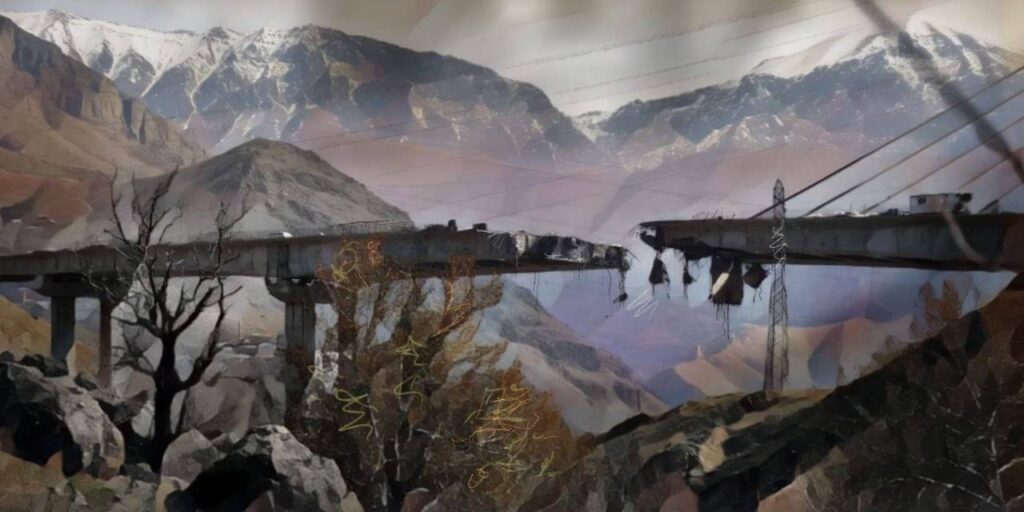
U.S. strikes on Iranian rail and coastal infrastructure have put Central Asia's southern transport plans under new pressure. Kazakhstan and Turkmenistan have spent years building routes through Iran to reach the Persian Gulf, the Gulf of Oman, and markets beyond Russia. Public statements so far do not show a confirmed halt in Central Asian freight, but bridge damage near Iran's border with Turkmenistan and strikes along Iran's southern coast have made the security picture more concrete. Reports and a video posted on July 9 showed damage to the Aq Taqeh Khan railway bridge, on Iran's rail link to Turkmenistan and Kazakhstan, after overnight U.S. strikes. Reuters said it verified the location by matching the bridge, riverbank, road, fields, and nearby town with satellite imagery, and found no earlier versions of the video online. Iran's Revolutionary Guard-linked Neynava Corps in Golestan said the area around the Aq Taqeh Khan railway bridge in Aq Qala County was targeted by U.S. cruise missiles early on July 9, with no casualties reported. The bridge sits on the Gorgan-Incheh Borun railway line, which reaches the Incheh Borun border crossing with Turkmenistan and links onward to Kazakhstan. Head of the Islamic Republic of Iran Railways, Jabar-Ali Zakeri, said engineers had rebuilt one damaged track on the Mashhad route and returned it to service in less than 15 hours, according to Fars News Agency. He said work on a second damaged line was continuing and was expected to finish within hours. That statement concerned the Mashhad route, however, and does not confirm the status of the Gorgan-Incheh Borun line. The route sits inside a wider transport effort that Kazakhstan, Turkmenistan, Iran, China, and Russia have all tried to expand. TCA has previously reported on a 2024 test container train on the China-Kazakhstan-Turkmenistan-Iran route, which ran from Xi'an to Tehran. It carried 45 forty-foot containers loaded with auto parts and cut the China-Iran delivery time to 15 days. The Gorgan-Incheh Borun railroad was inaugurated in December 2014, linking Iran to Turkmenistan and Kazakhstan along the eastern side of the Caspian Sea. The wider Uzen-Bereket-Gorgan route runs for more than 900 kilometers from western Kazakhstan through Turkmenistan into northern Iran. It connects Kazakhstan and Turkmenistan’s rail networks to Iran’s system and onward to the Persian Gulf and Asian markets. The U.S. military has framed the latest strikes as a response to Iranian attacks on commercial shipping. U.S. Central Command said on July 8 that its forces had struck about 90 Iranian military targets, including air defense systems, coastal surveillance assets, missile and drone storage sites, naval capabilities, and military logistics infrastructure along Iran's coastline. CENTCOM said the operation was designed “to further degrade Iran's ability to attack commercial shipping and innocent civilian mariners in the Strait of Hormuz.” The coastal security picture also impacts Kazakhstan through Shahid Rajaee Port in Bandar Abbas. On June 28, Kazakhstan and Iran signed a 27-year Build-Operate-Transfer agreement for a Kazakh transport and logistics terminal there. The Kazakh embassy in Tehran said the deal...

Iran’s Solico Group to Build Major Cheese Plant in Kazakhstan

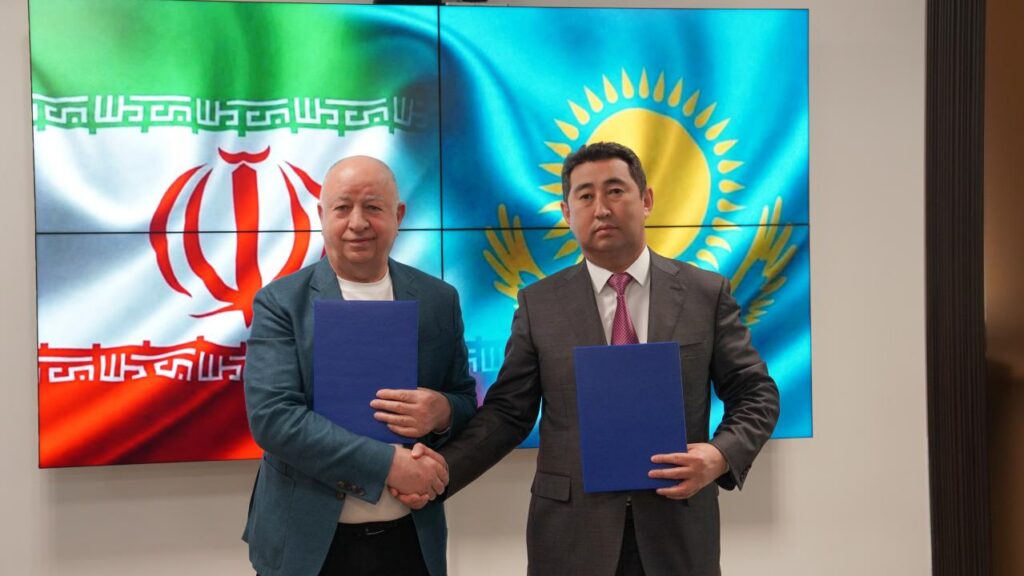
Iranian food conglomerate Solico Group will build a large cheese production plant in Kazakhstan’s Almaty region, marking a major step in the country’s efforts to expand value-added agricultural processing. Kazakhstan's Agriculture Minister Aidarbek Saparov and Solico Group President Gholam Ali Soleimani signed the investment agreement for the project, which will focus on deep milk processing and industrial-scale cheese production. The plant will have an annual production capacity of 155,000 tons of cheese, with total investment estimated at 35.2 billion tenge, or roughly $70 million, according to Kazakhstan’s Ministry of Agriculture. Construction work has already begun at the site in the Almaty region, and the plant is expected to be completed and commissioned in 2029. Saparov said attracting strategic investors into agricultural processing remains one of Kazakhstan’s key economic priorities. “President Kassym-Jomart Tokayev has tasked the government with increasing the share of processed agricultural products and developing industries with higher added value,” Saparov said. “Kazakhstan’s dairy sector has significant growth potential. In 2025, domestic production of cheese and cottage cheese increased by 13.1%. This project will significantly expand the country’s processing capacity and create a guaranteed market for local milk producers.” He added that the government was ready to provide comprehensive support for investors in priority sectors of the economy. Soleimani described Kazakhstan as a promising regional hub for food production and said the company was considering additional investments beyond the cheese factory. “We view Kazakhstan not just as a site for a single project, but as a long-term strategic partner. The country has strong agricultural potential, a favorable geographic location, and an attractive investment climate. Alongside the cheese plant, we are also exploring projects in potato processing and baby food production.” The agreement includes a broad package of state incentives, including the provision of engineering infrastructure for the production site. Under the terms of the agreement, Solico Group will create at least 400 permanent jobs, provide training for Kazakhstani specialists, and transfer modern industrial technologies and expertise. The company also plans to allocate about 50 million tenge annually from 2028 to 2038 for social initiatives and support for local communities in the Almaty region. The agreement adds to a series of recent Kazakhstan-Iran trade initiatives. As previously reported by The Times of Central Asia, Astana and Tehran said late last year that they aimed to triple bilateral trade to $1 billion in the coming years. Although some joint Kazakhstan-Iran projects were frozen earlier this year because of military conflict in Iran, economic cooperation appears to be recovering. In May 2026, Kazakhstani vegetable oil producers opened a new export route to Iran via the Caspian Sea.