• KGS/USD = 0.01144 0%
  • KZT/USD = 0.00215 0%
  • TJS/USD = 0.10456 0%
  • UZS/USD = 0.00008 0%
  • TMT/USD = 0.28490 0%
  • KGS/USD = 0.01144 0%
  • KZT/USD = 0.00215 0%
  • TJS/USD = 0.10456 0%
  • UZS/USD = 0.00008 0%
  • TMT/USD = 0.28490 0%
  • KGS/USD = 0.01144 0%
  • KZT/USD = 0.00215 0%
  • TJS/USD = 0.10456 0%
  • UZS/USD = 0.00008 0%
  • TMT/USD = 0.28490 0%
  • KGS/USD = 0.01144 0%
  • KZT/USD = 0.00215 0%
  • TJS/USD = 0.10456 0%
  • UZS/USD = 0.00008 0%
  • TMT/USD = 0.28490 0%
  • KGS/USD = 0.01144 0%
  • KZT/USD = 0.00215 0%
  • TJS/USD = 0.10456 0%
  • UZS/USD = 0.00008 0%
  • TMT/USD = 0.28490 0%
  • KGS/USD = 0.01144 0%
  • KZT/USD = 0.00215 0%
  • TJS/USD = 0.10456 0%
  • UZS/USD = 0.00008 0%
  • TMT/USD = 0.28490 0%
  • KGS/USD = 0.01144 0%
  • KZT/USD = 0.00215 0%
  • TJS/USD = 0.10456 0%
  • UZS/USD = 0.00008 0%
  • TMT/USD = 0.28490 0%
  • KGS/USD = 0.01144 0%
  • KZT/USD = 0.00215 0%
  • TJS/USD = 0.10456 0%
  • UZS/USD = 0.00008 0%
  • TMT/USD = 0.28490 0%

Viewing results 1 - 6 of 17

Actor Rauan Akhmedov on Cinema in Kazakhstan and Why He Has No Interest in Hollywood

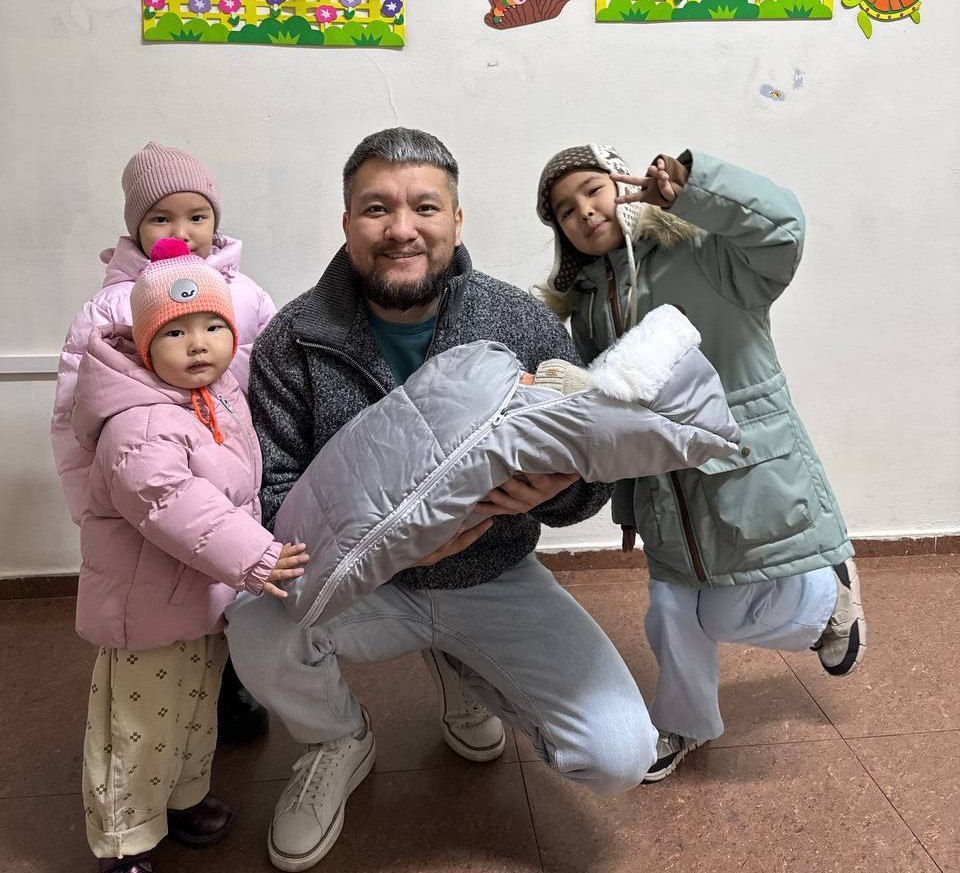
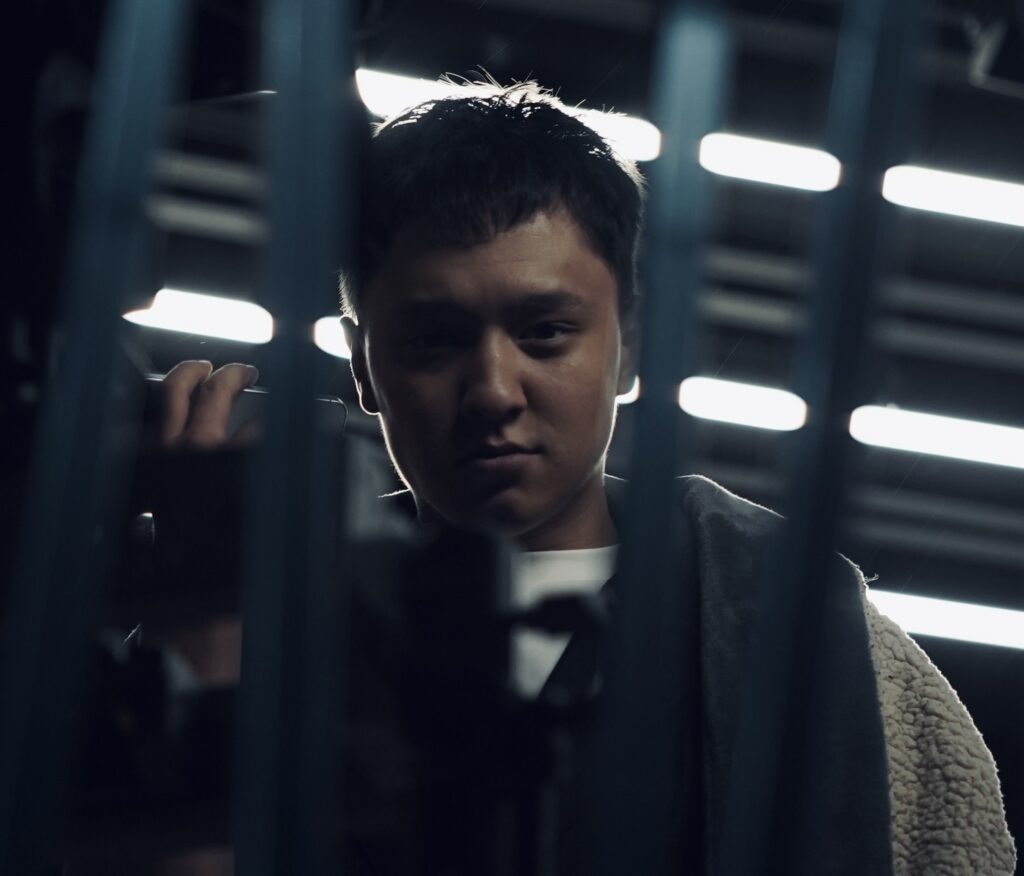
Rauan Akhmedov is one of Kazakhstan’s most sought-after young actors. Despite his rapidly rising career and growing international interest in Kazakh cinema, the 22-year-old says his priority is to continue developing within the domestic industry. In an interview with The Times of Central Asia, he discusses the state of cinema in Kazakhstan, the role of personal experience in his acting, and why tradition and modernity are not mutually exclusive. TCA: Your breakthrough came with Black Yard, directed by Dias Bertis. Is it true he noticed you while you were filming a small cameo in the series The Player? Rauan: Yes. I came to the audition, and we were rehearsing a scene with another candidate, I think he was reading for a doctor. We weren’t getting it right, so at some point the director stepped away. I then suggested to my scene partner that we try a different approach. Dias overheard us, came over, and said, “Switch roles.” We did, and he decided I should take the part. Apparently, he liked my performance, and later he invited me to Black Yard. TCA: You have three films coming out this spring. Is the Kazakhstani film industry becoming overcrowded? Do you feel the urge to work abroad? Rauan: Not yet. I want to follow my own path and realize my potential here. I believe Kazakhstani cinema can reach a very high level. I don’t dream about Hollywood. If I ever end up there, I want it to be through a Kazakhstani project. It’s important for me to stay at home, the language, the culture, the people. I want to grow here and contribute to the development of cinema in my country. Especially as audiences abroad are beginning to take an interest in our films. We haven’t conquered the world yet, but we’re improving all the time. Kazakhstan has strong potential. TCA: Would you describe yourself as a patriot? Rauan: Yes. I respect our filmmakers. When someone succeeds, when a film performs well at the box office, I’m genuinely pleased, even if it’s not my project. I think that once we overcome internal divisions and start supporting one another, we can achieve a great deal. TCA: Many films are now being shot in the Kazakh language. Does that give Kazakh-speaking actors a competitive advantage? Rauan: Probably. But in my view, that’s natural. Every country produces films in its own language. We are Kazakhs, who else will make films in Kazakh? At the same time, I respect all languages, Russian, English, Chinese. The more languages you know, the broader your perspective. TCA: You often portray characters from the 1990s, even though you were born in the 2000s. How do you research that period? Rauan: Partly through my parents. But it’s not that long ago, you can find a lot online, and I experienced some of it myself. For example, we had a rotary phone at home. We often used a VCR to watch home videos, family celebrations, my parents’ wedding. I saw how young they...

Kazakhstani Cinema at a Turning Point: Screenwriter Sergey Litovchenko Discusses the Industry

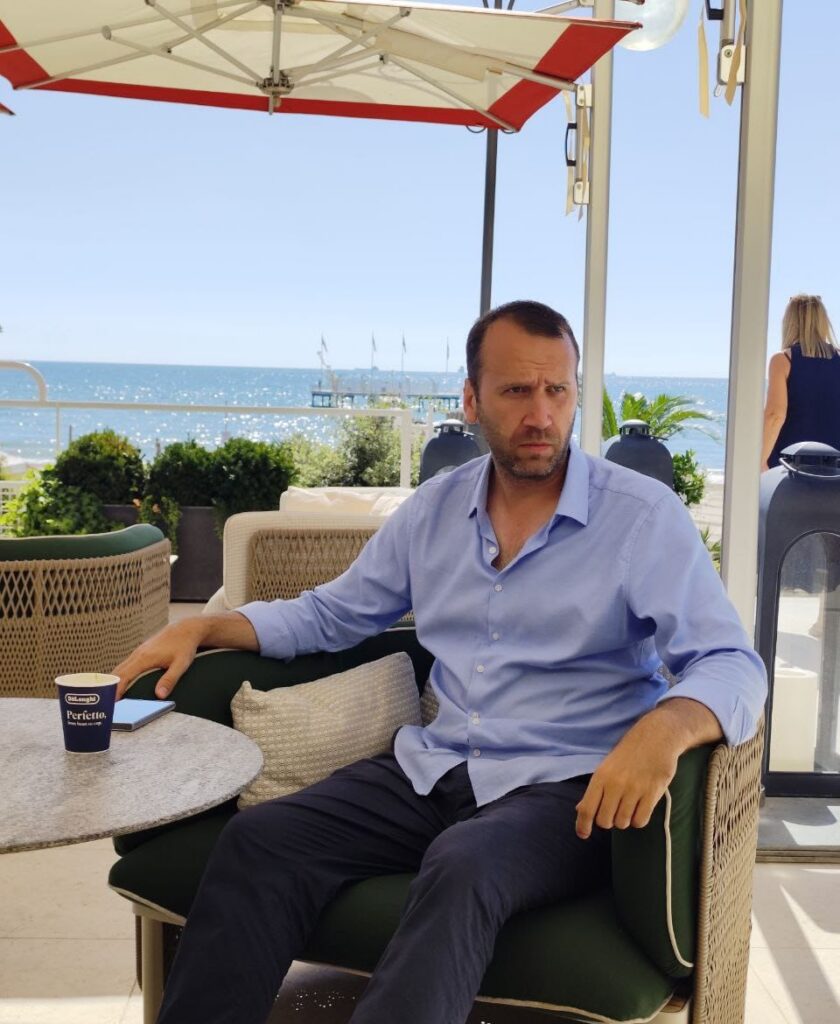
Kazakhstani cinema may be entering a “golden age.” Kazakh films are increasingly appearing at international festivals, while television series are reaching major global streaming platforms and attracting millions of viewers. Yet the country has not broken through at the Oscars, and the reasons go beyond funding. Screenwriter and creative producer Sergey Litovchenko discusses the changes and challenges shaping the industry, why the pandemic unexpectedly benefited Kazakhstani cinema, and which projects he considers the most significant milestones to date. TCA: Sergey, the Oscars have just taken place. Will Kazakhstan ever win an Oscar? And when might that happen? Sergey: Our industry is developing rapidly, with the pace increasing every year. I believe we are close to that moment. However, it will probably come sooner in the short-film category. Although it may seem like an unattainable goal, that is not the case. Look at Brazil, for example, which has been prominent in the Oscar race for the second year in a row. Last year, the film I’m Still Here received three nominations and won an Oscar for Best International Feature Film. This year, Brazilian entries have already secured four nominations, including Best Picture. So anything is possible. At present, the main factor holding us back is technical capacity. TCA: The relatively low-budget film Sentimental Value won Best International Feature Film this year. Is technical prowess really the most important factor? Sergey: It is technically very well made. We should also remember that it participated in a major festival and featured Hollywood star Elle Fanning. The reason I mentioned the Brazilian example is that Brazilian cinema is not widely known to mass audiences, yet the technical quality and acting impressed me. It is clear they have the time and resources to prepare thoroughly for filming. For Kazakhstan, the situation is more complex. We often operate in a “we should have filmed this yesterday” mode. The only film to reach not just the shortlist but the nominations was Sergei Bodrov’s Mongol. It is a masterpiece of technical craftsmanship. Its $17 million budget is evident on screen. It is not only technically accomplished, but also a strong film artistically. There have been other worthy candidates: Sergei Dvortsevoy’s Aika and Tulpan, Yermek Tursunov’s Kelin, and Askhat Kuchinchirekov’s Bauryna Salu. All are high-level works. But for a major breakthrough, we need stronger production capacity. TCA: Is this primarily a question of money? Sergey: Not always. I often hear filmmakers say, “Give us a budget and we will make it happen.” I ask them how much they need, a billion? Two? Asghar Farhadi shot A Separation for $400,000. Andrey Zvyagintsev filmed The Return for about $300,000. So it is not only about money. Nor is it about casting, we have many talented people. To create a breakthrough film, you need not only a profound story but also extensive preparation and a certain uncompromising attitude, in a positive sense. In Kazakhstan, however, we often adapt films to circumstances. If the weather is unsuitable, we proceed anyway. If the actor...

From VHS Tapes to Cannes and the Academy: Kazakh Cinematographer Yerkinbek Ptyraliyev on His Craft

Kazakh cinematographer Yerkinbek Ptyraliyev has built an international reputation through his collaborations with director Adilkhan Yerzhanov. Their film The Masters, released in 2014, was selected for the Cannes Film Festival and later screened at major festivals in Venice, Berlin, and other international venues. In 2024, Ptyraliyev became the first Kazakh cinematographer invited to join the Academy of Motion Picture Arts and Sciences. In an interview with The Times of Central Asia, he spoke about the role of a cinematographer, the technical challenges of filming night scenes in the steppe, and why the Kazakh school of cinematography is increasingly recognized as a distinct brand. TCA: You recently returned from the Berlin International Film Festival, where your team’s new film, Adilkhan Yerzhanov’s Turghaud, was screened. What are your impressions? Yerkinbek: Very positive. Our film was received very warmly. There was an engaging discussion after the screening, and it is always valuable to receive immediate feedback rather than hearing reactions later. We sat in the theater and listened to what the audience was saying. It was especially interesting to hear their interpretations. There were many different perspectives. TCA: Does the perception of foreign audiences differ significantly from that of Kazakh audiences? When I watched the film, it seemed primarily aimed at a domestic audience. Yerkinbek: I think every filmmaker wants their work to be seen everywhere. I am convinced that cinema has no borders. This year, the Golden Bear at the Berlinale went to a Turkish film, a movie entirely in Turkish, about Turks and Turkey, but shot in Berlin. That did not prevent it from winning. Language and national context are not limitations; on the contrary, they are resources. We need to support them both in everyday life and in cinema. Adilkhan’s films are universal precisely because he speaks about issues that matter to any modern person. That is why they resonate beyond our own country. TCA: I remember receiving accreditation for the Cannes Film Festival as a journalist when Adilkhan Yerzhanov was invited there for the first time with the film The Hosts, which you shot. Did that open the door to major cinema for you? Yerkinbek: Absolutely. It was my debut film and such an immediate success. After that project, foreign directors began to notice me. For example, I started receiving invitations to work in Turkey, where I shot two contemporary dramas. The first passed relatively quietly, but the second attracted significant attention from Turkish audiences. It was directed by Nazif Tun. Until then, he had spent his career making television films and series, but that project was his feature-film debut. I watched his previous work, it was very close to cinematic language, even though he himself insisted it was television rather than cinema. TCA: Did you ever consider moving to Turkey? The market there is still larger than ours. Yerkinbek: No. In recent years I have not even had the opportunity to go there. First, the timing has not worked out. Second, not every story resonates with me. So far,...

Kazakhstan-Based Actor Nyshanbek Zhubanaev on His Journey, Faith, and the Future of Cinema

Nyshanbek Zhubanaev is a professional actor, a graduate of the T.K. Zhurgenov Kazakh National Academy of Arts, and a rising star of series such as Sheker, 1286, and Munai. His path into acting, however, did not begin with red carpets or casting calls, but at a phosphorus plant. Taking a leap of faith to escape a life he describes as scripted by others, Zhubanaev pursued his childhood dream with persistence and conviction. In an interview with The Times of Central Asia, he reflects on his first steps in cinema, the role of faith, inner conflict, and why, for him, humanity matters more than talent. TCA: Your popularity came with the web series Sheker 2, 1286, and Munai. Two of them are set in the 1990s. Why do you think this decade continues to fascinate directors? Zhubanaev: It was a time of contrasts and complexity. When people say Munai romanticizes crime, I feel they’ve missed the point. It’s not about crime, it’s about the clash of personalities and how the oil business emerged in our country. The 90s serve as a backdrop. And in cinema, atmosphere is half the battle. As an actor, I want to be part of projects where that atmosphere is palpable. Whether it’s the 90s or another era doesn't matter. What matters is telling strong, vivid stories. TCA: What themes do you feel are missing in Kazakh cinema today? Zhubanaev: Our cinema is still developing, and there’s so much left to explore. People often say we lack films about love and relationships. We do have them, but not the kind you want to talk about seriously. And love is one of the hardest topics to portray, it leaves you no room to hide behind genre, action, or style. It demands talent. I read a lot, and I’m constantly amazed by the richness of Kazakh literature and history, and how little of it we bring to the screen. Take Mukhtar Auezov’s Karash Okigas, it’s a ready-made screenplay. During Soviet times, Kyrgyz director Bolotbek Shamshiyev adapted it, but today it deserves a modern retelling. TCA: You often cite literature as a source of cinematic inspiration. Zhubanaev: Absolutely. Look at Remarque’s All Quiet on the Western Front. Its recent film adaptation won an Oscar, though I found the film debatable. We have our own counterpart, Kazakh Soldier by Gabit Musrepov. Why not adapt that with a modern cinematic language? I also love the works of Beimbet Mailin. He’s an incredibly cinematic writer who remains relevant today. His Shuganyn Belgisi, written nearly a century ago, still speaks to issues like equality and the role of women in traditional society. As far as I know, Akan Satayev is currently preparing a film adaptation of Mailin’s Kulpash, the story of a woman who takes a desperate step to save her family during a famine. It’s powerful, dramatic material. The problem isn’t a lack of themes, it’s about who tells the story and how. You can create a visually perfect film and still fail...

Kazakh Producer Yulia Kim: “We Are Closing the Gap Between Central Asia and World Cinema”

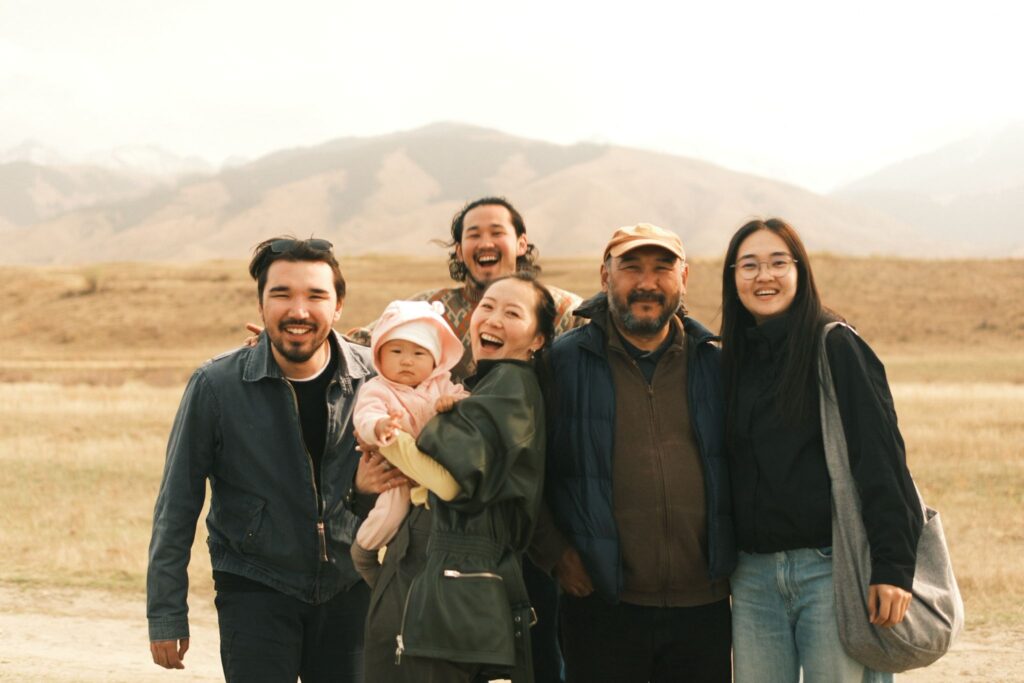
Central Asia is increasingly being recognized as a bright new spot on the global cinema map. Films by regional directors are now regularly featured in major festival programs, and international curators are paying closer attention to the area’s filmmaking talent. One of the key platforms fostering these connections is the Post Space film camp in Kyrgyzstan, a space where emerging directors present their work directly to global festival decision-makers. The Times of Central Asia spoke with Post Space co-founder and Kazakh producer Yulia Kim about how this format works, why bridging the gap between the region and the global film industry is vital, and how campfire songs can forge creative collaborations. [caption id="attachment_42621" align="aligncenter" width="1060"] @PostSpace[/caption] TCA: Yulia, you’re one of the founders of Post Space, widely considered the most influential film camp in Central Asia. You’ve been organizing it for four years now. Has it yielded results? Yulia: Many. In 2024, the Locarno Film Festival invited two Kazakh directors, including Aruan Anartay, a Post Space participant. Last year, we had another Kazakh participant. The Lisbon Film Festival even curated a program specifically dedicated to Central Asian cinema. Its director, Portuguese producer Paulo Branco, visited Post Space for the first time in 2024 and fell in love with our filmmakers. I believe that for the festival curators we invited, Central Asia has opened up in new ways. They now approach our films with a deeper understanding and, hopefully, greater interest. TCA: Would you say international interest is growing? Yulia: Yes, but Post Space aims for more than just professional development. We also strive to create a friendly, supportive atmosphere. The connections formed here often become lasting collaborations. For instance, we ran a screenwriting lab, and soon several films developed during that project will be released. One participant, Diaz Bertis, refined his script with the help of an international mentor we brought in. These are vital steps for our industry. TCA: Many local initiatives fizzle out quickly. Are you planning for the long term? Yulia: Absolutely. Our project is just gaining momentum. But we’re working with a minimal budget and little external support, which limits what we can do. We'd like to offer more grants and long-term support to the projects emerging from Post Space, but for now, it’s mostly moral support. Still, we’re pushing forward, and young filmmakers are eager to grow with us. We focus on giving a voice to emerging artists who aren’t even recognized at local festivals, let alone international ones. TCA: So Post Space is a launchpad for debut filmmakers? Yulia: For many, yes. There’s so much talent in the region, but a lot of it has no connection to the film industry. We want to be the space where they gain confidence, present their work, and receive feedback. Many participants hadn’t shown their films anywhere before Post Space, often due to fear or inexperience. They were thrilled to screen their work here. TCA: What stood out about Post Space 2025? Yulia: Each year has its...

How Kazakhstan Revives National Traditions Through Cinema

At a recent press screening of the Kazakhstani fantasy comedy All on Mosles: Battle of the Generations, the audience laughed, applauded and, perhaps most tellingly, relived childhood memories. Some even left wanting to play asyki again. The film’s creators achieved what seemed nearly impossible: they transformed an almost forgotten traditional game into a vibrant cinematic adventure appealing to both adults and children. The Times of Central Asia spoke with the film's authors, Yerken Gubashev, Yerkebulan Bekturov, and Mikhail Ulanov, about how the project came to life, the challenges they encountered, and why asyk atu is more than just a game. Now showing across Kazakhstan, the film centers on asyk atu, an ancient game where players aim to knock opponents’ asyk (ram’s knuckle bones) from a designated area using a special, often weighted and decorated, throwing asyk known as a sak. Popular across Soviet Kazakhstan until the 1990s, the game has since been revived by cultural activists. Today, asyk atu is included on UNESCO's Representative List of the Intangible Cultural Heritage of Humanity. [caption id="attachment_30806" align="aligncenter" width="797"] Image: TCA, Askar Kubaizhanov[/caption] TCA: Tell us about your film. How did the idea come about? Yerken Gubashev: I was really the initiator of the whole project. I co-wrote the script, co-produced the film, and played one of the lead roles. But more than that, it was my dream to bring asyki back and turn them into something grand. Watching my son and his friends sitting on the street, absorbed in their phones, was tough. When we were kids, asyki was real life. We played for hours, competing, learning dexterity, patience, and respect. I started imagining a world where asyki was the number one sport, with world championships and a whole culture surrounding it. I shared the idea with Yerkebulan and Mikhail, and we couldn’t stop. Mikhail Ulanov: We began to imagine: What if asyks could fly? What if each player had a unique technique? What if one could come to life or transform into a weapon? From this, a fantastical world emerged, rooted in tradition but filled with comedy, fantasy, and even superhero parody. Yerkebulan Bekturov: We shaped the film to resonate with modern youth: short, dynamic scenes, sharp transitions, and vivid visuals. Yet it tells a complete story. We believe it will appeal not just to Kazakhstani audiences but also internationally. There are lots of nods to Hollywood, The Gentlemen, Kill Bill, and others, which helps bridge cultures. TCA: The film isn’t just entertainment, is it? Is there a cultural mission here? Yerken Gubashev: Absolutely. Our goal is to bring asyki back to the playgrounds so kids share, compete, and step away from social media. More broadly, it's about reconnecting with our roots. Kazakh traditional culture is rich but underrepresented in cinemas. Importantly, asyki isn’t only Kazakh, it’s a Turkic game played by Uzbeks, Kyrgyz, Bashkirs, Tatars, Yakuts, and even in the Caucasus. It’s a vast cultural universe that unites Turkic peoples. Today, even the U.S., Norway, and Finland have national teams. A...