Kazakhstan Targets End to Electricity Deficit by 2027
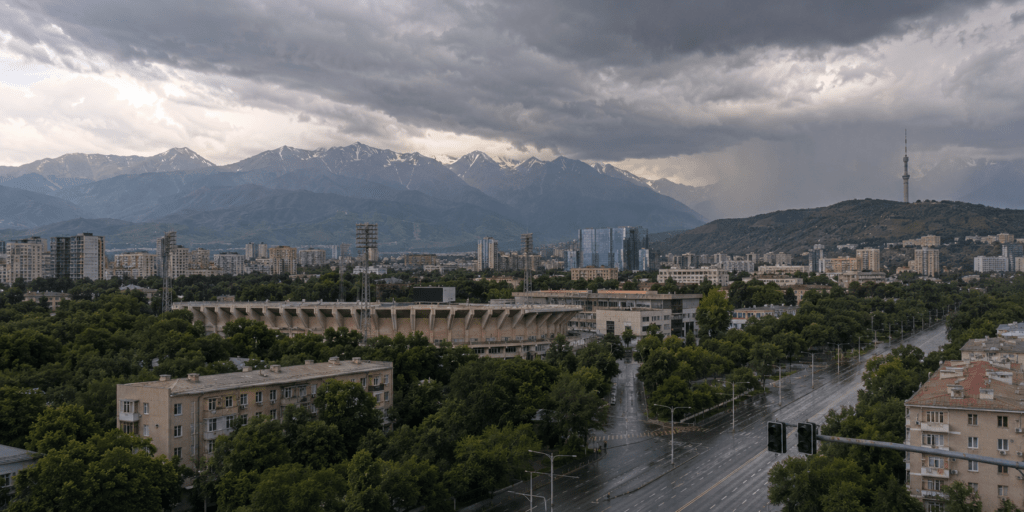
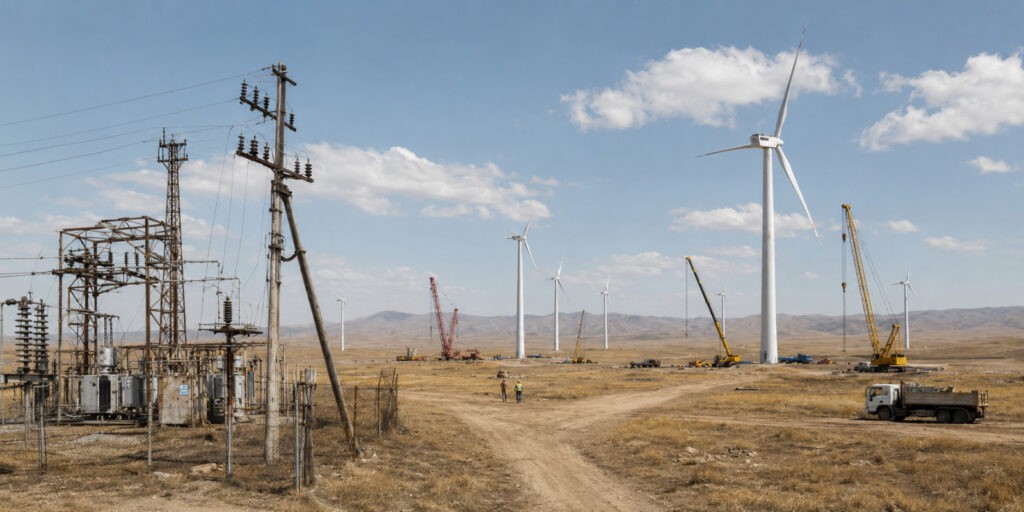
Just days after a major disruption hit power systems across Central Asia, Kazakhstan reaffirmed its plan to fully cover domestic electricity demand by the first quarter of 2027. By the end of next year, the Energy Ministry expects the country to have a surplus of about 1.3 billion kWh. That margin would still leave relatively little room for error because it is equivalent to only about 1% of the electricity Kazakhstan consumed in 2025, when demand grew by 3.8%. The August 14 outage affected parts of Kazakhstan, Kyrgyzstan, Uzbekistan, and Tajikistan. Power was cut to some consumers in Almaty, Kazakhstan’s largest city, which has a population of about 2.4 million. The precise chain of events remains unclear. Kazakhstan’s national grid operator KEGOC said the disruption began when two hydrogenerators at Kyrgyzstan’s Toktogul Hydropower Plant shut down, sharply changing power flows and overloading Kazakhstan’s North-East-South transmission corridor. Kyrgyzstan’s Energy Ministry later acknowledged that the Toktogul shutdown was the initial disturbance but said it should not automatically be treated as the direct cause of the subsequent outages elsewhere in Central Asia. A special commission is investigating the incident, although public statements so far have not identified its chair. The outage exposed a risk in regional grid connections. Kazakhstan’s grid is connected to Russia and neighboring Central Asian systems. These links allow electricity to move across borders, but a sudden loss of generation or a major transmission failure can also affect several countries in quick succession. Kazakhstan has been a net electricity importer for several years. In 2025, the country generated 123.1 billion kWh and consumed 124.6 billion kWh. Electricity imports from Russia totaled 4.64 billion kWh, compared with exports of 2.16 billion kWh in the opposite direction. The net inflow from Russia fell from 3.41 billion kWh in 2024 to 2.48 billion kWh in 2025. Electricity consumption increased by 3.8% in 2025, while peak demand reached a record 17.724 GW on December 18. Kazakhstan is also seeking to attract energy-intensive industries and large data centers. Those expectations are reflected in longer-term development plans, which already include 7.8 GW of new and modernized coal-fired generation by 2030, with investment estimated at more than $15.5 billion. The authorities expect to close the remaining short-term deficit by rapidly commissioning new generating capacity. Around 2.6 GW is scheduled to come online in 2026. Four gas-fired power plants and expansion projects at two existing power stations account for part of that capacity, while ten new renewable energy facilities are also planned. The Energy Ministry says these projects should allow Kazakhstan to fully meet its electricity needs by the end of the first quarter of 2027. A further 845 MW is planned for 2027, of which 570 MW would come from renewable projects. By the end of that year, the ministry expects an electricity surplus of around 1.3 billion kWh. Renewable energy is expanding alongside Kazakhstan’s continued reliance on conventional generation. Thermal power plants accounted for 74.4% of electricity generation in 2025. Solar and wind facilities, along with biogas plants, provided 6.1%. The...