


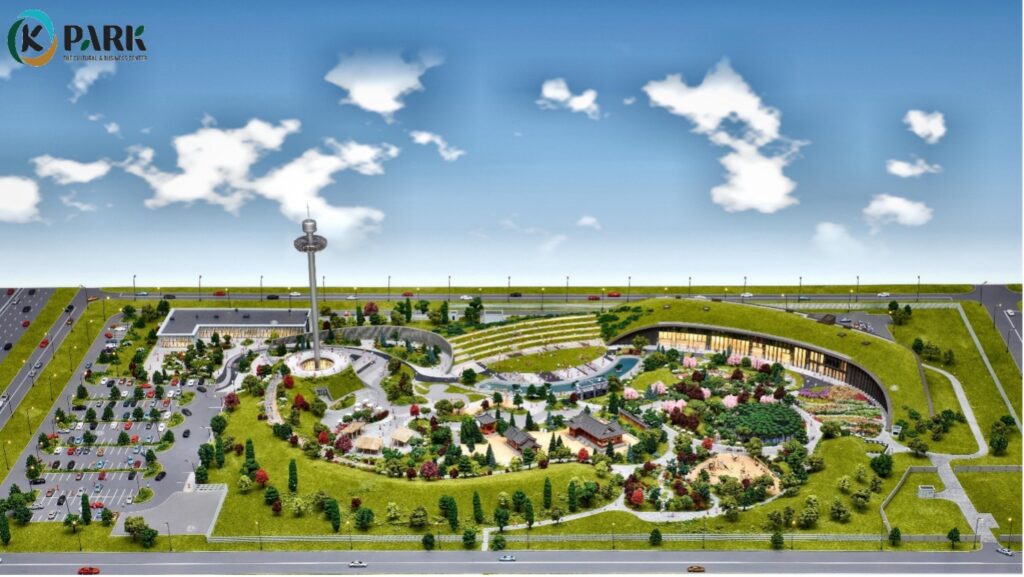
K-PARK: A Space for Memory, Gratitude, and Cooperation
In the history of every nation, some places come to mean more than their architecture, squares, or parks. They become part of a country’s collective memory, preserving the experiences of previous generations while looking toward the future. K-PARK, an international cultural and business center under development in Alatau City, is designed to be such a space. The foundation stone was laid on September 12, 2025. The project was initiated by the Association of Koreans of Kazakhstan and is timed to coincide with the 90th anniversary of the Korean presence in Kazakhstan, marked in 2027. K-PARK is the first investment project in this new city, weaving the history of one of Kazakhstan’s ethnic groups into the fabric of a city still being built. Memory of an Arduous Journey The history of the Koryo-saram in Kazakhstan is inseparable from the tragic deportation of 1937, when most were forcibly relocated from the Soviet Far East to Central Asia. For the first generation of deportees, Kazakhstan was an unknown land to which they arrived against their will. Over subsequent generations, the Koreans of Kazakhstan became an integral part of the country’s society, contributing to agriculture and industry as well as to science and medicine. They became active in education and culture, in business and civic life. The approaching 90th anniversary is an opportunity to reflect on this journey, and K-PARK is designed to give that memory a spatial form. Plans include a memorial of gratitude to the Kazakh people and a Garden of Identity. A dedicated Koryo-saram area would use historical reconstructions and a traditional Korean hanok house to tell the community’s story; museum and exhibition spaces would offer further context. Gratitude as a Component of Historical Memory The collective memory of Kazakhstan’s Koryo-saram community preserves many stories from the early years following the deportation, including accounts of harsh living conditions and of help from the local population. The project’s creators describe K-PARK as a symbol of respect and gratitude toward the Kazakh people and Kazakh land. Remembering the deportation therefore has another dimension: the solidarity of those who helped the displaced and the capacity of different peoples to coexist. K-PARK seeks to preserve the memory of a traumatic past and show how an ordeal endured can become a foundation for mutual respect and constructive action. From Ethnic Park to Open Public Space K-PARK is not intended to be solely a Korean ethno-cultural site. The planned cultural and business center will accommodate conferences and exhibitions. Its library and interactive museum would offer other ways to encounter the community’s history. Outside, a 5,000-seat amphitheater and sports and children’s playgrounds would provide space for performances and recreation. The official concept also envisions public events and international gatherings. For Koryo-saram, it can serve as a place to preserve historical memory and pass it on to new generations. For other Kazakhstanis, it offers a space to learn about the history of the country’s Korean community and its place in Kazakhstan’s wider history. In September 2026, Yuriy Tskhay, chairman...
