Tokayev Floats Vice President Post at National Kurultai as Kazakhstan Weighs Political Overhaul
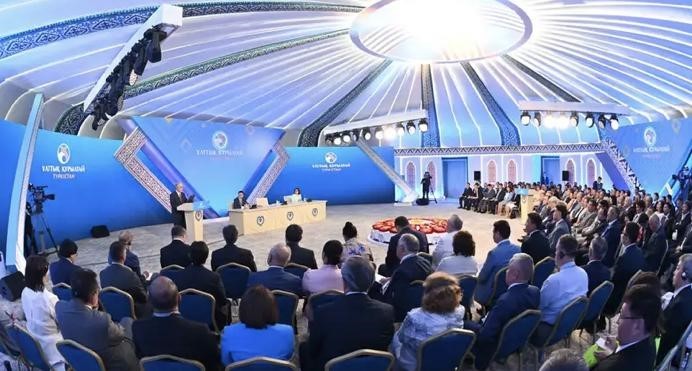
President Kassym-Jomart Tokayev used the fifth session of Kazakhstan’s National Kurultai on January 20 to propose creating a vice president’s post and embedding the new institution in the constitution, as part of a broader package of political reforms aimed at reshaping the country’s system of governance. Under the proposal, the vice president would be appointed by the president and confirmed by parliament by a simple majority vote. The president would define the vice president’s authority, which could include representing Kazakhstan at international forums and negotiations, representing the head of state in parliament, and engaging with domestic and international organizations in political, scientific, cultural, and educational fields. “The establishment of this position will stabilize the process of state governance, and will also bring final clarity regarding the hierarchy of power,” Tokayev said at the Kurultai. Kazakhstan does not currently have a vice president. Executive authority is vested in the presidency, while the government is led by a prime minister, with succession procedures defined by the constitution. Tokayev said the key provisions governing the new post, including its functions, should be enshrined directly in the constitution. The vice presidency was presented as part of a wider administrative restructuring. Tokayev said several administrative structures that support the current parliament would be abolished, along with the position of state counselor. He added that the functions, structure, and management system of the Presidential Administration would be reformed in line with practical needs. The Kurultai session in Kyzylorda took place as the administration advances a more far-reaching overhaul of the legislature. Tokayev has promoted a transition from Kazakhstan’s bicameral parliament, composed of the Senate and the Mazhilis, to a unicameral system, arguing that the change would simplify governance and shorten decision-making chains. [caption id="attachment_42476" align="aligncenter" width="1280"] President Tokayev at the National Kurultai; image: Akorda.kz[/caption] He outlined parameters for a future unicameral parliament, saying it could consist of around 145 deputies, be led by three vice-chairs, and operate with no more than eight standing committees. He also proposed renaming the legislature the “Kurultai,” saying the term reflects historical traditions of popular representation. The parliamentary reform agenda is being developed by a working group that began reviewing constitutional options in late 2025. The idea of moving to a unicameral system was first raised in Tokayev’s national address on September 8, 2025. On January 19, Tokayev held a meeting with the working group on parliamentary reform in Astana, where aides reported that the group had reviewed constitutional approaches to reshaping the legislature and discussed key approaches to constitutional reform based on proposals from citizens, experts, and civil organizations. Tokayev has tied the parliamentary overhaul to a nationwide vote. He reaffirmed that citizens would make the final decision through a referendum and said Kazakhstan is targeting 2027 for a public vote on abolishing the Senate and moving to a unicameral legislature. The latest reform proposals build on constitutional changes adopted after the unrest of January 2022. In June 2022, Kazakhstan held a nationwide referendum on proposed constitutional amendments, with more...