• KGS/USD = 0.01144 0%
  • KZT/USD = 0.00213 0%
  • TJS/USD = 0.10800 -0.18%
  • UZS/USD = 0.00008 0%
  • TMT/USD = 0.28490 0%
  • KGS/USD = 0.01144 0%
  • KZT/USD = 0.00213 0%
  • TJS/USD = 0.10800 -0.18%
  • UZS/USD = 0.00008 0%
  • TMT/USD = 0.28490 0%
  • KGS/USD = 0.01144 0%
  • KZT/USD = 0.00213 0%
  • TJS/USD = 0.10800 -0.18%
  • UZS/USD = 0.00008 0%
  • TMT/USD = 0.28490 0%
  • KGS/USD = 0.01144 0%
  • KZT/USD = 0.00213 0%
  • TJS/USD = 0.10800 -0.18%
  • UZS/USD = 0.00008 0%
  • TMT/USD = 0.28490 0%
  • KGS/USD = 0.01144 0%
  • KZT/USD = 0.00213 0%
  • TJS/USD = 0.10800 -0.18%
  • UZS/USD = 0.00008 0%
  • TMT/USD = 0.28490 0%
  • KGS/USD = 0.01144 0%
  • KZT/USD = 0.00213 0%
  • TJS/USD = 0.10800 -0.18%
  • UZS/USD = 0.00008 0%
  • TMT/USD = 0.28490 0%
  • KGS/USD = 0.01144 0%
  • KZT/USD = 0.00213 0%
  • TJS/USD = 0.10800 -0.18%
  • UZS/USD = 0.00008 0%
  • TMT/USD = 0.28490 0%
  • KGS/USD = 0.01144 0%
  • KZT/USD = 0.00213 0%
  • TJS/USD = 0.10800 -0.18%
  • UZS/USD = 0.00008 0%
  • TMT/USD = 0.28490 0%

Viewing results 1 - 6 of 7

Kazakhstan’s Parliament Gives Way to New Kurultai Under Tokayev’s Constitutional Reset

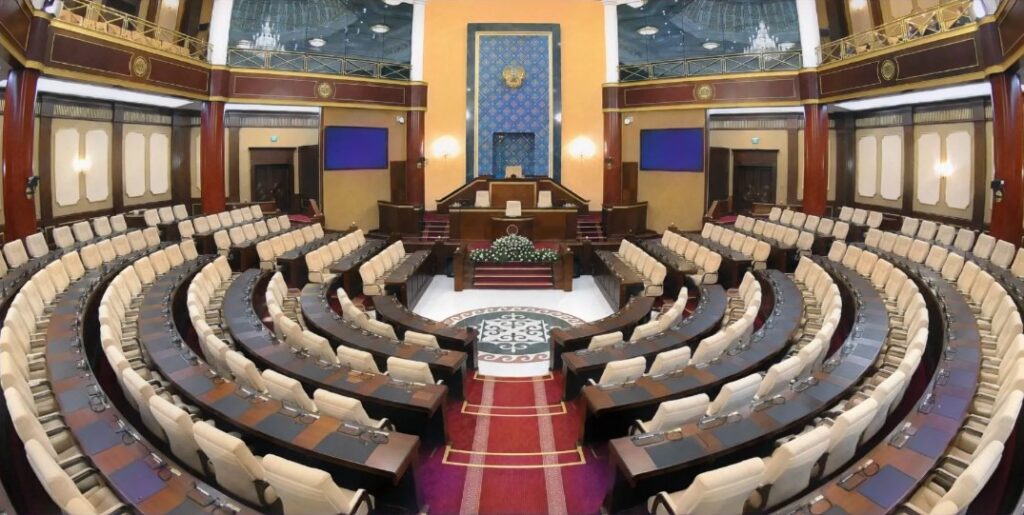
Kazakhstan’s bicameral parliament held its final joint session in Astana on June 30, closing a 30-year legislative era before the new Constitution takes effect on July 1. The change will replace the Senate and Mazhilis with a single-chamber Kurultai. Elections to the new body are expected in August, with 145 deputies to be elected through party lists. No current deputy will transfer automatically into the new chamber, giving the coming vote direct importance for Kazakhstan’s parties and for President Kassym-Jomart Tokayev’s wider state overhaul. Addressing the final joint session, Tokayev framed the change as more than an administrative reform. He said Kazakhstan was entering “a new chapter in the development of independent Kazakhstan,” and beginning what he called a new historical era. The president also used his speech to summarize the work of the parliament created under the 1995 Constitution. Over three decades, the legislature adopted around 3,500 laws, which Tokayev said had helped strengthen the country’s statehood. “Today, we are completing an important parliamentary political cycle and opening a new chapter in the development of independent Kazakhstan,” Tokayev said. According to Tokayev, more than 300 major laws, including constitutional legislation, have been adopted over the past three years. He described them as “a reliable platform for our future achievements.” The transition also carries a succession dimension. The new Constitution creates a vice presidency and rewrites parts of the state architecture ahead of the scheduled end of Tokayev’s single seven-year presidential term in 2029. Tokayev has presented the changes as a modernization of governance, while the August Kurultai election will show how much room the new party-list system gives to political competition. Tokayev told deputies that the new legislature would need to move faster than the outgoing parliament. He said the Kurultai would be expected to remove bureaucratic obstacles, improve the speed and quality of law-making, and bring qualified experts and consultants into legislative work. “The Kurultai will have to eliminate all obstacles in the form of bureaucratic procedures, increase the speed and quality of law-making, and organize the effective work of qualified experts and consultants,” Tokayev said. He linked those goals to global instability and digital competition, saying Kazakhstan had to adapt legislation to a rapidly changing environment. “The Kurultai will have to work at an accelerated pace to promptly adapt national legislation to rapidly changing realities within the digital matrix,” Tokayev said. “This is a critically important task, as it will determine Kazakhstan’s readiness to participate in global competition.” Tokayev praised the outgoing deputies for their work on digital legislation. He said there had been no ready-made templates for regulating artificial intelligence, and credited the parliament with helping build a flexible legal system. Tokayev said Kazakhstan had become one of the first countries to adopt both a Digital Code and a specialized law on artificial intelligence. He also pointed to the new Constitution’s guarantees on the protection of personal data in cyberspace. The next phase, he said, would include a full e-Parliament system. Tokayev first raised that idea...

Kazakhstan’s Constitutional Referendum Opens the Door to Major Institutional Reform

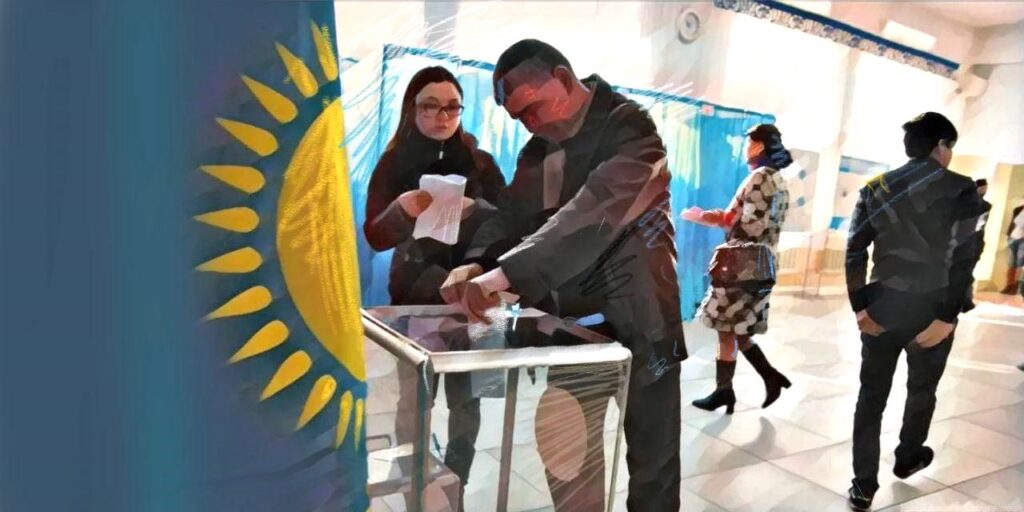
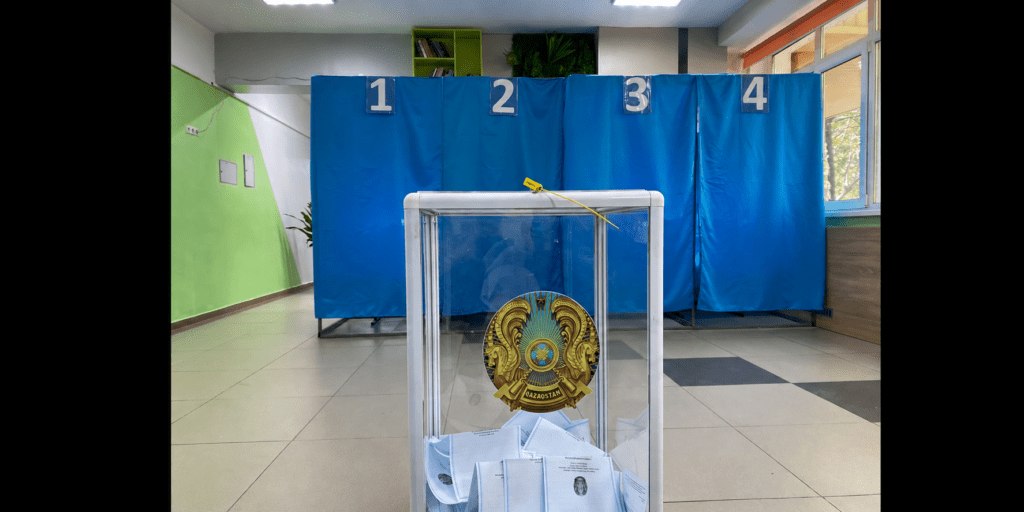
Kazakhstan will hold its constitutional referendum on March 15 on a draft that would replace the current bicameral parliamentary structure, restore the vice presidency, and reset the legal framework for the country’s post-2022 political order. The Central Referendum Commission has presented the vote as procedurally ready. On February 20, Qazinform reported that the commission had briefed the OSCE/ODIHR mission on preparations, saying infrastructure upgrades at all polling stations were complete, that voter lists included 12,416,759 eligible citizens, and that online services would allow voters to check their registration status. The same report said that public information efforts were underway across multiple channels, including personalized voter invitations with QR codes, and that the legal conditions were in place for accredited civic associations, non-profit organizations, and media representatives to work at polling stations. Administrative readiness, however, is only part of the story. The referendum’s significance lies in what adoption would change and what measures will be employed to move to the implementation stage afterward. Earlier TCA coverage examined the draft’s broader constitutional architecture and discussed its implications for the reordering of state authority. The issue now is narrower. A “yes” vote would approve a new institutional framework, but it would not by itself answer every question about how that framework will be interpreted, implemented, or used. However, the new constitution could allow future laws to move through parliament more expeditiously. The referendum is more than a routine exercise in constitutional amendment. The move announced in February was toward a new constitution rather than a narrower package of revisions. The draft would replace the current bicameral parliament with a single chamber, reduce the number of lawmakers, and reinstate the office of vice president. The text now before voters is being treated as a new basic law, not merely as a technical adjustment to the 1995 constitution. If approved, it will establish a new legal baseline from which later political interpretation begins. In addition, adoption would set a tight institutional timetable. If approved, the constitution would enter into force on July 1, and parliamentary elections would follow in August. Polling will take place at 10,402 stations, including 71 abroad, and official results must be published within seven days. In practical terms, March 15 would settle the text and begin the transition from constitutional approval to institutional implementation. That implementation phase has its own political weight. The referendum is considered valid if more than half of the eligible voters participate. The draft constitution will be adopted if a majority of those voting support it, provided the measure also receives majority support in at least two-thirds of Kazakhstan’s regions, cities of national significance, and the capital. Those thresholds are not unusual, but in this case, the authorities are seeking a public mandate for a new constitutional order. At the same time, the package also reaches beyond institutional mechanics. The draft would change the constitutional wording on the Russian language so that it would be used “along with” Kazakh rather than “on an equal footing” with it, and...

Kazakhstan’s Draft Constitution and the Reordering of State Authority

Kazakhstan’s current constitutional reform is no longer limited to parliamentary redesign. A draft updated basic law has been released for public discussion, and it presents the effort as a review of the state’s political architecture culminating in a nationwide referendum. The draft is described as the product of months of work initiated by President Kassym-Jomart Tokayev, with large-scale changes proposed for the country’s political system. A replacement-style text, an explicit state-architecture rationale, and a referendum endpoint together signal a reform agenda that reaches beyond legislative mechanics to the overall distribution of authority, the protection of fundamental rights, and strengthening of the rule of law. Kazakhstan’s current constitution was adopted by referendum in August 1995, replacing the January 1993 basic law. It has been amended repeatedly, including significant revisions in 1998, 2007, 2011, and 2022. The 2022 referendum package was a particularly extensive set of amendments. It presented a model of a presidential republic with a strong parliament, redistributed selected powers from the presidency to parliament, and created new parliamentary mechanisms. It also strengthened the ombudsman, enabled direct citizen appeals to the Constitutional Court, established a commissioner framework for socially vulnerable categories, established a ban on the death penalty, and set a single seven-year presidential term without the possibility of reelection. From Proposal to Draft Basic Law The current draft emerged from a process launched under Tokayev in late 2025. In September 2025, he proposed moving to a unicameral parliament, which set the reform’s initial direction. A working group was established in October 2025 to develop proposals, and in January 2026, a commission was formed to carry the work forward. The commission was chaired by Elvira Azimova, head of the Constitutional Court of Kazakhstan, linking the drafting process to the institution that reviews the basic law. The commission’s work moved beyond incremental amendments. It reviewed proposals affecting seventy-seven constitutional articles, about 84% of the current text, and that breadth drove the decision to prepare a fundamentally new basic law rather than another package of revisions. Rewriting most of the operative text shifts the reform from a parliamentary adjustment to a redesign of the state’s governing framework. The resulting draft is structured as a replacement-style document, with an updated preamble and a reorganization into eleven sections and ninety-five articles. The institutional centerpiece of the draft is a shift from a two-chamber parliament to a single chamber and to proportional representation for electing deputies. The proposed supreme legislative body, the Kurultai, would have 145 deputies, slightly fewer than the combined 148 members of the current Mazhilis and Senate of Kazakhstan. The draft also grants the Kurultai expanded powers, pairing structural consolidation with a change in how legislative authority is organized, including oversight, political accountability, and approval of key state appointments and conciliation procedures. Alongside the proposed legislature, the draft creates a national dialogue platform, the People's Council of Kazakhstan, described as the highest advisory body representing citizens’ interests and granted the right of legislative initiative. This adds a second channel for agenda-setting with...

Analysis: Three Decades of Parliamentary Reform in Central Asia — and What Changed

Kazakhstan’s President Kassym-Jomart Tokayev announced his reform plans on January 20, including structural changes to the government. Arguably, one of the least consequential of those changes is replacing the current bicameral parliament with a unicameral parliament. Across Central Asia, over the last 35 years, parliaments have repeatedly switched from unicameral to bicameral parliaments, or vice versa, the number of deputies has increased and decreased, and in some cases, parallel bodies have come into existence and later disappeared. Kazakhstan When the Soviet Union collapsed in late 1991, each of the former republics, including the Central Asian countries of Kazakhstan, Kyrgyzstan, Tajikistan, Turkmenistan, and Uzbekistan, had a unicameral, republican Supreme Soviet elected in 1990. These Supreme Soviets continued functioning after independence until 1994, and in the case of Kyrgyzstan and Tajikistan, until 1995. In Kazakhstan, in December 1993, the majority of the 360 deputies in the Supreme Soviet voted to dissolve the body. In March 1994, there were elections to the new parliament (Supreme Kenges) that had 177 seats. During the tumultuous year of 1995, the parliament was dissolved by then-President Nursultan Nazarbayev, who ruled by decree until snap parliamentary elections in December of that year. However, on August 29, 1995, voters approved a new constitution in a national referendum. That constitution created a bicameral parliament with 67 deputies in the Mazhilis, the lower house, and 50 deputies in the Senate, 10 of them directly appointed by the president. Deputies to the Mazhilis were chosen in popular elections. Senators were chosen in indirect elections involving deputies from local, provincial, and municipal councils of large cities. In the snap parliamentary elections of October 1999, 10 seats were added and chosen by party lists, while the original 67 continued to be contested in single-mandate districts. That structure lasted until 2007. Constitutional amendments adopted in late May that year increased the number of seats in the Mazhilis to 107, of which 98 were to be chosen by party lists. Nazarbayev’s Nur-Otan party won all 98 of the party list seats in the August elections. The remaining nine representatives came from the Assembly of Peoples of Kazakhstan, a group representing the various ethnic groups in Kazakhstan that Nazarbayev created in 1995. Eight additional members of the Assembly were given seats in the Senate. The Assembly held its own elections to fill those seats. Kazakhstan conducted a constitutional referendum in June 2022, in part aimed at mollifying discontent that lingered from the mass unrest in early January that year, which left 238 people dead. Some amendments stripped away powers in the executive branch that had accumulated during the 28 years Nazarbayev was president, and more power was given to parliament. Another amendment removed the nine Mazhilis seats reserved for members of the Assembly of Peoples of Kazakhstan. One amendment reduced the number of Senate members appointed by the president back to 10, after it had been raised to 15 under a 2007 amendment. Kyrgyzstan A referendum in Kyrgyzstan on constitutional amendments in October 1994 created a bicameral...

Tokayev Proposes a New Constitutional Architecture

In mid-January 2026, President Kassym-Jomart Tokayev moved Kazakhstan’s parliamentary reform agenda onto a deeper constitutional track. He framed the emerging package as comparable, in substance, to adopting a new constitution rather than making a bounded set of amendments. He also presented it as a further move away from the institutional logic of the 1995 framework and as the logical next step after the 2022 referendum changes, with the legislative branch identified as the main site of redesign. Tokayev laid out a two-stage pathway. First, a Constitutional Commission of more than 100 members is to consolidate proposals and draft a coherent text. The work is organized through the Constitutional Court leadership, and the participant pool is expected to include representatives of the National Kurultai, legal experts, media figures, maslikhat chairs, and regional public councils. The commission was established by decree shortly after Tokayev’s public rollout of the initiative, with early reporting identifying its chair and senior officers as part of the process’ initial institutionalization. Second, the resulting draft is to be submitted to a nationwide referendum, with timing to be set once the commission produces an implementable package. This is an architecture exercise before it is a policy program. The direction is clear enough to describe, but the operative meaning will depend on still-undetermined details, including how headline concepts are translated into constitutional language and how the referendum track shapes that drafting process. The Kurultai Plan and the Lawmaking Design Tokayev’s central institutional move is to abolish the current bicameral parliament and replace it with a single chamber, the Kurultai, combining functions now divided between the Mazhilis and the Senate. The change is publicly presented as consolidation, with unicameralism framed as a simplification of legislative structure that still keeps parliament as the focal representative institution within a presidential system. The package also sketches a streamlined internal design. Tokayev stated that the new chamber should comprise 145 deputies, with up to three deputy speakers and no more than eight committees. Public reports on the working-group discussions remark that earlier concepts ranged more widely before converging on 145; the current Mazhilis and Senate total 148 members. Tokayev indicated that deputies would be elected by proportional representation at the national level, while majoritarian rules would be retained at the regional level. He also signaled the removal of quota and appointment mechanisms associated with the existing system, including the elimination of a small number of presidentially appointed seats. A unicameral legislature raises a predictable design problem. Consolidation can increase legislative throughput unless procedures are structured to preserve deliberation. Allies of the reform have therefore emphasized a shift to a three-reading format, presented as a way to make lawmaking more deliberative. In practice, the decisive criteria here are implementation choices that are not yet public. These include final electoral rules, the internal allocation of committee jurisdiction, and procedural requirements governing readings, hearings, and amendments. Those choices will determine whether the Kurultai becomes a stronger site of relatively autonomous bargaining and scrutiny or a more efficient transmission...

Tokayev Floats Vice President Post at National Kurultai as Kazakhstan Weighs Political Overhaul

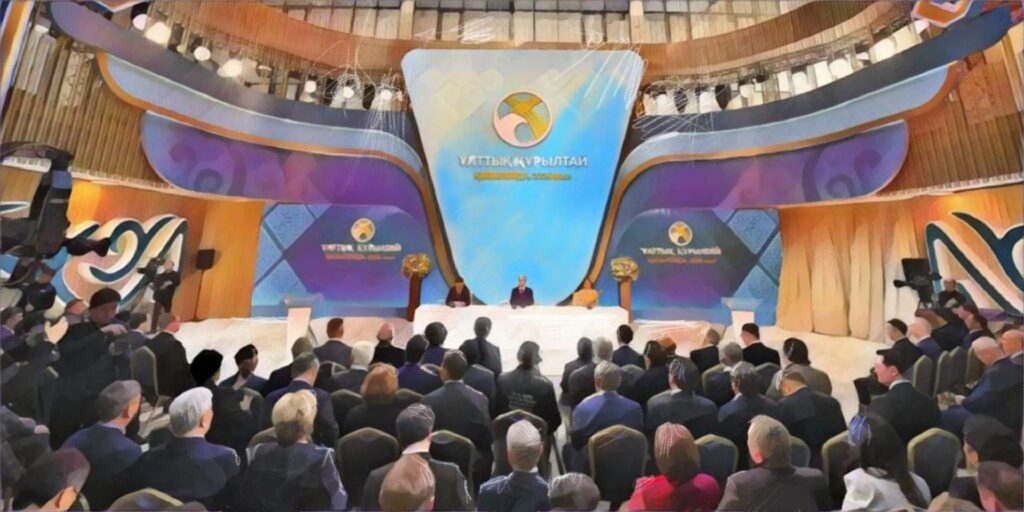
President Kassym-Jomart Tokayev used the fifth session of Kazakhstan’s National Kurultai on January 20 to propose creating a vice president’s post and embedding the new institution in the constitution, as part of a broader package of political reforms aimed at reshaping the country’s system of governance. Under the proposal, the vice president would be appointed by the president and confirmed by parliament by a simple majority vote. The president would define the vice president’s authority, which could include representing Kazakhstan at international forums and negotiations, representing the head of state in parliament, and engaging with domestic and international organizations in political, scientific, cultural, and educational fields. “The establishment of this position will stabilize the process of state governance, and will also bring final clarity regarding the hierarchy of power,” Tokayev said at the Kurultai. Kazakhstan does not currently have a vice president. Executive authority is vested in the presidency, while the government is led by a prime minister, with succession procedures defined by the constitution. Tokayev said the key provisions governing the new post, including its functions, should be enshrined directly in the constitution. The vice presidency was presented as part of a wider administrative restructuring. Tokayev said several administrative structures that support the current parliament would be abolished, along with the position of state counselor. He added that the functions, structure, and management system of the Presidential Administration would be reformed in line with practical needs. The Kurultai session in Kyzylorda took place as the administration advances a more far-reaching overhaul of the legislature. Tokayev has promoted a transition from Kazakhstan’s bicameral parliament, composed of the Senate and the Mazhilis, to a unicameral system, arguing that the change would simplify governance and shorten decision-making chains. [caption id="attachment_42476" align="aligncenter" width="1280"] President Tokayev at the National Kurultai; image: Akorda.kz[/caption] He outlined parameters for a future unicameral parliament, saying it could consist of around 145 deputies, be led by three vice-chairs, and operate with no more than eight standing committees. He also proposed renaming the legislature the “Kurultai,” saying the term reflects historical traditions of popular representation. The parliamentary reform agenda is being developed by a working group that began reviewing constitutional options in late 2025. The idea of moving to a unicameral system was first raised in Tokayev’s national address on September 8, 2025. On January 19, Tokayev held a meeting with the working group on parliamentary reform in Astana, where aides reported that the group had reviewed constitutional approaches to reshaping the legislature and discussed key approaches to constitutional reform based on proposals from citizens, experts, and civil organizations. Tokayev has tied the parliamentary overhaul to a nationwide vote. He reaffirmed that citizens would make the final decision through a referendum and said Kazakhstan is targeting 2027 for a public vote on abolishing the Senate and moving to a unicameral legislature. The latest reform proposals build on constitutional changes adopted after the unrest of January 2022. In June 2022, Kazakhstan held a nationwide referendum on proposed constitutional amendments, with more...