• KZT/USD = 0.00218
  • TJS/USD = 0.10810
  • UZS/USD = 0.00009
  • TMT/USD = 0.29760
  • KZT/USD = 0.00218
  • TJS/USD = 0.10810
  • UZS/USD = 0.00009
  • TMT/USD = 0.29760
  • KZT/USD = 0.00218
  • TJS/USD = 0.10810
  • UZS/USD = 0.00009
  • TMT/USD = 0.29760
  • KZT/USD = 0.00218
  • TJS/USD = 0.10810
  • UZS/USD = 0.00009
  • TMT/USD = 0.29760
  • KZT/USD = 0.00218
  • TJS/USD = 0.10810
  • UZS/USD = 0.00009
  • TMT/USD = 0.29760
  • KZT/USD = 0.00218
  • TJS/USD = 0.10810
  • UZS/USD = 0.00009
  • TMT/USD = 0.29760
  • KZT/USD = 0.00218
  • TJS/USD = 0.10810
  • UZS/USD = 0.00009
  • TMT/USD = 0.29760
  • KZT/USD = 0.00218
  • TJS/USD = 0.10810
  • UZS/USD = 0.00009
  • TMT/USD = 0.29760
02 September 2026

Viewing results 1 - 6 of 4

Uzbekistan’s Alphabet Reform Revives a 33-Year-Old Debate

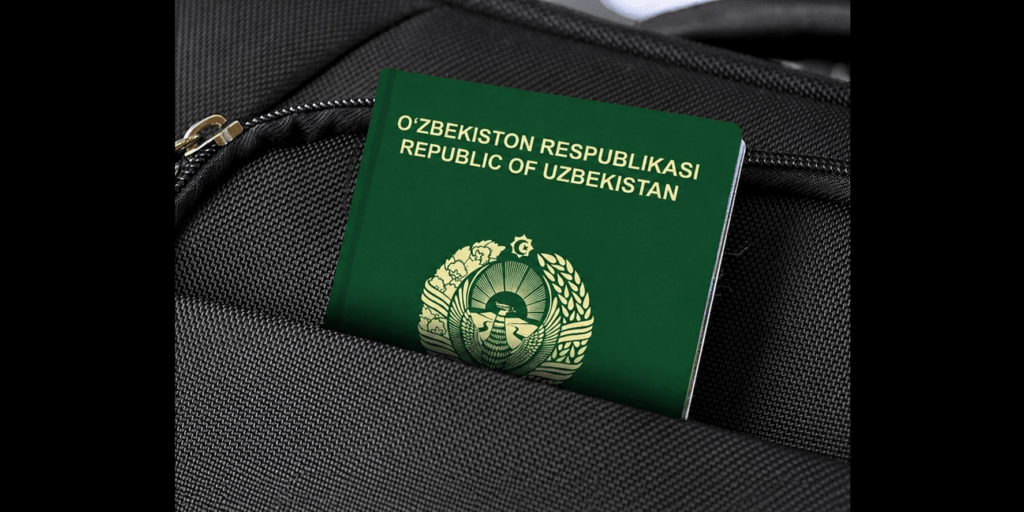
Uzbekistan began switching from Cyrillic to the Latin alphabet in 1993 and initially planned to complete the transition by 2000. Nearly 33 years later, both scripts are still widely used, and the country is preparing to revise its Latin alphabet again. On July 7, the lower house of Uzbekistan’s parliament approved a bill introducing a new version of the alphabet, with 28 letters and one apostrophe instead of the current 26 letters and three letter combinations, and sent it to the Senate. Literary scholar Dilbar Khaydarova told The Times of Central Asia that a reform originally intended to take seven years has stretched across a generation. She attributes the delay mainly to an inconsistent transition, with schools moving faster than publishers and much of the government. “After 30 or 31 years, these small corrections have prompted another reform,” she said. A Reform That Stretched Across Decades Uzbekistan adopted the law introducing a Latin-based alphabet in 1993. Schools were to use the new script first, while adults were expected to have opportunities to study it at workplaces and institutions. The transition was initially due to be completed by 2000. In 1995, the deadline was extended to 2005 and later postponed to 2010. The original alphabet was revised in 1995, when sh and ch were adopted and ng was listed separately. That revision also introduced the forms o‘ and g‘, establishing an alphabet of 26 letters and three letter combinations. Two Alphabets for One Country Schools switched to Latin, while Cyrillic remained common in government and the publishing industry. The media also continued using the script for years, and the Soviet-educated generation remained active in public institutions after 1993. As a result, children learned to write in Latin but continued to encounter Cyrillic in publications and official documents. The same script remained in use when they entered the workplace. “Even if we became literate in Latin, we also developed the ability to read and write in Cyrillic,” Khaydarova said. “Because the situation required it.” She describes this as the coexistence of “two policies or practices that did not correspond to each other.” This mismatch, she believes, largely explains why the transition has lasted for decades. That pattern persists, with some major publications using Latin while others continue publishing in Cyrillic. Khaydarova says the difference does not necessarily reflect opposition to the reform because publishers must consider their audiences’ habits. The Cost of the New Alphabet Implementing the revised alphabet will involve costs beyond school textbooks. Since 1993, Uzbekistan has accumulated a vast body of material in both Cyrillic and the current version of Latin. For publishers, this raises questions about whether existing publications should be converted to the revised script and who will pay for the work. “If they lose a significant share of their audience, there will be serious financial risks in the future,” Khaydarova said. Khaydarova believes the state will have to bear some of the cost by supporting publishers that convert existing materials to the revised script. “The more sources of...
Adoption of Latin-Based Common Turkic Alphabet

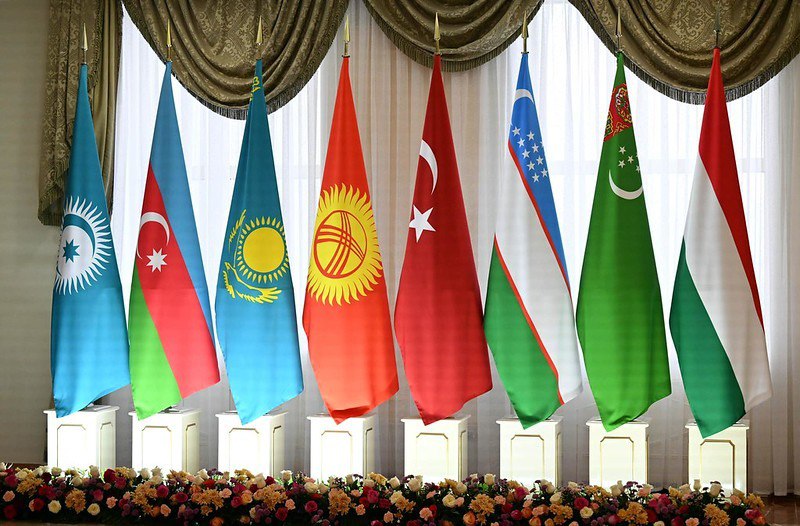
The Turkic Academy has announced that the Turkic World Common Alphabet Commission is to adopt a Latin-based Common Turkic Alphabet consisting of 34 letters. At a meeting in Baku (Azerbaijan) on September 9-11, the Commission finalized its two-year development of a proposed standard alphabet for Turkic languages in which each letter in represents different phonetic sounds in Turkic languages. Emphasizing its historic significance, the Turkic Academy stated that the development of the Common Turkic Alphabet, first proposed by scientists in 1991, promotes mutual understanding and cooperation among the Turkic peoples while preserving their linguistic heritage. Based in Astana, Kazakhstan, the Turkic Academy is an international organization established under the Organization of Turkic States. Founding member states include Azerbaijan, Kazakhstan, Kyrgyzstan, and Türkiye, with Hungary and Uzbekistan joining as observers in 2018 and 2022, respectively.  The Organization of Turkic States currently comprising Azerbaijan, Kazakhstan, Kyrgyzstan, Turkey, Uzbekistan and Turkmenistan, with Hungary and the Turkish Republic of Northern Cyprus as observers, was founded in 2009 to foster comprehensive cooperation among Turkic-speaking nations. The alphabet issue in post-Soviet Turkic-speaking countries dates back to 1929, when the Soviet government replaced traditional Arabic-based alphabets used by Muslim minorities in the Soviet Union with Latin-based national alphabets. In 1940, the Latin alphabet was replaced with Cyrillic, used for the Russian language. After the breakup of the Soviet Union in 1991, former Soviet republics of Azerbaijan and Turkmenistan switched to Latin-based alphabets, while Uzbekistan has used both Latin and Cyrillic alphabets since 1992. In 2017, Kazakhstan's then-President Nursultan Nazarbayev ordered the government to develop a Latin-based alphabet for the Kazakh language. The switch, initially planned for 2025, was then postponed till as late as 2031. Citing the complexity of a transition from the Cyrillic to a Latin-based alphabet, in June 2022, Nazarbayev's successor, President Kassym-Jomart Tokayev stated that linguistic reform should not be rushed. Kyrgyzstan is the only post-Soviet Turkic-speaking nation committed to the use of the Cyrillic alphabet. Talk about switching from Cyrillic to Latin in post-Soviet Central Asia has always irritated Moscow, which considered such moves by the former Soviet republics as a means of distancing themselves from Russian influence.

Kazakhstan issues new coins featuring Latin-based alphabet

NUR-SULTAN (TCA) — Kazakhstan’s National Bank has issued freshly minted coins with engraved texts in the country's new Latin-based alphabet, RFE/RL reported. Continue reading

Kazakhstan: president’s decree makes changes in new Latin-based alphabet

ASTANA (TCA) — Kazakhstan President Nursultan Nazarbayev has decreed changes in the Latin-based alphabet that is to replace Cyrillic in the Central Asian country, abolishing apostrophes that came under severe criticism from linguists, RFE/RL's Kazakh Service reports. Continue reading