Opinion: Why Uzbekistan’s Presidential Administration Was Given Sweeping Powers and Broad Immunity
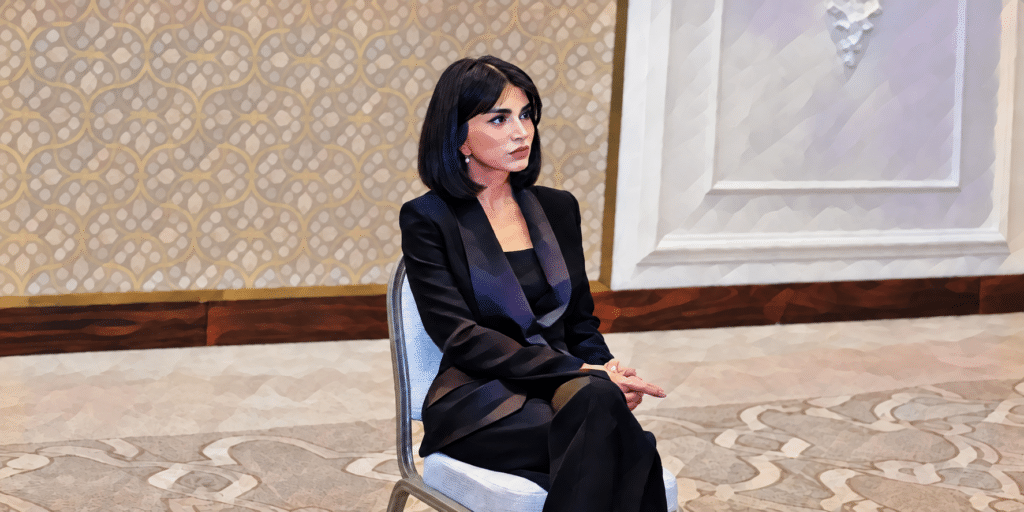
Saida Mirziyoyeva, the 41-year-old daughter of Uzbekistan’s president who has headed his administration since 2025, is taking an increasingly active role on the international stage. She participated in the 15th United Nations Congress on Crime Prevention and Criminal Justice in Abu Dhabi, and was received by UAE President Sheikh Mohamed bin Zayed Al Nahyan. During the meeting, the two sides discussed further expansion of cooperation between Uzbekistan and the United Arab Emirates. Combined with the law on Uzbekistan’s Presidential Administration adopted in August, Mirziyoyeva’s growing international profile raises a broader question: how far could her political influence extend? A New Legal Framework The Constitutional Law on the Administration of the President of the Republic of Uzbekistan, approved by the Senate on August 7 and signed by Shavkat Mirziyoyev a week later, on August 14, followed closely on the heels of a constitutional amendment establishing that the administration’s legal status and powers should be defined by law. Officially, the legislation was drafted to implement Article 109 of Uzbekistan’s Constitution. The article states that the president forms an administration and appoints its head to provide organizational, legal, and analytical support for the exercise of presidential powers. An amendment that took effect on July 25 added that the legal status, main tasks, organization, and powers of the Presidential Administration are to be determined by law. Saida Mirziyoyeva had been appointed head of her father’s administration in June 2025. When the bill, consisting of four chapters and 34 articles, was presented in the lower house of parliament, lawmakers said the experience of a number of countries had been studied. They included Turkmenistan and Taiwan, as well as Finland, the Czech Republic, Slovakia, Romania, Latvia, the United States, and Kazakhstan. Lawmakers cited these countries’ arrangements for regulating presidential administrations, offices, or chancelleries. The Uzbek law combines substantial administrative and coordinating authority with extensive immunity provisions for senior Presidential Administration personnel. Powers of a “Successor”? Under the new law, the head of Uzbekistan’s Presidential Administration has the authority to: introduce or eliminate additional staff positions and create or abolish project offices responsible for developing individual sectors and industries; coordinate and oversee administrative reforms in national and local executive bodies and submit proposals to the president on improving public administration; facilitate the introduction of key performance indicator systems in government bodies; appoint and dismiss certain officials of government bodies and organizations; create or abolish compliance units in government agencies, as well as positions for deputy heads or advisers responsible for compliance and internal anti-corruption controls. The head of the administration may also hire independent advisers on a contractual basis. Under the law, the head of the Presidential Administration also becomes deputy chair of the Security Council under the president and organizes and coordinates the activities of its members. Some Uzbek opposition figures, most of whom live and work abroad, see Mirziyoyeva’s expanded powers as adding weight to speculation that the president may be preparing his daughter as a possible successor. “She was already de facto the No....