• KGS/USD = 0.01144 0%
  • KZT/USD = 0.00205 0%
  • TJS/USD = 0.10784 0%
  • UZS/USD = 0.00008 0%
  • TMT/USD = 0.28490 0%
  • KGS/USD = 0.01144 0%
  • KZT/USD = 0.00205 0%
  • TJS/USD = 0.10784 0%
  • UZS/USD = 0.00008 0%
  • TMT/USD = 0.28490 0%
  • KGS/USD = 0.01144 0%
  • KZT/USD = 0.00205 0%
  • TJS/USD = 0.10784 0%
  • UZS/USD = 0.00008 0%
  • TMT/USD = 0.28490 0%
  • KGS/USD = 0.01144 0%
  • KZT/USD = 0.00205 0%
  • TJS/USD = 0.10784 0%
  • UZS/USD = 0.00008 0%
  • TMT/USD = 0.28490 0%
  • KGS/USD = 0.01144 0%
  • KZT/USD = 0.00205 0%
  • TJS/USD = 0.10784 0%
  • UZS/USD = 0.00008 0%
  • TMT/USD = 0.28490 0%
  • KGS/USD = 0.01144 0%
  • KZT/USD = 0.00205 0%
  • TJS/USD = 0.10784 0%
  • UZS/USD = 0.00008 0%
  • TMT/USD = 0.28490 0%
  • KGS/USD = 0.01144 0%
  • KZT/USD = 0.00205 0%
  • TJS/USD = 0.10784 0%
  • UZS/USD = 0.00008 0%
  • TMT/USD = 0.28490 0%
  • KGS/USD = 0.01144 0%
  • KZT/USD = 0.00205 0%
  • TJS/USD = 0.10784 0%
  • UZS/USD = 0.00008 0%
  • TMT/USD = 0.28490 0%

Viewing results 1 - 6 of 304

Kazakhstan Will Not Extend Wheat Import Ban

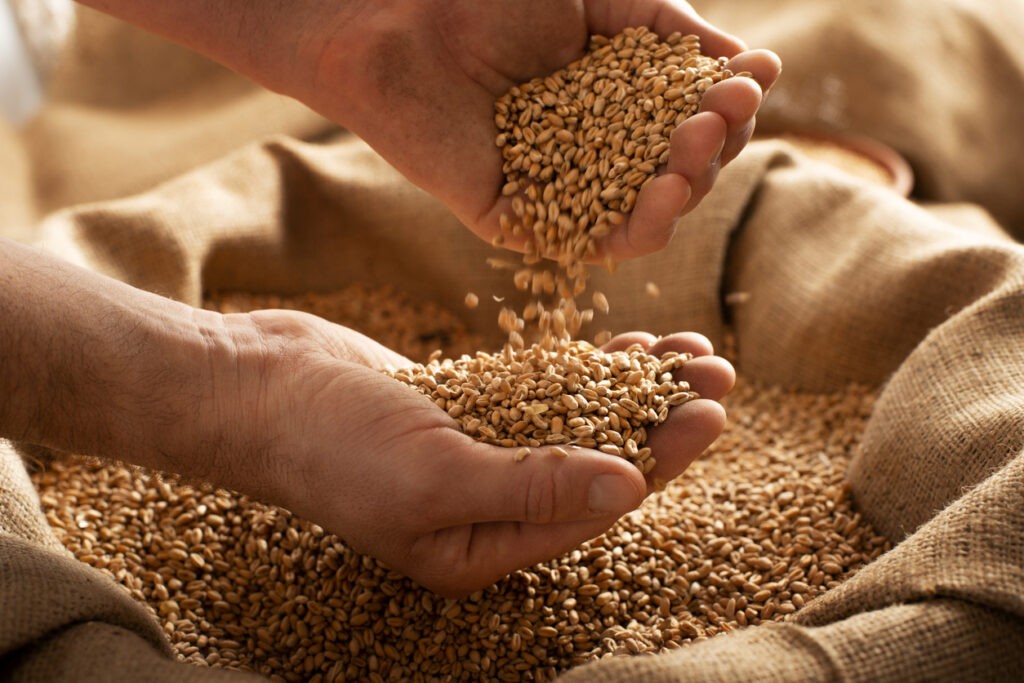
Kazakhstan’s Ministry of Agriculture has announced that the country will not extend the ban on wheat imports, which was in effect from August 21 to December 31, 2024. However, officials have not ruled out the possibility of reintroducing such measures in the future to safeguard the interests of domestic grain producers. “From August 21 to December 31, 2024, there was a ban on the import of wheat into the territory of the Republic of Kazakhstan (RK) from third countries and from the EAEU countries by all means of transport, except for the transit of wheat through the territory of Kazakhstan. Thus, from January 1, 2025, the ban on imports of wheat into Kazakhstan and imports will be carried out without restrictions,” stated the Ministry of Agriculture. The ministry noted that future decisions on non-tariff measures regulating wheat imports would depend on the situation in the grain market. This leaves open the possibility of reintroducing temporary bans on imported wheat if necessary. The current ban was introduced to stabilize domestic grain prices. In October, Deputy Prime Minister Serik Zhumangarin explained that earlier attempts to regulate imports through less restrictive measures had failed. Wheat continued to enter Kazakhstan through unofficial channels at prices lower than the cost of domestically produced grain, disrupting the local market. “We needed this ban to determine the price on the domestic market, to give a message to the domestic market on price,” Zhumangarin stated. He added that the authorities have now stabilized prices and plan to monitor wheat pricing at the border to avoid the need for future blanket bans. The ban had a significant impact on wheat imports from Russia. In the first half of 2024, 1.3 million tons of Russian wheat were imported, often labeled as feed for poultry farms or raw materials for Kazakhstan’s flour milling industry. This figure sharply contrasts with Kazakhstan’s annual grain consumption of 1.7 million tons, based on per capita consumption of 64 kg annually. Kazakhstan entered the ban period with robust grain reserves of 5.1 million tons and anticipated a record harvest of 25 million tons in 2024. In reality, the harvest exceeded expectations, reaching 26.5 million tons, according to the Ministry of Agriculture. Despite these gains, the competitiveness of domestic grain within the country remains a concern. The Times of Central Asia previously reported Kazakhstan’s ambitious export plans, aiming to ship up to 12 million tons of grain from the new harvest to international markets. However, competition with Russian wheat has complicated these efforts. In response to Kazakhstan’s ban, Russia imposed partial restrictions on importing Kazakh agricultural products in October 2024. More critically, Russia began redirecting its wheat exports to third countries that have traditionally been key markets for Kazakh farmers.

Kyrgyz Authorities Postpone Fines for Lack of Compulsory Car Insurance

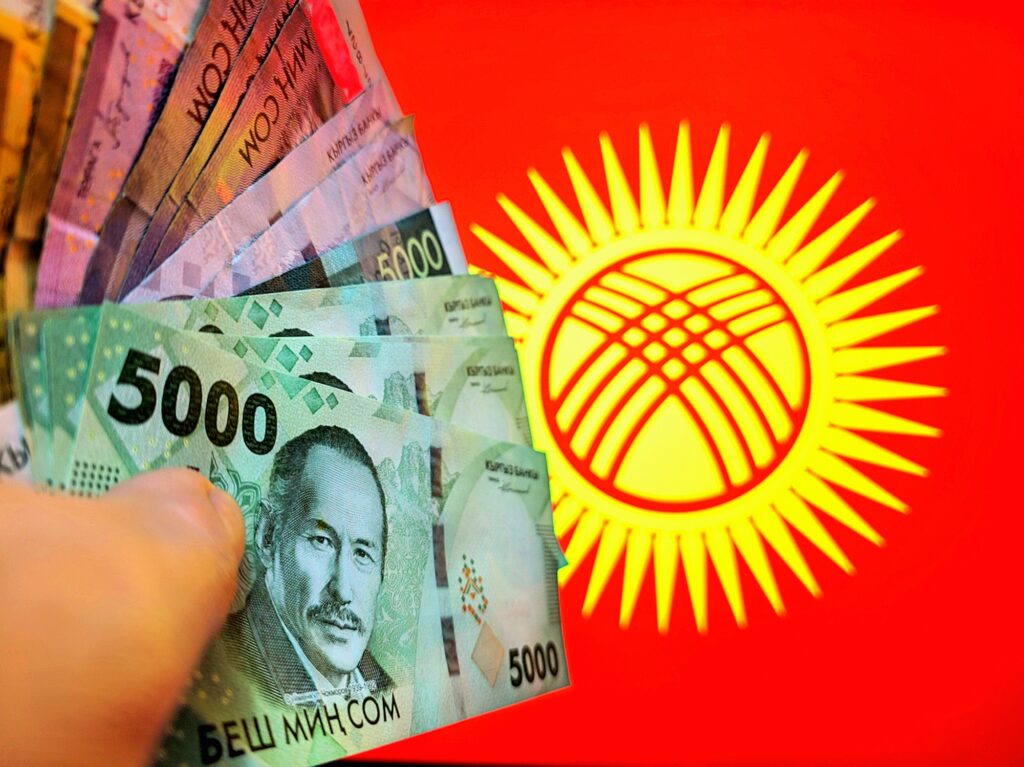
The Cabinet of Ministers of Kyrgyzstan has announced another postponement of fines for motorists without a Compulsory Motor Liability Insurance Policy (CMLIP). Initially set to take effect on January 1, 2025, the penalties will now be delayed until July 1. This is not the first time the implementation of this regulation has been deferred. Authorities concluded that citizens need clearer information about the requirements for mandatory auto insurance. “Currently, changes have been initiated to allow the CMLIP policy to automatically transfer to the new owner of the car when it is sold, which will greatly simplify the insurance process for citizens. We strongly recommend car owners issue a policy in advance to avoid penalties and ensure the protection of their liability on the roads,” stated the Cabinet’s official message. Under the amended law, individuals who fail to secure a CMLIP will face fines of KGS 3,000 ($35), while legal entities will be fined KGS 13,000 ($150). Notably, fines for legal entities have been enforceable since spring 2023. As previously reported by The Times of Central Asia, every motorist in Kyrgyzstan is required to purchase an insurance policy when re-registering a vehicle. However, compliance remains a significant challenge. Despite efforts by the State Insurance Organization to promote compulsory insurance - including warnings about fines - results have been underwhelming. Only around 100,000 vehicles in Kyrgyzstan are insured, out of the 1.6 million cars registered in the country. The Cabinet’s decision to delay penalties aims to provide additional time for public awareness campaigns and to address logistical issues, such as enabling automatic policy transfers during vehicle sales. Officials hope these measures will encourage more motorists to comply with the law before fines are enforced in mid-2025.

Amid Discontent Among Entrepreneurs, Kyrgyz Authorities Ease Tax Burden

Kyrgyz President Sadyr Japarov has instructed the new Prime Minister Adylbek Kasymaliev and the head of the State Tax Service (STS) to develop a new fiscal policy that will not overburden citizens or force entrepreneurs to conceal their income. Special attention is to be paid to electronic bills of lading (EBL). Following a corruption scandal in the STS, the new head of the tax service, Almambet Shykmamatov, proposed abolishing the EBLs introduced by the government in the summer of 2024. At a parliamentary session, Shykmamatov explained that the EBLs were implemented to combat the shadow turnover of goods. However, the new reporting system has sparked numerous complaints from entrepreneurs. Shykmamatov stated, "I will find those who implemented the EBL system improperly and without analysis and ensure they are held accountable. I will explain what populism is and why simply raising taxes and calling it economic growth is unacceptable." EBLs (electronic bills of lading) replaced the so-called voluntary patents that entrepreneurs and market traders used to purchase monthly as a form of tax payment. Later, during a government meeting, Kasymaliev, head of the Kyrgyz Cabinet of Ministers, confirmed that despite widespread public protests, the authorities do not intend to abolish EBLs entirely but assured that the Cabinet will work to simplify the system and will study the possibility of revising the list of goods to be included in the reporting of EBL. The Times of Central Asia surveyed entrepreneurs who have been most affected by EBLs. Venera Mugalimova, a seller of electrical building supplies at a Bishkek market, said, "The introduction of EBLs has severely complicated my life. This system is unfeasible for me and all vendors working on consignment sales. In such cases, we first receive the goods, sell them, and only then settle the payment. The system doesn’t recognize 'consignment goods.' The company providing the goods on consignment cannot issue me an invoice without payment.” According to sellers, individuals offering paid training on how to use the EBL system have started to appear in Kyrgyzstan's online space, and their services are in high demand. "It’s a massive headache, although it depends on your business type. In my case, we deal with many small items—about 5,000 different products. Manually entering the name, price, and exchange rate for each product is problematic and very time-consuming," Alena, a wholesale seller of fabrics and clothing at Dordoi Market, told The Times of Central Asia. Her company not only sells goods but also imports them from nearby countries. "With EBLs, I lose a lot of time. Either I focus on reporting or work. Combining both is very hard, and we’d need to hire at least three accountants for the number of outlets we have. That’s additional expenses," the businesswoman noted. Sergey Ponomarev, President of the Association of Markets, Trade Enterprises, and Service Industries, commented to The Times of Central Asia that moving away from the patent system was crucial in combating the shadow economy. However, the current situation with EBLs looks less than optimistic.

Kyrgyz Journalists Reject Japarov Criticism of Foreign Funding in the Media

Kyrgyzstan's President Sadyr Japarov has criticized the country's media for its willingness to accept foreign funding. American diplomats disagree with the government’s “accusations,” while local journalists pointed out that Kyrgyz media operates with the help of advertising and grants. Speaking at the recent People's Kurultai (Congress) in Bishkek, Japarov criticized several Kyrgyz media outlets for receiving foreign funding, accusing journalists of spreading false information. According to him, most Kyrgyz publications have foreign sponsors. Japarov claimed that journalists obey their "masters" and are therefore deprived of freedom of speech. The president also shared data on foreign funding received by some opposition media outlets and NGOs. “These funds are accounted for in reports only superficially. Their foreign sponsors say, ‘Yes, they are doing a good job.’ But what’s really happening? Here, they spread false information, look for negativity, and undermine the reputation of others. And when lawsuits are filed against them, they immediately claim it’s an attack on freedom of speech,” Japarov said. The president addressed the leadership of the U.S. State Department, stating that funds should be directed directly to Kyrgyz authorities. “We will ensure their effective use. Do you want to raise the level of journalism? We can do it. Do you want complete freedom of speech? We guarantee it,” Japarov emphasized. A few days later, the U.S. Embassy in Bishkek responded to the criticism. “In the field of journalism, our assistance is aimed at funding fact-checking programs, supporting Kyrgyz-language journalism, and assisting investigative journalists in uncovering violations, including corruption,” the diplomats said in a statement. The embassy emphasized its belief that independent media, which performs a watchdog role in society, is crucial for any government. In an interview with The Times of Central Asia, journalist Chynara Sydykova shared that grant support enabled her to implement several socio-cultural projects. “These projects helped us grow and become independent professionals in directing, producing, and project management. Finally, it allowed us to simply become journalists capable of working honestly, objectively, and professionally, covering topics of public interest,” Sydykova said. The investigative journalist noted that none of the grant providers interfered with the work process. However, Sydykova admitted that manipulations could occasionally occur. “Journalists shouldn’t cling to every visible opportunity to get funding. They need to build a reputation so that no one would even think of using them as an agent of influence. Thanks to my television projects, I provided real help to respondents in the areas of health and social injustice,” Sydykova added. Public figure and journalist Alisher Tashmatov told The Times of Central Asia that he takes a neutral stance on grants. According to him, the most important thing is that grants allocated by foreign institutions should not threaten Kyrgyzstan’s national security. “In Kyrgyzstan, media survives through advertising and grants. Only a few receive funding from the state. Moreover, even state-owned media occasionally receives financial assistance from foreign institutions and companies,” he noted, adding that criticism of the authorities should be well-founded.

Uzbekistan Moves to Penalize Financing of Mass Disturbances

Uzbekistan’s Parliament, the Oliy Majlis, is taking decisive steps to address the organization and financing of public disturbances. On December 11, the Legislative Chamber approved a draft law amending Article 244 of the Criminal Code. Passed in its first reading, the amendments aim to strengthen the country’s legal framework for tackling mass disturbances. During a parliamentary session on December 24, the draft law advanced further, reaching its third reading and gaining adoption. The updated Article 244 introduces several significant changes: A new third section establishes specific liability for individuals undergoing training with the intent to participate in mass disturbances. A fourth section introduces fines for financing such activities. A fifth section provides an exemption from criminal liability for individuals who voluntarily report to law enforcement after undergoing such training. These amendments are designed to deter organized disturbances while promoting cooperation with authorities.

Kyrgyzstan to Update National Anthem

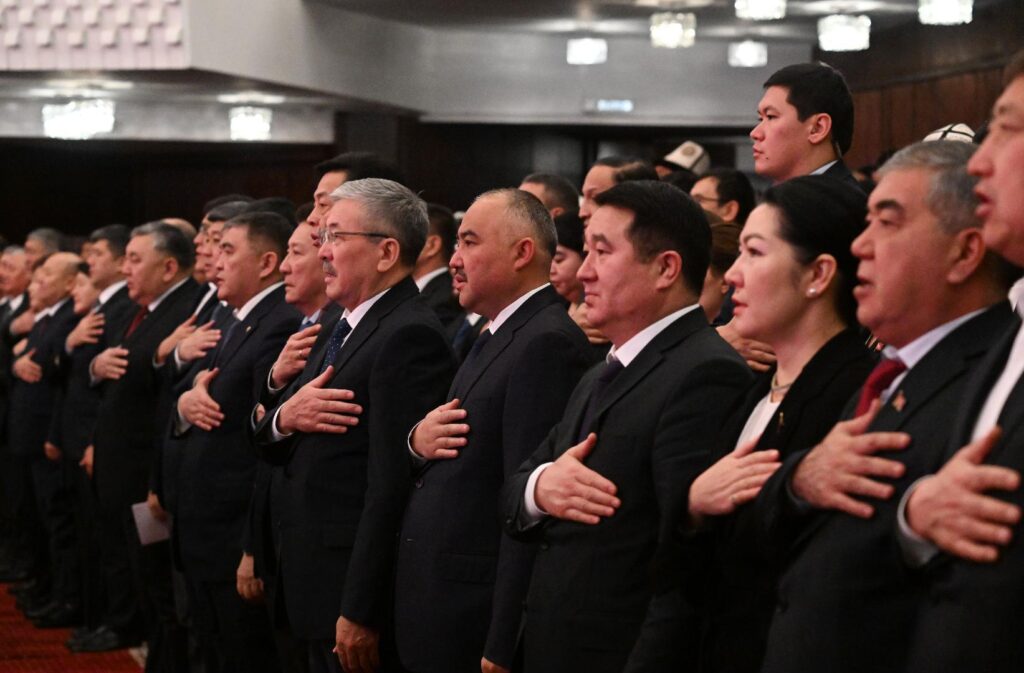
The Ministry of Culture, Information, Sports, and Youth Policy of Kyrgyzstan, in collaboration with creative unions, is working on crafting a new national anthem. The announcement was made during a press conference in Bishkek by Melis Murataliyev, chairman of the National Commission on the State Language. An interdepartmental commission has been established to evaluate proposed versions of the anthem. “We have been tasked with conducting a linguistic examination of all selected variants to ensure they align with our culture, traditions, and worldview. We will assess whether the meaning of word combinations remains consistent when pronounced. Three versions will ultimately be submitted to the Jogorku Kenesh for approval, but not before undergoing rigorous linguistic review,” Murataliyev stated. Parliament Speaker Nurlanbek Shakiyev had first proposed changing the anthem several months ago. He noted that the current anthem was adopted during a challenging period following Kyrgyzstan’s independence. “Today, we are a stable and developing state. For this reason, the anthem should reflect our progress and be one that everyone can sing with pride,” Shakiyev said. He emphasized that the selection process should involve public participation, allowing citizens to contribute text and melody proposals. The contest criteria stipulate that the anthem should celebrate Kyrgyzstan, inspire its people, and encourage development and progress. President Sadyr Japarov has also expressed support for the initiative. He believes the current anthem has lost its relevance and sees no issue with updating it. “The anthem should be the work of creative individuals - composers and poets - and its development should involve public discussion. If the majority supports a new anthem, it would be a positive step forward. Imagine schoolchildren and Aksakals singing it together; that would be truly wonderful,” Japarov remarked. The new anthem is expected to be adopted by April next year.