
• KGS/USD = 0.01143 0%
  • KZT/USD = 0.00201 0%
  • TJS/USD = 0.10510 -0.28%
  • UZS/USD = 0.00008 0%
  • TMT/USD = 0.28575 0%
  • KGS/USD = 0.01143 0%
  • KZT/USD = 0.00201 0%
  • TJS/USD = 0.10510 -0.28%
  • UZS/USD = 0.00008 0%
  • TMT/USD = 0.28575 0%
  • KGS/USD = 0.01143 0%
  • KZT/USD = 0.00201 0%
  • TJS/USD = 0.10510 -0.28%
  • UZS/USD = 0.00008 0%
  • TMT/USD = 0.28575 0%
  • KGS/USD = 0.01143 0%
  • KZT/USD = 0.00201 0%
  • TJS/USD = 0.10510 -0.28%
  • UZS/USD = 0.00008 0%
  • TMT/USD = 0.28575 0%
  • KGS/USD = 0.01143 0%
  • KZT/USD = 0.00201 0%
  • TJS/USD = 0.10510 -0.28%
  • UZS/USD = 0.00008 0%
  • TMT/USD = 0.28575 0%
  • KGS/USD = 0.01143 0%
  • KZT/USD = 0.00201 0%
  • TJS/USD = 0.10510 -0.28%
  • UZS/USD = 0.00008 0%
  • TMT/USD = 0.28575 0%
  • KGS/USD = 0.01143 0%
  • KZT/USD = 0.00201 0%
  • TJS/USD = 0.10510 -0.28%
  • UZS/USD = 0.00008 0%
  • TMT/USD = 0.28575 0%
  • KGS/USD = 0.01143 0%
  • KZT/USD = 0.00201 0%
  • TJS/USD = 0.10510 -0.28%
  • UZS/USD = 0.00008 0%
  • TMT/USD = 0.28575 0%
28 February 2026

Viewing results 1 - 6 of 4

Beshbarmak, Pilaf, and Olivier Salad: What Will Be Served on New Year’s Eve Tables in Central Asia

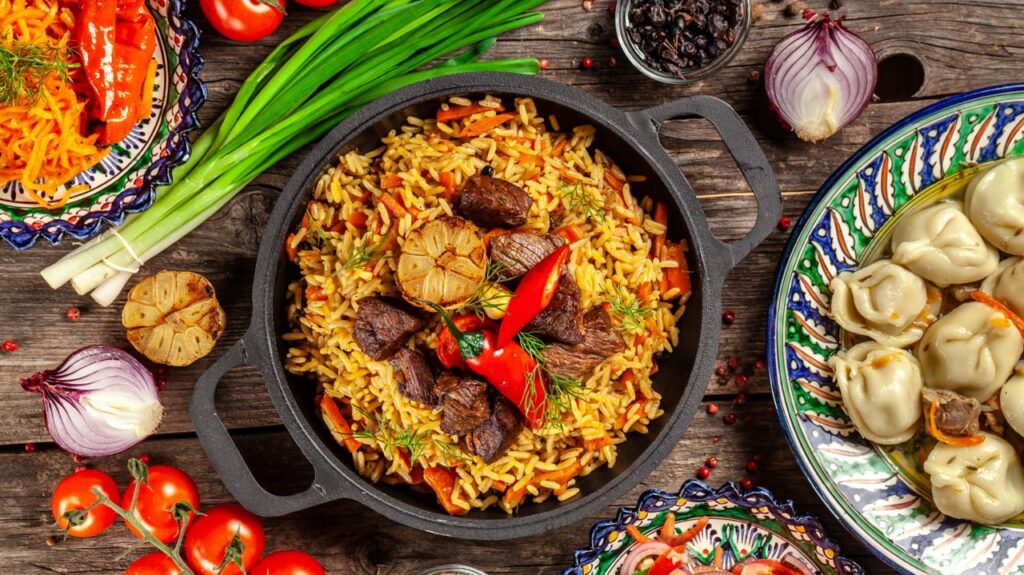
New Year remains one of the most significant holidays in Central Asia. While its scale and prominence have gradually declined due to rising religiosity, many residents still regard it as the foremost secular and ideology-free celebration of the year. Across the region, households prepare their most beloved dishes to ring in the occasion. No New Year Without Olivier Salad For many families, traditional fare is an essential part of New Year’s Eve. Olivier salad has long been a staple of the holiday table. Originally created in the 1860s by a French chef in Russia, the dish once featured ingredients such as hazel grouse and seafood. Over time, particularly during the Soviet era of shortages, the recipe evolved. Today, Olivier salad typically includes beef, chicken (or boiled sausage), potatoes, green peas, pickled cucumbers, and mayonnaise. It is usually prepared in large batches to ensure there is enough for all guests. Other popular salads include herring under a fur coat, vinaigrette, and “Tenderness”, hearty dishes that can leave guests too full for main courses. Even in modest households, red caviar often finds its way to the table, adding a touch of festivity and indulgence. Kazakhstan: Beshbarmak with a Twist In Kazakhstan, beshbarmak remains the centerpiece of the New Year’s feast, as it is for most major celebrations. Traditionally, the dish combines three cuts of horse meat, kazy, karta, and zhay, served with flat noodles and onions. However, some families are adapting their menus in line with the Chinese zodiac. As the Year of the Red Horse approaches, online advice has suggested avoiding horse meat out of respect for the symbolic animal. A vegan version of beshbarmak, featuring mushrooms and pumpkin, is gaining traction. Baked koktal fish is another showpiece dish, while kuydak (lamb with potatoes and onions) and khan syrbaz (a rich stew of lamb, vegetables, barley, and broth) are popular additions. Desserts often include traditional fermented milk products such as zhent, katyk, and irimshik, and the table is rarely without kumys, a fermented mare’s milk beverage. Uzbekistan: Pilaf Reigns Supreme In Uzbekistan, New Year is celebrated with great enthusiasm. According to folklore, Korbobo, a local version of Santa Claus, arrives on a donkey with his granddaughter Korgyz to distribute gifts to well-behaved children. Pilaf, or plov, is the dominant holiday dish. Made with rice, carrots, onions, meat, and spices, regional variations might include raisins or quince for added sweetness. Each area boasts its own version of the national favorite. Samsas, meat-filled pastries baked in a tandoor, are also served, as are manti, large, steamed dumplings filled with lamb, beef, or pumpkin. Other popular dishes include kazan-kabob (fried meat and potatoes). For dessert, chak-chak (fried dough with honey) and halva (made from sesame, semolina, or nuts) are perennial favorites. Kyrgyzstan: Boorsoki and Beshbarmak In Kyrgyzstan, beshbarmak, prepared with either horse meat or lamb, is also a central dish. Families commonly serve manti, baked chicken, and boorsoki (known in Kazakhstan as baursaki), fried dough balls that are a holiday staple. Other meat-based specialties...

Tashkent Supermarket Expands to Manhattan, Bringing Central Asian Flavors and Culture to the West Village

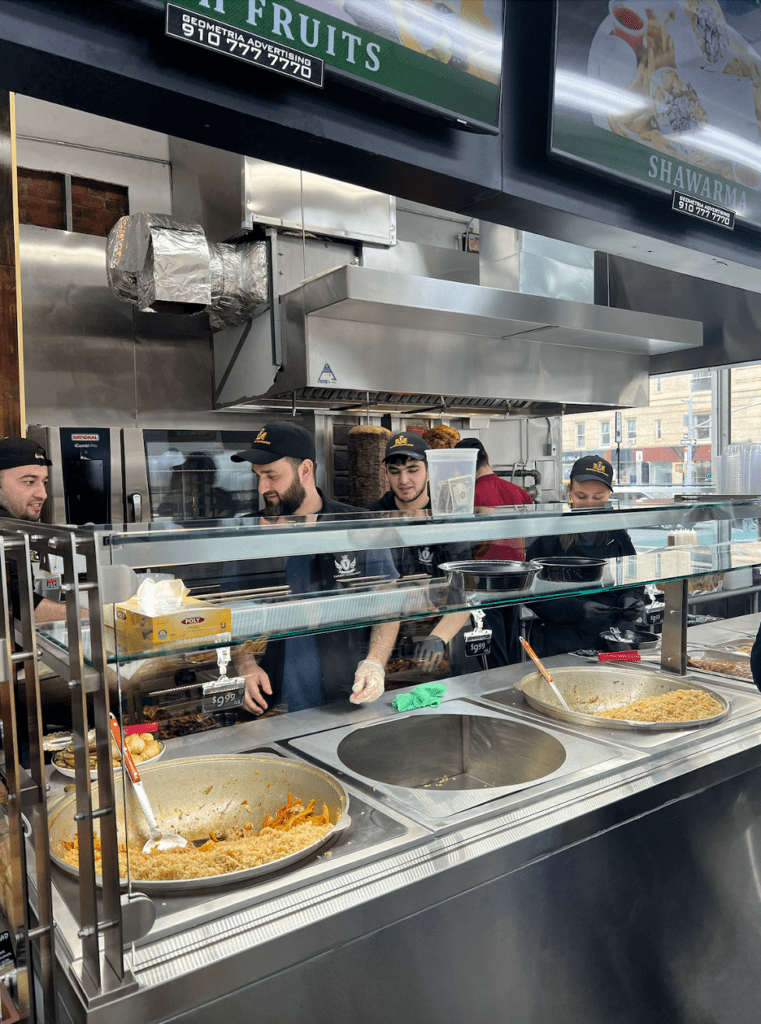
After years of the iconic Brighton Beach grocery store and its ever-fresh hot bar, Tashkent Supermarket announced it would open its first Manhattan location in 2022, spurring excitement and anticipation in the West Village. 378 Sixth Avenue is now home to an intoxicating array of fresh Central Asian foods, imported products, and friendly faces sharing incredible cultures. TCA went to the new Manhattan branch to talk to patrons about their thoughts on the new location, how the food tastes, and their knowledge of Uzbekistan and Central Asia. We first spoke with Margarita, an ethnic Russian who has lived in New York for the past three years. Before moving to New York, she lived in Tashkent for 16 years. [caption id="attachment_29912" align="aligncenter" width="936"] Located right at the West 4th Street-Washington Square subway stop, Tashkent Supermarket sees a lot of foot traffic[/caption] “I’ve been to this location a few times already; it’s good but not quite as big as the flagship store in Brighton,” she told me. “I go for the imported Russian food; their grechka (buckwheat) is the best, and their hot bar tastes exactly like the food I miss from Uzbekistan. I go to their stores thrice a week, and importantly, the prices are very competitive for New York, especially meat and produce.” Among the American produce and packaged products, Armenian juices, Russian cookies, and Uzbek seasonings line the shelves. Unfamiliar patrons pick up and inspect foreign products and inspect them. Two girls, who admitted they didn't know much about Uzbekistan or Central Asia, peered through the store's window, watching people place syrniki (cottage cheese pancakes) into plastic containers. "These pancakes really caught my eye," one said. "I've tried Afghan food before, but never Uzbek or other Central Asian cuisine. This supermarket in my neighborhood will help expand my palate and let me try new things." [caption id="attachment_29913" align="aligncenter" width="936"] Hot bar food includes fresh salads, chubereki, samsa, manty, and pastries[/caption] Ilona, a native of Vilnius, Lithuania, has lived in New York for over 25 years, and her whole family loves Tashkent Supermarket. “It is a slice of home in New York, and they have a great selection of products from the former Soviet Union. It is the only place in the city where I can find the ingredients I need to make my favorite food. Parsley root, dill, and other herbs are my main purchases here. I love this store and its community so much.” Aizhan, an ESL teacher from Almaty, has lived in New York for nine years. “It is my first time at the Manhattan location. It is excellent, and the prices are very reasonable. They are my go-to for catering orders, and everyone is always happy with the quality and taste of the food. They do a phenomenal job making [Central Asian] food. I have not been back [to Kazakhstan] in years, but coming to Tashkent Supermarket makes me feel like I have transported myself back to Almaty.” Michele, a New York native, traveled to Uzbekistan,...