• KGS/USD = 0.01144 0%
  • KZT/USD = 0.00216 0%
  • TJS/USD = 0.10562 0%
  • UZS/USD = 0.00008 0%
  • TMT/USD = 0.28530 0%
  • KGS/USD = 0.01144 0%
  • KZT/USD = 0.00216 0%
  • TJS/USD = 0.10562 0%
  • UZS/USD = 0.00008 0%
  • TMT/USD = 0.28530 0%
  • KGS/USD = 0.01144 0%
  • KZT/USD = 0.00216 0%
  • TJS/USD = 0.10562 0%
  • UZS/USD = 0.00008 0%
  • TMT/USD = 0.28530 0%
  • KGS/USD = 0.01144 0%
  • KZT/USD = 0.00216 0%
  • TJS/USD = 0.10562 0%
  • UZS/USD = 0.00008 0%
  • TMT/USD = 0.28530 0%
  • KGS/USD = 0.01144 0%
  • KZT/USD = 0.00216 0%
  • TJS/USD = 0.10562 0%
  • UZS/USD = 0.00008 0%
  • TMT/USD = 0.28530 0%
  • KGS/USD = 0.01144 0%
  • KZT/USD = 0.00216 0%
  • TJS/USD = 0.10562 0%
  • UZS/USD = 0.00008 0%
  • TMT/USD = 0.28530 0%
  • KGS/USD = 0.01144 0%
  • KZT/USD = 0.00216 0%
  • TJS/USD = 0.10562 0%
  • UZS/USD = 0.00008 0%
  • TMT/USD = 0.28530 0%
  • KGS/USD = 0.01144 0%
  • KZT/USD = 0.00216 0%
  • TJS/USD = 0.10562 0%
  • UZS/USD = 0.00008 0%
  • TMT/USD = 0.28530 0%

Viewing results 1 - 6 of 5

Kyrgyz Authorities Tighten Control Over Meat Prices

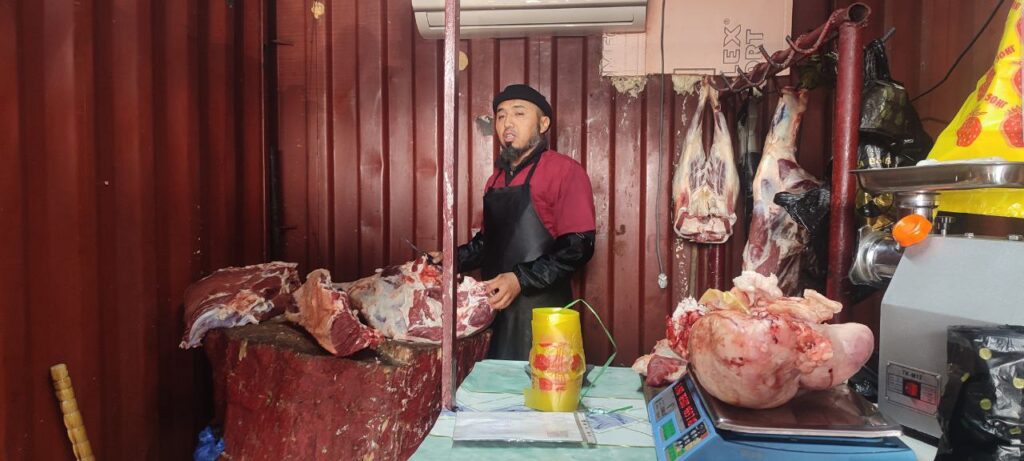
Temporary state regulation of meat prices has been in effect in Kyrgyzstan for several months. Inspectors fine sellers who exceed the permissible price caps. The first violation typically results in a warning. The Ministry of Economy and Commerce recently extended the regulation. The price controls were due to expire last week, but officials argue that without oversight, rising meat prices could trigger an increase in the cost of other goods and the broader consumer basket. In Bishkek, the government has set maximum retail prices at $7.50 per kilogram for lamb and $7.70 for beef. Price caps in the regions are slightly lower. According to sellers, rising prices are driven not by profit motives but by external pressures, prolonged drought, higher fuel prices, increased transportation costs, and a surge in meat exports, especially to Uzbekistan. “Meat is indeed becoming more expensive, mainly because it is being exported abroad. We need to provide for ourselves first. When we sell at state-set prices, it becomes unprofitable, we operate at a loss. We still have to pay rent, electricity, patent fees, security, and water,” said Mirlan Tursunaliyev, a meat seller in Bishkek, speaking to The Times of Central Asia. He added that vendors hope the price caps will be revised to better reflect their operational costs. Officials from the Antimonopoly Regulation Service note that some sellers are unwilling to comply with legal requirements such as submitting documents, updating price tags, or paying fines. In some cases, enforcement raids are carried out jointly with police. According to the agency, meat prices in Kyrgyzstan typically rise between May and September. Authorities expect demand to decline toward the end of the year, as is customary in winter. A seasonal drop in demand could also bring down production costs.

Kyrgyzstan Restricts Livestock Exports to Stabilize Meat Prices

In early 2025, Kyrgyzstan temporarily suspended livestock exports in a bid to curb rising meat prices on the domestic market. The measure has resulted in a significant reduction in export volumes. According to the Ministry of Water Resources, Agriculture and Processing Industry, between January and mid-August 2025, Kyrgyzstan exported 30,493 cattle, 31,781 sheep and goats, and 1,636 horses. This marks a sharp decline compared to the same period in 2024, when the country exported 77,907 cattle, 70,392 sheep and goats, and 5,113 horses. Kyrgyz livestock is primarily exported to neighboring Central Asian countries. Officials say the suspension has helped prevent meat shortages and price surges domestically. To further bolster local meat production and supply, the ministry has proposed extending the export ban for an additional six months. In the first half of 2025, Kyrgyzstan produced 115,400 tons of meat, an increase of 3,900 tons compared to the same period in 2024. However, demand continues to outpace supply. National meat consumption stood at 309,400 tons in 2024 and reached 157,300 tons in the first half of 2025. In 2024, Kyrgyzstan met 86.2% of domestic meat demand through local production. That figure dropped to 79.7% in the first half of 2025, underscoring the country’s ongoing reliance on imports to bridge the supply gap. To contain prices, the government implemented temporary state control over retail meat prices beginning August 11. For a 90-day period, the price of beef and mutton has been capped at 700 Kyrgyz soms ($8) per kilogram.

Kyrgyzstan Introduces Meat Price Regulation Amid Export Surge

In response to rising domestic meat prices and increasing livestock exports, Kyrgyzstan has introduced state regulation of meat pricing. The directive was issued by Bakyt Torobaev, Minister of Water Resources, Agriculture, and Processing Industry. According to the minister, the state will now monitor meat prices, track livestock movements, and impose restrictions on meat exports to neighboring countries. Torobaev also instructed the Antimonopoly Regulation Service (ARS) to maintain continuous oversight of price trends and conduct market analysis across the country. Ministry specialists are expected to carry out inspections and engage with vendors to prevent unjustified price hikes. The Ministry of Agriculture stated that all relevant departments have been mobilized to implement the directive. Veterinary, livestock, and pasture authorities have been tasked with strengthening sanitary oversight of livestock transportation. These efforts will be coordinated with the Border Service to combat smuggling. Unregulated livestock exports, particularly of native Kyrgyz sheep breeds, have long been a concern for authorities. Strong demand from neighboring countries has created domestic supply shortages, contributing to annual price increases of approximately 10%. Uzbekistan remains the primary destination for Kyrgyz meat and livestock exports. In addition to meat products, Uzbekistan imports live sheep for breeding purposes. According to the National Statistical Committee, Kyrgyzstan exported 233,000 live goats and sheep valued at $23.5 million and 130,000 head of cattle worth $24.5 million to Uzbekistan in 2024. Some of this livestock is subsequently transported from Uzbekistan to Tajikistan. The new price regulation measures are part of broader government efforts to ensure national food security and stabilize prices in the domestic market.