• KGS/USD = 0.01144 0%
  • KZT/USD = 0.00198 -0%
  • TJS/USD = 0.10903 0.18%
  • UZS/USD = 0.00008 0%
  • TMT/USD = 0.28571 0%
  • KGS/USD = 0.01144 0%
  • KZT/USD = 0.00198 -0%
  • TJS/USD = 0.10903 0.18%
  • UZS/USD = 0.00008 0%
  • TMT/USD = 0.28571 0%
  • KGS/USD = 0.01144 0%
  • KZT/USD = 0.00198 -0%
  • TJS/USD = 0.10903 0.18%
  • UZS/USD = 0.00008 0%
  • TMT/USD = 0.28571 0%
  • KGS/USD = 0.01144 0%
  • KZT/USD = 0.00198 -0%
  • TJS/USD = 0.10903 0.18%
  • UZS/USD = 0.00008 0%
  • TMT/USD = 0.28571 0%
  • KGS/USD = 0.01144 0%
  • KZT/USD = 0.00198 -0%
  • TJS/USD = 0.10903 0.18%
  • UZS/USD = 0.00008 0%
  • TMT/USD = 0.28571 0%
  • KGS/USD = 0.01144 0%
  • KZT/USD = 0.00198 -0%
  • TJS/USD = 0.10903 0.18%
  • UZS/USD = 0.00008 0%
  • TMT/USD = 0.28571 0%
  • KGS/USD = 0.01144 0%
  • KZT/USD = 0.00198 -0%
  • TJS/USD = 0.10903 0.18%
  • UZS/USD = 0.00008 0%
  • TMT/USD = 0.28571 0%
  • KGS/USD = 0.01144 0%
  • KZT/USD = 0.00198 -0%
  • TJS/USD = 0.10903 0.18%
  • UZS/USD = 0.00008 0%
  • TMT/USD = 0.28571 0%
05 December 2025

Viewing results 1 - 6 of 20

Nigora Fazliddin: The Social Media Storyteller Bringing Life in Tajikistan to the World

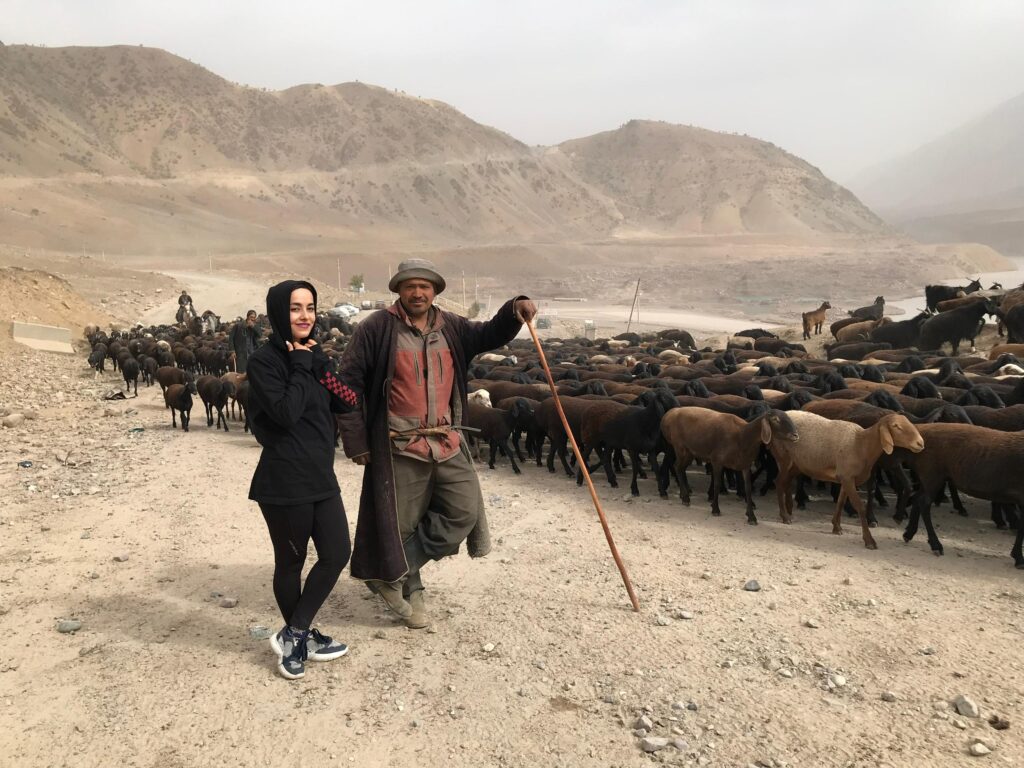
For all its beauty and Silk Road history, Tajikistan remains one of the least visited countries on earth. Life in its epic mountain ranges is rarely captured by photographers, and documentary films are few and far between – mainly half-hearted vlogs by the foreigners who pass through on the Pamir Highway. But in recent years, one Tajik filmmaker and travel influencer has made it her mission to show both her own people and the wider world what makes her homeland so extraordinary. Nigora Fazliddin, a former journalist from Dushanbe, is part of a new generation of creators using social media to bridge cultural distances. Posting simple videos and photographs from her journeys in Tajikistan, she captures the landscapes and communities that outsiders, and even many Tajiks, rarely get to see. "This love I have for our land – its wild beauty, its silence, its soul – I try to share with others," she tells The Times of Central Asia. "On X I mostly reach an international audience, since it's not very popular in Tajikistan. But on Instagram, it's a different story. That’s where Tajiks find me, and where I find them." [caption id="attachment_35211" align="aligncenter" width="400"] Image: Nigora Fazliddin[/caption] One of her favorite discoveries, she says, is Shirkent National Park in the south-west of the country, where fossilized dinosaur footprints mark the earth. "It gives you goosebumps to stand there and imagine creatures walking those same paths millions of years ago," she adds. Then there are the Pamirs, often called “the roof of the world.” At 7,495 meters, Peak Somoni attracts mountaineers from Central Asia and further afield. The region is also home to the rare Marco Polo sheep and shaggy yaks, which are found only here. But what lingers most for Fazliddin is not the challenge of climbing or the sight of wildlife, but the solitude of valleys so remote that no car can reach them. She also cherishes journeys into the Yaghnob Gorge, where people still live as their ancestors did. There she met a shepherd in his seventies, Mirzoali, who has spent four decades with his flock among the peaks. "He told me, “I’ve been a shepherd for 40 years – and I never get tired of it.’” His secret? Clean air, peace, a healthy routine – and living in the mountains year-round. That’s the kind of wisdom you can only find in the mountains," she says. [caption id="attachment_35209" align="aligncenter" width="400"] Image: Nigora Fazliddin[/caption] What Fazliddin shares online is more than travel content. For many Tajiks, especially those in cities, her images bring new perspectives to familiar places. "My Instagram has become like a mirror where people can see themselves, their roots, and the beauty they grew up with – but may have never really looked at," she explains. The responses have been moving. Her social media followers now invite her to visit their villages. For Fazliddin, these moments confirm that her work is worth doing: "It makes me feel like what I do matters – even in...

Netflix Documentary ‘Off Road’ Showcases Kyrgyzstan to the World

A new documentary series, Off Road, filmed in Kyrgyzstan by Faraway Road Productions, has premiered on the global streaming platform Netflix. The project was produced in collaboration with Kyrgyzstan’s Ministry of Economy and Commerce, the Department of Tourism, and the Tourism Development Support Fund, all of whom played key roles in facilitating filming across the country. Off Road takes viewers on a thrilling automotive adventure across some of Kyrgyzstan’s most breathtaking landscapes from the capital Bishkek to the high mountain valleys of Issyk-Kul, Karakol, and other iconic destinations. Over six episodes, the series immerses audiences in the country’s natural beauty, vibrant culture, and the renowned hospitality of the Kyrgyz people. Edil Baisalov, Deputy Chairman of the Cabinet of Ministers of Kyrgyzstan, emphasized the significance of the series: “Thanks to the release of Off Road, millions of viewers around the world will discover the stunning nature of Kyrgyzstan and the traditional warmth of our people. We are grateful to the production company and Netflix for choosing Kyrgyzstan as a filming location. Next year, several additional films and series are expected to launch, further promoting our country’s tourism potential on Netflix and other international platforms.” More than a backdrop, Kyrgyzstan emerges as the true protagonist of Off Road, inviting global audiences to experience its rugged terrain, rich traditions, and unspoiled beauty.

Legal Media Center to Sue Kazakh Foreign Ministry Over Journalist Accreditation Refusal

The Legal Media Center, a media-focused human rights organization, has announced plans to file a lawsuit against Kazakhstan’s Ministry of Foreign Affairs (MFA) over its refusal to accredit seven journalists from Radio Azattyq, the Kazakh service of Radio Free Europe/Radio Liberty (RFE/RL). According to Gulmira Birzhanova, head of the center’s legal department, the new regulations on foreign media introduced in 2024 have created a restrictive legal framework that infringes on journalists’ constitutional rights. “By delaying their response and failing to provide concrete grounds for the MFA’s refusal to extend accreditation, the Ministry created conditions that violate journalists’ constitutional rights and legal protections. We remind the authorities that our journalists work for a media outlet already accredited in Kazakhstan,” Birzhanova said in a statement posted to Facebook. The updated rules prohibit foreign media outlets from operating in Kazakhstan without official MFA accreditation. The Legal Media Center argues that these provisions constitute a de facto professional ban and conflict with both Kazakhstan’s Constitution and international press freedom standards. The organization also claims that the restrictions appear to be selectively enforced, with Radio Azattyq being specifically targeted. In January 2024, the MFA denied accreditation to several RFE/RL journalists, some of whom had not had their credentials renewed since late 2022. Radio Azattyq subsequently filed a lawsuit, which resulted in a mediation agreement in April. At the time, RFE/RL President Stephen Capus welcomed the outcome. “All we have ever asked for is that our journalists be allowed to do their jobs safely and without pressure. We remain committed to providing the Kazakh audience with independent and reliable information,” he said. The Times of Central Asia previously interviewed Kazakh journalist Asem Tokayeva, a long-time contributor to RFE/RL. In that interview, she described internal challenges and disagreements within the media organization, raising broader concerns about the future of independent journalism in Central Asia.

Digitizing Central Asia: Interview with Ainura Umaeva, Thought Leader in Communications and Media

This week The Times of Central Asia will be attending the CAMCA Regional Forum, which this year is being held in Ulaanbaatar, Mongolia.  The CAMCA network is a collection of professionals and policymakers dedicated to developing Eurasia by sharing ideas, knowledge and inspiration; its name stands for Central Asia, Mongolia, the Caucasus and Afghanistan. Ahead of the Forum, The Times of Central Asia spoke with Ainura Umaeva, the Owner and CEO of TIDAM Communications Agency in Almaty -- and a leader in strategic communications and advisory -- about what the CAMCA program means for the Eurasian communications and digital industries, and what the future might hold for women doing business in Central Asia. TCA: What condition do you feel the digital and information spaces are currently in – in Kazakhstan, and elsewhere in the Eurasia region? AU: Kazakhstan has made remarkable progress in digitalizing public services and fintech. For many of us, it’s now second nature to access government or commercial services instantly through a smartphone. This level of convenience has become so embedded in our daily lives that we often take it for granted. However, when we look deeper, we notice a different reality. Despite this visible digital infrastructure, there’s a significant lack of digital literacy — especially in the private sector. Many businesses are still not leveraging the full potential of digital technologies, including AI, data analytics, or automation. While we appear digitally advanced on the surface, in practice the digital transformation often remains quite superficial. The real challenge now is to deepen that transformation — to build not only user-facing digital tools but also internal digital capacity and data culture. In what areas do you think CAMCA initiatives can help them improve? One of the greatest strengths of CAMCA is its ability to bridge regional fragmentation. Although the CAMCA region is often perceived by the outside world as a cohesive bloc, internally we remain deeply segmented — informationally, economically, and culturally. Many countries in the region lack awareness of one another’s realities, opportunities, and success stories. Several years ago, I worked with a client on a cross-regional study, and it became clear to me how little we actually know about our neighbors. This informational disconnect leads to missed opportunities for collaboration and shared growth. Initiatives like the CAMCA Forum are essential because they foster not just dialogue, but a sense of common regional identity. Paradoxically, it often takes an external initiative to help us better recognize how much we share. Being born and raised in Kazakhstan, with roots in the Caucasus, I constantly reflect on the contrast between the two regions. Despite its political and linguistic diversity, the Caucasus is often perceived — and perceives itself — as more cohesive than Central Asia. In our region, we are still discovering our collective identity. You’re speaking in a session dedicated to women’s networks. How will women’s authority in Eurasian business look in 10 years compared to now? In our work with the She Business Women Community — a...

Turkmen Authorities Order Social Media Campaign to Showcase “Positive Image”

Authorities in Turkmenistan have launched a new initiative aimed at promoting a positive image of the country on social media platforms abroad. The campaign, ordered by the presidential administration in late May, is designed to counter what officials call “foreign centers of ideological subversion”, a term reminiscent of Soviet-era rhetoric used to describe independent media and opposition groups. Scripted Positivity: Who Films What Under the directive, regional administrations have been tasked with producing video content that highlights the country’s “achievements.” Cultural and arts workers are now expected to travel to rural areas to film staged interviews with farmers, gardeners, cotton growers, and artisans. These interviews must portray high living standards, rising incomes, modern amenities, and open support for the country's leadership. Visual presentation is tightly controlled: if a villager’s home is deemed sufficiently presentable, new construction, clean yard, the interview may be conducted there. Otherwise, filming must take place in fields or gardens to ensure an appealing backdrop. Begenchmyrat Orazov, khyakim (local governor) of the Mary region, emphasized that all content must be shot on ordinary mobile phones and without the involvement of professional teams or extra payment. “You get paid,” he reportedly reminded cultural workers during a May 28 meeting with local officials, law enforcement, and agricultural representatives. Millionaires on Paper Participants are instructed to describe their “decent earnings” using the outdated currency system, speaking in millions of old manats, despite the redenomination in 2009 (1 new manat = 5,000 old manats). This approach is intended to suggest inflated incomes to an international audience less familiar with the country's currency history. Cultural workers are encouraged to enhance the content by incorporating traditional songs, musical performances, or recitations of poetry by former president Gurbanguly Berdimuhamedov or the revered Turkmen poet Makhtumkuli. A Question of Translation Similar meetings have been held across all regions, and filming is reportedly underway. Villagers are required to submit documentation of completed work to the leadership of their agricultural associations, which must then report daily to district heads (etraps). However, a critical gap remains unresolved: how the video content will reach international viewers. The issue of translation into foreign languages has yet to be addressed. Posting videos exclusively in Turkmen is unlikely to appeal to a global audience. Additionally, many Turkmen migrants, one of the campaign’s implicit targets, are well aware of the country’s internal challenges. Old Tools for a New Image This initiative appears to be a response to increasing criticism from independent Turkmen media and social media platforms, which frequently report on the country’s socio-economic problems and human rights violations. These platforms, widely followed in the diaspora, have become a growing concern for the authorities in Ashgabat. Rather than engaging with the criticism through reform or transparency, the government is opting for a top-down media campaign reminiscent of earlier propaganda models. The focus seems less on improving conditions and more on reshaping perceptions. Whether this strategy will resonate beyond the bureaucratic machinery of the state remains to be seen.

Kazakhstan’s Institute of Nuclear Physics Launches Advances in Nuclear Science and Applications Journal

Kazakhstan’s Institute of Nuclear Physics has officially launched a new international scientific journal, Advances in Nuclear Science and Applications. The presentation of the first issue took place at the Institute’s headquarters and marks a significant step in the country's efforts to promote nuclear research and academic exchange on a global scale. According to the Ministry of Science and Higher Education, the journal is designed as a high-level international platform that integrates both fundamental and applied research in nuclear science and technology. It aims to foster open knowledge exchange and collaboration across borders. The inaugural issue, published in March 2025, features six peer-reviewed articles covering current topics in nuclear science. The journal will be published quarterly in English, in March, June, September, and December, and will follow international academic publishing standards. All submitted articles undergo a rigorous double-blind peer review process, and the journal is fully open access via its official website. The publication is also seeking inclusion in major global scientific databases such as Scopus and Web of Science. The editorial board consists of more than ten recognized experts from eight countries: Russia, Italy, Japan, the United States, Turkey, Poland, Romania, and Kazakhstan, reflecting the journal’s international scope and ambitions. Sayabek Sakhiev, Director General of the Institute of Nuclear Physics, emphasized the significance of the launch: “We have been working towards creating the journal for more than a year. This is the result of serious and purposeful work. Today we have big plans and high expectations. We strictly follow international standards and are confident that Advances in Nuclear Science and Applications will take its rightful place in world science.” The journal’s Editor-in-Chief, Prof. Mikhail Itkis, has also extended an invitation to early-career scientists, encouraging young researchers to submit their work for publication in upcoming issues.