• KGS/USD = 0.01144 0%
  • KZT/USD = 0.00198 -0%
  • TJS/USD = 0.10903 0.18%
  • UZS/USD = 0.00008 -0%
  • TMT/USD = 0.28490 -0.28%
  • KGS/USD = 0.01144 0%
  • KZT/USD = 0.00198 -0%
  • TJS/USD = 0.10903 0.18%
  • UZS/USD = 0.00008 -0%
  • TMT/USD = 0.28490 -0.28%
  • KGS/USD = 0.01144 0%
  • KZT/USD = 0.00198 -0%
  • TJS/USD = 0.10903 0.18%
  • UZS/USD = 0.00008 -0%
  • TMT/USD = 0.28490 -0.28%
  • KGS/USD = 0.01144 0%
  • KZT/USD = 0.00198 -0%
  • TJS/USD = 0.10903 0.18%
  • UZS/USD = 0.00008 -0%
  • TMT/USD = 0.28490 -0.28%
  • KGS/USD = 0.01144 0%
  • KZT/USD = 0.00198 -0%
  • TJS/USD = 0.10903 0.18%
  • UZS/USD = 0.00008 -0%
  • TMT/USD = 0.28490 -0.28%
  • KGS/USD = 0.01144 0%
  • KZT/USD = 0.00198 -0%
  • TJS/USD = 0.10903 0.18%
  • UZS/USD = 0.00008 -0%
  • TMT/USD = 0.28490 -0.28%
  • KGS/USD = 0.01144 0%
  • KZT/USD = 0.00198 -0%
  • TJS/USD = 0.10903 0.18%
  • UZS/USD = 0.00008 -0%
  • TMT/USD = 0.28490 -0.28%
  • KGS/USD = 0.01144 0%
  • KZT/USD = 0.00198 -0%
  • TJS/USD = 0.10903 0.18%
  • UZS/USD = 0.00008 -0%
  • TMT/USD = 0.28490 -0.28%
06 December 2025

Viewing results 1 - 6 of 4

Kyrgyzstan Shutters April TV as President Signs New Media Law

A district court in Bishkek has ordered the liquidation of April TV, one of Kyrgyzstan’s few remaining independent broadcasters, intensifying what some observers are calling an ongoing campaign to silence dissenting voices in the country’s media landscape. The decision, handed down by the Oktyabr District Court on July 9, followed a lawsuit brought by state prosecutors who alleged that the broadcaster's content was “biased, one-sided, destructive and manipulative,” and posed a threat to the constitutional order. In a related development, on July 11, President Sadyr Japarov signed a new law clamping down on media freedom into force. In the district court, prosecutors argued that April TV’s content risked inciting mass unrest and undermining the authority of the state. The court’s ruling cited assessments conducted by the State Committee for National Security (GKNB), which claimed that the broadcaster’s video reports negatively influenced public opinion, insulted government officials, and could provoke calls for the seizure of power. Over the past two years, President Japarov's administration claims to have successfully thwarted several attempted coups and assassination plots targeting high-ranking officials. These incidents, according to the government, highlight ongoing challenges to political stability in Kyrgyzstan, which has framed its efforts as critical to ensuring the country’s continued progress amidst a complex regional and domestic landscape. In addition to terminating April TV’s legal status, the court also authorized the blocking of its online platforms and affiliated channels, including the popular YouTube-based partner channel Next TV. Editor-in-chief of April TV, Dmitriy Lozhnikov, rejected the government’s claims, defending the station’s critical tone and stating that “criticizing the government isn’t a crime, but one of the core functions of the press.” In a final message before going offline, the outlet declared it was taking “a vacation from which [we] might never return.” At least ten current and former staff members of April TV were summoned for questioning by the GKNB as part of a broader criminal probe. No specific charges have been disclosed. The closure of April TV mirrors actions taken against other prominent independent outlets in Kyrgyzstan over the past two years. In February 2024, a Bishkek court approved the liquidation of Kloop, a media organization known for its investigative reporting on corruption – a ruling later upheld by the Supreme Court. The authorities claimed that its charter did not permit Kloop to engage in journalism, and objected to what they described as the “negative tone” of its reporting. In late May, the security forces conducted coordinated raids on the homes of eight current and former Kloop employees in Bishkek and Osh — detaining two on charges of “public calls for mass unrest” and compelling the others to sign non-disclosure agreements. Kloop has relocated its operations abroad, maintaining access to its content in Kyrgyzstan through mirror sites and launching a new podcast studio in Georgia. Despite mounting pressure, the outlet’s leadership remains defiant, vowing to continue producing the “most incisive investigations, the most objective news, and the boldest commentary.” In a similar vein, the investigative media outlet Temirov...
Traditional Storytellers in Kyrgyzstan Face Scrutiny From Authorities

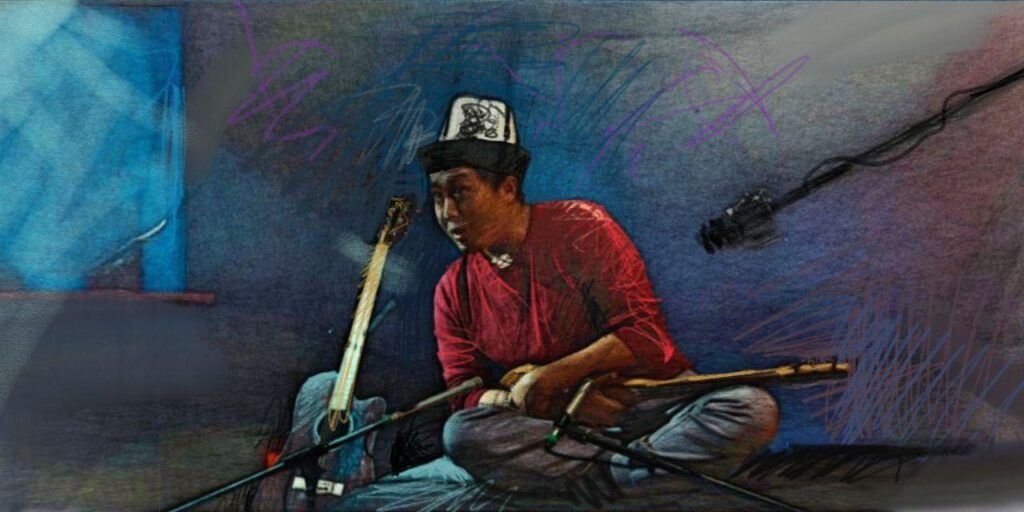
Asylbek Maratov is a performer of folk-style poetry in Kyrgyzstan, a form of cultural expression that dates from the time when nomads roamed Central Asia and involves music and improvisation, often delivered at ceremonies and other special events as well as on social media Lately, Maratov and some other akyns, as these oral storytellers are known, have faced pressure in a country where the government is tightening up on expression as a way to ensure what it calls ‘national stability’. The tension points to sensitivities about how freely they can sing or talk about issues that they think are relevant to society as part of a tradition that is steeped in epic tales of the past and has been recognized by UNESCO as intangible cultural heritage. Maratov said he got a warning from the State Committee for National Security for performing songs on political topics at a concert, the Kloop news organization reported this week. It said the performer commented about a caution from the state authorities on Facebook on Wednesday, though a link to the social media post says the content is unavailable. "I received a warning, now may God help me. I don't wish prison on anyone, let the people have joy," Maratov said in the post, according to Kloop. Maratov has previously performed his craft at the World Nomad Games, an event that celebrates culture and sports in Central Asia and is held every two years. He has commented on corruption, a sensitive topic for a government that has promised to curb graft but faces questions about transparency and accountability. Late last year, President Sadyr Japarov signed a new law that toughens punishments and restrictions, for example, barring people convicted of corruption from holding state and municipal jobs. The president has said that his family members won’t get mixed up in state affairs, but reports such as the one last year that his son planned to build the biggest golf course in Central Asia raised some concerns about business ethics. Akyns draw from a tradition that goes back centuries, evoking history, philosophy, and spirituality in their commentaries and sometimes engaging in competitions similar to rap battles. They play instruments such as the Kazakh dombra or Kyrgyz komuz. There is a school for akyns in Kyrgyzstan. They are able to reach a much wider audience than in the past because of YouTube and other social media platforms, and a few in Kyrgyzstan have directed sharp criticism at their country’s leadership. This month, Kyrgyzstan’s Supreme Court upheld a lower court’s sentence of three years in prison for Askat Zhetigen, an akyn who was found guilty of calling for the violent seizure of power, the 24.kg news service reported. Zhetigen had used harsh language while criticizing the authorities on social media. Kloop, the investigative news outlet that reported on the warning against Maratov, was closed under a court order in Kyrgyzstan last year in what media advocates said was a targeting of journalists and a shrinking of free speech in...

UN Rights Body Criticizes Prison Sentences for Kyrgyz Journalists

The human rights office of the United Nations and other international groups are expressing concern that two journalists in Kyrgyzstan were convicted of inciting mass unrest and sentenced to years in prison. Journalists Azamat Ishenbekov and Makhabat Tazhibek kyzy of the Temirov Live media outlet were sentenced on Thursday to five and six years in jail respectively and plan to appeal. Two other media workers in the same case were placed on three years’ probation and released. Another seven were acquitted. The investigation and trial were “marred by due process and fair trial concerns” and Kyrgyz authorities should review the cases of those who were sentenced, the Office of the United Nations High Commissioner for Human Rights said in a statement on Friday. “While seven others were acquitted, it is problematic that 11 journalists and media workers, all former or current staff of the investigative outlet Temirov Live, were arbitrarily arrested and detained for simply doing their job,” the U.N. human rights office said. “We urge the authorities to review vague provisions of the Criminal Code that expose journalists and others to potential liability for exercise of their fundamental rights, including freedom of expression.” The New York-based Committee to Protect Journalists said the prison terms amounted to retaliation for reporting on alleged corruption and that “Kyrgyzstan has forfeited its reputation as a relative haven of press freedom in Central Asia.” Top officials in Kyrgyzstan have previously dismissed such international criticism, saying the case against the workers affiliated with Temirov Live was not politically motivated and that the people being prosecuted were masquerading as journalists and publishing false information. Temirov Live is a YouTube-based outlet that has broadcast reports on alleged graft at high levels of government. It was founded in 2020 by Bolot Temirov, who was expelled from Kyrgyzstan in 2022. His wife is Tazhibek kyzy, director of Temirov Live and one of the two journalists who was sentenced to jail last week.

Kyrgyzstan Closes Kloop; Media Outlet Says Work Will Go On

Amid concerns that media freedoms in Kyrgyzstan are shrinking, President Sadyr Japarov has suggested that the closure of Kloop Media, a Kyrgyz foundation that runs an investigative news organization, was a blow against “anarchy” and false information rather than freedom of speech. Japarov offered his contested vision of what constitutes responsible media coverage in an interview published on Tuesday by the state news agency Kabar, which asked for his reaction to a reported ruling by Kyrgyzstan’s Supreme Court that upheld the liquidation of Kloop Media after a yearlong court battle. “Doesn't the closure of this media have a negative impact on the freedom of expression in the country?” Kabar director Mederbek Shermetaliev asked Japarov. “Nothing. For 30 years, we have replaced anarchy with democracy and gossip with freedom of speech. Now the community is recovering from those diseases,” Japarov replied. “We have had and will have freedom of speech. We will support anyone as long as they tell the truth. Anarchy, spreading rumors and false information is not freedom of speech.” The president’s emphasis on stability and regulated expression is a shift from the more freewheeling environment of past years in Kyrgyzstan, which had a reputation as one of the more open – as well as turbulent - societies in Central Asia. Japarov, who came to power during a period of political upheaval in 2020, has dismissed criticism that his government is creeping toward authoritarianism. Last week, Kloop Media said it had learned that the Supreme Court’s panel of judges for civil and economic cases decided on July 16 to uphold the foundation’s liquidation, indicating the court had remained silent about the ruling until foundation lawyers were informed on Aug. 22. It said the closure of Kloop’s bank accounts could begin soon, but said the number of its online visitors had grown and that work would continue to be published on the internet. "And as long as at least one Kyrgyzstani reads us, we will continue to publish the most in-depth investigations, the most balanced news, and the most incisive columns," Kloop co-founder Rinat Tukhvatshin said. Prosecutors had argued that Kloop’s charter did not allow it to engage in journalism, while also drawing attention to reporting that they described as negative. Kloop has won a number of international media awards for investigations into government corruption, election violations and other sensitive topics. The New York-based Committee to Protect Journalists has condemned the moves to shutter Kloop, saying it was a “shameful episode” that showed Kyrgyzstan had lost its reputation “as a haven for press freedom in Central Asia.” In the Kabar interview, Japarov was asked what he thinks about investigative journalism. “We support all those investigating, no matter who they are. The only request is to double-check,” Japarov said. But investigating “with bias, slander, hostility, and personal interest” is not freedom of speech, he said. Kloop published a just-the-facts story about the president’s remarks with the headline: “Sadyr Japarov: Liquidation of Kloop Media will not affect freedom of speech in Kyrgyzstan.”