• KGS/USD = 0.01144 0%
  • KZT/USD = 0.00210 0%
  • TJS/USD = 0.10563 0%
  • UZS/USD = 0.00008 0%
  • TMT/USD = 0.28530 0%
  • KGS/USD = 0.01144 0%
  • KZT/USD = 0.00210 0%
  • TJS/USD = 0.10563 0%
  • UZS/USD = 0.00008 0%
  • TMT/USD = 0.28530 0%
  • KGS/USD = 0.01144 0%
  • KZT/USD = 0.00210 0%
  • TJS/USD = 0.10563 0%
  • UZS/USD = 0.00008 0%
  • TMT/USD = 0.28530 0%
  • KGS/USD = 0.01144 0%
  • KZT/USD = 0.00210 0%
  • TJS/USD = 0.10563 0%
  • UZS/USD = 0.00008 0%
  • TMT/USD = 0.28530 0%
  • KGS/USD = 0.01144 0%
  • KZT/USD = 0.00210 0%
  • TJS/USD = 0.10563 0%
  • UZS/USD = 0.00008 0%
  • TMT/USD = 0.28530 0%
  • KGS/USD = 0.01144 0%
  • KZT/USD = 0.00210 0%
  • TJS/USD = 0.10563 0%
  • UZS/USD = 0.00008 0%
  • TMT/USD = 0.28530 0%
  • KGS/USD = 0.01144 0%
  • KZT/USD = 0.00210 0%
  • TJS/USD = 0.10563 0%
  • UZS/USD = 0.00008 0%
  • TMT/USD = 0.28530 0%
  • KGS/USD = 0.01144 0%
  • KZT/USD = 0.00210 0%
  • TJS/USD = 0.10563 0%
  • UZS/USD = 0.00008 0%
  • TMT/USD = 0.28530 0%

Viewing results 1 - 6 of 35

Kazakhstan Investigates Recipients of USAID Funding

Following the cancellation of USAID funding, the Kazakhstani government and parliament are scrutinizing the recipients of U.S. financial assistance. The issue has sparked significant public debate and online discussions. Deputies Demand Explanations On March 10, the U.S. administration announced the cancellation of 83% of USAID programs. Secretary of State Marco Rubio stated: “After a six-week review, we are officially canceling 83% of USAID programs. The 5,200 contracts now canceled spent tens of billions of dollars in ways that did not serve (and in some cases even harmed) the core national interests of the United States.” Earlier, on March 5, deputies from the People's Party of Kazakhstan (PPK) formally requested that the Minister of National Economy and the Minister of Justice conduct an audit of foreign funding for non-governmental organizations (NGOs). Lawmakers called for transparency regarding project financing, allocated amounts, and fund usage. According to the deputies, some USAID-funded programs contradicted traditional Kazakhstani values, particularly those related to LGBT rights and feminist movements. Reports indicate that members of the parliamentary majority faction, Amanat, also supported the request. Government Investigation Underway The government's position remained unclear until March 12, when Respublika newspaper reported that Deputy Prime Minister and Minister of National Economy Serik Jumangarin had responded to the Mazhilis on behalf of the Cabinet of Ministers. Respublika is associated with Mukhtar Ablyazov, a fugitive oligarch sentenced in absentia to a lengthy prison term in Kazakhstan. According to the report, 28 long-term USAID programs were active in Kazakhstan under bilateral agreements in 2024. In total, USAID allocated $26.5 million for projects implemented in the country between 2023 and 2024. These initiatives covered sectors such as the economy, energy, healthcare, civil society, and media. Some projects extended beyond Kazakhstan, impacting other Central Asian nations. Among the NGOs operating under USAID programs in 2024-2025 were: Public Foundation "Desenta" NGO "Kadyr-Kasiyet" Representative Office of Eurasia Foundation in Kazakhstan Representative Office of Winrock International Representative Office of Internews Network Representative Office of the American Bar Association Additionally, several government agencies collaborated with USAID. Jumangarin noted that, under Kazakhstani law, recipients of foreign funding must publish annual reports on how the funds are used. He assured deputies that the verification of USAID-funded projects would continue under a working group established by the Ministry of Foreign Affairs, led by Murat Nurtleu. Funding Details Emerge Further details surfaced on March 14, with reports indicating that USAID had canceled contracts in Central Asia, including Kazakhstan and Kyrgyzstan. Two contracts in Kazakhstan were reportedly worth $2.35 million and $3.35 million. These funds were designated for the projects “Strengthening Civic Participation in Kazakhstan” and “Strengthening Human Rights and Equality.” The latter aimed to support LGBT organizations in Kazakhstan and Kyrgyzstan in advocating for human rights. This information was cited from an official USAID document. Additional media reports revealed a list of USAID grantees in 2024, including: ArtKoshe PF The YouTube channel "Hyperborey" Oksana Gabitova (Akulova) Vlast Media Group LLP DEPPA podcast Täuelhsız project Tasadagy Omir project Aftertutor IP, an online magazine focused on...

Obituary – Young Uzbek Reporter Loved Journalism, but Grew Frustrated: “There’s No Point Anymore.”

Alisher Ruziokhunov, an Uzbek journalist who had worked for Kun.uz and other online news organizations in Uzbekistan, has died of an illness in his early 30s, according to several outlets that used to employ him. In a tribute, a former colleague said Ruziokhunov drifted away from journalism in recent years because he found it difficult to report freely despite government commitments to loosen restrictions on the media. Kun.uz described Ruziokhunov as a talented journalist who wrote hundreds of articles about “the development of the state and society” and started big projects such as the Munozara Club, which “brought together representatives of government institutions for discussions.” Ruziokhunov traveled widely, attending events as a journalist and conference participant. He visited Armenia, Ukraine and Kenya, as well as the U.S.-Mexico border and the Moody College of Communication at The University of Texas at Austin. “Why does journalism mean a lot to me? I believe media and true journalism make our world a better place to live in,” Ruziokhunov said on social media. “Don’t be afraid to stand out among everyone with your thoughts, appearance, or goals,” he said in another post. Despite his talent, passion and growing experience, Ruziokhunov had doubts. Ilyos Safarov, an Uzbek journalist who reported Ruziokhunov’s death in an emotional social media post on Wednesday, said in a later message that his close friend had dropped out of Uzbekistan’s media scene in recent years because he was disillusioned. Safarov said Ruziokhunov preferred to go into education, believing that Uzbek journalism had reached “the limit” because a journalist who published critical commentary could easily face retaliation from people in power. “There’s no point anymore,” Safarov remembered his friend saying. “I often argued against him, challenging his views,” Safarov said. “At times, just to push his buttons, I even accused him of cowardice. But deep down, I knew he was right. And the truth is, today, we really are powerless. Forget about defending others—journalists can’t even protect themselves.” “By now, everyone has realized that the brief period of relative freedom over the past 3-4 years was merely a façade, designed to allow people to criticize the past era more openly,” said Safarov, who works for Vatandosh TV. By past era, he appeared to be referring to the more authoritarian era of Uzbek leader Islam Karimov, who died in 2016. Uzbek President Shavkat Mirziyoyev, who took over after Karimov’s death, has periodically spoken in support of freedom of speech, though some journalists and bloggers say they have faced prosecution and intimidation because of their work. The law in Uzbekistan says the spread of false information that leads to the denigration of “a person´s dignity” or threatens “public order or security” can lead to prison sentences; advocates of freedom of expression say such regulations are overly broad and are used to muzzle criticism of the government.

Turkmen Civil Servants Could Lose Jobs for Misusing Newspapers with Pictures of Berdimuhamedovs

Authorities in Turkmenistan have warned civil servants that they could face dismissal for misusing state newspapers featuring images of President Serdar Berdimuhamedov and his father, former President Gurbanguly Berdimuhamedov. Officials have been explicitly banned from using these newspapers as toilet paper, food packaging, or firewood. Government employees are now required to sign pledges to “carefully keep the pages” containing photographs of the ruling family. According to civil servants, they have been instructed to ensure that images of the Berdimuhamedovs do not end up in the trash or repurposed for household use. Authorities are reportedly even considering introducing QR codes on each page of newspapers to track subscribers and monitor how printed materials are used. “Now we are afraid that children might accidentally tear or throw away a newspaper with the president’s image - because you can lose your job for that,” said one civil servant, who spoke anonymously for fear of reprisals. Human rights organizations, including Reporters Without Borders (RSF), consistently rank Turkmenistan among the world’s worst countries for press freedom. Since Serdar Berdimuhamedov succeeded his father as president in 2022, the country’s media environment has remained tightly controlled. Despite officially stepping down, Berdimuhamedov Sr. continues to wield significant influence over decision-making in the government.

CPJ Report Highlights Deteriorating Situation for Journalists in Tajikistan

The Committee to Protect Journalists (CPJ) has released its 2024 annual report, identifying the countries with the highest number of journalists imprisoned in the previous year. According to the report, China (50 journalists), Israel (43), and Myanmar (35) topped the list. Globally, a total of 361 journalists were imprisoned in 2023 -- the second-highest figure since records began in 1992, surpassed only by 2022’s total of 370. The report also highlights Tajikistan’s worsening environment for press freedom, with specific mention of the country's persecution of journalists, including cases linked to ethnic discrimination. The CPJ report notes that two of the eight imprisoned journalists in Tajikistan belong to the Pamiri ethnic minority, a group historically subjected to systemic discrimination. These journalists hail from the Gorno-Badakhshan Autonomous Oblast (GBAO), a region that has experienced significant unrest in recent years. Among them is Ulfatkhonim Mamadshoeva, a prominent journalist who is currently serving a 20-year prison sentence. Authorities accused Mamadshoeva and her former husband, General Kholbash Kholbashov of the GKNB Border Troops, of orchestrating mass riots in GBAO in May 2022. These protests, which were met with a violent government crackdown, resulted in numerous deaths. Before her arrest, Mamadshoeva publicly denied any involvement in illegal activities. The CPJ’s findings reflect the broader challenges faced by journalists in Tajikistan, where independent reporting is increasingly equated with criminal activity. The CPJ report underscores the global misuse of vague anti-state laws to silence independent media. More than 60% of journalists imprisoned worldwide were charged under broadly defined laws, often targeting dissenting voices under accusations of terrorism, extremism, or other anti-state activities. Tajikistan is listed alongside countries like Russia, Belarus, Myanmar, and Turkey as frequent users of such repressive measures. “A significant proportion of these cases involve terrorism or 'extremism' charges, which are often very vaguely worded,” the report states, noting that such laws give governments broad discretion to suppress media freedoms. In Tajikistan, the eight journalists are currently serving prison sentences ranging from seven to 20 years. These long sentences illustrate the risks faced by media workers in a country where freedom of the press continues to erode. The CPJ report highlights a troubling global trend, with over 100 new journalists imprisoned in the past year. While the focus of the report is on numerical leaders like China, Israel, and Myanmar, countries like Tajikistan, where media suppression is equally severe but less publicized, remain of grave concern.

Kyrgyz Journalists Reject Japarov Criticism of Foreign Funding in the Media

Kyrgyzstan's President Sadyr Japarov has criticized the country's media for its willingness to accept foreign funding. American diplomats disagree with the government’s “accusations,” while local journalists pointed out that Kyrgyz media operates with the help of advertising and grants. Speaking at the recent People's Kurultai (Congress) in Bishkek, Japarov criticized several Kyrgyz media outlets for receiving foreign funding, accusing journalists of spreading false information. According to him, most Kyrgyz publications have foreign sponsors. Japarov claimed that journalists obey their "masters" and are therefore deprived of freedom of speech. The president also shared data on foreign funding received by some opposition media outlets and NGOs. “These funds are accounted for in reports only superficially. Their foreign sponsors say, ‘Yes, they are doing a good job.’ But what’s really happening? Here, they spread false information, look for negativity, and undermine the reputation of others. And when lawsuits are filed against them, they immediately claim it’s an attack on freedom of speech,” Japarov said. The president addressed the leadership of the U.S. State Department, stating that funds should be directed directly to Kyrgyz authorities. “We will ensure their effective use. Do you want to raise the level of journalism? We can do it. Do you want complete freedom of speech? We guarantee it,” Japarov emphasized. A few days later, the U.S. Embassy in Bishkek responded to the criticism. “In the field of journalism, our assistance is aimed at funding fact-checking programs, supporting Kyrgyz-language journalism, and assisting investigative journalists in uncovering violations, including corruption,” the diplomats said in a statement. The embassy emphasized its belief that independent media, which performs a watchdog role in society, is crucial for any government. In an interview with The Times of Central Asia, journalist Chynara Sydykova shared that grant support enabled her to implement several socio-cultural projects. “These projects helped us grow and become independent professionals in directing, producing, and project management. Finally, it allowed us to simply become journalists capable of working honestly, objectively, and professionally, covering topics of public interest,” Sydykova said. The investigative journalist noted that none of the grant providers interfered with the work process. However, Sydykova admitted that manipulations could occasionally occur. “Journalists shouldn’t cling to every visible opportunity to get funding. They need to build a reputation so that no one would even think of using them as an agent of influence. Thanks to my television projects, I provided real help to respondents in the areas of health and social injustice,” Sydykova added. Public figure and journalist Alisher Tashmatov told The Times of Central Asia that he takes a neutral stance on grants. According to him, the most important thing is that grants allocated by foreign institutions should not threaten Kyrgyzstan’s national security. “In Kyrgyzstan, media survives through advertising and grants. Only a few receive funding from the state. Moreover, even state-owned media occasionally receives financial assistance from foreign institutions and companies,” he noted, adding that criticism of the authorities should be well-founded.

Russian Journalist Inessa Papernaya Found Dead in Tashkent Hotel

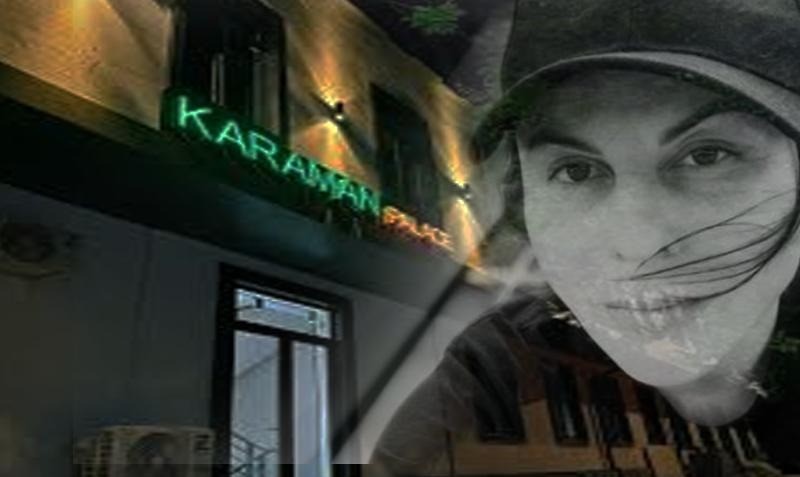
Russian journalist Inessa Papernaya, known for her work with lenta.ru and profile.ru, was tragically found dead in a hotel in Tashkent, Uzbekistan, on October 20. It has been reported that Papernaya was in Uzbekistan on vacation, and was staying at the Karaman Palace Hotel with a companion, Maxim Radchenko, with whom she was in a long-term relationship, and whom she had traveled with in order to meet his relatives. According to reports, hotel staff knocked on the door of her room that evening while delivering a package. After receiving no response, they entered the room and discovered the bodies of Papernaya and Radchenko. An Uzbek citizen was subsequently found dead in the bathroom of another room in the hotel. Preliminary reports attributed the cause of the deaths to poisoning of “unknown origin,” with early suggestions being propagated that gas seeped into the room through the ventilation system after the hotel’s pool was cleaned on October 19-20, leading to the tragic incident. Following the discovery, authorities sealed off the Karaman Palace Hotel. The General Prosecutor’s Office of Uzbekistan has launched an investigation under Article 186 of the Uzbek Criminal Code, which covers the provision of unsafe services, and a forensic examination has been ordered to determine the precise cause of death. Relatives of Radchenko have disputed what they have described as several different versions of the deaths which have been put forward. According to Radchenko's sister, the family were initially told that "he had an epileptic seizure; she ran up to him, slipped, fell, hit herself and died. This is some kind of TV series: how do you fall? What nonsense... Then there was a version about drugs, since their bodies were in the bathroom, that meant they were drug addicts." In a further twist challenging the official narrative regarding gas seepage related to the pool being cleaned, Radchenko's sister has categorically stated that "there is no pool there." Meanwhile, no websites advertising rooms at the Karaman Palace make any mention of a pool, with some stating outright that this facility is not available. Hayat Shamsutdinov, press secretary of the General Prosecutor’s Office of Uzbekistan, has confirmed that the bodies will be transported to Moscow for a joint cremation to be held on October 25.