• KGS/USD = 0.01144 0%
  • KZT/USD = 0.00213 0%
  • TJS/USD = 0.10693 0%
  • UZS/USD = 0.00008 0%
  • TMT/USD = 0.28571 0%
  • KGS/USD = 0.01144 0%
  • KZT/USD = 0.00213 0%
  • TJS/USD = 0.10693 0%
  • UZS/USD = 0.00008 0%
  • TMT/USD = 0.28571 0%
  • KGS/USD = 0.01144 0%
  • KZT/USD = 0.00213 0%
  • TJS/USD = 0.10693 0%
  • UZS/USD = 0.00008 0%
  • TMT/USD = 0.28571 0%
  • KGS/USD = 0.01144 0%
  • KZT/USD = 0.00213 0%
  • TJS/USD = 0.10693 0%
  • UZS/USD = 0.00008 0%
  • TMT/USD = 0.28571 0%
  • KGS/USD = 0.01144 0%
  • KZT/USD = 0.00213 0%
  • TJS/USD = 0.10693 0%
  • UZS/USD = 0.00008 0%
  • TMT/USD = 0.28571 0%
  • KGS/USD = 0.01144 0%
  • KZT/USD = 0.00213 0%
  • TJS/USD = 0.10693 0%
  • UZS/USD = 0.00008 0%
  • TMT/USD = 0.28571 0%
  • KGS/USD = 0.01144 0%
  • KZT/USD = 0.00213 0%
  • TJS/USD = 0.10693 0%
  • UZS/USD = 0.00008 0%
  • TMT/USD = 0.28571 0%
  • KGS/USD = 0.01144 0%
  • KZT/USD = 0.00213 0%
  • TJS/USD = 0.10693 0%
  • UZS/USD = 0.00008 0%
  • TMT/USD = 0.28571 0%

Viewing results 1 - 6 of 54

Migrants in the Crossfire: Russia’s Recruitment for Ukraine War Sparks Tensions

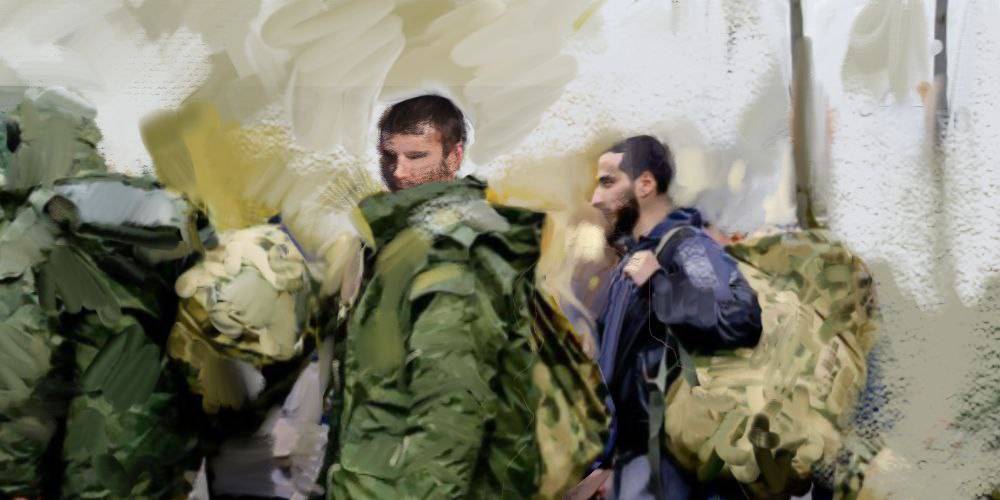
Russia’s ongoing “special military operation” in Ukraine has increased the demand for additional forces, and, in response, Russia is increasingly viewing the use of migrants as a good solution to the situation. As of September 1, 2024, official figures state that 3,985,000 citizens of Central Asian countries lived in Russia. Uzbekistan leads the way with over 1,792,000 migrants, followed by Tajikistan with more than 1,231,000, Kazakhstan with 606,900, Kyrgyzstan with 262,800, and Turkmenistan with 92,000. Some Central Asian migrants have signed contracts with the Russian Ministry of Defense to participate in the war, motivated mainly by financial incentives. However, economic reasons are not the only factor driving them to war. People from Central Asian countries who have received citizenship are also being threatened with imprisonment for failing to join the war effort. TCA has previously reported on efforts by officials to recruit young men detained at the Sakharovo immigration processing center to join the Russian army and fight in Ukraine. In addition, a decree issued by Vladimir Putin has simplified the process for foreigners who join the military to gain Russian citizenship. In contrast, Central Asian governments have looked to discourage their citizens from engaging in the conflict. For example, Uzbekistan has warned that any citizen involved in the Russia-Ukraine war will face legal consequences. In October 2023, an Uzbek citizen who fought in Ukraine for financial reasons was sentenced to three years in prison by a Uzbek court. The defendant had returned to Uzbekistan after being wounded in the conflict, and authorities discovered military documents and proof of his Russian citizenship during their investigation. By September 2024, a growing number of Central Asians had perished in the war, including 47 Uzbeks, 51 Tajiks, and 26 Kyrgyz nationals. In Kazakhstan, since 2014, following the start of the war in the Donetsk and Luhansk regions, criminal liability was been introduced for citizens who participate in armed conflicts abroad. A person who commits such an offense can be punished with imprisonment for up to 12 years, face the confiscation of property, and be deprived of their citizenship. For example, in November of last year, a 34-year-old man from Kazakhstan was imprisoned for six years and eight months for participating in the war in Ukraine. Kyrgyzstan and Tajikistan have also applied measures involving the deprivation of liberty their citizens who participate in the war. Tajikistan’s economy significantly depends on remittances from labor migrants in Russia, which account for approximately one-third of its GDP. Despite the war in Ukraine, over 1.7 million Tajik citizens sought work in Russia in the first half of 2022. However, reports indicate that many Tajik migrants are being sent to Ukraine against their will, raising concerns. The situation further deteriorated after a terrorist attack at Crocus City Hall in February 2024. Tajik nationals were among the primary suspects, leading to a shift in Russia’s attitude towards Central Asian migrants. Tajikistan’s Foreign Minister, Sirojiddin Muhriddin, expressed concerns over the violations of Tajik citizens’ rights in some CIS countries, calling for a...
Tajikistan Expresses Concerns over Violations of its Citizens’ Rights in CIS Countries

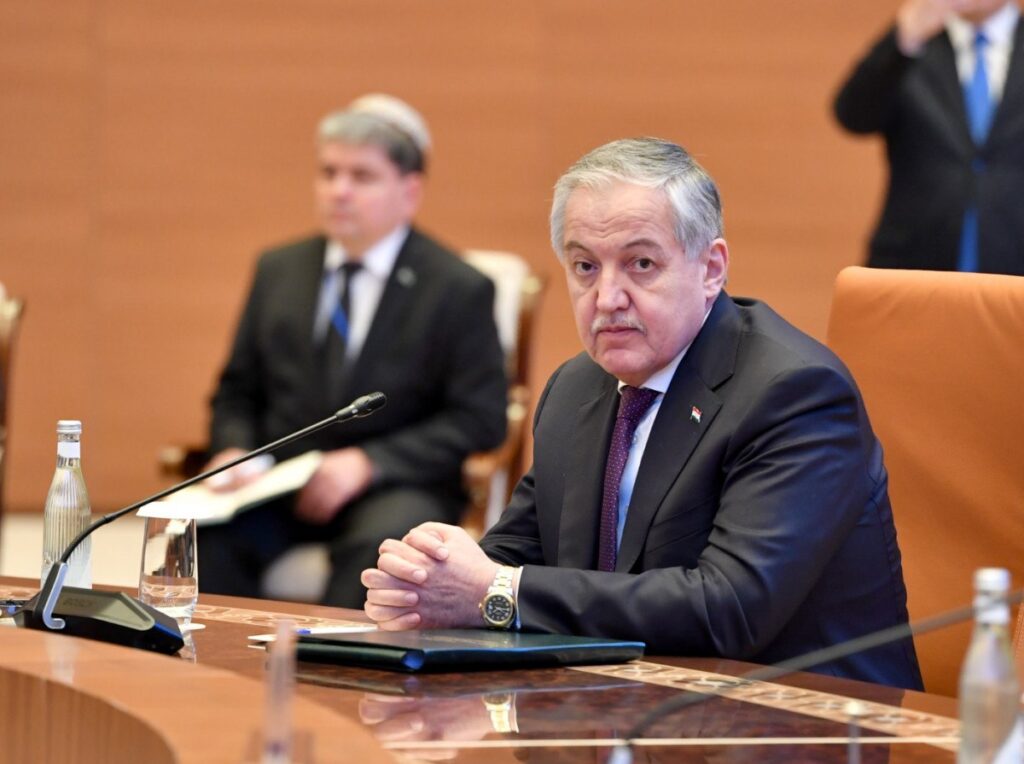
The most recent meeting of the Council of Foreign Ministers of the Commonwealth of Independent States (CIS) was hosted by Moscow on October 7. During the meeting,  Minister of Foreign Affairs of Tajikistan, Sirojiddin Muhriddin, expressed his concern about the violation of the rights of the republic's citizens on the territory of some CIS countries. Emphasizing the need for a comprehensive approach to solving migration issues in the countries of the Commonwealth of Nations, he called for consideration of all parties' interests: host countries, migrant-sending countries, foreign citizens, and the local population. The Minister also addressed urgent security issues and stressed the need to strengthen the fight against terrorism, extremism, illegal drug trafficking, and transnational crimes. He invited the CIS states to participate in the international conference on counterterrorism, scheduled for early November in Kuwait City as part of the Dushanbe process.

Kyrgyz Prime Minister: Labor Migrants From EAEU Should Not Be Discriminated Against on Territory of the Union

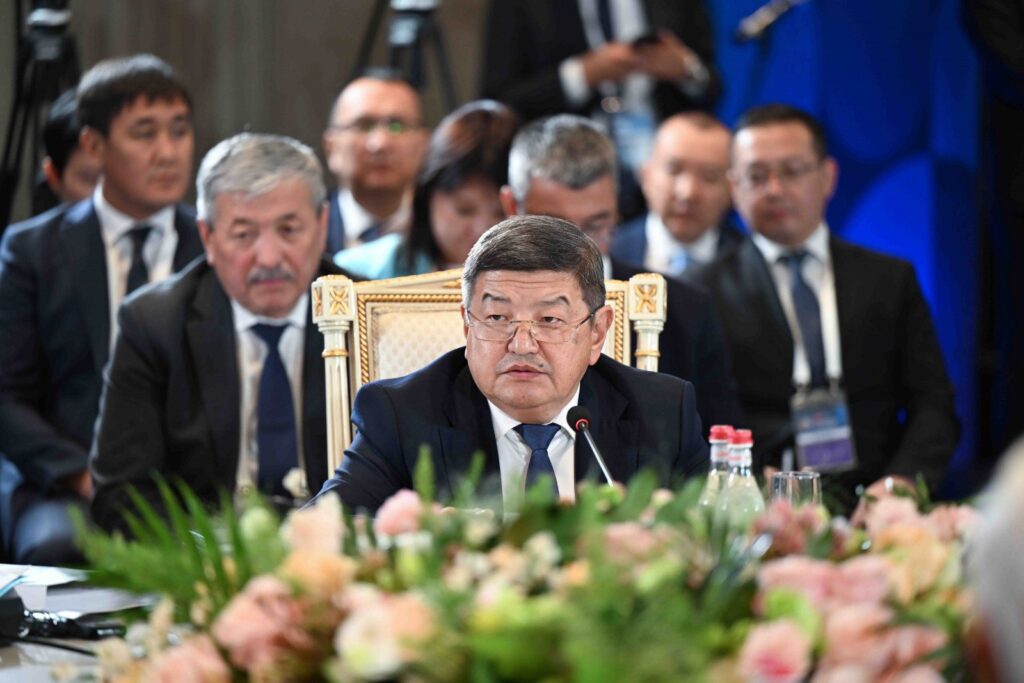
Speaking at a meeting of the Eurasian Intergovernmental Council in Yerevan, Kyrgyz Prime Minister Akylbek Japarov said that tightening migration laws should not apply to citizens from EAEU countries. According to Akylbek Japarov, increasing trade between EAEU countries and developing cooperative ties is the basis for sustainable economic growth. However, the main participants in any integration are people, so the attitude toward the citizens of the EAEU countries in any state of the Union should be the same. “Such a level of integration has been reached, when business and citizens of member states understand and deeply believe in the unity of the economic union (EAEU), and respectively require the same attitude to themselves being on the territory of any of the EAEU countries,” said the head of the Cabinet. Therefore, according to Japarov, the leadership of the EAEU countries should pay special attention when tightening migration legislation and adjust their attitudes toward migrants from union countries. Following the terrorist attack on the Crocus City Hall near Moscow, the Russian authorities significantly tightened migration legislation. Thousands of citizens, mainly from Tajikistan and Uzbekistan, were subjected to forced deportation. The restrictions also affected Kyrgyz citizens, although the country is a member of the EAEU. “We proceed from the fact that legislative initiatives should not contradict the norms of the EAEU treaty; that is, they should not apply to our working citizens and members of their families. Both in the documents initiated by state structures and in the public space, it is necessary to separate the rights of citizens of the EAEU countries from those of countries that are not part of it,” Japarov emphasized. According to official data, about half a million Kyrgyz citizens work in Russia. The unofficial figure may be two or three times higher.

Passenger Train Between Tashkent and Moscow Resumes

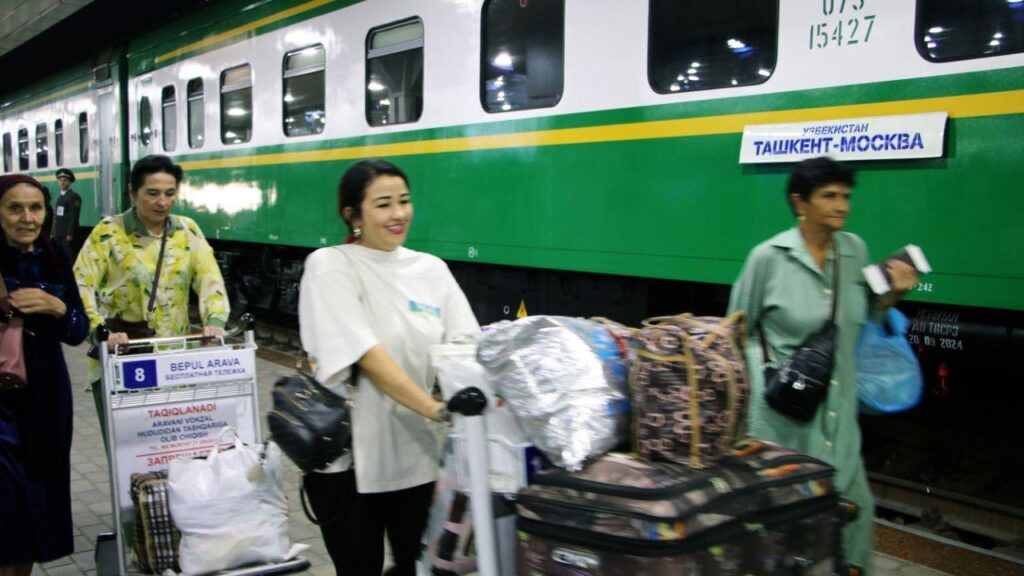
After a four-year break, the passenger train service on the Tashkent-Moscow-Tashkent route has resumed. The service reopened this week, with passenger trains now departing from Tashkent and back from Moscow once a week. The first Tashkent-Moscow train departed from Tashkent’s central railway station on September 24, and is scheduled to arrive at the Paveletsky railway station in Moscow on September 27. Passenger train service on the Bishkek-Moscow route will resume in 2025. The passenger train between Bishkek and Moscow has been out of operation since the COVID-19 pandemic. After the pandemic, trains from Bishkek and the Russian city of Samara resumed. Passenger trains to Moscow were temporarily suspended from Bishkek and other Eurasian countries due to a large-scale reconstruction of the Moscow railway junction that began after the pandemic. Relatively cheap railway service to Moscow (compared to air transport) is essential for Kyrgyzstan and Uzbekistan, as hundreds of thousands of Kyrgyz and Uzbek labor migrants work in Russia.

Kyrgyz Authorities Urge Migrants to Return Home From Russia

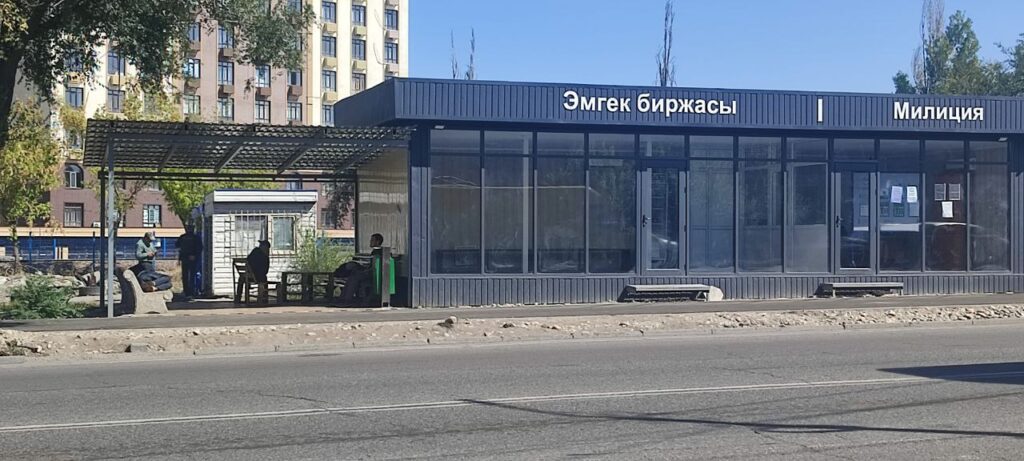
Kyrgyzstan's presidential spokesperson Askat Alagozov has urged Kyrgyz citizens who have gone to work in Russia to return and work at home. However, only some people share the government's position on the issue. Alagozov noted that the country desperately needs construction and textile workers. “Of course, the salary you expect will be the same as what you get in Russia. But, most importantly, it is better to work in your homeland and near your family. Come and work in your own country,” Alagozov wrote on social media. Alagozov published the Ministry of Labor and Social Development hotline number, where citizens can get help with employment. In comments to the post, citizens noted that salaries in Russia are higher than in Kyrgyzstan. A migrant in Russia receives an average of 80 to 200 thousand KGS ($950 - 2,350), while in Kyrgyzstan, the average salary is 30 to 50 thousand KGS ($350 - 600). “90% of Kyrgyz migrate to buy an apartment. Working here [in Kyrgyzstan], it is impossible to buy a house. The most important factor is migrants' need for housing,” one of Alagozov's followers said. As of August 1, 57,500 unemployed citizens were registered at the labor exchange. According to the National Statistical Committee, registered unemployment decreased by 21% over the past year. The Ministry of Labor and Social Development also claims that more than 230,000 citizens across the country have been employed over the past few years, while 58,000 have received vocational training. Meanwhile, workers registered at the labor exchange told The Times of Central Asia that the Kyrgyz labor market is not as good as the authorities make it out to be. To earn money, people have to take any job offered. “We are standing here on Lev Tolstoy Street, and everyone in Bishkek knows you can find workers if you come here. People here take on any work: construction and landscaping, concrete work, unloading, and transport work,” said a construction worker named Ulukbek. Permanent work is hard to find in the city, he said. “I can earn 1,500-2,000 KGS (US $18) daily, but not always, and sometimes you don't make any money. There is a mafia here; no one will give you a good job for nothing. There is massive competition in the warm seasons. In summer, people stand on both sides of the road, and there is more business to be had,” Ulukbek explained. Talk of a shortage of qualified construction workers in Kyrgyzstan began during the recent construction boom.

Central Asian Countries Unite To Support Women and Children Repatriated From Conflict Zones

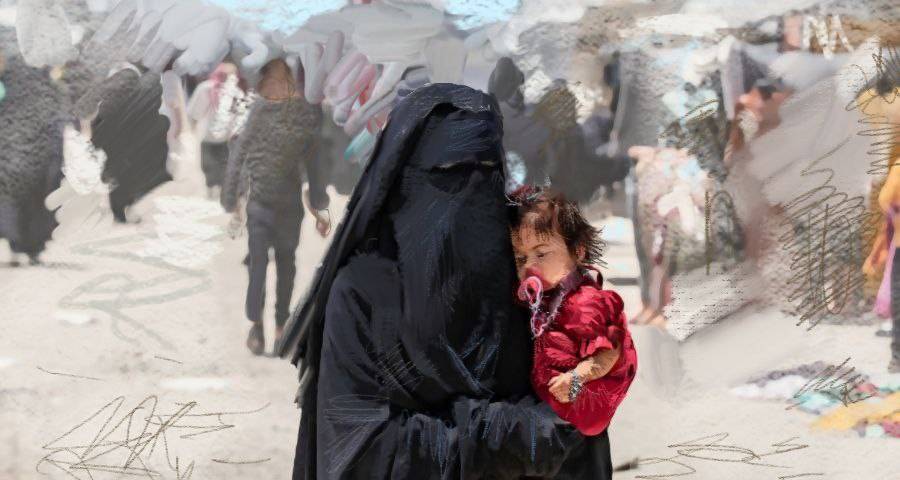
UNICEF Uzbekistan reports that Kazakhstan, Kyrgyzstan, Tajikistan, and Uzbekistan are actively working to improve the support system for women and children returning from conflict zones, such as Iraq and Syria. In support of the European Union's project “The second phase of EU-UN support to Central Asian states for their citizens returning from conflict zones,” delegations from the above met to discuss their shared experiences and means of providing necessary support and services for successfully reintegrating women and children into society. Uzbekistan was one of the first countries in Central Asia to start repatriating its citizens from conflict zones. Since 2019, the country has undertaken several missions to return women and children stranded in conflict zones as part of operations known as “Mehr” (“kindness” in Uzbek). The “Mehr-1” and “Mehr-2” operations have enabled the Government of Uzbekistan to repatriate many of its citizens, and in cooperation with the government of Iraq and UNICEF, offer a safe haven in their motherland for children deprived of basic necessities such as food, clean water, and medical care while living in war zones and refugee camps. On their return, repatriated citizens are placed in special sanatoriums where they are provided with hot food, clothing, and the services of doctors, therapists, and teachers. To date, Uzbekistan has successfully repatriated 531 citizens, including 331 children, 125 women, and 27 men. The country's initiative has been praised internationally and noting  its focus on the interests of children and supporting the family unity and society, Ní Aoláin, a UN expert has stateed that, “The Uzbek model of repatriation and reintegration provides a roadmap for other governments to return their nationals from conflict zones." Kazakhstan, likewise, has committed to the repatriation of its citizens from areas previously controlled by the Islamic State, and has launched operations “Jusan” and “Rusafa”, implemented with a high level of coordination between various government agencies, including national security services, diplomats, and the military. One of the most essential repatriations took place within the framework of the “Jusan” operation, launched in 2019. The name “Jusan” means bitter wormwood; native to Kazakhstan and a symbol of homesickness. Through this operation, hundreds of women and children were rescued from dangerous refugee camps in Syria, including the notorious Al-Hol Camp. Maryam, one of the women repatriated during the “Jusan” operation, said that the "first time a delegation from Kazakhstan arrived was to collect data on Kazakh citizens in the Al-Hol Camp. They promised to come back for us soon. A month of waiting felt like an eternity to us.” According to women from the tent camp, the shortage of drinking water and provisions, essential medicines, and the unbearable heat aggravated the situation and led to constant conflicts between residents. The humanitarian operations “Jusan” and “Rusafa” enabled the return of 725 people to Kazakhstan, including 188 women and 522 children, most of whom were under twelve years of age. Kazakhstan's success in such operations has been  attributed to the high level of investment by the state. According to Gabit Konusov,...