• KGS/USD = 0.01144 0%
  • KZT/USD = 0.00200 0%
  • TJS/USD = 0.10470 -0.19%
  • UZS/USD = 0.00008 0%
  • TMT/USD = 0.28490 0%
  • KGS/USD = 0.01144 0%
  • KZT/USD = 0.00200 0%
  • TJS/USD = 0.10470 -0.19%
  • UZS/USD = 0.00008 0%
  • TMT/USD = 0.28490 0%
  • KGS/USD = 0.01144 0%
  • KZT/USD = 0.00200 0%
  • TJS/USD = 0.10470 -0.19%
  • UZS/USD = 0.00008 0%
  • TMT/USD = 0.28490 0%
  • KGS/USD = 0.01144 0%
  • KZT/USD = 0.00200 0%
  • TJS/USD = 0.10470 -0.19%
  • UZS/USD = 0.00008 0%
  • TMT/USD = 0.28490 0%
  • KGS/USD = 0.01144 0%
  • KZT/USD = 0.00200 0%
  • TJS/USD = 0.10470 -0.19%
  • UZS/USD = 0.00008 0%
  • TMT/USD = 0.28490 0%
  • KGS/USD = 0.01144 0%
  • KZT/USD = 0.00200 0%
  • TJS/USD = 0.10470 -0.19%
  • UZS/USD = 0.00008 0%
  • TMT/USD = 0.28490 0%
  • KGS/USD = 0.01144 0%
  • KZT/USD = 0.00200 0%
  • TJS/USD = 0.10470 -0.19%
  • UZS/USD = 0.00008 0%
  • TMT/USD = 0.28490 0%
  • KGS/USD = 0.01144 0%
  • KZT/USD = 0.00200 0%
  • TJS/USD = 0.10470 -0.19%
  • UZS/USD = 0.00008 0%
  • TMT/USD = 0.28490 0%

Viewing results 1 - 6 of 9

Inside Uzbekistan’s Regional Defense Strategy: An In-Depth Interview with Michael Hilliard

Michael Hilliard is Director of Defense & Security Analysis at the Oxus Society for Central Asian Affairs, where he leads a specialist project analyzing the armed forces of Central Asia. The Oxus Society’s latest report, focusing on Uzbekistan’s military, has just been released. The Times of Central Asia spoke with Hilliard about the report, Uzbekistan’s evolving defense doctrine, and its future role as a military power in the region. TCA: In light of the new report on Uzbekistan’s military, how would you characterize Uzbekistan’s overarching security and defense doctrine, especially in relation to the broader Central Asian region? Michael Hilliard: Uzbekistan’s primary defense doctrine is essentially internally focused. Since independence, and particularly since the events in Andijan in 2005, Tashkent has concentrated on transforming its forces into a rapid-response military with specializations in counterterrorism, crowd control, and dispersal operations. When you speak with officers or policymakers within the defense establishment, 2005 is a recurring reference point. During those early hours, protestors overran a motor rifle unit and seized weapons. Many defense personnel still believe that if they had been able to react faster, the final outcome in the square might have been different. This need for rapid adaptability has driven much of Tashkent’s defense policy since then. TCA: The report notes that Kazakhstan has now overtaken Uzbekistan as the region’s leading military power and that this gap is likely to widen. To what extent does this reflect Tashkent’s greater emphasis on regional cooperation and the resolution of border disputes, rather than competition? Hilliard: Kazakhstan’s economic dominance makes this outcome unsurprising. The country now accounts for just under 60% of Central Asia’s total GDP as of 2024. With that level of wealth, Astana naturally has greater resources to allocate to defense. However, Uzbekistan traditionally spends a higher proportion of its budget on the military. Despite having only half of Kazakhstan’s GDP, it has often matched Kazakhstan’s defense spending in real terms. If Kazakhstan simply accelerates its defense spending to the regional average, it will quickly surge ahead. Ultimately, it’s an issue of economics; Kazakhstan has more money to spend. TCA: What is the role of the Shanghai Cooperation Organisation (SCO) and its Regional Anti-Terrorist Structure (RATS) in shaping Uzbekistan’s regional military posture? Hilliard: While some once had ambitious visions for the SCO, today it’s primarily intelligence-focused. Joint exercises are still held but remain limited, and RATS’ influence has declined somewhat following China’s controversial maneuvering within the organization. At present, RATS focuses more on identifying individuals or groups, such as traffickers or terrorist networks, that all member states have a shared interest in apprehending. It’s quite different from the CSTO, where Moscow wields far greater control. TCA: How might Tashkent view the recent clashes between Taliban and Pakistani forces, given that Pakistan currently chairs RATS? Hilliard: Tashkent’s attention is mainly on northern Afghanistan, not the Taliban-Pakistan clashes in the southeast. These incidents appear limited, so they’re unlikely to alter Tashkent’s calculus significantly. However, they do make cross-regional initiatives such as the Tajikistan-Afghanistan-Pakistan-India (TAPI)...

Zelensky Steps Up Claims of Uzbek and Tajik Citizens Fighting for Russia in Ukraine

Ukrainian President Volodymyr Zelensky has claimed that citizens of Uzbekistan and Tajikistan are among foreign fighters serving in the Russian army in Ukraine. The statement was made on August 4 via his official Telegram channel, following a visit to the 17th Separate Motorized Infantry Battalion in the northern city of Vovchansk, Kharkiv region. “Today I was alongside those defending our country on the Vovchansk front the soldiers of the 17th Separate Motorized Infantry Battalion of the 57th Brigade named after Kostiantyn Hordiienko,” Zelensky wrote. “We spoke with commanders about the situation on the front line, the defense of Vovchansk, and the dynamics of the fighting. Soldiers on this front are recording the participation of mercenaries from China, Tajikistan, Uzbekistan, Pakistan, and several African countries. We will respond.” During the visit, Zelensky also discussed issues related to drone supplies, recruitment, and direct funding for brigades. He awarded service medals to Ukrainian troops and stated: “It is an honor for me to be here. Thank you for fighting, serving your state, the Ukrainian people, and supporting one another.” However, independent verification of these claims is limited. In some cases, reports suggest a different dynamic: in May, Alexander Bastrykin, head of Russia’s Investigative Committee, stated that authorities had “tracked down 80,000” newly naturalized Russian citizens, many originally from Uzbekistan, Tajikistan, and Kyrgyzstan, who had tried to evade military service. Around 20,000 were reportedly sent to the front lines. These figures, while not independently verified, suggest that conscription, rather than voluntary enlistment or mercenary recruitment, may account for much of Central Asian involvement. The war continues to have a profound economic impact. Ukraine’s industrial production index dropped from 101.7% in December 2021 to 69.3% by December 2024. Trade between Ukraine and Central Asia has also declined sharply. Kazakhstan’s trade turnover with Ukraine fell from $5.5 billion in 2012 to just $391 million in 2023. Once Ukraine’s 15th-largest trading partner in 2021, Kazakhstan ranked 35th by the end of 2023.

Opinion: A Sea of Discord? Intensifying Military Drills Threaten Stability in the Caspian Region

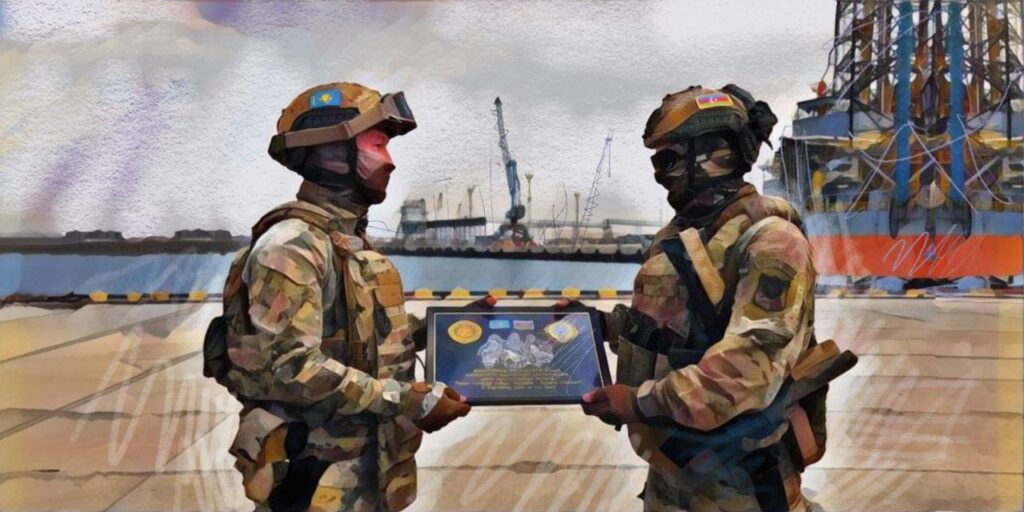
On Monday, Russia and Iran launched joint military exercises in the Caspian Sea under the banner “Together for a Safe and Secure Caspian Sea.” Officially, the drills aim to enhance maritime security and naval cooperation between the two countries and are being coordinated by Iran’s Northern Fleet. While such exercises might once have passed without much notice, their timing and frequency reflect a shifting dynamic: the Caspian region is rapidly emerging as a potential hotspot in global geopolitics. Just one month prior, the same waters hosted joint military exercises between Azerbaijan and Kazakhstan, held in Aktau, western Kazakhstan. These were followed by the “Tarlan-2025” air and tactical drills in Azerbaijan from July 8-10, which focused on enhancing UAV operations and military coordination. Baku’s strategic alliance with Ankara is a key factor here. Azerbaijan, a close Turkish partner, is now engaged in a more strained relationship with Russia. Moscow’s muted reaction to this cooling suggests an awareness that Ankara is increasingly shaping a Turkic military-political bloc, an emerging force in a region of strategic importance to both Russia and China. Earlier this month, Turkey launched its annual Anadolu-2025 special forces exercises. Participants included troops from 33 nations, Kazakhstan, Azerbaijan, Pakistan, Uzbekistan, and others but notably excluded Russia. For the first time, in 2024, military exercises were held in the Caspian without Russian involvement. The Birleistik (Unity) 2024 drills were conducted at Kazakhstan’s Oymasha training ground and Cape Tokmak along the Caspian coast. Troops from Azerbaijan, Kazakhstan, Kyrgyzstan, Tajikistan, and Uzbekistan rehearsed scenarios including conflict zone identification, night maritime operations, and amphibious landings. Previously, regional military cooperation had been limited to bilateral engagements, such as the 2023 UZAZ exercises (Azerbaijan-Uzbekistan), Kanzhar-2023 (Kazakhstan-Uzbekistan), and Hazri-2023 (Azerbaijan-Kazakhstan). The spike in joint drills during 2024-2025 underscores growing rivalries between regional and global powers. These operations are not mere formalities but reveal emerging security alignments and geopolitical signals. Three distinct blocs appear to be coalescing in the Caspian, with implications for Central Asia as well. The first bloc includes Russia, Iran, and China. These nations have held annual “Maritime Security Belt” exercises since 2019, with the most recent in March 2025 off the Iranian coast. The second bloc comprises Turkey, Azerbaijan, and members of the Organization of Turkic States (OTS). Defense ties among these countries are becoming a core element of OTS cooperation. At the 10th OTS Summit in Astana in 2023, Azerbaijani President Ilham Aliyev emphasized defense as the main guarantor of member state security, citing ongoing regional conflicts and violations of international law. The third bloc, more pragmatic and focused, is the Kazakhstan-Azerbaijan partnership. These countries are cooperating on the basis of the 2018 Caspian Convention to secure maritime communications. Azerbaijan contributes military expertise, particularly in UAV and drone warfare developed during the Karabakh conflicts. Kazakhstan brings diplomatic credibility and promotes regional governance and connectivity, offering a stabilizing complement to Azerbaijan’s military strengths. In sum, the Caspian Sea, once colloquially referred to as “Russia’s lake”, is steadily losing that identity. It is transforming into...

Tashkent Turns to Beijing: Uzbekistan’s Military Realignment Reflects Regional Shifts

Uzbekistan is reportedly preparing to acquire fifth-generation fighter jets from China, a move that signals a significant shift in the country’s military strategy, according to the Tashkent Times. Historically dependent on Russian arms, Tashkent is now actively diversifying its defense partnerships, prompting analysts to see this as part of a broader regional realignment in Central Asia’s security architecture. Experts from Uzbekistan and Kazakhstan told Exclusive.kz that the transition has been years in the making. Zakir Usmanov, a defense analyst at Uzbekistan’s National Scientific Research Center “Bilim Karvoni,” noted that dissatisfaction with Russia’s performance in the Collective Security Treaty Organization (CSTO) was a turning point. “It became clear that Russia was no longer fulfilling its obligations under the CSTO,” he said. In response, Uzbekistan withdrew from the bloc and began upgrading its military with Chinese-made systems, affordable, functional, and supported by flexible financial and logistical arrangements. “The example of Turkey shows that military modernization can be achieved relatively quickly,” Usmanov explained. “Uzbekistan’s decision to acquire Chinese aircraft is deliberate, they’re cost-effective and come with training and maintenance packages.” Kazakhstan, by contrast, is taking a more cautious approach. Military expert Daulet Zhumabekov acknowledged similarities in both countries’ efforts to diversify military procurement but emphasized Kazakhstan’s deeper institutional ties to Russia through the CSTO, open borders, and economic integration within the Eurasian Economic Union (EAEU). “For Kazakhstan, strategic balance is essential,” said Zhumabekov. “Turning completely away from Russia would be impractical, but relying solely on Moscow is also a strategic liability.” Nevertheless, Kazakhstan has made incremental moves toward diversification, including the purchase of Turkish drones and Airbus transport aircraft, mainly for logistics and peacekeeping rather than combat roles. Zhumabekov pointed out that around 80% of Kazakhstan’s arms and ammunition still come from Russia, which he views as a significant vulnerability. Kuat Dombay, director of the C5+ Central Asia Studies Center in Kazakhstan, noted that Uzbekistan has moved more decisively. “China’s willingness to share military technology makes it an attractive partner,” he said. He cited Pakistan’s jointly developed JF-17 fighter jet as evidence of Beijing’s growing capabilities. Uzbekistan has already begun pilot training on Chinese platforms, indicating that this is more than a procurement deal, it represents strategic integration. Dombay also emphasized that defense cooperation with China and Turkey tends to be less politically provocative than with Western nations. “Deals with the U.S. or Europe can provoke backlash from Moscow,” he said. “But agreements with Beijing or Ankara are seen as more neutral.” China’s ambitions in Central Asia are expanding. A recently released White Paper from Beijing positions China as a potential guarantor of regional security, a role long associated with Russia. With relations with the West under strain, China seeks stability along its borders, particularly in regions critical to its energy and infrastructure initiatives. Dombay highlighted symbolic diplomacy, such as President Xi Jinping’s first post-pandemic state visits to Kazakhstan and Uzbekistan, during which he explicitly affirmed support for Kazakhstan’s sovereignty, an unusual gesture widely interpreted as a message to Moscow. “Central Asia can...

Kazakhstan’s Defense Ministry Confirms Russian Origin of Crashed Drones

Kazakhstan’s First Deputy Minister of Defense, Sultan Kamaletdinov, has confirmed that the unmanned aerial vehicles (UAVs) that crashed in the West Kazakhstan region earlier this year were launched from a Russian test site. Since January, four unidentified drones have been found in the region. Speaking to journalists on the sidelines of a Senate session, Kamaletdinov shared the preliminary findings from an investigation conducted by the Ministry of Defense. “More than 90% of the unmanned aerial vehicles discovered in the West Kazakhstan region were located within the boundaries of the 926th Main Flight Test Center of the Russian Federation,” he stated. “The airspace above this site is utilized by the center for UAV testing.” When asked who had launched the drones, Kamaletdinov responded directly: “The Russian Federation, which is testing its UAVs.” A String of Drone Incidents The first reported drone was found on February 18 in the village of Ualy in the Bokeiordinsky district. A second was discovered near the village of Atameken in the Taskalinsky district on March 18. At the end of March, a third UAV was located near the border with Russia, followed shortly by the crash of a fourth drone in the Zhanibek district. Russian Testing Grounds in Kazakhstan Russia leases three military test sites in Kazakhstan, including those associated with the 929th State Flight Test Center. These facilities are located in the West Kazakhstan and Atyrau regions and are tied to Russia’s V.P. Chkalov State Flight Test Center (929 GLITS VVS), a key institution for military aviation and weapons testing. The main base of the Chkalov Center is in Akhtubinsk, Astrakhan region, but its network of test ranges extends across Russia and Kazakhstan, spanning distances from 22 to 800 kilometers from Akhtubinsk. While the use of Kazakh territory for foreign military testing has long been a sensitive topic, Kamaletdinov’s comments underscore the enduring presence of Russian military operations within Kazakhstan’s borders.

Russia Warns of Rising Security Threats in Central Asia During CSTO Talks in Bishkek

Kyrgyz Defense Minister Ruslan Mukambetov met with Russian Defense Minister Andrei Belousov in Bishkek to discuss the future of bilateral military cooperation. The meeting concluded with the signing of a Strategic Partnership Program in the Military Field extending through 2030. Belousov's visit comes ahead of the annual meeting of the Council of Defense Ministers of the Collective Security Treaty Organization (CSTO), also taking place in the Kyrgyz capital. As part of the lead-up to the event, the two ministers held direct bilateral talks. Speaking at the meeting, Belousov stated that CSTO member states are “living in conditions of global instability” and must remain vigilant. “Both within the CSTO and in our bilateral relations, we must treat the emerging threats with the utmost care. And there are more and more of them,” he said. Belousov identified radical groups operating in Afghanistan as the primary security threat in Central Asia, citing Russian intelligence estimates that place their numbers at over 15,000 fighters. He also pointed to growing instability in the Middle East, which, according to Russian officials, has led to an increase in foreign fighters entering the region. Mukambetov, for his part, expressed satisfaction with the depth of military cooperation with Russia and highlighted continued collaboration across all defense sectors. The ministers discussed both current and prospective issues related to military and military-technical cooperation. Despite Moscow’s ongoing warnings about extremist threats in the region, some experts argue that Russia may be inflating the scale of the danger. The narrative of a looming Islamic threat remains a consistent theme in Russian security rhetoric. In a potentially contradictory move, the Russian Supreme Court recently lifted its long-standing ban on the Taliban movement. Nevertheless, Russian officials continue to present information on Afghan-based terrorist threats to their CSTO allies. The Kremlin has also voiced concerns about growing Western influence in Central Asia. According to reports, Russian officials believe Western countries have gained excessive sway in the region, a development Moscow sees as a strategic challenge.