• KZT/USD = 0.00220
  • TJS/USD = 0.10850
  • UZS/USD = 0.00008
  • TMT/USD = 0.29850
  • KZT/USD = 0.00220
  • TJS/USD = 0.10850
  • UZS/USD = 0.00008
  • TMT/USD = 0.29850
  • KZT/USD = 0.00220
  • TJS/USD = 0.10850
  • UZS/USD = 0.00008
  • TMT/USD = 0.29850
  • KZT/USD = 0.00220
  • TJS/USD = 0.10850
  • UZS/USD = 0.00008
  • TMT/USD = 0.29850
  • KZT/USD = 0.00220
  • TJS/USD = 0.10850
  • UZS/USD = 0.00008
  • TMT/USD = 0.29850
  • KZT/USD = 0.00220
  • TJS/USD = 0.10850
  • UZS/USD = 0.00008
  • TMT/USD = 0.29850
  • KZT/USD = 0.00220
  • TJS/USD = 0.10850
  • UZS/USD = 0.00008
  • TMT/USD = 0.29850
  • KZT/USD = 0.00220
  • TJS/USD = 0.10850
  • UZS/USD = 0.00008
  • TMT/USD = 0.29850
01 November 2026

Viewing results 1 - 6 of 3

Kazakhstan Military Training Overhauled with New Drone Forces Planned

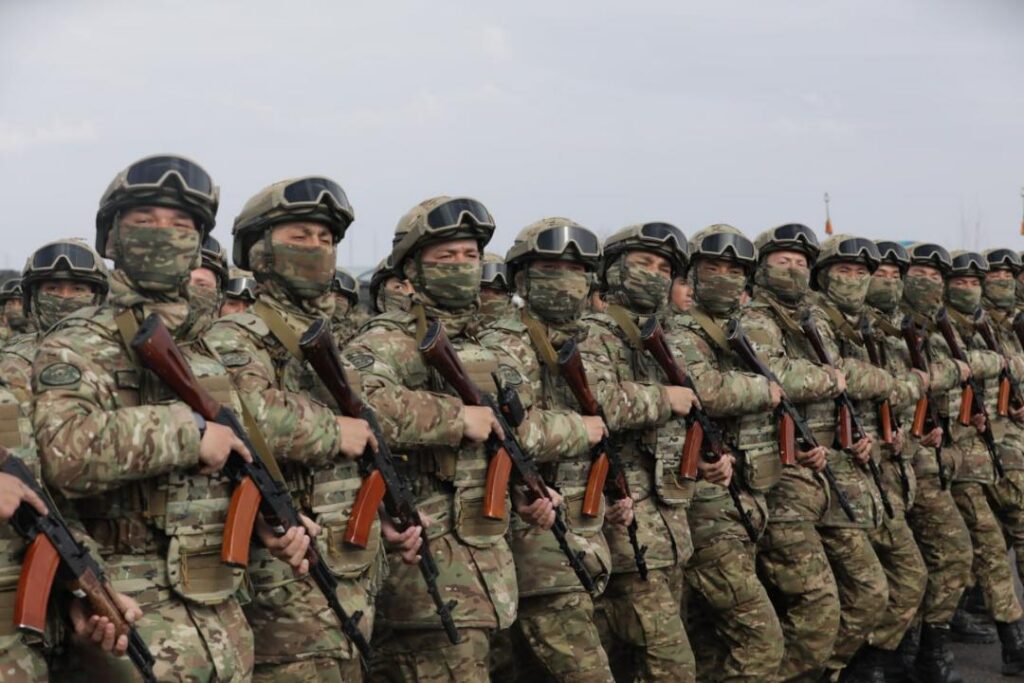
Less than a month after 14 service members died during military exercises in the Caspian Sea, Kazakhstan has approved plans to overhaul conscript training and introduce new safeguards against abuse in the armed forces. The reform plan was approved at a Security Council meeting on October 21, with the main changes scheduled for 2027. The September 24 tragedy prompted an investigation that uncovered serious failures in the planning of the exercises and measures to protect soldiers. A wider inspection of the Defense Ministry has since led to 13 criminal cases involving suspected embezzlement, abuse of authority, and other violations. New Training System Aims to Reduce Abuse Beginning in 2027, Kazakhstan plans to divide its mandatory 12-month military service into two stages. Recruits will spend their first six months at training centers and the remaining six months in military units, where they will continue combat training alongside their assigned formations. The change is intended to help conscripts adjust to military life and reduce the risk of hazing. Political analyst Gaziz Abishev believes that separating initial training from regular military service will make it easier for commanders to monitor abuse. “Amid the chaos of a regular military unit, it's much harder to keep track of abusive behavior by people who are out of control. It will be easier at a training center. Officers will be personally accountable for the safety of conscripts,” he wrote on Telegram. The military also plans to appoint military counselors and an ombudsman for service members. The aim is to give soldiers and their families somewhere to turn when their rights are violated. Askhat Aimagambetov, a member of Kazakhstan's parliament, the Kurultai, welcomed the initiative, citing cases of violations of service members' rights and the difficulties their relatives have faced in seeking justice. “Now service members and their parents will have a direct, legally recognized advocate,” the lawmaker said. A New Drone Force The plan also calls for the establishment of dedicated drone forces and an expansion of the network of specialized military schools.. The move reflects the growing importance of unmanned aircraft in modern warfare, demonstrated particularly by the war in Ukraine, where relatively inexpensive drones have proved capable of destroying far more costly military equipment. Organizational preparations are expected to be completed by the end of 2026, with the main reforms planned for 2027. The wider inspection of the Defense Ministry is also due to be completed by the end of the year. Although preliminary findings have exposed serious failings, the commission's full conclusions have yet to be published. Kazakhstan's Military Capabilities in Central Asia Kazakhstan ranks 58th among 145 countries in the 2026 Global Firepower ranking, behind Uzbekistan, which holds 53rd place. Turkmenistan ranks 78th, Tajikistan 100th, and Kyrgyzstan 109th. According to Global Firepower estimates, Kazakhstan's defense budget for 2026 is approximately $5.84 billion, compared with around $6.21 billion for Uzbekistan.
Russia and Kyrgyzstan Sign Military Cooperation Plan for 2027

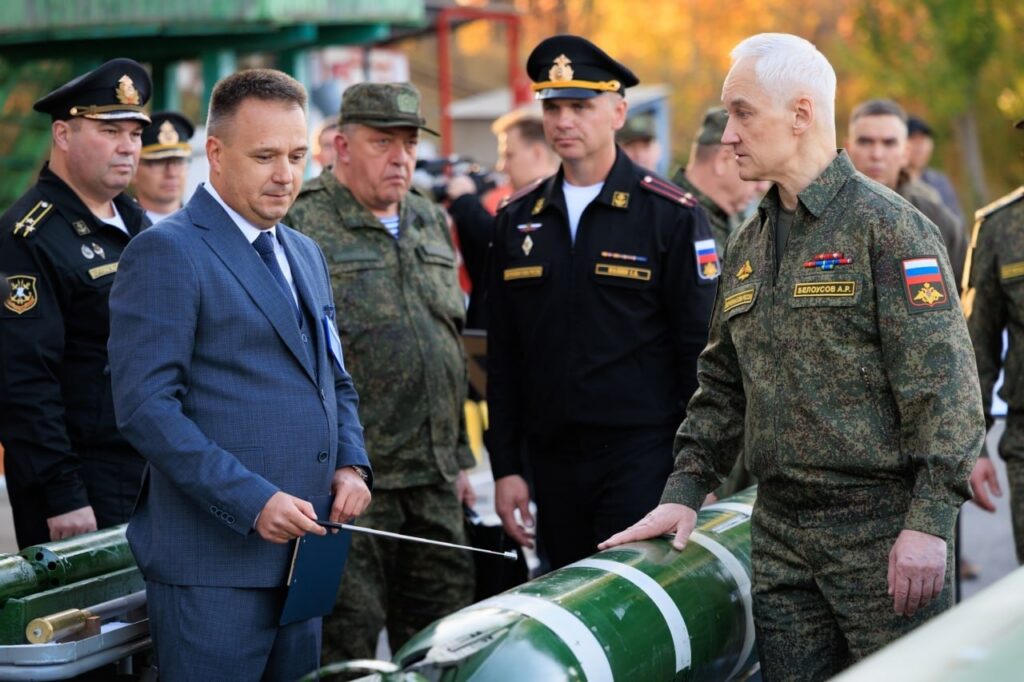
Russia and Kyrgyzstan signed a military cooperation plan for 2027 on October 15, a day after Russian lawmakers approved measures to simplify arms deliveries to Bishkek. Defense ministers Andrei Belousov and Ruslan Mukambetov signed the agreement in Cholpon-Ata, on the shores of Lake Issyk-Kul, ahead of a meeting of defense ministers from the Commonwealth of Independent States (CIS). The plan's contents have not been made public. Russia's Defense Ministry said the two sides discussed military personnel training, military-technical cooperation, and the operation of the joint Russian military base in Kyrgyzstan. Russia's military presence in Kyrgyzstan consists of four facilities, including Kant Air Base, around 20 kilometers from Bishkek, which Russian forces have used since 2003. It is part of the forces of the Russian-led Collective Security Treaty Organization (CSTO). The other facilities are a Russian Navy communications station in Chaldovar, a seismic monitoring station in Mailuu-Suu, and a naval weapons testing base near Karakol on Lake Issyk-Kul. Belousov inspected the Issyk-Kul facility on October 14. The base tests anti-submarine weapons and systems designed to protect ships and submarines from torpedo attacks. The joint military base operates under bilateral agreements. Its current structure took shape after Russia's military facilities in Kyrgyzstan were brought together under an agreement signed in 2012, which entered into force in 2017. On October 14, Russia's State Duma ratified a protocol simplifying military-technical cooperation with Kyrgyzstan. Signed in November 2025, the protocol allows military equipment to be supplied under contracts between authorized organizations without additional import and export licenses. It also simplifies procedures for spare parts, repairs, and maintenance. The changes could speed up deliveries to the Kyrgyz military, although no new contracts have been announced. In 2025, Russia and Kyrgyzstan signed a strategic military partnership program covering 2026–2030. The two defense ministries have now agreed on their work for the coming year. Kyrgyzstan also maintains military ties with other countries. In February 2026, representatives of U.S. Central Command, the U.S. Air Force, and the Montana National Guard discussed joint training plans for fiscal year 2027 with Kyrgyz military officials.

Kazakhstan Begins Military AI Training for 75 Personnel

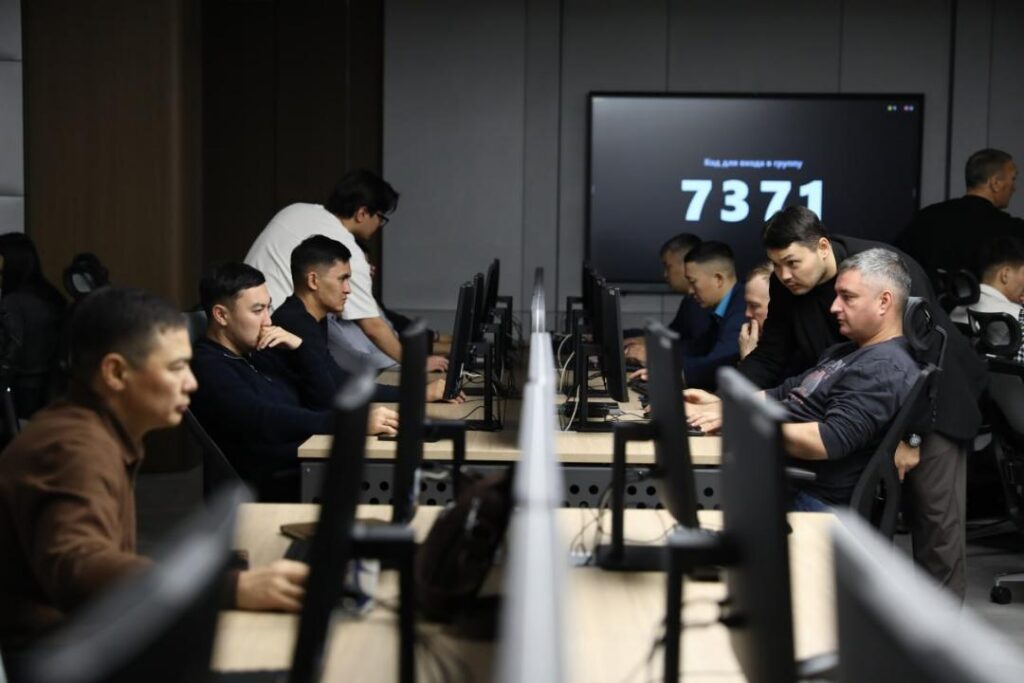
Kazakhstan has begun training military personnel to create software using artificial intelligence (AI) without having to write code themselves. A total of 75 participants, including conscripts from the Air Defense Forces and Ground Forces, will take the course at Maqsut Narikbayev University (MNU) in Astana. The approach, known in the AI industry as "vibe coding," allows users to create digital tools by describing tasks in everyday language. AI generates the code, while users check the results and refine their instructions as needed. During the course, participants will learn to visualize data and develop applications. "Our goal is to give military personnel skills they can apply in their daily duties. We teach them to create their own digital solutions for specific tasks, from analyzing data on the country and its regions to automating workflows. The main thing is to show them how it works and help them overcome the initial barrier so they can go on to develop their own ideas independently," explained Sergey Pen, deputy chairman of the MNU Management Board for science, innovation, and artificial intelligence. The training is part of the AI+X program, run by MNU under a three-year government pilot initiative. For practical sessions, the university uses its specialized AI Agentic Lab and computing resources. The use of AI for military tasks also raises questions about data security. Kazakhstan is developing a dedicated AI system for military personnel that is intended to keep information within a secure environment rather than transmit it to external services.
