
• KZT/USD = 0.00223
  • TJS/USD = 0.10820
  • UZS/USD = 0.00009
  • TMT/USD = 0.29760
  • KZT/USD = 0.00223
  • TJS/USD = 0.10820
  • UZS/USD = 0.00009
  • TMT/USD = 0.29760
  • KZT/USD = 0.00223
  • TJS/USD = 0.10820
  • UZS/USD = 0.00009
  • TMT/USD = 0.29760
  • KZT/USD = 0.00223
  • TJS/USD = 0.10820
  • UZS/USD = 0.00009
  • TMT/USD = 0.29760
  • KZT/USD = 0.00223
  • TJS/USD = 0.10820
  • UZS/USD = 0.00009
  • TMT/USD = 0.29760
  • KZT/USD = 0.00223
  • TJS/USD = 0.10820
  • UZS/USD = 0.00009
  • TMT/USD = 0.29760
  • KZT/USD = 0.00223
  • TJS/USD = 0.10820
  • UZS/USD = 0.00009
  • TMT/USD = 0.29760
  • KZT/USD = 0.00223
  • TJS/USD = 0.10820
  • UZS/USD = 0.00009
  • TMT/USD = 0.29760
21 September 2026

Viewing results 1 - 6 of 3

Kyrgyzstan’s NISI Director on Reform, Red Tape and a Bigger Global Role

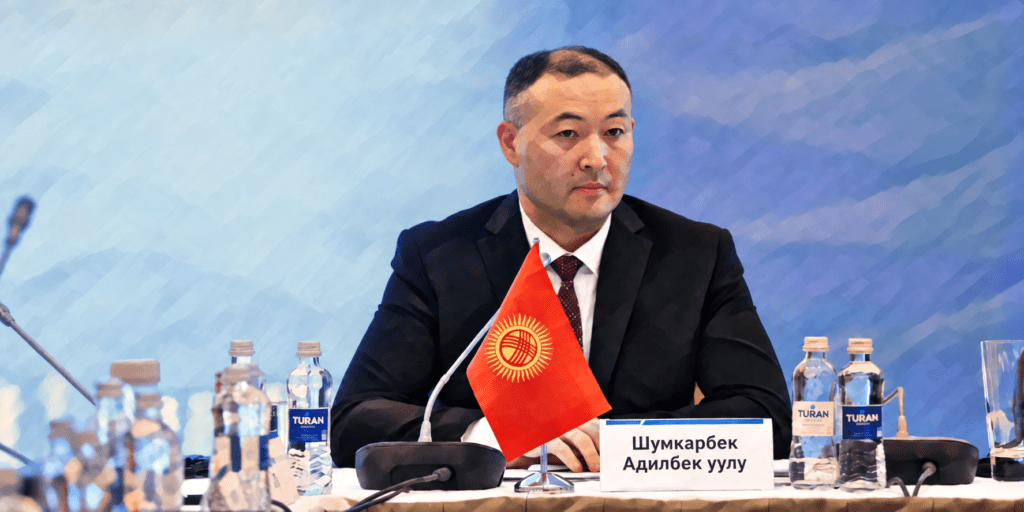
On September 15, 2026, The Times of Central Asia spoke with Shumkarbek Adilbek uulu, director of the National Institute for Strategic Initiatives (NISI) under the President of the Kyrgyz Republic. Established in its current form in 2024 through the merger of two institutes, NISI provides strategic advice to the country's leadership and develops proposals to reduce bureaucracy. Adilbek uulu discusses Kyrgyzstan's priorities for its 2027–2028 UN Security Council term and its approach to climate diplomacy. He also outlines NISI's work on economic reform and digital public services, including efforts to help smaller businesses grow. Some views expressed in this interview reflect Adilbek uulu's personal opinions rather than the official position of NISI or the Kyrgyz government, as he notes in his answers. The English text has been lightly edited for readability.   TCA: What have been your main priorities since becoming director, and how did you come to join NISI? Adilbek uulu: We're focused on practical ways to drive sustainable economic growth at home: a smaller, simpler government, more room for business, and productive relations abroad that feed into our domestic agenda. By protecting our national interests, our diplomats support the domestic goal of building up the Kyrgyz Republic, nation-building if you will, without getting caught up in other countries' ambitions. I joined NISI in 2025 to help break through decades of bureaucratic gridlock, a real drag on economic development. Minister Ayaz Baetov brought me in. At the time, he was the Minister of Justice, Deputy Chairman of the Cabinet of Ministers, and NISI's director, all at once. He told me NISI's job was to give the Presidential Administration strategic advice that's pragmatic and rooted in Kyrgyz insight. I agreed and have been working at it since. That's our core job. Interestingly, Minister Baetov was just named Kyrgyzstan's Permanent Representative to the UN in New York. The significance of the contribution Mr. Baetov has made to the effort to reduce bureaucracy remains to be fully assessed. I am confident it will be rated highly, as we will feel the positive impact of many of his ideas and decisions in the future. TCA: Kyrgyzstan was recently elected a non-permanent member of the UN Security Council for 2027–2028. Will NISI be more focused on foreign policy now? Adilbek uulu: With Kyrgyzstan on the Security Council, the government will be pulled into issues outside our usual remit, so NISI will be in even closer contact with the Ministry of Foreign Affairs. To be clear, I don't speak for the Foreign Ministry. I help shape strategy for our diplomats, businesspeople, and policymakers, and I track what's happening overseas and in our neighborhood. UNSC issues will be high on our agenda, and we'll support the MFA on long-term thinking. As one example, I just got back from the China Economic and Social Forum in Hangzhou, China. The forum focused on the environment and natural resources. I'll be putting together a memo for the Office of the President with our observations. TCA: How does climate vulnerability...

Empowering Trade and Women Entrepreneurs: Kazakhstan’s Digital Leap for the Turkic States

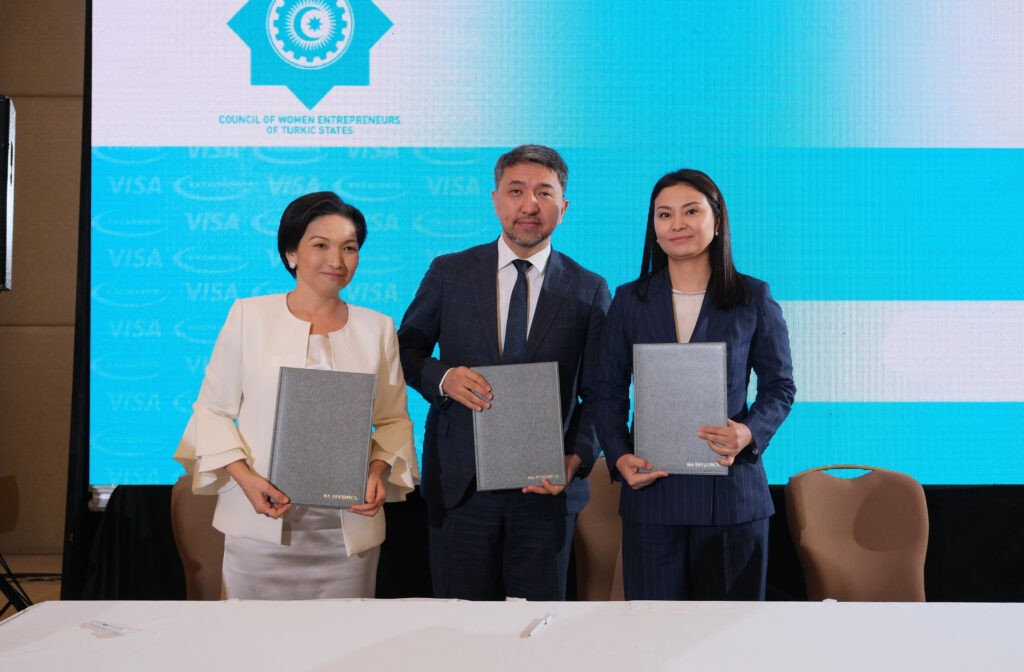
The head of the Presidium of the National Association of Women Entrepreneurs of Kazakhstan (ASMAR), Lazzat Ramazanova, who currently chairs the Council of Women Entrepreneurs of Turkic States, has reported on the development of a single digital ecosystem for business in the five countries which form the Organization of Turkic States (OTS). This platform is expected to expand international trade with countries outside of the Organization. This year, Kazakhstan chairs the Council of Women Entrepreneurs of Turkic States, which operates under the OTS and includes five member countries: Kazakhstan, Kyrgyzstan, Azerbaijan, Turkey, and Uzbekistan. Three more countries - Hungary, Northern Cyprus, and Turkmenistan - are represented in the Organization with the status of observer states. One of the goals of Kazakhstan's chairing of the OTS was to strengthen business ties between Turkic states. To this end, the Turkic Business Hub initiative was implemented, an online platform that will become an important element of integration and cooperation in the region. Speaking at the close of the meeting in Astana, Lazzat Ramazanova told those in attendance: “Today, within the framework of the General Assembly of Women Entrepreneurs of the Turkic World, an ambitious initiative was put forward to create a unified digital platform for business. Kazakhstan was the initiator and implementer of this idea, as our country is now among the top 25 most digitized countries. The platform has already been developed, and in Kazakhstan, we are already working with our ministries on the integration of info-systems. Now, we will work with the governments of Turkic states so that the same integration takes place with their info-systems. In other words, the software has been created, and we are working to bring other countries into it.” The main advantage of a Turkic Business Hub is it ensures business security when choosing a partner in a given country. This is because when a user of the platform registers as a potential participant in trade relations, all information about them as a business entity is collected. Artificial intelligence automatically scans the fiscal (tax and customs) authorities and runs the business' credit history through the hub's integration with the databases of banks. The banks have their own interest in this system, since using it they can find clients and borrowers who have passed strict compliance checks. AI can also monitor the presence or absence of lawsuits from former partners of the entity that is attempting to register. “In the case of detection of negative information, the entity is denied registration, i.e., from there start, there will be no 'scam' companies or unscrupulous counter-parties on the platform," Ramazanova explained. "They will immediately be 'canceled' by the artificial intelligence based on the data from tax, customs, and other state services. But the most important thing is that in case of rejection, AI will send such the rejectee a complete summary of the reasons why they were denied registration, so the business will know what they need to correct to join the system. Once business entities that have no...

ADB and Kompanion Bank to Boost Financing of Women-Led and Small Businesses in Kyrgyzstan

As reported in a news release on its website, on December 28th the Asian Development Bank (ADB) and Kompanion Bank Closed Joint Stock Company on December 28th signed off a loan of up to $5 million in local currency financing to boost micro, small, and medium-sized enterprises (MSMEs) in Kyrgyzstan, especially those owned or led by women. Established in 2004, Kompanion Bank is one of the large commercial banks in the Kyrgyz Republic and dominates the MSME market through its wide network with 93 branches across the country. More than half of Kompanion’s portfolio is with micro and small enterprises. “Women account for about a third of entrepreneurs in the Kyrgyz Republic, but they nevertheless face significant challenges in accessing financial services and credit,” said ADB Director General for Private Sector Operations, Suzanne Gaboury. “This partnership with Kompanion Bank will help bridge the financing gap for women-led small businesses, as well as provide a strong case for the sustainability of local currency lending to these companies.” To strengthen development impact and address finance and bankability constraints, transactions incorporate a credit guarantee from the Asian Development Fund’s (ADF) Private Sector Window facility (PSW) of up to $2.3 million. ADB will also provide technical assistance to Kompanion Bank to enhance its digital capabilities and operational efficiency. “We are happy to be a partner with ADB in this initiative to support micro and small entrepreneurs in the Kyrgyz Republic. We believe that our experience in the MSME market will allow us to make a significant impact on the local economy, and we look forward to working closely with ADB for the benefit of our clients and the community,” said Kompanion Bank CEO, Margarita Cherikbaeva. ADB will also help Kompanion Bank to develop a gender action plan to promote gender equality and women’s empowerment in its business activities. Key activities will include increasing the number of women borrowers and delivering training on improved agricultural practices and digital and financial literacy for female clients.
