
• KZT/USD = 0.00221
  • TJS/USD = 0.10830
  • UZS/USD = 0.00008
  • TMT/USD = 0.29760
  • KZT/USD = 0.00221
  • TJS/USD = 0.10830
  • UZS/USD = 0.00008
  • TMT/USD = 0.29760
  • KZT/USD = 0.00221
  • TJS/USD = 0.10830
  • UZS/USD = 0.00008
  • TMT/USD = 0.29760
  • KZT/USD = 0.00221
  • TJS/USD = 0.10830
  • UZS/USD = 0.00008
  • TMT/USD = 0.29760
  • KZT/USD = 0.00221
  • TJS/USD = 0.10830
  • UZS/USD = 0.00008
  • TMT/USD = 0.29760
  • KZT/USD = 0.00221
  • TJS/USD = 0.10830
  • UZS/USD = 0.00008
  • TMT/USD = 0.29760
  • KZT/USD = 0.00221
  • TJS/USD = 0.10830
  • UZS/USD = 0.00008
  • TMT/USD = 0.29760
  • KZT/USD = 0.00221
  • TJS/USD = 0.10830
  • UZS/USD = 0.00008
  • TMT/USD = 0.29760
18 October 2026

Viewing results 1 - 6 of 3

Kyrgyzstan Plans $1 Billion Pharmaceutical Industrial Park

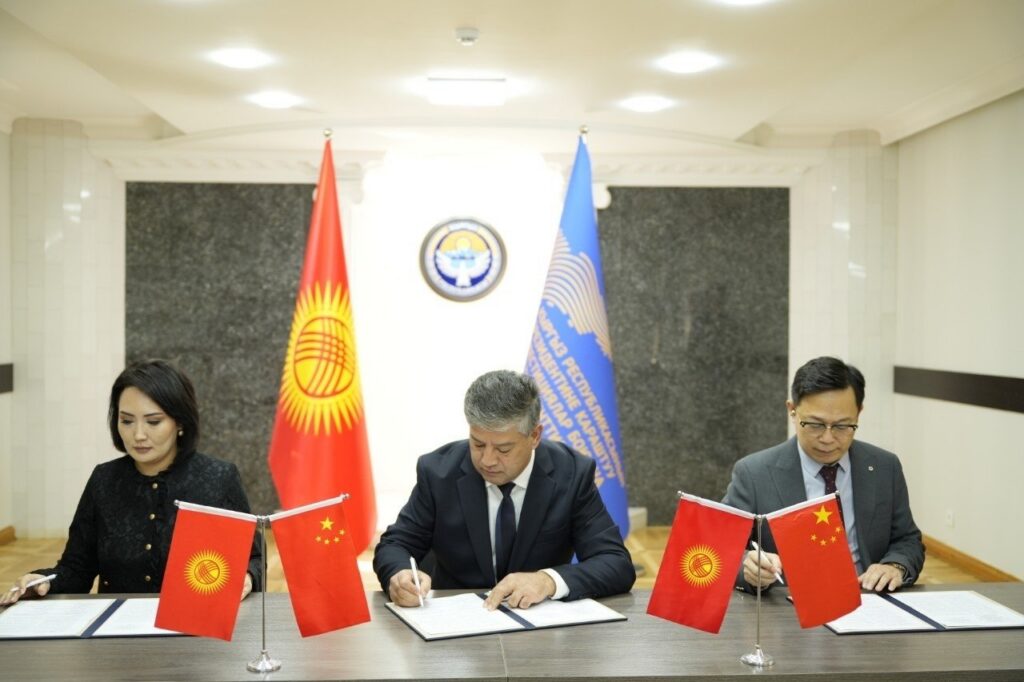
A $1 billion pharmaceutical industrial park is planned in Kyrgyzstan as the country seeks to expand domestic drug production in a market still dominated by imports. The National Investment Agency signed a memorandum on the project with 21st Century Biomedicine on September 29. The full-cycle complex is planned for a 20-hectare site and would be developed in three stages over six years. The park is expected to include a research center, drug-production facilities, a medical devices center, and a business incubator. Less is known about 21st Century Biomedicine itself. The company has little visible public profile, and no clear record of previous pharmaceutical projects appears in publicly available sources. Kyrgyz reports say Bishkek-based MedPharm Consulting will provide organizational, technical, and legal support for the development. The proposal comes amid growing Chinese interest in Kyrgyzstan’s pharmaceutical sector. In December 2024, the government approved an investment agreement for a Kyrgyz-Chinese pharmaceutical project led by Standard Pharm Group, with planned investment of more than $41 million. Chinese investors have since discussed further projects, including a pharmaceutical plant using locally grown medicinal herbs. Drug production at the proposed industrial park is planned to comply with the Eurasian Economic Union’s Good Manufacturing Practice standards, which set common requirements for pharmaceutical manufacturing and quality control across Armenia, Belarus, Kazakhstan, Kyrgyzstan, and Russia. Meeting those standards would be one requirement for exporting medicines within the EAEU. According to the National Investment Agency, domestic production currently covers around 4% of Kyrgyzstan’s pharmaceutical needs. If the park is completed, the project is expected to raise the country’s pharmaceutical self-sufficiency to 25–30%. The proposed development is also expected to create 2,500–3,000 direct jobs and more than 10,000 indirect jobs. Kyrgyzstan remains heavily dependent on foreign medicines. In November 2025, a Health Ministry official said that imports accounted for around 97% of medicines sold in the country, with domestic producers supplying about 3%. The authorities are seeking to develop domestic production while also expanding infrastructure for storing and distributing medicines. In September, construction began in Bishkek on a state pharmaceutical warehouse and logistics complex for Kyrgyzpharmatsiya, the state enterprise responsible for centralized procurement of medicines and medical supplies for public healthcare institutions. The new facility, worth around $7.4 million, is intended to improve the storage and nationwide distribution of pharmaceuticals. For now, however, the proposed $1 billion pharmaceutical park remains at the memorandum stage.

Kyrgyzstan Reports 34% Growth in Foreign Direct Investment in First Quarter of 2026

Kyrgyzstan attracted $386.7 million in foreign direct investment in the first quarter of 2026, up 34% from $288.2 million during the same period last year, according to the latest data from the National Investment Agency under the President of the Kyrgyz Republic. The strongest inflow was recorded in the financial and insurance sector, which drew $93.6 million, followed by the manufacturing sector with $90.1 million. Investment in wholesale and retail trade rose to $64.5 million, while foreign direct investment in information and communications increased by 75% year-on-year to $46.9 million. The sharpest increase came in the professional, scientific, and technical activities sector, where investment jumped from just $1.8 million in the first quarter of 2025 to $49.5 million in the same period this year. By region, the capital, Bishkek, accounted for the largest share of total foreign direct investment, attracting $115.8 million, or 30% of the total. Talas Region ranked second with $80.3 million, representing 20.7% of total inflows, followed by Naryn Region with $69.7 million, Chui Region with $68.6 million, and Jalal-Abad Region with $43.3 million. The latest figures continue an upward trend. In 2025, Kyrgyzstan’s total foreign direct investment reached $1.31 billion, up 27.3% from more than $1 billion in 2024, according to official data. The government has been actively promoting investment in manufacturing, infrastructure, energy, and logistics as part of broader efforts to strengthen long-term capital inflows and regional development.

PPP Development in Kyrgyzstan Gains Strong Momentum

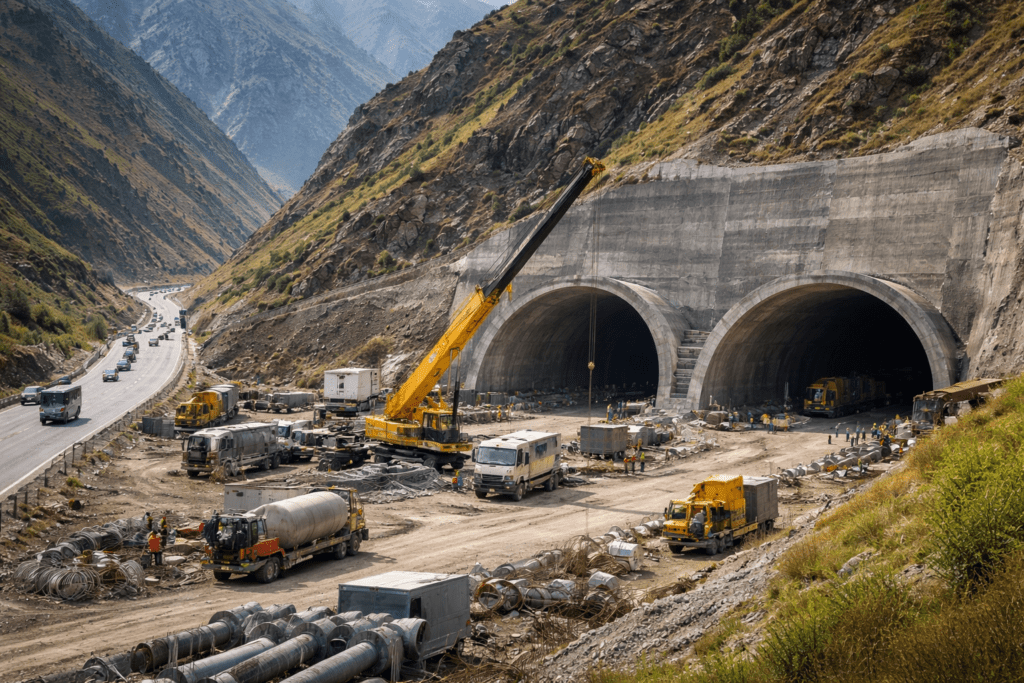
A new FII Institute’s Public-Private Partnerships: Financing The Future Impact Report 2026 reveals that emerging markets are driving the next wave of PPP growth. PPP spending across low-and middle-income countries reached $100.7 billion in 2024, up 16% on-year, with emerging markets now representing around 61% of global PPP activity by GDP share. A key finding is that Kyrgyzstan ranks third in the report’s emerging-market PPP project pipeline, with 80 published or announced projects, behind only the Philippines (230 projects) and Saudi Arabia (98), and ahead of Bangladesh (71) and Peru (54). For Kyrgyzstan, being ranked among the top PPP pipelines signals strong momentum in PPP development. To coordinate and promote PPP projects and attract private investment and private-sector management experience, the government has established the Public-Private Partnership Center of the Kyrgyz Republic. According to the National Investment Agency under the President of the Kyrgyz Republic, the PPP Center's project portfolio now includes over 90 projects with a total private investment volume of 434 billion soms (over $4.9 billion). Currently, 65 PPP projects are in the active implementation phase, and 14 new PPP agreements were signed in 2025 in sectors such as transport, logistics, agriculture, ecology and waste management, tourism, education, and communications, attracting over $3.9 billion in private investment to the Kyrgyz economy. Key PPP agreements signed in 2025 include the construction and operation of the Kelechek alternative toll tunnel through the Too-Ashuu Pass on the Bishkek-Osh highway; the construction and operation of the eastern bypass road around Bishkek; the construction and management of a trade and logistics center in Kara-Suu; and projects to modernize regional healthcare infrastructure, including the Bulak sports and fitness complex in Osh, the U Nexus Hub innovation center at the International University of Kyrgyzstan, and a magnetic resonance imaging (MRI) center at the Osh Interregional Clinical Hospital. An important PPP initiative is the Trans-Eurasian Route railway project. A public-private partnership agreement for the project was signed in Bishkek in February 2025, marking Kyrgyzstan’s first PPP initiative in the railway sector. The agreement was concluded between the National Investment Agency, Kyrgyzstan’s national railway company Kyrgyz Temir Jolu, and the U.S.-based consortium All American Rail Group Global Infrastructure Partner LLC. The project involves the construction of a railway across central Kyrgyzstan, traversing mountainous terrain from east to west and connecting Karakol in the northeastern Issyk-Kul region with Makmal in the southwestern Jalal-Abad region. The railway is expected to play a key role in modernizing the country’s transport infrastructure and enhancing regional connectivity and economic development. The growth in the number of PPP projects was supported by legislative reforms in 2025. Amendments to the PPP Law significantly simplified procedures for investors: a simplified mechanism for launching small projects was introduced, along with provisions allowing the allocation of municipal land and property without a tender at a preferential rental rate. A milestone of 2025 was the establishment of the PPP Academy, a joint initiative of the PPP Center and the Eurasian Development Bank, aimed at training professionals for Kyrgyzstan’s...
