
• KGS/USD = 0.01144 0%
  • KZT/USD = 0.00213 0%
  • TJS/USD = 0.10562 0%
  • UZS/USD = 0.00008 0%
  • TMT/USD = 0.28530 0%
  • KGS/USD = 0.01144 0%
  • KZT/USD = 0.00213 0%
  • TJS/USD = 0.10562 0%
  • UZS/USD = 0.00008 0%
  • TMT/USD = 0.28530 0%
  • KGS/USD = 0.01144 0%
  • KZT/USD = 0.00213 0%
  • TJS/USD = 0.10562 0%
  • UZS/USD = 0.00008 0%
  • TMT/USD = 0.28530 0%
  • KGS/USD = 0.01144 0%
  • KZT/USD = 0.00213 0%
  • TJS/USD = 0.10562 0%
  • UZS/USD = 0.00008 0%
  • TMT/USD = 0.28530 0%
  • KGS/USD = 0.01144 0%
  • KZT/USD = 0.00213 0%
  • TJS/USD = 0.10562 0%
  • UZS/USD = 0.00008 0%
  • TMT/USD = 0.28530 0%
  • KGS/USD = 0.01144 0%
  • KZT/USD = 0.00213 0%
  • TJS/USD = 0.10562 0%
  • UZS/USD = 0.00008 0%
  • TMT/USD = 0.28530 0%
  • KGS/USD = 0.01144 0%
  • KZT/USD = 0.00213 0%
  • TJS/USD = 0.10562 0%
  • UZS/USD = 0.00008 0%
  • TMT/USD = 0.28530 0%
  • KGS/USD = 0.01144 0%
  • KZT/USD = 0.00213 0%
  • TJS/USD = 0.10562 0%
  • UZS/USD = 0.00008 0%
  • TMT/USD = 0.28530 0%

Viewing results 1 - 6 of 6

Kazakhstan Pushes to Unlock Private Investment as IFC Backs Reform Drive

Kazakhstan is positioning itself as a more attractive destination for private investment, as authorities push to expand infrastructure, improve access to capital, and strengthen its role along key Eurasian trade routes. In an interview with The Times of Central Asia, Lisa Kaestner, the new Regional Director for Türkiye, Kazakhstan, and Uzbekistan at the International Finance Corporation (IFC), outlines how the World Bank Group’s private sector arm plans to support that shift, from backing transport corridors to mobilizing capital for businesses and infrastructure projects. TCA: Since taking up your new role, how has your career path and leadership experience shaped your approach to this position? Kaestner: I joined IFC as Resident Representative in Georgia in 1999, and that early experience shaped how I approach working directly with local partners and stakeholders. Since then, I've held several leadership roles across IFC and the World Bank, primarily in Eastern Europe and Central Asia, while also expanding into Africa, where I led advisory services to governments across Eastern and Southern Africa — working across sectors like agribusiness, tourism, housing, technologies and financial services to support private sector-led growth. More recently, I served as Country Manager for Ukraine and earlier also Moldova, where I led IFC's strategic work on expanding support for businesses and financial institutions and helping lay the groundwork for private sector participation in Ukraine’s reconstruction. In March 2026, I stepped into my current role as Director overseeing IFC's activities in Türkiye, Kazakhstan, and Uzbekistan, focused on mobilizing private investment and advancing reforms in close partnership with governments and the private sector. TCA: How do you assess the investment attractiveness of Kazakhstan at present? Kaestner: Kazakhstan presents a compelling investment story. The country benefits from a strategic geographic position at the heart of Eurasia, significant natural resources, and a government that has demonstrated a genuine commitment to reform and private sector development. From our point of view, several factors stand out as particularly encouraging. Kazakhstan has made meaningful progress in strengthening financial sector regulation and advancing infrastructure development. At the same time, we recognize that challenges remain. One key factor is the dominant role of the state in the economy, which represents roughly 40% of GDP, especially in major sectors like natural resources, electricity, telecommunications, and infrastructure. In this regard, we support the government’s efforts to increase private sector participation through privatization, IPOs, and public-private partnerships (PPPs). Additionally, maintaining steady progress on governance, transparency, and the rule of law remains crucial for sustaining investor confidence in the long term. Diversifying the economy away from commodity dependence — while significant strides have been made — remains a priority, as does deepening domestic capital markets to reduce reliance on external financing. Broader reforms are needed to achieve stable economic growth and improve the business climate, which will allow Kazakhstan to reach the level of developed countries. Significant efforts to develop the Trans-Caspian Transport Corridor (TCTC)—also known as the Middle Corridor, which is becoming increasingly important as an alternative trade route between Asia and Europe are...

PPP Development in Kyrgyzstan Gains Strong Momentum

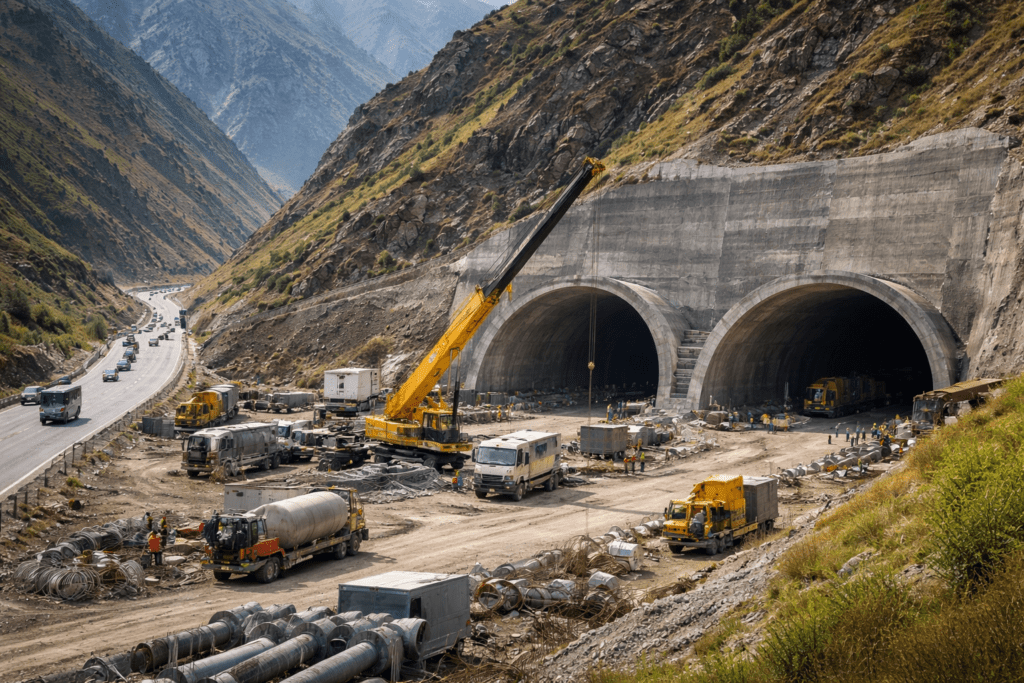
A new FII Institute’s Public-Private Partnerships: Financing The Future Impact Report 2026 reveals that emerging markets are driving the next wave of PPP growth. PPP spending across low-and middle-income countries reached $100.7 billion in 2024, up 16% on-year, with emerging markets now representing around 61% of global PPP activity by GDP share. A key finding is that Kyrgyzstan ranks third in the report’s emerging-market PPP project pipeline, with 80 published or announced projects, behind only the Philippines (230 projects) and Saudi Arabia (98), and ahead of Bangladesh (71) and Peru (54). For Kyrgyzstan, being ranked among the top PPP pipelines signals strong momentum in PPP development. To coordinate and promote PPP projects and attract private investment and private-sector management experience, the government has established the Public-Private Partnership Center of the Kyrgyz Republic. According to the National Investment Agency under the President of the Kyrgyz Republic, the PPP Center's project portfolio now includes over 90 projects with a total private investment volume of 434 billion soms (over $4.9 billion). Currently, 65 PPP projects are in the active implementation phase, and 14 new PPP agreements were signed in 2025 in sectors such as transport, logistics, agriculture, ecology and waste management, tourism, education, and communications, attracting over $3.9 billion in private investment to the Kyrgyz economy. Key PPP agreements signed in 2025 include the construction and operation of the Kelechek alternative toll tunnel through the Too-Ashuu Pass on the Bishkek-Osh highway; the construction and operation of the eastern bypass road around Bishkek; the construction and management of a trade and logistics center in Kara-Suu; and projects to modernize regional healthcare infrastructure, including the Bulak sports and fitness complex in Osh, the U Nexus Hub innovation center at the International University of Kyrgyzstan, and a magnetic resonance imaging (MRI) center at the Osh Interregional Clinical Hospital. An important PPP initiative is the Trans-Eurasian Route railway project. A public-private partnership agreement for the project was signed in Bishkek in February 2025, marking Kyrgyzstan’s first PPP initiative in the railway sector. The agreement was concluded between the National Investment Agency, Kyrgyzstan’s national railway company Kyrgyz Temir Jolu, and the U.S.-based consortium All American Rail Group Global Infrastructure Partner LLC. The project involves the construction of a railway across central Kyrgyzstan, traversing mountainous terrain from east to west and connecting Karakol in the northeastern Issyk-Kul region with Makmal in the southwestern Jalal-Abad region. The railway is expected to play a key role in modernizing the country’s transport infrastructure and enhancing regional connectivity and economic development. The growth in the number of PPP projects was supported by legislative reforms in 2025. Amendments to the PPP Law significantly simplified procedures for investors: a simplified mechanism for launching small projects was introduced, along with provisions allowing the allocation of municipal land and property without a tender at a preferential rental rate. A milestone of 2025 was the establishment of the PPP Academy, a joint initiative of the PPP Center and the Eurasian Development Bank, aimed at training professionals for Kyrgyzstan’s...