• KGS/USD = 0.01144 0%
  • KZT/USD = 0.00213 0%
  • TJS/USD = 0.10699 0%
  • UZS/USD = 0.00008 0%
  • TMT/USD = 0.28571 0%
  • KGS/USD = 0.01144 0%
  • KZT/USD = 0.00213 0%
  • TJS/USD = 0.10699 0%
  • UZS/USD = 0.00008 0%
  • TMT/USD = 0.28571 0%
  • KGS/USD = 0.01144 0%
  • KZT/USD = 0.00213 0%
  • TJS/USD = 0.10699 0%
  • UZS/USD = 0.00008 0%
  • TMT/USD = 0.28571 0%
  • KGS/USD = 0.01144 0%
  • KZT/USD = 0.00213 0%
  • TJS/USD = 0.10699 0%
  • UZS/USD = 0.00008 0%
  • TMT/USD = 0.28571 0%
  • KGS/USD = 0.01144 0%
  • KZT/USD = 0.00213 0%
  • TJS/USD = 0.10699 0%
  • UZS/USD = 0.00008 0%
  • TMT/USD = 0.28571 0%
  • KGS/USD = 0.01144 0%
  • KZT/USD = 0.00213 0%
  • TJS/USD = 0.10699 0%
  • UZS/USD = 0.00008 0%
  • TMT/USD = 0.28571 0%
  • KGS/USD = 0.01144 0%
  • KZT/USD = 0.00213 0%
  • TJS/USD = 0.10699 0%
  • UZS/USD = 0.00008 0%
  • TMT/USD = 0.28571 0%
  • KGS/USD = 0.01144 0%
  • KZT/USD = 0.00213 0%
  • TJS/USD = 0.10699 0%
  • UZS/USD = 0.00008 0%
  • TMT/USD = 0.28571 0%

Viewing results 1 - 6 of 42

Kazakhstan and Kyrgyzstan to Cooperate on Snow Leopard Conservation

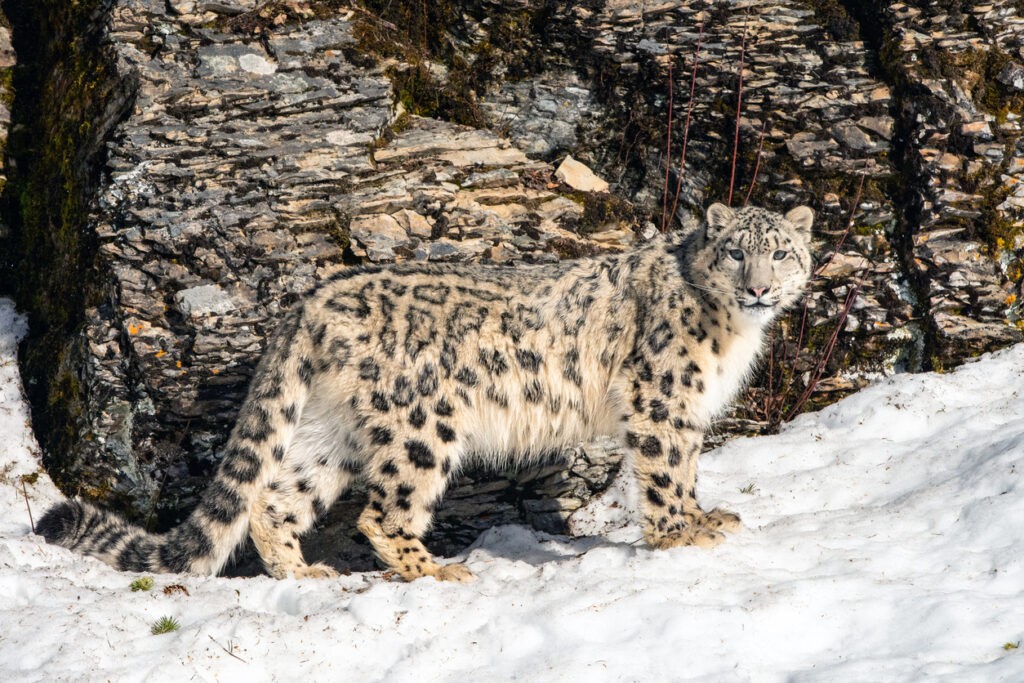
As reported by the United Nations Development Programme (UNDP) in Kazakhstan, a memorandum of understanding on snow leopard conservation was signed on October 17 between Kazakhstan's and Kyrgyzstan's  protected nature reserves. Initiated by UNDP in Kazakhstan with the support of the Global Environment Facility (GEF), the five-year agreement aims to conserve the snow leopard and its habitats in the northern Tien Shan Mountains within four of the countries' Specially Protected Nature Areas: the Kolsay Kolderi State National Park, the Almaty State Nature Reserve, the Ile-Alatau State National Park in Kazakhstan, and the Chon Kemin State Nature Park in Kyrgyzstan. The two countries will coordinate joint measures and share experiences in researching and strengthening snow leopard protection. Over the next five years, the parties will also develop and implement several initiatives to monitor the snow leopard, its habitats and food supply, promote transboundary and international cooperation, and increase public awareness and participation through snow leopard conservation programs. Nurken Sharbiyev, Vice Minister of Ecology and Natural Resources of Kazakhstan, citing the fact that the country's snow leopard population has increased by over 20% since 2019, to between 152 and 189 animals, stated, “This memorandum will strengthen the links between our countries to conserve this globally important species." Mirslav Amankulov, Vice Minister of Natural Resources, Ecology and Technical Supervision of Kyrgyzstan, said that Kyrgyzstan currently has over 400 snow leopards but noted: “As it is a migratory species, its habitat is not limited to the territory of the country. To study and preserve the snow leopard and its habitat, prevent the impact of serious threats such as illegal hunting and reduction of food supply and habitats due to human activities, interaction between stakeholders is needed, which will be facilitated by the implementation of measures under the signed memorandum between Kazakhstan and the Kyrgyz Republic." The snow leopard is recognized as a rare or endangered species in 12 countries and its population is indicative of the stability and health of the mountain ecosystem, which occupies a third of the globe. At the first International Forum on Snow Leopard Conservation in Bishkek in 2013, with the support of representatives of 12 snow leopard range countries and the international community, the Bishkek Declaration on the Protection of the Snow Leopard was unanimously adopted, and the Global Snow Leopard and Ecosystem Protection (GSLEP) Program was approved. Later, in December 2023, Kyrgyzstan's President Sadyr Japarov signed a Decree “On recognizing the snow leopard as a national symbol of the Kyrgyz Republic.”

Uzbekistan’s Heritage Trees Added to International Monumental Trees List

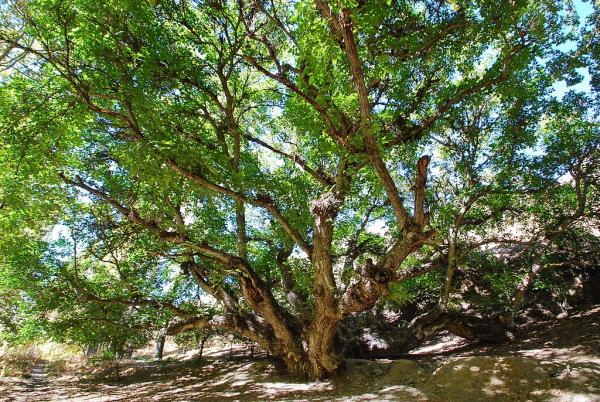
The Ministry of Ecology of Uzbekistan reports that it has participated in the compilation of data on the country's aged and relict trees for inclusion in the international list of MonumentalTrees.com. MonumentalTrees.com is an electronic record of perennial, rare, and unique tree species of international importance located throughout the world, aimed to protect and promote national natural heritage sites. Species found in Uzbekistan currently listed on MonumentalTrees.com. include: Eastern Biota (1500 years' old) in the Forish district of Jizzakh ; Sycamore ( over 1160 years' old) in the Urgut district of the Samarkand; Juniper ( over 1000 years' old), Hazel ( over 800 years' old) and Sycamore (around 600 years' old) in the Bostanlyk district of Tashkent , as well as Sycamore (some 900 years' old) in the village of Sayrob in the Boysun district of Surkhandarya; Sycamore (over 750 years' old) in the territory of the Dorus-Saodat Memorial Complex in the city of Shakhrisabz  in Kashkadarya , and a Boboyongok Hazel tree (about 700 years' old) in the Zomin national nature park in Jizzakh . Uzbekistan is the first Central Asian country and the third among the CIS republics to register its natural heritage species in this international list. Perennial trees located in Russia and Azerbaijan are also included.

Sumbar the Life-Saving Brown Bear Settles in Ashgabat Zoo

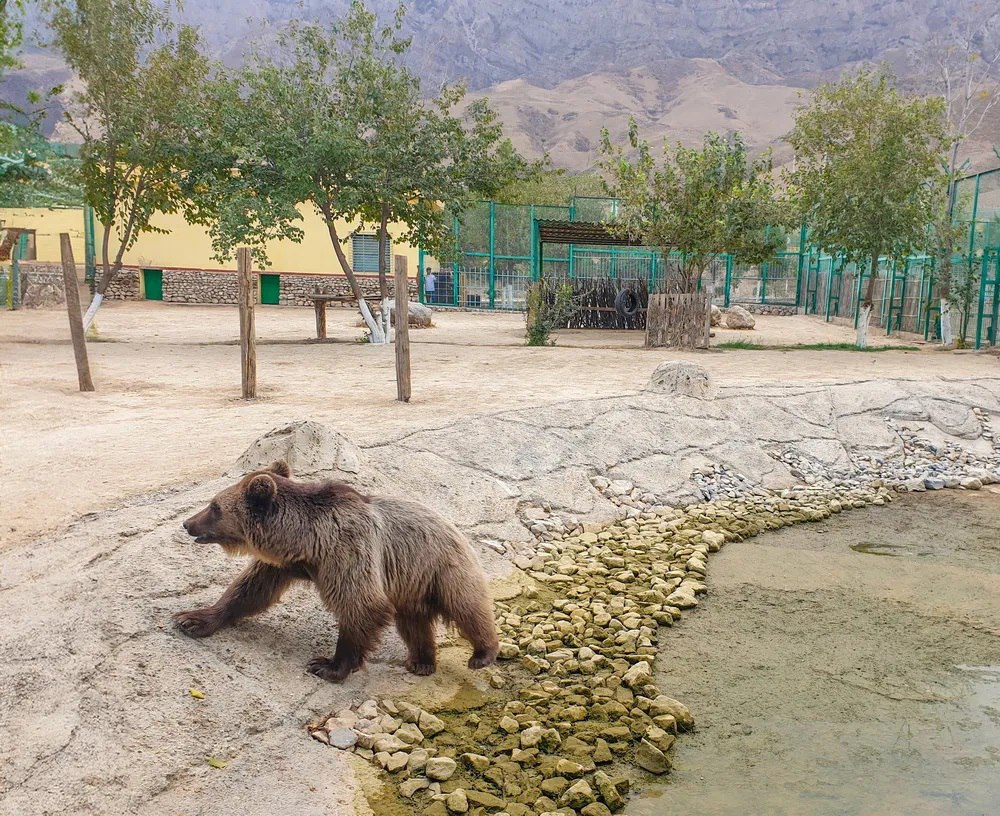
The National Museum of Wildlife of Turkmenistan, known as the Ashgabat Zoo, has a new resident — a brown bear named Sumbar, transferred from the Volokolamsk Center of the Moscow Zoo. This bear is not an ordinary bear: earlier, as a donor, his blood saved the life of another female bear. This is a rare case because there are seven groups of bear blood, and the blood of Sumbar suited the sick animal. The bear was given to the Ashgabat Zoo on the initiative of the Eurasian Regional Association of Zoos and Aquariums (EARAZA) in honor of the 33rd anniversary of Turkmenistan's independence. Sumbar will have to adapt to a new place where comfortable conditions have been created for him in a spacious enclosure. Caring zookeepers have hidden food in different corners of the zoo's territory so that the bear can show its instincts. Currently, Sumbar is showing unexpected vegetarian preferences, favoring fruits and nuts. He is soon to be joined by a female brown bear named Aydere, also from the Moscow Zoo. Given that bears reach sexual maturity by age three and that Sumbar and Aydere are still "little," they have time to adapt and become friends, with the prospect of starting a family in the future. This case is unique because it is extremely rare for bears to become donors due to the difficulty of blood group compatibility. When veterinarians discovered that a sick bear cub had a serious illness requiring a blood transfusion, Sumbar's blood matched perfectly. Thanks to this, the bear cub's life was saved. This case attracted the attention of zoologists and veterinarians worldwide, and Sumbar gained heroic status among his subscribers and the center's staff.

Restoring Roars: The Historic Return of Amur Tigers to Kazakhstan’s Wilderness

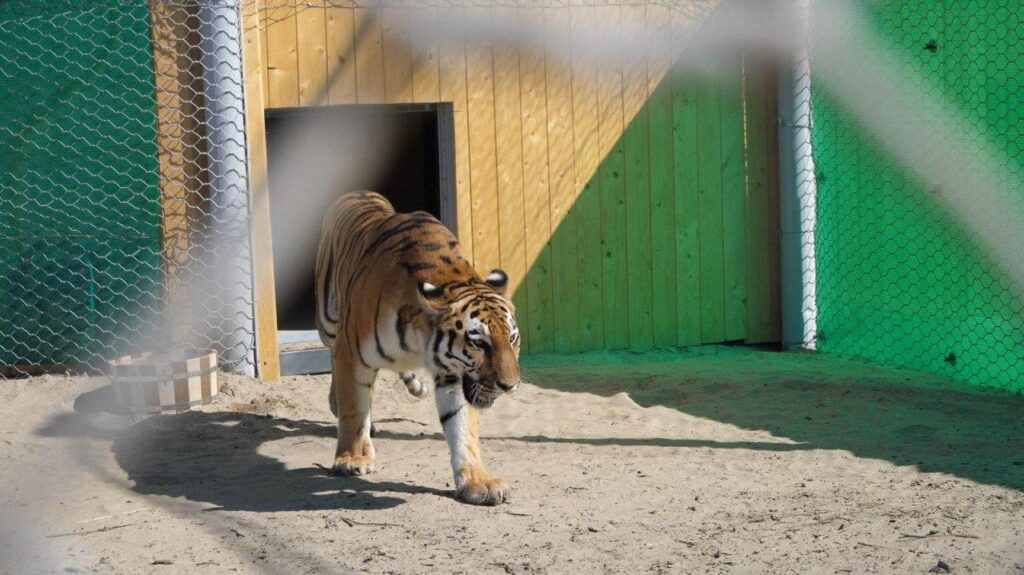
This past weekend, two Amur tigers were brought to the Ile-Balkhash State Nature Reserve in southern Kazakhstan from the Landgoed Hoenderdaell Zoo in the Netherlands. The tigers, one male and one female, will live in a specially-built enclosure in the reserve for breeding and the release of their offspring into the wild. Their offspring are expected to become the first wild tigers to reappear on Kazakhstan's territory in more than 70 years. In 2025, another three or four tigers are planned to arrive in Kazakhstan from Russia. In 2010, Kazakhstan's government announced plans to reintroduce Amur tigers to the country. Seven years later, a tiger reintroduction program was developed, and the southern shore of Lake Balkhash in the delta of the Ili River was chosen as the most suitable place to restore the population in Kazakhstan. The program is being implemented by the Ministry of Ecology and Natural Resources in Kazakhstan, with the support of the World Wildlife Fund (WWF) and the United Nations Development Programme (UNDP). According to the ministry, the Ile-Balkhash Reserve can accommodate a population of up to 100 tigers. The tigers that were once indigenous to Kazakhstan were known as Turan tigers. The Turan tiger was an extinct population once found in Central Asia, the Caucasus, and northern Iran. Biologists suggest that Turan tigers and Amur tigers, native to Russia's Far East, are not distinct subspecies but belong to the same group of big cats. The Ile-Balkhash Reserve was created to restore the ecosystem of the southern Balkhash region, and work is underway to restore the tiger's natural food base. Ile-Balkhash is a critical natural area of the Ile River Delta with the adjacent shore of Lake Balkhash. It is the only preserved river delta in Central Asia, while the others (the deltas of the Syr Darya, Amu Darya, and Chu Rivers) have degraded due to desertification. Improving the tiger's natural food supply and the reserve's remoteness will help avoid conflict between the tiger and humans in the area. Historically, the Turan tigers' habitats in Kazakhstan were reed beds and floodplain forests along the banks of the Ili and Syr Darya rivers. Based on historical records of tiger hunts and the frequency of human encounters with them, the population density of the Turan tiger was considerably higher than that of the Amur tiger, and more comparable to the density of tigers in India. In what is now Kazakhstan, the extermination of tigers, including through military shootings, began in 1891. The destruction of their habitat and primary food sources — such as Tugai red deer, goitered gazelles, saigas, kulans, roe deer, and wild boars — ultimately led to their extinction by 1948. This is not the first project to reintroduce endangered species to Kazakhstan. In June 2024, eight Przewalski’s horses were reintroduced to the Altyn Dala Nature Reserve in the Kostanay region of Kazakhstan. The horses were transported from Prague Zoo. The Kazakh Ministry of Ecology and Natural Resources have said that 40 wild horses will be...

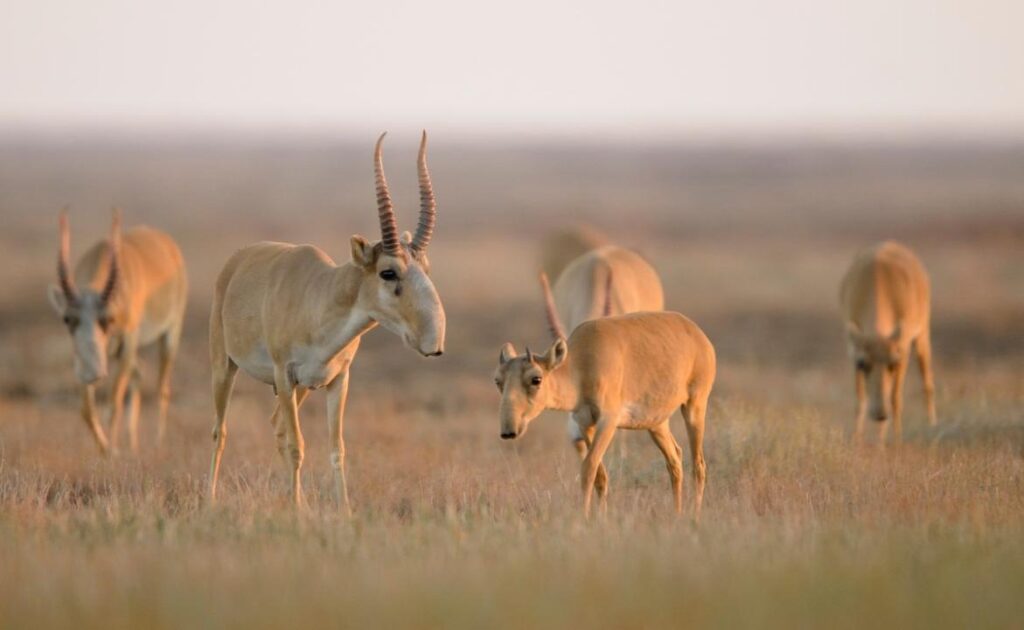
Kazakhstan Now Home to 99% of the World’s Saiga Population

The Minister of Ecology and Natural Resources of Kazakhstan, Yerlan Nysanbayev, has announced that the number of saigas in Kazakhstan has risen to around four million, equivalent to 99% of the global population. Just over half of the population - 2.8 million- resides in West Kazakhstan Oblast and the overall figure takes into account those born during May's birthing season. The presence of such large numbers of this type of antelope has not however, always been welcomed. As referenced by Nyanbayev, to lessen their damage to agriculture, Kazakhstan had previously taken measures to regulate the population. As recently as 2023, 42,000 saigas were seized, with their meat sold through processing plants in four regions. Under instruction of the Head of State, the practice has been stopped and commending the move, Nysanbayev reported, “No other state today has such a population. This is thanks to the efforts that the state: Money was spent, specialized enterprises were organized, and many legislative measures were taken." Saigas are one of the oldest breeds on the planet, dating back 250,000 years. Capable of reaching speeds of up to 80 kilometers per hour, and with unique nasal filters to help clean the air of dust and keep cool in the heat, the saiga migrate great distances, traveling up to 1,000 kilometers in search of food. A ban on shooting and hunting saigas in Kazakhstan was introduced in 1999. This decision was part of a conservation effort to protect the animals, whose population had been significantly reduced by poachers intent on seizing their horns, highly valued in traditional medicine. In December 2023, the International Union for Conservation of Nature (IUCN) updated the status of the Saiga from Critically Endangered to Near Threatened, but estimated the global population at 1.9 million, up from a low of 39,000 as recently as 2005. An April 2024 survey conducted by the Altyn Dala Conservation Initiative, however, recorded a population of 2,833,600 in Kazakhstan prior to the birthing season. The figure 4.1 million, therefore, falls within the range of the recent average increase in numbers of 48%. Saiga Antelopes – which migrate in excess of 1,000 kilometers between their summer and winter ranges because of “extreme variations” in climate - remain acutely susceptible to sudden mass deaths from pasteurellosis, an acute bacterial disease which killed up to 200,000 of the species in a three-week period in Kazakhstan in 2015.

International Recognition for the Kazakh Tazy Dog

The Kazakh Tazy, one of the oldest dog breeds, is at last, poised to receive international recognition. The General Committee of the International Cynological Federation (FCI) has officially approved the preliminary recognition of the Kazakh Tazy as a unique breed. The move secures Kazakhstan as the holder of the breed standard and is a significant step towards the breed's global recognition. The next ten years will be devoted to collecting data on the health, characteristics, and registration of Tazy puppies, which will be submitted to the FCI for review. Since 2022, the Presidential Affairs Department (PAD) of the Republic of Kazakhstan has been working on preserving Kazakh dog breeds through scientific research, exhibitions and amendments to legislation regarding breeding. In August 2023, the Union of Cynologists of Kazakhstan, having fulfilled all of its requirements, became a full member of FCI which in turn, allowed the Kazakh Tazy to be declared a national breed. The Kazakh Tazy dog emerged over four thousand years ago and according to recent genetic studies, is unique in terms of genetic diversity, especially in Kazakhstan's southern and eastern regions. Renowned for its outstanding endurance, ability to withstand Central Asia's harsh climate, and skills in hunting hares, wolves, and other animals, the Tazy has long been an essential part of the nomadic people's lives.