• KGS/USD = 0.01144 0%
  • KZT/USD = 0.00203 0%
  • TJS/USD = 0.10685 -0.19%
  • UZS/USD = 0.00008 0%
  • TMT/USD = 0.28530 0%
  • KGS/USD = 0.01144 0%
  • KZT/USD = 0.00203 0%
  • TJS/USD = 0.10685 -0.19%
  • UZS/USD = 0.00008 0%
  • TMT/USD = 0.28530 0%
  • KGS/USD = 0.01144 0%
  • KZT/USD = 0.00203 0%
  • TJS/USD = 0.10685 -0.19%
  • UZS/USD = 0.00008 0%
  • TMT/USD = 0.28530 0%
  • KGS/USD = 0.01144 0%
  • KZT/USD = 0.00203 0%
  • TJS/USD = 0.10685 -0.19%
  • UZS/USD = 0.00008 0%
  • TMT/USD = 0.28530 0%
  • KGS/USD = 0.01144 0%
  • KZT/USD = 0.00203 0%
  • TJS/USD = 0.10685 -0.19%
  • UZS/USD = 0.00008 0%
  • TMT/USD = 0.28530 0%
  • KGS/USD = 0.01144 0%
  • KZT/USD = 0.00203 0%
  • TJS/USD = 0.10685 -0.19%
  • UZS/USD = 0.00008 0%
  • TMT/USD = 0.28530 0%
  • KGS/USD = 0.01144 0%
  • KZT/USD = 0.00203 0%
  • TJS/USD = 0.10685 -0.19%
  • UZS/USD = 0.00008 0%
  • TMT/USD = 0.28530 0%
  • KGS/USD = 0.01144 0%
  • KZT/USD = 0.00203 0%
  • TJS/USD = 0.10685 -0.19%
  • UZS/USD = 0.00008 0%
  • TMT/USD = 0.28530 0%
09 February 2026

Viewing results 1 - 6 of 10

Kazakh Scientists Launch Medical Exoskeleton for Stroke Rehabilitation

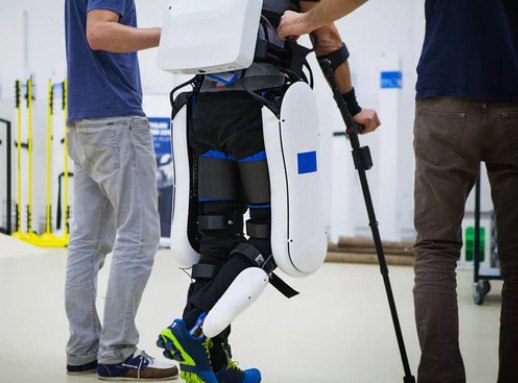
Researchers at Nazarbayev University have completed development and secured state registration for a medical exoskeleton designed to aid stroke rehabilitation. The device is now ready for clinical use and mass production, according to the university’s press service. Named the Astana Gait Exoskeleton Assisted Rehabilitation (A.GEAR), the system is intended to help restore motor function in stroke survivors and individuals with musculoskeletal disorders. It received official certification following a positive evaluation from the National Center for Expertise of Medicines and Medical Devices. Nazarbayev University stated that this is one of the few high-tech medical solutions developed domestically that has received full clinical approval. Cost efficiency is cited as A.GEAR’s main competitive advantage. According to project estimates, the exoskeleton is several times more affordable than foreign alternatives, reducing Kazakhstan’s reliance on imports and increasing accessibility to modern rehabilitation tools. Professor Prashant Jamwal, the project lead, noted that it took just four years to progress from a lab concept to a certified medical product far shorter than the global average of 10 to 15 years. He added that the system could not only replace imported equipment but also reduce public expenditure on rehabilitation technologies. The project began in late 2021 at the university’s Medical Robotics Competence Center. Clinical trials took place in Karaganda and Astana, involving stroke patients and adolescents with cerebral palsy. Following the successful trials, the team began negotiations for a long-term contract with SK-Pharmacy LLP and sought a commercial distributor. Commercialization is being overseen by Robotics and Artificial Intelligence, led by Nazarbayev University graduate Shyngys Dauletbayev. In 2026, the university’s technopark aims to produce at least five exoskeleton units, with plans to scale production for distribution to medical institutions nationwide. University President Professor Waqar Ahmad highlighted that Nazarbayev University researchers rank among the top 2% of scientists globally, based on a bibliometric analysis by Stanford University. According to the Ministry of Health of Kazakhstan, approximately 40,000 people in the country suffer strokes annually, underlining a consistent demand for advanced rehabilitation solutions. As previously reported by The Times of Central Asia, Kazakhstan is also expanding the use of artificial intelligence for early diagnosis of strokes and cancer.

Meet Nurxat Nuraje, One of Kazakhstan’s Most Impressive Scientists

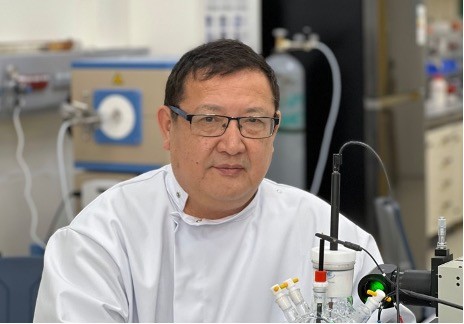
Nurxat Nuraje is a Kazakh scientist who is now well known in the global scientific community. He has spent more than two decades studying and conducting research in the United States. Drawn to science from an early age, he earned his PhD in chemistry from the City University of New York in 2008, successfully launching his research career. His main field of research is nanotechnology and its applications. At a time when nanoscience was still emerging, his bold approach to the subject quickly gained recognition. His first major publication was in the Journal of the American Chemical Society – one of the world’s leading chemistry journals. The paper introduced innovative ideas about nanocircuit fabrication, methods and challenges in their development, computational power, and potential applications. This paper was considered a major contribution to the field at the time. Soon after, he joined the Massachusetts Institute of Technology (MIT), one of the world’s foremost technology universities, as a postdoctoral researcher. There, he succeeded in finding ways to increase computer storage capacity, which is a crucial question for modern computing. His research on the development and application of specific nanoparticles was published in Advanced Materials, once again establishing his name in global science. His work was later awarded a silver medal at the International Materials Research Society conference in San Francisco. “Science doesn’t deliver results overnight. It evolves gradually,” says Nuraje. “The true mission of a scientist is to reshape the world’s thinking through discovery. In the future, we must move from oil to hydrogen energy. That is the energy of tomorrow.” Since 2013, Nuraje has worked as a research scientist at MIT. He is also credited with developing conductive polymer nanoparticles, which are now widely used. Together with his students, he continues to design and create practical, everyday-use technologies. In 2015 he received the Joseph Award for his outstanding contribution to nanotechnology. He became the first Kazakh scientist to win this American honor. Why did MIT invite him to join their team? The answer lies in his PhD dissertation, which was recognized by experts as one of the best in the field. Harvard University, the University of California, and MIT each offered him postdoctoral positions. One of Nuraje's remarkable achievements was the development of anti-fogging materials – the kind used on smartphone screens today. Working with MIT professor Angela Belcher, he co-created a new type of photocatalytic material through genetic engineering of the M13 virus. This groundbreaking work was published in Advanced Materials in 2012 and resulted in five international patents. This is a true testament to the Kazakh proverb: “Knowledge conquers all.” In 2015, he joined Texas Tech University as a professor of chemical engineering, where he established his own research laboratory, The Nurxat Nuraje Lab. There, his team developed solar-powered water-splitting technology to produce hydrogen. His breakthroughs in conductive polymers earned him the American Chemical Society’s Petroleum Research Award in 2016. In the following years, he was named “Most Distinguished Scientist” at Texas Tech University, and in 2018, the...

Made in Kazakhstan: Building an AI for a Nation

On a cold November morning at Al-Farabi University in Almaty, students gathered in a drafty lecture hall, many still wrapped in their coats. The setting was more reminiscent of a forgotten Soviet-era classroom than a venue for cutting-edge technology. But amid the peeling paint and rickety seats, some of the country’s most ambitious young researchers had come to discuss Kazakhstan’s latest steps into the world of artificial intelligence. The star billing came from the Institute of Smart Systems and Artificial Intelligence (ISSAI) at Nazarbayev University in Astana. Last year, the institute released KazLLM, its first Large Language Model (LLM), to much fanfare, inspired by a philosophy of building AI systems that understand the country’s language and culture rather than borrowing second-hand from Silicon Valley. But can Kazakhstan keep pace in the global AI race? And despite the government’s efforts to back local products, can it convince the population to use them over Western alternatives? Recent developments The Institute’s founder, Doctor Huseyin Atakan Varol, was keen to stress that steps have been taken to develop Kazakhstan’s native AI ecosystem over the past twelve months. “Since the release of KazLLM last year, we have witnessed what I would describe as a ‘Cambrian explosion’ of generative AI development,” he told The Times of Central Asia. “The KazLLM project enabled us to create the team and amass the know-how to build a new generation of multilingual and multimodal models tailored to Kazakhstan’s needs.” Among these, he lists Oylan, a multimodal language–audio-vision model; MangiSoz, a multilingual speech and text translation engine; TilSync, a real-time subtitle and translation engine; and Beynele, a text-to-image generation model. All these models have been fine-tuned to better reflect Kazakh culture and linguistic norms. “In short, we are building AI made in Kazakhstan, by Kazakhstani youth, for Kazakhstan –models that understand the language, culture, and needs of the people,” said Amina Baikenova, ISSAI’s Acting Deputy Director of Product and External Affairs, in an interview with TCA. [caption id="attachment_39061" align="aligncenter" width="1600"] The old lecture hall at Al-Farabi University, Almaty; image: TCA, Joe Luc Barnes[/caption] Much of this progress stems from the enthusiasm of a generation of students, whom Kazakhstan has invested heavily in training. Indeed, the country has become a magnet for young researchers from across Central Asia. “After completing my bachelor’s degree in Kyrgyzstan, I was looking for opportunities to build my research career. That’s why I moved to Kazakhstan,” said Adam Erik, an ISSAI student from Bishkek. “Kazakhstan has become a scientific center of Central Asia.” Erik believes strongly in building local language models. “There is a thing called bias in data sets,” he said. “Models from the U.S., China, or Europe are incredible, but they’re trained mostly on Western culture and literature. Local solutions are still necessary.” These sentiments reflect a common frustration among researchers: even the best global AI systems stumble when asked about Kazakh idioms, rural social norms, or local history. The data used to train the world’s most powerful models rarely includes more than a sliver...

Dr. Atakan Varol: Kazakhstan Should Play an Active Role in Shaping the Future of AI

The Times of Central Asia spoke with Dr. Hussein Atakan Varol, a professor of robotics and PhD in electrical engineering, who serves as General Director of the Institute of Smart Systems and Artificial Intelligence (ISSAI) at Nazarbayev University (NU). Dr. Varol discusses ISSAI’s research initiatives, the role of artificial intelligence (AI) in Kazakhstan, and the country's potential to lead in AI innovation. ISSAI’s Mission and Collaborations TCA: What is the mission of ISSAI, and what are its key focus areas? Varol: At ISSAI, our mission is to conduct cutting-edge AI research and develop practical, impactful solutions that benefit Kazakhstan and the broader global community. We specialize in large-scale generative AI models, speech recognition, computer vision, and AI infrastructure. Our goal is to establish sovereign AI capabilities in Kazakhstan, minimizing dependence on external technologies while maintaining a strong ethical foundation. All our research adheres to principles of "AI for Good" and "AI for Kazakhstan," ensuring that developments remain responsible and socially beneficial. TCA: How does ISSAI collaborate with the public sector, private companies, and international organizations? Varol: We actively engage with government agencies, local businesses, and global AI research institutions. Our partnerships focus on AI model development, data collection, and deploying AI-driven solutions. Access to computational resources remains a key challenge, and we collaborate strategically to secure the infrastructure needed to scale AI projects in Kazakhstan. Notable Projects and Local Impact TCA: What are some of ISSAI’s most promising current developments? Varol: A highlight is SoyleApp, which provides real-time speech recognition, text-to-speech, and multilingual translation. It has vast potential in education, public services, and cross-language communication. We’ve also developed the Mangitas 01 Inference Server, a vital step for Kazakhstan’s AI ecosystem. In the absence of AI supercomputers, we built Mangitas 01 using commercial off-the-shelf components, allowing local deployment of AI models with enhanced data security. We’re now working on expanding this line to support our Oylan language-vision model, paving the way for more advanced multimodal AI applications. TCA: Have ISSAI’s solutions been successfully implemented in Kazakhstan? Varol: Yes. SoyleApp is being integrated into governmental and enterprise systems to improve accessibility for Kazakh-speaking users. Mangitas 01 serves as a prototype for local AI infrastructure, enabling organizations to operate AI systems within Kazakhstan, enhancing both data protection and performance. TCA: How does the local context influence your AI development? Varol: Kazakhstan’s linguistic and cultural diversity demands AI systems capable of understanding and producing content in Kazakh, Russian, and other regional languages. We've created tailored datasets and models to meet these needs. Moreover, the country's limited AI infrastructure has led us to focus on efficient and scalable solutions like Mangitas 01. [caption id="attachment_31080" align="aligncenter" width="1600"] Dr. Atakan Varol; image: NU.edu[/caption] The Future of AI and Kazakhstan’s Role TCA: How do you see AI evolving over the next 5-10 years? Varol: The next leap is toward multimodal and sparse generative models that handle text, images, and audio simultaneously. With proper investment, Kazakhstan can contribute meaningfully to this frontier. We’re also exploring edge AI, which enables...