• KGS/USD = 0.01143 0%
  • KZT/USD = 0.00205 0%
  • TJS/USD = 0.10724 0.09%
  • UZS/USD = 0.00008 0%
  • TMT/USD = 0.28571 0%
  • KGS/USD = 0.01143 0%
  • KZT/USD = 0.00205 0%
  • TJS/USD = 0.10724 0.09%
  • UZS/USD = 0.00008 0%
  • TMT/USD = 0.28571 0%
  • KGS/USD = 0.01143 0%
  • KZT/USD = 0.00205 0%
  • TJS/USD = 0.10724 0.09%
  • UZS/USD = 0.00008 0%
  • TMT/USD = 0.28571 0%
  • KGS/USD = 0.01143 0%
  • KZT/USD = 0.00205 0%
  • TJS/USD = 0.10724 0.09%
  • UZS/USD = 0.00008 0%
  • TMT/USD = 0.28571 0%
  • KGS/USD = 0.01143 0%
  • KZT/USD = 0.00205 0%
  • TJS/USD = 0.10724 0.09%
  • UZS/USD = 0.00008 0%
  • TMT/USD = 0.28571 0%
  • KGS/USD = 0.01143 0%
  • KZT/USD = 0.00205 0%
  • TJS/USD = 0.10724 0.09%
  • UZS/USD = 0.00008 0%
  • TMT/USD = 0.28571 0%
  • KGS/USD = 0.01143 0%
  • KZT/USD = 0.00205 0%
  • TJS/USD = 0.10724 0.09%
  • UZS/USD = 0.00008 0%
  • TMT/USD = 0.28571 0%
  • KGS/USD = 0.01143 0%
  • KZT/USD = 0.00205 0%
  • TJS/USD = 0.10724 0.09%
  • UZS/USD = 0.00008 0%
  • TMT/USD = 0.28571 0%

Viewing results 1 - 6 of 63

Uzbekistan Seeks International Collaboration for Nuclear Energy Project

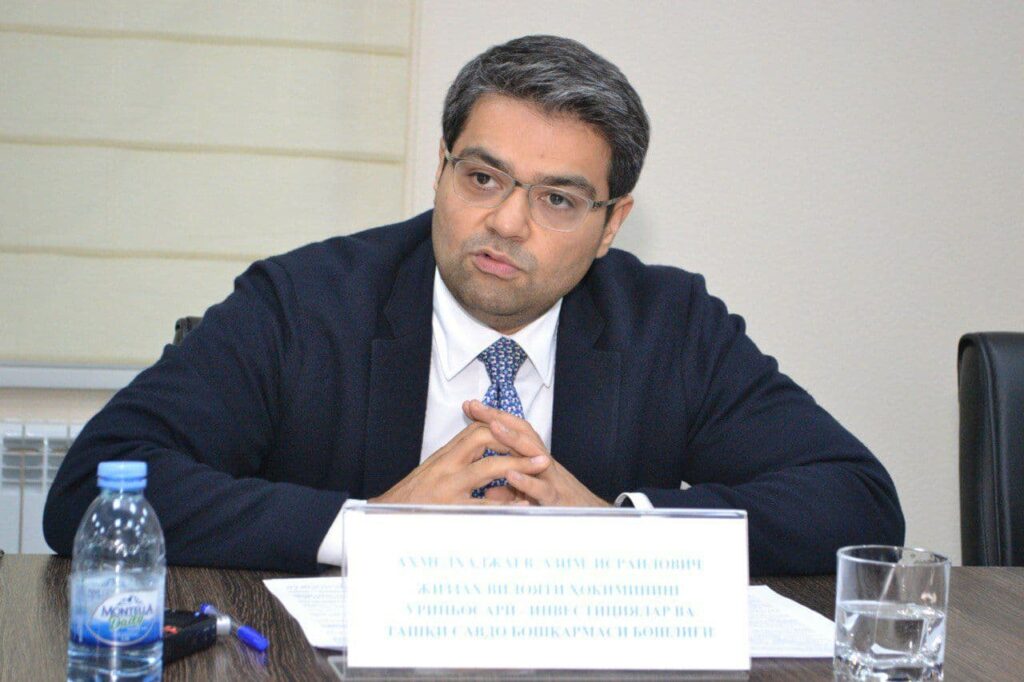
President Shavkat Mirziyoyev held a meeting on February 10 to review progress in Uzbekistan’s nuclear energy sector and outline future goals. Officials reported that 25 gigawatts of renewable energy capacity will be added over the next five years, generating 64 billion kilowatt-hours of green energy annually. By 2030, the country aims to increase the share of renewable energy to more than 50% of total electricity production. Azim Ahmadkhodjayev, director of Uzatom, discussed the sector’s prospects in an interview with Uzbekiston 24 TV following the meeting. He noted that by 2040, the share of nuclear energy in global electricity production could rise from 9% to 25%. He also recalled that Uzbekistan signed an agreement last year with Rosatom to build a 330 MW small-scale nuclear power plant in Jizzakh. “Our president emphasized that this project should have an international character, with the involvement of various international organizations,” he said. In addition to Russian technologies, the project will integrate Chinese non-nuclear technologies and European software and hardware. “To implement this project, we will create an international consortium using the most advanced technologies,” Ahmadkhodjayev added. To reduce water consumption, the project may incorporate dry coolers from Hungarian or Chinese manufacturers. Uzatom has also developed a cooperation program with the International Atomic Energy Agency (IAEA) to train specialists and ensure safety in nuclear energy projects. Ahmadkhodjayev noted that the president has instructed officials to explore alternative approaches for similar projects in the future.

Kazakhstan Trains a Thousand Specialists for Future Nuclear Power Plants

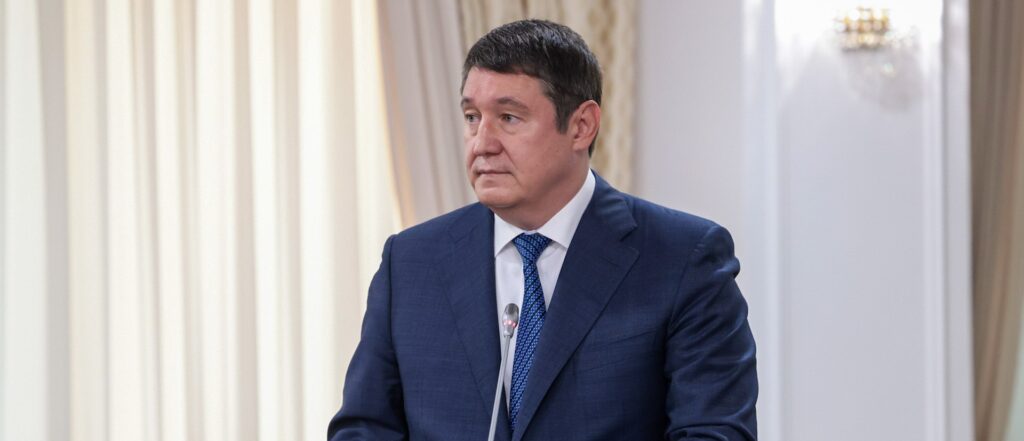
Six universities in Kazakhstan are currently training personnel for the nuclear and atomic industries. According to Gulzhan Dzharasova, Deputy Chairman of the Committee of Higher and Postgraduate Education at the Ministry of Science, approximately 1,000 students are pursuing engineering degrees related to the nuclear sector. Kazakhstan’s decision to build its first nuclear power plant (NPP) was made last fall following a referendum, in which more than 70% of the population voted in favor of nuclear energy. The first plant is set to be built in the Almaty region and is expected to be operational by 2035, as the country anticipates an energy shortage by that time. The plant will require a workforce of at least 2,000 employees, and the Ministry of Energy aims to train specialists domestically to meet this demand. To support this initiative, local colleges will introduce training programs for key technical roles, including dosimetrists, steam turbine equipment repair specialists, nuclear power plant maintenance and mechanical repair specialists, and IT professionals specializing in nuclear energy. Currently, 921 students are enrolled in nuclear engineering programs at Kazakhstan’s higher education institutions, with nearly all (96%) receiving government-funded scholarships. “As part of a strategic partnership in this field, branches of leading foreign universities are being established. The National Research Nuclear University has been created at the Kazakh National University (KazNU). Additionally, a consortium of German technical universities has launched a new training format for engineers in the electric power industry. In 2024, a branch of Anhalt University opened at the Almaty University of Power Engineering and Communications, where specialists in electrical and power engineering are being trained,” Dzharasova said. Kazakhstan’s Growing Need for Nuclear Energy Experts Kazakhstan’s Minister of Energy, Almasadam Satkaliyev, addressed concerns about the demand for nuclear energy specialists. He stated that the country will need at least three nuclear power plants, which would require a workforce of 5,000 to 6,000 trained professionals. “The sites for all three plants will be selected based on a comprehensive plan. It is not feasible to plan one station first and then another separately. We must first analyze the network configuration, power distribution schemes, cross-border energy flows, grid voltage levels, the necessary number of substations, and the feasibility of using direct current (DC) technology for long-distance transmission,” Satkaliyev explained. Accelerating Nuclear Power Plant Construction At a recent briefing, Satkaliyev also stated that the first nuclear power plant unit in Kazakhstan could be completed within eight years. “Even considering the average global timeline for such projects, we will push vendors to explore the possibility of expediting construction so that we can have the first unit operational within eight years,” he said. The Times of Central Asia previously reported that Kazakhstan plans to select a contractor for the construction of its first nuclear power plant in the first half of this year.

With Russia Visit, Kazakh Team Wraps Up Study Tour For Nuclear Project

A Kazakh delegation has toured one of Russia’s main nuclear energy facilities, inspecting the turbine hall, laboratories and cooling systems of power units as it rates possible suppliers for the construction of Kazakhstan’s first nuclear power plant. Similar trips were made late last year to the other countries on Kazakhstan’s short list: South Korea, France and China.  Kazakhstan will make a final decision on a supplier or consortium for the nuclear power plant project this year, the Ministry of Energy said, reflecting momentum since Kazakhstan approved the government-backed plan in a national referendum in October. Kazakhstan, the world’s top producer of uranium, wants to reduce reliance on coal, a major source of pollutants, and address electricity shortages as demand grows.   Kazakh Energy Minister Almassadam Satkaliyev led a team that visited the Leningrad nuclear power plant near St. Petersburg on Tuesday, showing particular interest in VVER-1200 reactor technology, the flagship project of Rosatom, Russia’s state nuclear agency.  “Today, we have completed our series of working visits aimed at studying the world’s best practices in nuclear energy,” Satkaliyev said, according to the ministry statement. He said the visit “provided us with an in-depth understanding of the technologies and safety measures that ensure environmental protection and the well-being of local residents.”  The VVER-1200 reactor, a pressurized water reactor that uses so-called Generation III+ power units, is said to have high safety standards and its technology is being exported to countries including China, India, Egypt and Turkey. The technology incorporates lessons learned from the Fukushima nuclear accident in Japan in 2011, in which an earthquake and ensuing tsunami knocked out the plant’s energy supply.  According to Rosatom, VVER-1200 safety systems allow the nuclear plant to operate in situations such as “earthquakes, floods, storm winds, hurricanes, snowfalls, tornadoes, low and high extremes of temperature, as well as such man induced events as aircraft crash (or impact from aircraft parts), air shock wave, fire, and flooding caused by water pipe breaks.” The Leningrad plant has two VVER-1200 reactors and several older RBMK reactors, which have a graphite-moderated design that was upgraded after the RBMK reactor disaster at Chernobyl in 1986. Those older reactors are gradually being phased out at Leningrad. Many Kazakh people are uneasy about nuclear power because of the legacy of the Semipalatinsk site, where decades of Soviet-era nuclear weapons tests led to health and environmental problems because of radioactive contamination. Ahead of last year’s “yes” vote in the referendum, the government argued that nuclear power would be a relatively clean, cheap – and safe - alternative to coal-fired plants. Some analysts have warned of geopolitical complications for Kazakhstan in choosing foreign partners for its nuclear industry, including concerns about dependence on Russia, which is at war with Ukraine and currently under Western sanctions. But a Carnegie Politika commentary in October said Kazakhstan “has more agency today than at any previous point in negotiations” and could demand favorable terms for nuclear technology transfer, allowing it to build up the “localization” of its industry.  By...

Kazakhstan Completes International Visits Ahead of Nuclear Power Plant Construction

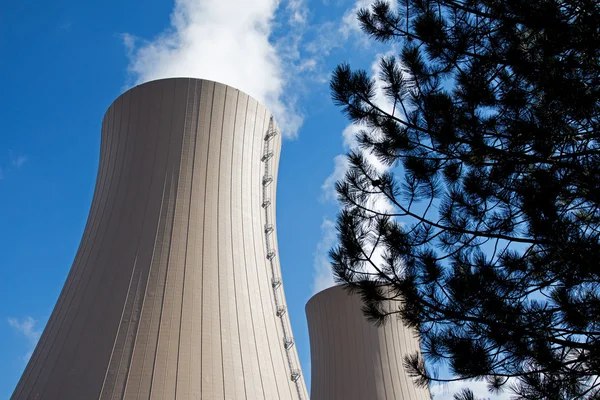
Kazakhstan has completed a series of international visits to evaluate technologies for its planned nuclear power plant (NPP). On January 21, 2025, a Kazakh delegation led by Energy Minister Almasadam Satkaliyev visited Russia to assess the operations of Generation 3+ nuclear power units at the Leningrad NPP. During the visit, the delegation examined key components of the plant, including its control systems, turbine hall, laboratory facilities, and cooling system. Particular focus was placed on the VVER-1200 reactor, the flagship project of Russia's state nuclear corporation, Rosatom. This visit marked the final stage of Kazakhstan’s review process of potential suppliers for the NPP. From October to December 2024, Kazakh specialists also visited South Korea, France, and China. As a result, the final list of candidate suppliers includes Russian Rosatom, Korean KHNP, Chinese CNNC, and French EDF. While in Russia, the Kazakh delegation also consulted with Leningrad NPP management and visited the satellite town of Sosnovy Bor, a scientific and engineering innovation hub. The Leningrad NPP is Russia’s largest by installed capacity and features two types of reactors: uranium-graphite RBMK and water-water VVER. “We have completed a series of working visits dedicated to studying advanced nuclear power technologies. Familiarization with the operation of Leningrad NPP allowed us to study in detail the key aspects of operation, the safety of the plant, and its impact on the environment,” Energy Minister Satkaliyev stated. The final decision on the supplier or consortium to construct the NPP will be made in 2025. This decision will take into account Kazakhstan’s national interests, its international obligations, and recommendations from the International Atomic Energy Agency (IAEA). Kazakhstan’s first nuclear power plant is set to be built in the village of Ulken on the shores of Lake Balkhash. The project is intended to address the country’s growing power shortages and reduce greenhouse gas emissions. Potential partners from China, Russia, South Korea, and France are being considered, and the project is expected to be financed through foreign loans.

Kazakhstan to Train Workforce for Future Nuclear Power Plants

Kazakhstan’s first nuclear power plant (NPP) is expected to create permanent employment for approximately 2,000 people, with an additional 10,000 workers involved during its construction. This announcement was made by Energy Minister Almasadam Satkaliyev during a recent government meeting. The country plans to commission its first NPP by 2035. A shortlist of potential builders includes four international companies: China’s CNNC, Russia’s Rosatom, South Korea’s KHNP, and France’s EDF. Authorities have also suggested the possibility of forming a consortium involving multiple countries to leverage diverse technological solutions. Alongside these efforts, Kazakhstan intends to independently train the specialists required for NPP operations. Minister Satkaliyev highlighted plans to establish specialized training programs in domestic colleges to develop skills for roles such as dosimetrists, steam turbine equipment mechanics, nuclear power plant maintenance and repair specialists, and IT specialists for nuclear facilities. Practical training will be conducted at the National Nuclear Center and the Institute of Nuclear Physics. “By 2030, the NPP construction project will create around 5,000 jobs, peaking at approximately 10,000 jobs in 2032. Once operational, the first plant will provide at least 2,000 permanent positions,” Satkaliyev stated. As previously reported by The Times of Central Asia, Kazakhstan is accelerating the construction timeline for the NPP, located in the Almaty region, and plans to select a contractor in the first half of this year. During the government meeting, which coincided with the “Year of Working Professions” initiative, Satkaliyev also addressed the broader labor demand in Kazakhstan’s energy sector. The industry is expected to require over 16,000 additional workers, including power engineers, welders, fitters, gas cutters, and electricians, by 2030. The country’s energy sector currently employs 303,000 people across 1,600 enterprises, with 99 new projects planned over the next five years. To attract and retain talent, the Ministry of Energy aims to achieve an annual 15% wage increase for production personnel in energy-producing companies. Meanwhile, Talgat Yergaliyev, Chairman of the Union of Builders of Kazakhstan (UBC), has called for simplifying the hiring process for foreign labor to address workforce shortages in Kazakhstan’s construction sector.

Kazakhstan Could Save America’s Energy Future

The energy crisis gripping Europe has made clear for all to see the limits of solar and wind power. Years of investment and unbridled ambition have not created renewable sources that can deliver the consistent, large-scale energy that modern economies need. Nuclear power has emerged as the only viable solution for achieving zero-emissions energy while maintaining reliability. Europe’s urgent need to reduce its dependency on Russian gas has made all that even clearer. Meanwhile, the United States faces its own energy challenges. Its nuclear industry urgently requires a secure and stable uranium supply; yet U.S. foreign policy has largely overlooked Kazakhstan, the world’s largest uranium producer. It gets worse. No sitting U.S. president has ever visited Kazakhstan, which produces over 40% of the world’s natural uranium. Russia and China have filled this diplomatic vacuum, embedding themselves deeply in Kazakhstan’s energy sector. The United States and Europe must act decisively to build stronger ties with Kazakhstan and Central Asia, if they are to achieve energy independence by securing their nuclear futures. Europe’s dependence on Russian natural gas has been its geopolitical Achilles’ heel for decades. Russia's illegal war of aggression against Ukraine, driving home the need to diversify energy sources, has further increased that vulnerability. Nuclear power offers Europe a path to energy independence. This hinges, however, on access to uranium, of which Europe imports 97% of its supply. Moreover, much of that uranium is enriched in Russia, creating a dependency analogous to that on Russian gas. That problem can be solved by deepening cooperation with Kazakhstan, the world’s largest uranium producer. Unfortunately, Europe’s engagement with Kazakhstan has been half-hearted at best; yet the country's reserves are essential for powering Europe’s nuclear plants. Strategic investments and partnerships are needed to unlock Kazakhstan’s role as a reliable uranium supplier to Europe, but logistical hurdles and a lack of political focus have so far stymied efforts to make that happen. Kazakhstan, the world's leading uranium producer, offers the United States a critical opportunity to secure its energy and national-security needs, yet Washington has ignored this and made little effort to deepen its ties with Kazakhstan. By contrast, China sources 60% of its uranium imports from Kazakhstan, supported by investments in mining and nuclear fuel facilities. Likewise, Russia has, through Rosatom, forged strong partnerships with Kazatomprom. These efforts give Beijing and Moscow significant leverage over global uranium markets. The U.S., however, has failed to foster the political and economic relationships necessary for long-term nuclear-energy security. Kazakhstan is a particularly glaring case in point. Over the past two decades, Kazakhstan has come to account for nearly half of global uranium production, giving it a key position in the global uranium supply chain. Neighboring Uzbekistan, the fifth-largest producer, adds another 6%, and Mongolia also has significant undeveloped reserves of future potential. Yet Kazakhstan remains heavily dependent on Russian infrastructure for uranium transport and enrichment. Until the late 2024 signature of an agreement to supply nearly half of its annual uranium ore production to China through the...