• KGS/USD = 0.01144 0%
  • KZT/USD = 0.00203 0%
  • TJS/USD = 0.10563 -0.09%
  • UZS/USD = 0.00008 0%
  • TMT/USD = 0.28490 0%
  • KGS/USD = 0.01144 0%
  • KZT/USD = 0.00203 0%
  • TJS/USD = 0.10563 -0.09%
  • UZS/USD = 0.00008 0%
  • TMT/USD = 0.28490 0%
  • KGS/USD = 0.01144 0%
  • KZT/USD = 0.00203 0%
  • TJS/USD = 0.10563 -0.09%
  • UZS/USD = 0.00008 0%
  • TMT/USD = 0.28490 0%
  • KGS/USD = 0.01144 0%
  • KZT/USD = 0.00203 0%
  • TJS/USD = 0.10563 -0.09%
  • UZS/USD = 0.00008 0%
  • TMT/USD = 0.28490 0%
  • KGS/USD = 0.01144 0%
  • KZT/USD = 0.00203 0%
  • TJS/USD = 0.10563 -0.09%
  • UZS/USD = 0.00008 0%
  • TMT/USD = 0.28490 0%
  • KGS/USD = 0.01144 0%
  • KZT/USD = 0.00203 0%
  • TJS/USD = 0.10563 -0.09%
  • UZS/USD = 0.00008 0%
  • TMT/USD = 0.28490 0%
  • KGS/USD = 0.01144 0%
  • KZT/USD = 0.00203 0%
  • TJS/USD = 0.10563 -0.09%
  • UZS/USD = 0.00008 0%
  • TMT/USD = 0.28490 0%
  • KGS/USD = 0.01144 0%
  • KZT/USD = 0.00203 0%
  • TJS/USD = 0.10563 -0.09%
  • UZS/USD = 0.00008 0%
  • TMT/USD = 0.28490 0%
20 February 2026

Viewing results 1 - 6 of 12

Kazakhstan Turns from Pipelines to Processors

Kazakhstan’s strategic plan for advanced computing represents a diversification of its traditional oil, gas, and transit profile and of the wider national economy. A $2 billion Nvidia-linked initiative now turns on three main elements. First is a national supercomputer using Nvidia H200 chips, with headline AI performance around 2 exaflops. Second is a planned 100 MW data-center campus, designed to expand capacity for commercial users over several years. Third is a “sovereign AI hub” concept that promises long-term chip access for sensitive public-sector workloads. Prior to this package, Kazakhstan had already moved unusually quickly to build high-end AI and computing infrastructure, treating digital capacity as central to its development policy. The national supercomputer is now the most powerful system in Central Asia and is housed in a Tier III state data center intended for use by universities, startups, and corporate tenants. The hardware push accompanies a wider digital policy agenda, including new training programs with Nvidia to expand the country’s AI talent base. Parallel initiatives with the United States seek to anchor Kazakhstan more firmly within Western regulatory and connectivity frameworks, as part of a broader attempt to move beyond hydrocarbons and build domestic capability in computation-heavy activities. Kazakhstan’s New AI Statecraft Astana is presenting the Nvidia package as an economic instrument, not just a hardware upgrade. Senior officials now describe advanced computing as a new pillar of national development, on a par with hydrocarbons and transit. Recent policy statements frame AI and digital infrastructure as central, not a side theme of “innovation” policy. In parallel, the long-running “Digital Kazakhstan” agenda has moved from e-government and broadband roll-out into a second phase where data centers, national platforms, and specialized training come to the foreground. Within that shift, “sovereign AI” is becoming a core organizing idea. Officials and local specialists talk about national language models that can handle Kazakh, Russian, and other regional languages, and about keeping sensitive public-sector data on infrastructure under national jurisdiction. The new supercomputer and the sovereign AI hub are presented as the place where that work will happen at scale: training and serving models for government services, regulatory tasks, and domestic firms, rather than relying entirely on foreign platforms. The Nvidia partnership is therefore framed as a way to secure long-term access to leading chips for these “sovereign” workloads, even as global export rules tighten. The same initiative also underwrites a shift in Kazakhstan’s self-presentation from a “pipeline corridor” to Kazakhstan as a corridor for data and high-end digital services. The government has begun to link the sovereign AI hub and supercomputer to a set of fiber-optic projects across the Caspian that aim to tie Central Asia more tightly into Eurasian data routes. The same geography that once made Kazakhstan a crucial link for oil, gas, and rail freight can now make it a regional conduit for digital traffic and AI-enabled services. Kazakhstan is also using the package to deepen a specific diplomatic track with the United States. Joint announcements and working groups on digital transformation,...

Uzbekistan Deepens U.S. Partnership Through New Investment Council and National AI Strategy

Uzbekistan is advancing a broad effort to strengthen its relationship with the United States through new economic, diplomatic, and technological initiatives. A presidential decree establishing the Uzbekistan–U.S. Business and Investment Council, alongside a major artificial intelligence partnership with NVIDIA, underscores the country’s strategy to draw investment and accelerate digital development. A New Platform for Economic Engagement The creation of the Uzbekistan–U.S. Business and Investment Council follows President Shavkat Mirziyoyev’s recent participation in the C5+1 Summit, where regional connectivity and U.S.–Central Asia cooperation were central topics. The council will be jointly led by the Head of the Presidential Administration and a representative appointed by the U.S. administration, giving both sides a formal mechanism to coordinate investment priorities and oversee major projects. Uzbekistan expects the platform to support initiatives involving institutions such as the U.S. International Development Finance Corporation, the European Bank for Reconstruction and Development, and the Asian Development Bank. Officials have framed the council as part of a longer-term effort to expand trade, encourage U.S. private-sector engagement, and diversify the country’s investment base. Expanding Diplomatic Reach The government is preparing to significantly widen its diplomatic network in the United States. A new Adviser-Envoy will be assigned to the embassy in Washington beginning in 2026 to coordinate investment initiatives linked to the council. Plans are also underway to open additional consulates in Philadelphia, Chicago, Orlando, and Seattle, reflecting both the size of the Uzbek diaspora and growing interest in regional outreach. Uzbekistan’s shift toward deeper engagement includes a visa-free regime for U.S. citizens starting January 1, 2026, which will allow 30-day stays and support increased travel for business and education. Updates on foreign policy and consular matters are regularly published by the Ministry of Foreign Affairs. Expanding the National AI Ecosystem Alongside diplomatic and economic reforms, Uzbekistan is pursuing ambitious plans to grow its artificial intelligence capacity. During a recent visit to the United States, Digital Technologies Minister Sherzod Shermatov held discussions with leaders at NVIDIA on infrastructure development, AI governance, and workforce training. The ministry has positioned the partnership as a key step toward integrating international expertise into Uzbekistan’s digital transformation strategy. The cooperation includes the development of an AI Excellence Center powered by NVIDIA technology and supported by training programs from the company’s Deep Learning Institute. The center will provide training for educators and specialists, while universities begin preparing to introduce AI-focused academic programs and certification pathways. A Nationwide Investment in Digital Infrastructure Uzbekistan plans to deploy two national AI clusters by 2026 with a combined computing capacity of up to one megawatt. One cluster will support academic and research institutions, while the second will focus on public-sector systems and industrial projects, including automation, healthcare analytics, and digital government services. Funding is in place for NVIDIA-powered supercomputers that will be installed at leading universities, with procurement scheduled for late 2025. The government is also creating an Industrial AI Excellence Center backed by a $3 million investment. The facility is expected to begin operating in 2026 and will concentrate on...

Uzbekistan Partners with NVIDIA to Build National AI Infrastructure and Training Centers

Uzbekistan is advancing its ambition to become Central Asia’s digital leader through a new strategic partnership with U.S. tech giant NVIDIA, the Ministry of Digital Technologies announced. Minister Sherzod Shermatov met with NVIDIA executives during his official visit to the United States to finalize large-scale initiatives aimed at developing the country’s artificial AI infrastructure and talent ecosystem. According to the ministry, the collaboration will focus on three core areas: knowledge exchange, education, and infrastructure development. NVIDIA will share international best practices in AI governance, ecosystem development, and industry expertise, using open, non-confidential data. A centerpiece of the partnership is the creation of an AI Excellence Center based on NVIDIA technologies and training programs. The center will focus on preparing educators and retraining specialists, with the broader goal of integrating AI curricula into Uzbekistan’s higher education system. Training programs will be supported by the NVIDIA Deep Learning Institute, which will offer technical courses and certification. By 2026, the Ministry of Digital Technologies plans to launch two national AI clusters with a combined computing capacity of up to one megawatt. One cluster will serve educational and research institutions, while the second will support projects in e-government, healthcare, and industrial automation. These initiatives will be carried out through separate agreements, aligned with existing infrastructure and export control requirements. Uzbekistan’s top universities are also set to receive NVIDIA-powered supercomputing systems. Funding for the project has already been secured, with procurement procedures scheduled for the fourth quarter of 2025. Additionally, the government will invest $3 million to establish an Industrial AI Excellence Center. This facility will apply NVIDIA technologies to key areas such as digital twins, robotics, and industrial automation. The center is expected to launch in 2026. The Ministry of Digital Technologies said the agreement represents “an important step in integrating global expertise in artificial intelligence and digital transformation with Uzbekistan’s national priorities for sustainable technological growth.” The announcement follows the successful conclusion of ICT Week Uzbekistan 2025, the country’s largest tech forum to date, held in September. The event drew over 20 official delegations, 300 companies, and 20,000 participants from more than 50 countries. With artificial intelligence and emerging technologies at the forefront, the forum reaffirmed Uzbekistan’s goal of becoming a regional digital hub and converting global partnerships into long-term innovation and investment pipelines. The Times of Central Asia recently spoke with Minister Shermatov about Uzbekistan’s efforts to attract investment, prepare its workforce for an AI-driven economy, and ensure data protection as digitalization accelerates.

Kazakhstan Launches Central Asia’s Most Powerful Supercomputer

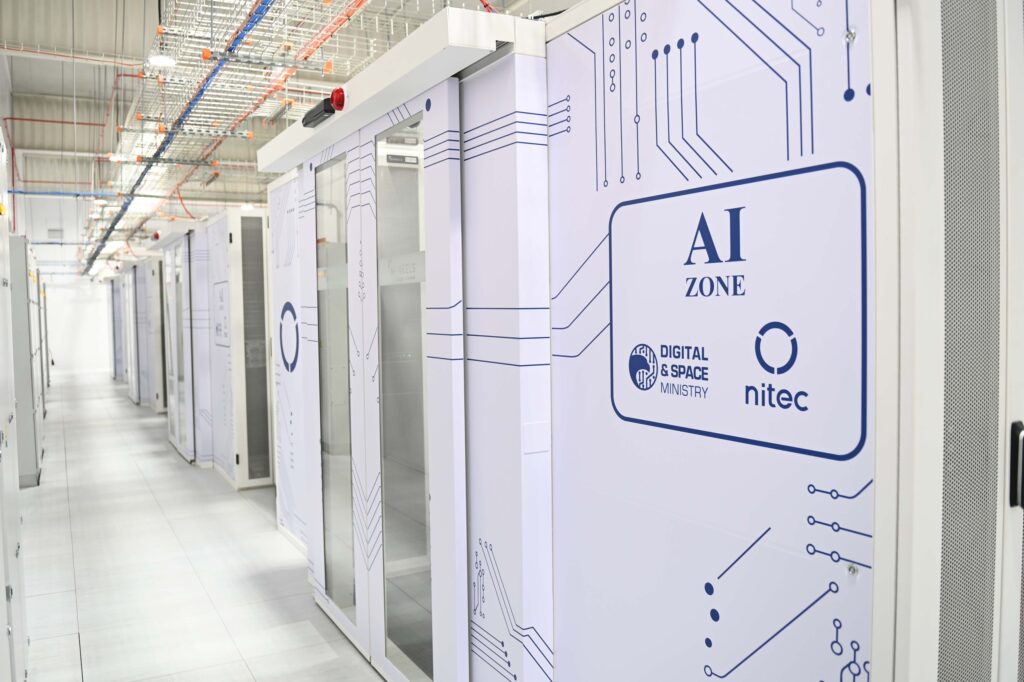
Kazakhstan has officially launched the most powerful supercomputer in Central Asia, marking a significant milestone in its push for digital sovereignty. President Kassym-Jomart Tokayev attended the inauguration ceremony at the new data center operated by the Ministry of Digital Development, Innovation, and Aerospace Industry. According to the presidential press service, the computing cluster, built on NVIDIA H200 graphics processors, can deliver up to 2 exaflops (two quintillion operations per second) of performance, making it the region’s most advanced high-performance computing system. Tokayev emphasized that the launch will catalyze digital transformation across key sectors of the Kazakh economy. The system will be accessible to startups working in neural networks, universities, research institutions, and both public and private sector enterprises. “Having our own high-performance infrastructure will accelerate the adoption of artificial intelligence, reduce dependence on foreign IT resources, and ensure the country’s technological sovereignty,” said Zhaslan Madiev, Minister of Digital Development. Boosting Domestic Capabilities Madiev noted that many Kazakh companies, including fintech firms and startups, currently rely on foreign cloud providers such as Amazon and Google for computing resources. This dependence leads to capital outflows and heightens risks related to data security. He added that local engineers have received specialized training, and full operational control of the supercomputer will be transitioned to Kazakhstani specialists over the next five years. During his visit to the National Computer Center, Tokayev was introduced to a range of domestic digital initiatives in fields such as healthcare, education, governance, and urban infrastructure. These include: SmartCity Astana: A project aimed at creating a digital twin of the capital, incorporating over 100,000 AI-enabled surveillance cameras for real-time threat detection and public safety monitoring. AlemLLM: A large language model customized for local linguistic and cultural contexts. AI Kitap: An adaptive learning platform that offers personalized digital education based on student levels and preferences. Baspana Hub: A digital ecosystem for real estate, integrating government services, property evaluations, a marketplace, and renovation support. Tokayev also viewed presentations from emerging Kazakhstani tech startups. Among them was Surfaice.pro, a construction technology firm founded by Kazakhstani entrepreneurs in Silicon Valley. The company operates in five U.S. states and has raised $1.5 million in funding from Big Sky Capital and Shadow Ventures. A Strategic Investment in Digital Sovereignty As previously reported by The Times of Central Asia, the launch of the supercomputer aligns with Kazakhstan’s broader ambition to become a regional technology hub. It was developed under a strategic partnership between the Ministry of Digital Development and UAE-based Presight AI Ltd. With its enhanced digital infrastructure and growing ecosystem of AI innovation, Kazakhstan is positioning itself at the forefront of high-performance computing and artificial intelligence in Central Asia.