• KZT/USD = 0.00223
  • TJS/USD = 0.10840
  • UZS/USD = 0.00008
  • TMT/USD = 0.29760
  • KZT/USD = 0.00223
  • TJS/USD = 0.10840
  • UZS/USD = 0.00008
  • TMT/USD = 0.29760
  • KZT/USD = 0.00223
  • TJS/USD = 0.10840
  • UZS/USD = 0.00008
  • TMT/USD = 0.29760
  • KZT/USD = 0.00223
  • TJS/USD = 0.10840
  • UZS/USD = 0.00008
  • TMT/USD = 0.29760
  • KZT/USD = 0.00223
  • TJS/USD = 0.10840
  • UZS/USD = 0.00008
  • TMT/USD = 0.29760
  • KZT/USD = 0.00223
  • TJS/USD = 0.10840
  • UZS/USD = 0.00008
  • TMT/USD = 0.29760
  • KZT/USD = 0.00223
  • TJS/USD = 0.10840
  • UZS/USD = 0.00008
  • TMT/USD = 0.29760
  • KZT/USD = 0.00223
  • TJS/USD = 0.10840
  • UZS/USD = 0.00008
  • TMT/USD = 0.29760
21 October 2026

Viewing results 1 - 6 of 22

A Blow to the CPC: Geopolitical Intrigue Surrounding the Pipeline

More than a week has passed since Ukrainian drones attacked the Kropotkinskaya oil refinery, part of the Caspian Pipeline Consortium (CPC) system. However, the incident remains a topic of heated debate in Kazakhstan. What Happened? On February 17, the Kropotkinskaya oil pumping station, located in Kavkazsky district, Krasnodar Krai, was targeted by multiple UAVs carrying explosives and metal fragments. While there were no casualties, the facility sustained damage and was taken out of service. Oil transportation through the Tengiz-Novorossiysk pipeline has since been rerouted via a bypass system, ensuring that shipments from the CPC Marine Terminal continue as normal. On February 20-21, a Kazakh delegation, including Daniyar Berlibayev, special representative for the CPC project from KazMunayGas, and Yerbolat Mendybayev, Director of Transportation and Logistics at KazMunayGas, visited the Kropotkinskaya station alongside CPC Deputy General Director Hakim Kasymov to assess the damage​. At a CPC shareholders' meeting in Abu Dhabi on February 25-26, CEO Nikolay Gorban presented a report on the extent of the damage, equipment dismantling progress, and contractor mobilization status. According to the CPC press service, shareholders pledged full support for repair work, which is expected to take approximately two months​. Kazakh Debate: Is Ukraine to Blame? While CPC shareholders, including entities from Kazakhstan, Russia, Europe, and the United States, treated the issue as a technical problem, Kazakh public discourse took a different turn, led by Mazhilis deputies. Parliamentarian Nikita Shatalov questioned Ukraine’s motivations on his Telegram channel: “The Ukrainian side could not have been unaware that 90% of the oil transported through the pipeline is Kazakh, extracted from Tengiz, with revenues benefiting Western companies exporting to the EU. The pipeline is international, with KazMunayGas, Chevron, ExxonMobil, and Italy’s Eni as shareholders. This attack was clearly intended to damage Kazakhstan’s economic interests.” Shatalov emphasized Kazakhstan’s neutral stance in the Ukraine-Russia war, pointing out that diplomatic contacts between Astana and Kyiv have continued at the highest levels, including President Kassym-Jomart Tokayev’s engagement with Volodymyr Zelensky. “Those responsible for this attack on an international consortium must be punished. Kazakhstan must demand accountability from Ukraine for the damage inflicted and the threat to bilateral relations.”​ His stance was echoed by Mazhilis deputy Marat Bashimov, who called the attack a "direct assault on Kazakhstan’s interests" in a Facebook post: “The Ukrainian side knew exactly how strategically vital the CPC pipeline is for Kazakh oil exports.”​ Bashimov argued that Kazakhstan has always upheld neutrality, supported diplomatic resolution efforts, and even refused to recognize the self-proclaimed Donetsk and Luhansk republics. Kazakh Debate: Is Russia to Blame? Not all deputies agreed. Mazhilisman Yermurat Bapi strongly rejected demands for Ukrainian compensation, arguing that Kazakhstan has no moral or legal grounds to make such a claim: “For more than three years, Ukraine has been fighting for survival against an aggressor that invaded its territory. As part of this war, Ukraine has the right to choose its defense strategies.” Bapi went further, blaming Kazakhstan’s overreliance on Russian infrastructure for the crisis: “The CPC pipeline was a strategic mistake of...


Kazakhstan Ends Era of Cheap Fuel: Price Controls Set for Abolition

On January 17, the Ministry of Energy of the Republic of Kazakhstan published a number of draft orders on the Open NLA (normative legal acts) portal, which were to be discussed within five days. In total, the Ministry proposed the abolition of eleven orders regulating wholesale and retail prices for petroleum products, which have been under price control since 2014. In addition, it intends to change the calculation formulas and price ceilings for wholesale and retail sales of liquefied and natural gas. I have been writing about the need for price liberalization since 2018, as seen in articles such as “#Kazneft, part 2: The Bermuda Gasoline Triangle - Why Prices Will Rise” and “#Kazneft, part 4: We Rank Seventh in the World for the Cheapest Gasoline. Is It Sold at a Loss?” This is a landmark event for the Government of Kazakhstan, which has long maintained not only the lowest fuel prices in the region but some of the lowest globally. The country consistently ranks among the top ten nations with the cheapest energy resources, including fuel, natural gas, coal, and electricity.   Cheap and Even Cheaper According to Global Petrol Prices, as of January 20, 2025, fuel prices per liter in dollar terms across the EAEU, CIS, and neighboring countries are as follows: (Table 1) Country RON-95 Diesel Turkmenistan 0,43 0,29 Kazakhstan 0,47 0,55 Russia 0,61 0,71 Azerbaijan 0,65 0,59 Belorussia 0,75 0,75 Kyrgyzstan 0,81 0,81 Afghanistan 0,83 0,83 Uzbekistan 0,99 0,95 Georgia 1,09 1,06 China 1,15 1,02 Ukraine 1,39 1,37 Mongolia 1,49 1,19 Kazakhstan ranks seventh globally for the affordability of RON-95 gasoline, trailing behind Angola, Egypt, Algeria, Kuwait, Turkmenistan, and Malaysia. At the same time, there are “throwaway” prices in Iran, Libya, and Venezuela, but these price indicators do not reflect the actual availability of fuel in these countries. Turkmenistan also shows relatively low fuel prices, primarily due to the use of alternative fuels, such as methane, in transportation. Kazakhstan has historically had nearly double the price gap compared to its neighboring countries, which has facilitated the shadow export of fuel despite an official ban on exporting petroleum products.   A Leaky Bucket I have described Kazakhstan's domestic fuel market as a "leaky bucket"— no matter how much fuel is produced, it is constantly in short supply. In 2024, the country processed about 18 million tons of oil, with its three major refineries — Atyrau: 99% owned by the national company KazMunayGas (KMG), Shymkent: 51% owned by China National Petroleum Corporation (CNPC), and 49% by KMG, and Pavlodar: 100% KMG — accounting for approximately 17 million tons. Mini-refineries produced an additional one million tons. The production of petroleum products (excluding fuel oil) amounted to around 14.5 million tons.   The balance of petroleum products for 2025 is as follows, million tons: (Table 2) Product Production in the Republic of Kazakhstan Import from Russia Import to production, % RON-92, RON-95, RON-98 5,0 0,29 6 % Diesel fuel 5,1 0,45 9 % Jet fuel 0,75 0,3 40 % Bitumen/tar 1,1 0,50 45 % For 2025,...

KazMunayGaz Looking to Buy Another European Oil Refinery

Kazakhstan’s KazMunayGaz (KMG) is seeking to acquire an oil refinery in Bulgaria from Russia’s LUKoil at a bargain price. The purchase of Lukoil Neftohim Burgas, the largest oil refinery in the Balkans, would, according to some media sources, more than double [KMG’s] European refining capacity.” KMG reported a bid of $1 billion for the refinery, which one outlet stated “seems small.”   Pressured Out The Burgas refinery was built in the early 1960s and “joined the LUKoil Group” in 1999. The European Union decision to impose a ban on Russian oil imports after the Kremlin launched its full-scale war on Ukraine deprived Lukoil Nefthohim Burgas of its major source of crude oil. According to a Financial Times report from November 2024, the Bulgarian government pressured LUKoil to sell the refinery, hitting the Russian company “with a 60% tax on profits in an effort to force out its owners” and prohibiting the “export of Russian crude-based products from Lukoil Neftohim Burgas.” In turn, LUKoil complained about “discriminatory laws and other unfair, biased political decisions toward the refinery.” KMG reportedly lost interest in the refinery in late 2024, but BNN Bloomberg reported on January 7 that the Kazakh company was still among the bidders for the Bulgarian refinery.   Advantage KMG When the EU banned Russian oil imports, Lukoil Nefthohim Burgas compensated by purchasing oil from Kazakhstan and the Middle East. If KMG buys the Bulgarian refinery, presumably most or all of the crude processed there will come from Kazakhstan. Kazakhstan exported some 70.5 million tons of oil in 2023, and expects figures will be slightly less in 2024, some 68.8 million tons, due to maintenance at the Tengiz and Kashagan fields. Some 80% of those oil exports are shipped from Kazakhstan through the Caspian Pipeline Consortium (CPC) pipeline to Russia’s Black Sea port at Novorossiysk. Prior to Russia’s full-scale invasion of Ukraine, the EU purchased about 50% of the Kazakh oil shipped through the CPC pipeline, but that amount has risen to 80% since the ban on Russian oil imports was imposed. Kazakhstan is also increasing the amount of oil it exports through Azerbaijan to Georgia’s Black Sea port at Batumi, where KMG subsidiary KazTransOil owns the oil terminal. Kazakhstan has a deal to ship 1.5 million tons of oil annually through Azerbaijan, but Kazakh Energy Minister Abdusalam Satkaliyev said in November 2024 that his country was looking to boost that to 20 million tons. Kazakhstan currently has two Aframax-class oil tankers (deadweight 80,000 tons each) operating in the Black Sea, but plans to bring this number to 12 during the coming years. The Lukoil Nefthohim Burgas refinery has a capacity to process some seven tons of oil annually. KMG International already owns two oil refineries in Romania. The Petromidia refinery, with an annual capacity of some five million tons, is located 20 kilometers from the Black Sea port city of Constanta, and the much smaller and older Vega refinery, north of Bucharest, with an annual capacity of some 350,000 tons....

Kazakhstan Needs a Fourth Oil Refinery to Meet Its Growing Demand for Motor Fuel

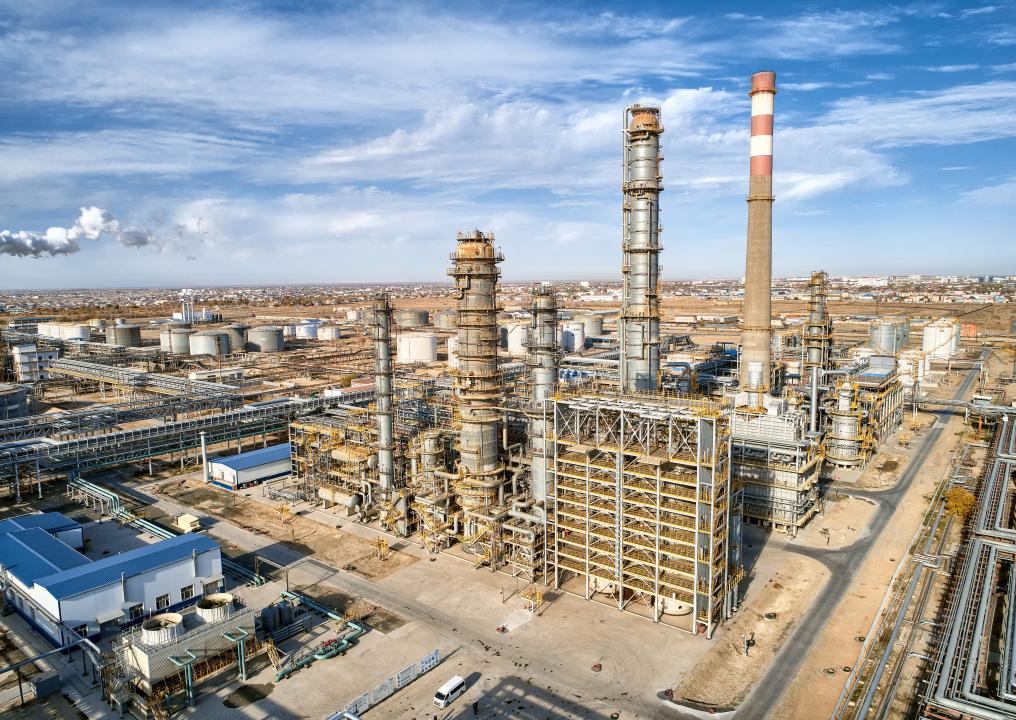
Speaking in parliament on November 25, Kazakhstan’s Energy Minister Almasadam Satkaliyev announced that the country anticipates a shortage of motor fuel by 2036. To address this, he emphasized the need to design a new oil refinery with a capacity of 10 million tons per year by 2030, with construction slated to begin in 2032. According to Satkaliyev, the proposed refinery will ensure Kazakhstan’s fuel demands are met from 2040 to 2050 while also enabling exports to rapidly developing markets in Central, South, and Southwest Asia. Currently, Kazakhstan operates three oil refineries - located in Shymkent, Pavlodar, and Atyrau - which are sufficient to meet domestic demand for gasoline and diesel fuel. However, during seasonal shortages, Kazakhstan imports additional fuel from Russia. Satkaliyev provided details on the country’s fuel production and import figures for 2024. Kazakhstan plans to produce 10.9 million tons of fuel this year, including 5.1 million tons of gasoline, 0.6 million tons of aviation fuel, and 5.2 million tons of diesel. In addition, approximately 1 million tons of fuel will be imported from Russia, comprising 0.285 million tons of gasoline, 0.3 million tons of aviation fuel, and 0.45 million tons of diesel. By 2032, Kazakhstan’s annual fuel production is expected to reach 19 million tons, including 8.2 million tons of gasoline, 1.5 million tons of aviation fuel, and 9.3 million tons of diesel. This increase will not only eliminate the need for imports but also enable the country to export surplus fuel. Satkaliyev also addressed the domestic supply of liquefied petroleum gas (LPG), which is the most affordable and widely used automobile fuel in Kazakhstan. From January to October 2024, Kazakhstan produced 2.5 million tons of LPG, compared to 2.4 million tons in 2023. The Energy Ministry has set the planned production volume for 2024 at 2.9 million tons. To stabilize the LPG market, the ministry has banned its exports since November 2023. The domestic market requires 164,000 tons of LPG monthly, while the ministry distributes 130,000-140,000 tons. Looking ahead, the government aims to meet rising LPG consumption by introducing new production capacities, with plans to increase annual LPG production to 4.2 million tons by 2032.

Kyrgyzstan to Modernize Oil Refinery in Jalal-Abad

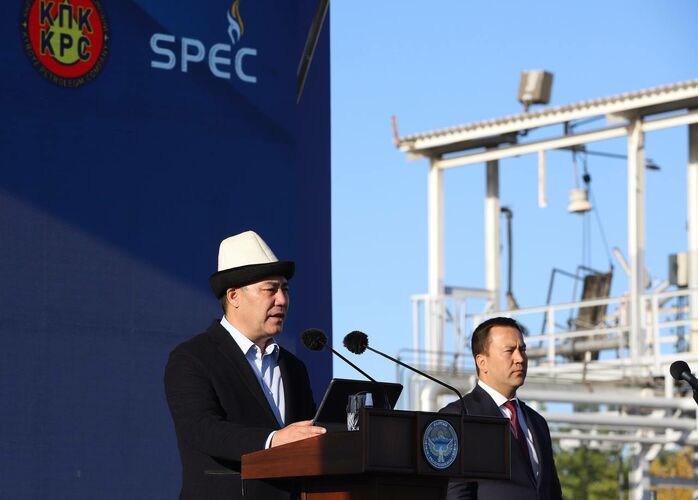
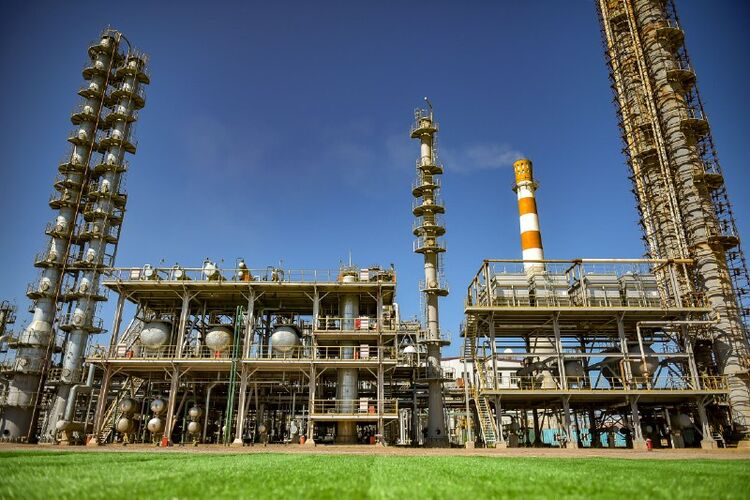
On September 28, Kyrgyzstan's largest oil refinery, located in the southern city of Jalal-Abad, began a large-scale modernization. Operated by Kyrgyz Petroleum Company, the refinery produces AI-80 gasoline, diesel fuel, and fuel oil. Kyrgyzstan's annual gasoline and diesel fuel demand is 1.4 million tons. The refinery in Jalal-Abad can meet only 6.5% of that demand. After the modernization project, the refinery will be able to meet 32% of the domestic demand. After modernization, AI-92 and AI-95 gasoline production would increase more than 12-fold, and diesel fuel production would grow by 40%. The total investment in modernizing the refinery will amount to $410 million, including $200 million in foreign investments and $110 million from the Kyrgyz government. Today, almost all gasoline and diesel fuel used by Kyrgyzstan is imported from Russia. The Times of Central Asia earlier reported that Kyrgyzstan proposed oil-rich Azerbaijan to sign a long-term contract to supply Azeri crude oil to Kyrgyzstan. Azeri crude oil is needed for Kyrgyzstan’s Junda oil refinery. Located in Kara-Balta, about 100 kilometers west of Bishkek, the refinery reopened late in August after a major overhaul. It now plans to reach its total annual capacity of processing 800,000 tons of crude oil by the end of this year.

Kyrgyzstan Seeks Crude Oil Supplies from Azerbaijan

At a meeting with Azerbaijan’s Energy Minister Parviz Shahbazov, his counterpart from Kyrgyzstan, Taalaibek Ibrayev, proposed signing a long-term contract to supply Azeri crude oil to Kyrgyzstan. The bilateral meeting took place on September 16 in Bishkek, on the sidelines of the 4th meeting of energy ministers of the Organization of Turkic States (Azerbaijan, Kazakhstan, Kyrgyzstan, Turkey, and Uzbekistan). Representatives of Turkmenistan and Hungary attended as observers. The Azeri Energy Minister expressed its readiness for cooperation, and proposed establishing a special working group to organize oil supplies. Ibrayev also proposed that Azerbaijan participate in hydropower and renewable energy projects in Kyrgyzstan, and consider preferential financing of $2 million from the Azerbaijan-Kyrgyzstan Development Fund for the purchase and installation of charging devices for electric vehicles in Kyrgyzstan. Today, Kyrgyzstan’s local capacity for refining crude oil and producing motor fuel covers about 5% of domestic demand, with the rest imported from Russia. During Kyrgyz President Sadyr Japarov’s visit to oil-rich Azerbaijan earlier this year, negotiations were held with the Azeri state oil company, SOCAR, on Azerbaijani oil supplies to Kyrgyzstan’s Junda refinery. Energy Minister Ibrayev commented that the Junda oil refinery requires more than 1 million tons of crude oil annually for refining. On August 30, the refinery reopened in the town of Kara-Balta, about 100 kilometers west of Bishkek. Late in March, the refinery completed a significant overhaul and plans to reach its total annual capacity of processing 800,000 tons of crude oil by the end of this year.