• KZT/USD = 0.00226
  • TJS/USD = 0.10830
  • UZS/USD = 0.00009
  • TMT/USD = 0.29760
  • KZT/USD = 0.00226
  • TJS/USD = 0.10830
  • UZS/USD = 0.00009
  • TMT/USD = 0.29760
  • KZT/USD = 0.00226
  • TJS/USD = 0.10830
  • UZS/USD = 0.00009
  • TMT/USD = 0.29760
  • KZT/USD = 0.00226
  • TJS/USD = 0.10830
  • UZS/USD = 0.00009
  • TMT/USD = 0.29760
  • KZT/USD = 0.00226
  • TJS/USD = 0.10830
  • UZS/USD = 0.00009
  • TMT/USD = 0.29760
  • KZT/USD = 0.00226
  • TJS/USD = 0.10830
  • UZS/USD = 0.00009
  • TMT/USD = 0.29760
  • KZT/USD = 0.00226
  • TJS/USD = 0.10830
  • UZS/USD = 0.00009
  • TMT/USD = 0.29760
  • KZT/USD = 0.00226
  • TJS/USD = 0.10830
  • UZS/USD = 0.00009
  • TMT/USD = 0.29760
27 September 2026

Viewing results 1 - 6 of 37

Kazakhstan’s Oil Exports to Germany Drop Sharply in June

Kazakhstan’s oil exports to Germany via the Druzhba pipeline fell by 1.4 times in June 2025 compared to May, according to new data from KazTransOil. Supply Targets vs. Delivery Volumes In June, KazTransOil transported 160,000 tonnes of crude oil to Germany through the Russian Transneft pipeline network, down from 230,000 tonnes in May. The shipments were delivered to the Adamova Zastava entry point on the German border. KazTransOil has not yet disclosed its supply plans for July. Despite the recent dip, Kazakhstan plans to export 1.5 million tonnes of oil to Germany in 2025, mirroring the 2024 target. In 2023, the volume reached 993,000 tonnes. Kazakhstan's Energy Minister Erlan Akkenzhenov stated in May that Astana is in talks with partners to potentially increase the annual supply to 2.2 million tonnes. His predecessor, Almasadam Satkaliyev, had earlier voiced similar intentions, indicating the figure could be raised to 2 million tonnes if demand from Germany rises. President Kassym-Jomart Tokayev has also expressed readiness to boost exports. Deepening Energy Ties Kazakhstan launched regular oil deliveries to Germany through Druzhba in 2023 as part of its broader strategy to diversify export routes. The first shipment was dispatched in February of that year. KazTransOil received a 2023 quota from Transneft for 1.2 million tonnes of oil, and in August, Karachaganak Petroleum Operating (KPO), operator of the Karachaganak field, announced plans to maintain that volume in 2024. In June 2023, KazMunayGas signed a supply agreement with Rosneft Deutschland GmbH for monthly deliveries of 100,000 tonnes to the PCK Raffinerie in Schwedt, Germany. The contract involved KazMunayGas Trading AG as the seller and Rosneft Deutschland, one of the refinery’s co-owners, as the buyer. Why Use the Druzhba Pipeline? The Druzhba pipeline originates in Samara, Russia, and branches into two routes after Bryansk and Mozyr: the northern branch runs through Belarus to Poland and Germany, while the southern route passes through Ukraine to Hungary, Slovakia, and the Czech Republic. Following Germany’s decision to halt imports of Russian oil in early 2023, capacity became available within the Druzhba system. Kazakhstan capitalized on this opening, with oil shipments technically routed through Russia’s Transneft network under intergovernmental agreements. Germany, in its search for alternatives to Russian crude, has turned to Kazakhstan as a reliable supplier. Technical compatibility with the Druzhba pipeline and Kazakhstan’s neutral foreign policy have made it a strategic energy partner.

Kazakhstan Weighs OPEC+ Exit, Raising Fears of Global Oil Price War

Kazakhstan is reportedly considering a reassessment of its participation in the OPEC+ alliance, raising concerns among major global oil market players, according to Reuters. Reuters columnist Ron Bousso Thomson noted that recent statements from Kazakhstan’s new Minister of Energy, Yerlan Akkenzhenov, emphasized prioritizing national interests over adhering to the cartel's production quotas. In an interview with Reuters, Akkenzhenov said, "Kazakhstan will proceed from its own interests in determining production volumes". Such rhetoric may signal Kazakhstan's de facto refusal to comply with OPEC+ quotas and could mark the first step toward a formal withdrawal from the alliance, which is led by Saudi Arabia. Since 2022, OPEC+ members had agreed to cut output by 5.85 million barrels per day to stabilize prices within a $70-90 per barrel range. Production Growth Despite Restrictions Kazakhstan has consistently exceeded its production limits. In March 2025, the country produced 1.85 million barrels of oil per day, 26% above its established quota of 1.468 million barrels. This surge is attributed to the expanded development of the Tengiz field. Such non-compliance has reportedly irritated Saudi Arabia, which, according to IMF estimates, needs oil prices above $90 per barrel to balance its national budget. In early April, Riyadh responded by slashing oil prices for the Asian market and accelerating production increases, signaling its displeasure toward undisciplined alliance members. Analysts warn that if tensions escalate further, Saudi Arabia could resort to drastic measures, potentially triggering a global price war. The Danger of a Price War The specter of a repeat of 2014, when Saudi Arabia flooded the market to push out U.S. shale producers, looms large. Should OPEC+ collapse, a supply glut could cause oil prices to plummet. Countries with higher production costs, such as Kazakhstan, would be particularly vulnerable to such a scenario. Risks for Kazakhstan's Budget and the Tenge According to analysts, Kazakhstan faces significant fiscal risks. Economist Arman Beisembayev explained that citizens would not immediately feel the impact of a sharp decline in oil prices due to existing contracts, which typically take three to six months to fulfill. However, he cautioned that economic repercussions could begin to surface by the fall. Financial analyst Andrei Chebotarev predicted that falling oil revenues would necessitate a budget revision. The current state budget is based on an oil price of $75 per barrel and an exchange rate of 470 tenge per U.S. dollar. In reality, oil prices are trending toward $65, and the tenge has depreciated to 518 per dollar. “Most likely, the government will increase withdrawals from the National Fund and revise budget expenditures. Devaluation may also become inevitable to balance the budget under new realities,” Beisembayev added. Global Turbulence and Geopolitical Factors Experts highlight that the policies of U.S. President Donald Trump's administration, particularly the escalation of trade conflicts, have played a significant role in destabilizing global markets. Newly imposed U.S. tariffs have already dampened global oil demand. “For developed countries, cheap oil is a boon. But for Kazakhstan, it poses risks and a threat of recession,” Beisembayev added....

Kazakhstan Aims to Double Oil Refining Capacity by 2040

Kazakhstan plans to double its oil refining capacity to 38 million tons by 2040, according to the country’s Minister of Energy, Yerlan Akkenzhenov. The announcement came during a recent meeting with executives from the national oil company KazMunayGas and representatives from the country’s four main refineries: Atyrau, Pavlodar, Shymkent, and the Aktau-based Caspi Bitum plant. Akkenzhenov said the goal is enshrined in Kazakhstan’s new Oil Refining Industry Development Concept for 2025-2040, which aims to significantly boost the share of refined oil, improve resource efficiency, and increase the production of value-added petroleum products. Key objectives of the strategy include: Increasing the depth of refining to 94%, aligning with global best practices; A full transition to high environmental standard fuels, such as K5 gasoline and Jet A-1 jet fuel; Expanding the production of petrochemical products for both domestic and international markets; Enhancing the technological sophistication and operational efficiency of Kazakhstan’s refineries. “We must not just supply the domestic market with fuel today but lay the foundation for technological sovereignty and sustainable development for decades to come,” Akkenzhenov said. “The successful realization of this concept depends on our ability to work efficiently, make bold decisions, and take responsibility for them. There is no time for hesitation, the country expects concrete results: modern plants, quality products, and reliable power supply.” As part of the initiative, the minister urged the accelerated development of a feasibility study to double the capacity of the Shymkent refinery and called for swift agreement signings with potential partners. He also stressed the need for the Pavlodar petrochemical plant to begin work on its next expansion phase. Meanwhile, the Atyrau refinery is to focus on implementing approved projects while preparing for further capacity growth. The Caspi Bitum plant has been tasked with completing post-modernization commissioning and ensuring stable operations. Kazakhstan’s three major oil refineries are located in: Pavlodar (northeast); Atyrau (west); Shymkent (south). As previously reported by The Times of Central Asia, the national antimonopoly agency proposed in March to privatize state stakes in the Pavlodar and Atyrau refineries, a move that could reshape the sector’s ownership landscape.

Kazakhstan’s Oil Exports Uninterrupted Despite Caspian Pipeline Consortium Berth Suspensions

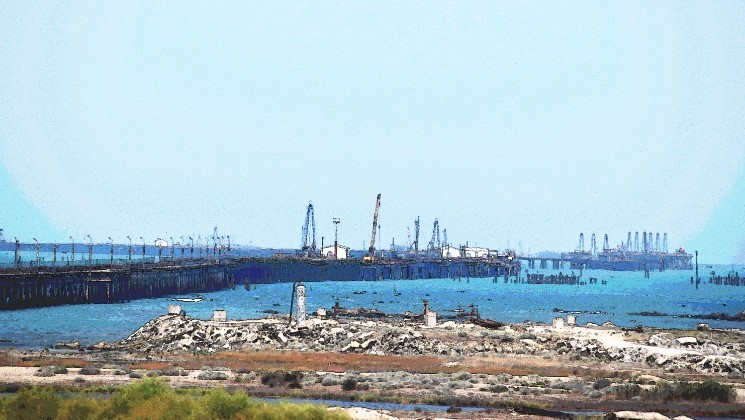
Despite the suspension of two out of three offshore berths operated by the Caspian Pipeline Consortium (CPC), Kazakhstan’s oil exports are proceeding without disruption, according to the Ministry of Energy of the Republic of Kazakhstan. The ministry stated that there are currently no restrictions on the receipt or shipment of oil through the CPC system. Transshipment is being carried out on schedule via VPU-3, the third remote mooring unit, which has been in operation since 2014. “Shipments are proceeding normally and according to schedule through the VPU-3 offshore mooring device, which remains operational,” the Ministry of Energy announced. Temporary Suspension of VPU-1 and VPU-2 Earlier, CPC announced the temporary suspension of VPU-1 and VPU-2 following an unscheduled inspection conducted by Russia’s Rostransnadzor. The inspections are part of a broader review of marine infrastructure safety across the Azov-Black Sea basin, launched in the wake of an oil product spill in the Kerch Strait in December 2024. Following the inspection, regulatory authorities issued protocols and directives mandating the temporary shutdown of the two berths until the violations identified are addressed. In the meantime, all CPC shipments have been consolidated through VPU-3. Consortium shareholders have been formally notified of the developments. Similar Measures at Transneft Facility The crackdown on safety violations has extended beyond the CPC. The eighth oil-loading berth operated by JSC Novorossiysk Commercial Sea Port (NCSP Group), part of Russia’s Transneft, has also been suspended for 90 days. The suspension followed the identification of safety violations related to the handling of hazardous cargo. Transneft has been ordered to correct the deficiencies by June 30. Strategic Significance of CPC The CPC is Kazakhstan’s most critical export route for crude oil, linking the giant Tengiz Field with the Yuzhnaya Ozereyevka Terminal on the Black Sea. The pipeline stretches 1,510 kilometers, including 452 kilometers within Kazakhstan, and has an annual capacity of up to 81.5 million tons. In 2024, Kazakhstan exported 54.9 million tons of oil via CPC, accounting for approximately 80% of the country's total oil exports. Security Concerns: Drone Attacks Raise Alarms Security concerns continue to loom over the CPC infrastructure. In February, the Kropotkinskaya station was targeted by seven drones. While the Ministry of Energy reassured that oil deliveries remained unaffected, the incident heightened concerns about operational stability. Although Russia and Ukraine later agreed not to target CPC facilities, Russia alleges that its air defense systems intercepted another drone attack on March 24, the third such incident in a month. Oil market analyst Olzhas Baidildinov voiced skepticism about the durability of the ceasefire arrangement. “We shouldn’t count on an end to attacks on CPC infrastructure,” Baidildinov said. “There’s unwarranted optimism in Kazakh media and among some experts, especially against the backdrop of record oil output in February-March. A decline in both oil production and exports seems inevitable, along with a drop in KazMunayGas’ dividend income from CPC and budget revenues.” He also warned that irregular operations could damage infrastructure designed for continuous, stable use. “Oil pipelines are engineered for consistent operational...

Britain’s Victoria Oil & Gas Files Multimillion-Dollar Lawsuit Against Kazakhstan

British company Victoria Oil & Gas has filed a multimillion-dollar lawsuit against the government of Kazakhstan under the Energy Charter Treaty. The development was reported by Energy Monitor, a Telegram channel focused on Kazakhstan’s energy sector. Dispute Centers on Kemerkol Oil Field The legal proceedings are registered with the International Centre for Settlement of Investment Disputes (ICSID), a World Bank-affiliated body. The case stems from a longstanding dispute over the Kemerkol oil field in Kazakhstan's Atyrau region. In 2005, Victoria Oil & Gas acquired a 100% stake in the field from Saga Creek Gold Ltd for $8.5 million. After drilling several wells, the company estimated the field’s geological reserves at approximately 15 million tons of oil. Unexplained Contract Termination In 2008, Kazakhstan’s authorities terminated the subsoil use contract without providing an official explanation. That same year, Kazakh company Bakyt Tau purchased the rights to the field from Saga Creek Gold Ltd for 360 million tenge (approximately $3 million at the 2008 exchange rate). In 2016, Bakyt Tau transferred the development license to Up-Nafta Operating for 1.36 billion tenge (nearly $4 million at the 2016 rate). The company continued exploration and drilling operations. By 2022, the State Reserves Commission reported the following: C1 category geological reserves: 2.35 million tons; recoverable: 588,000 tons C2 category reserves: 652,000 tons; recoverable: 29,000 tons As of 2023, actual oil production totaled just 14,700 tons, with 12 active wells and an average water cut of 79%. Legal Strategy or Political Statement? Given the field’s modest reserves and limited output, some experts suggest the lawsuit may be more political than economic. Energy Monitor noted: “The field is clearly not worth hundreds of millions of dollars, unlike the Stati case involving the Borankol and Tolkyn fields. Most likely, the lawsuit has a political context rather than an economic one.” Victoria Oil & Gas first raised the prospect of arbitration in April 2021. The case has now been officially registered under ICSID case number ARB/25/13, signaling the start of formal legal proceedings. Implications for Kazakhstan While the precise amount of the claim has not been disclosed, Victoria Oil & Gas is expected to seek compensation for lost investments and projected profits. However, given the field’s limited commercial viability, many industry observers question the likelihood of a favorable ruling. The case adds to Kazakhstan’s growing docket of international arbitrations, including the high-profile Stati brothers’ case. Analysts warn the dispute could affect the country’s investment climate and its bargaining position in future energy negotiations.

Kazakhstan Agrees to Increase Oil Transit Through Azerbaijan

Kazakhstan’s KazMunayGas and Azerbaijan’s SOCAR have agreed to increase the transit of Kazakh oil through the Aktau-Baku-Ceyhan route in 2025. The decision was made during a meeting in Baku between KazMunayGas Chairman Askhat Hasenov and SOCAR President Rovshan Najaf, where they reviewed progress on the 2022 oil transportation agreement​. At the end of 2024, the volume of Kazakh oil transported through Azerbaijan reached 1.4 million tons. Under the new plan, this figure is set to increase to 1.7 million tons in 2025. The expansion will enhance the transit potential of both Kazakhstan and Azerbaijan, while boosting Kazakhstan’s access to global energy markets. Focus on Decarbonization and Energy Cooperation During the talks, the two companies also discussed their strategic partnership on decarbonization, which was formalized at the 29th UN Climate Change Conference (COP-29) in Azerbaijan. The agreement focuses on: Introducing low-carbon technologies in the oil and gas sector. Reducing harmful emissions from energy production. Additionally, discussions covered joint exploration projects, oil and gas production, investment opportunities, and the digitalization of industrial processes. “SOCAR is a key partner of KazMunayGas. Together, we will continue to contribute to global energy security and the stability of hydrocarbon supplies. This partnership will create new transit opportunities through the Caspian region,” said Hasenov​. Kazakhstan and Azerbaijan’s Broader Cooperation Beyond oil transit, Kazakhstan and Azerbaijan recently signed an agreement to construct an underwater fiber-optic communication line across the Caspian Sea. The deal was finalized during Kazakh Prime Minister Olzhas Bektenov’s recent visit to Baku​. This project, along with the expanded oil transit, highlights the deepening economic and strategic partnership between the two Caspian nations.