
• KGS/USD = 0.01144 0%
  • KZT/USD = 0.00201 0%
  • TJS/USD = 0.10464 0%
  • UZS/USD = 0.00008 0%
  • TMT/USD = 0.28490 0%
  • KGS/USD = 0.01144 0%
  • KZT/USD = 0.00201 0%
  • TJS/USD = 0.10464 0%
  • UZS/USD = 0.00008 0%
  • TMT/USD = 0.28490 0%
  • KGS/USD = 0.01144 0%
  • KZT/USD = 0.00201 0%
  • TJS/USD = 0.10464 0%
  • UZS/USD = 0.00008 0%
  • TMT/USD = 0.28490 0%
  • KGS/USD = 0.01144 0%
  • KZT/USD = 0.00201 0%
  • TJS/USD = 0.10464 0%
  • UZS/USD = 0.00008 0%
  • TMT/USD = 0.28490 0%
  • KGS/USD = 0.01144 0%
  • KZT/USD = 0.00201 0%
  • TJS/USD = 0.10464 0%
  • UZS/USD = 0.00008 0%
  • TMT/USD = 0.28490 0%
  • KGS/USD = 0.01144 0%
  • KZT/USD = 0.00201 0%
  • TJS/USD = 0.10464 0%
  • UZS/USD = 0.00008 0%
  • TMT/USD = 0.28490 0%
  • KGS/USD = 0.01144 0%
  • KZT/USD = 0.00201 0%
  • TJS/USD = 0.10464 0%
  • UZS/USD = 0.00008 0%
  • TMT/USD = 0.28490 0%
  • KGS/USD = 0.01144 0%
  • KZT/USD = 0.00201 0%
  • TJS/USD = 0.10464 0%
  • UZS/USD = 0.00008 0%
  • TMT/USD = 0.28490 0%

Viewing results 1 - 6 of 6

Kazakhstan Claims Success in Asset Recovery, But Transparency Questions Linger

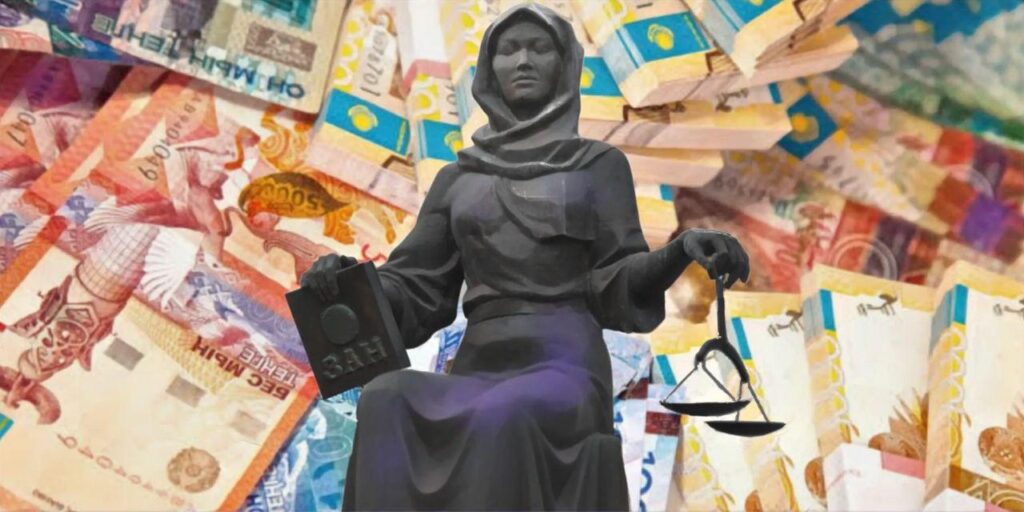
Kazakhstan’s authorities have presented the results of the campaign to recover illegally acquired or transferred assets as a major success. In September 2025, during his address to the nation, President Kassym-Jomart Tokayev signaled a transition from asset recovery to broader investor-protection priorities. According to Prosecutor General Berik Asylov, recoveries totaling hundreds of billions of tenge have been returned to the state since the launch of the asset-recovery campaign. This includes not only cash and securities, but also land plots, business assets, and luxury property. Overall, official estimates put the total value of assets clawed back under the campaign at around 1.2–1.3 trillion tenge (roughly $2.3 billion), though only part of this amount has been directly credited to the state budget. A tax on indulgence When the law “On the Return of Illegally Acquired Assets to the State” was adopted in 2023, it was presented not merely as a fiscal tool but as a means of restoring historical justice. As part of the concept of building a “Fair Kazakhstan,” the authorities promised that assets once hidden in offshore accounts or invested in luxury real estate abroad would be redirected toward social development. Two years later, it is clear that the assets have indeed been returned. Yet instead of a transparent process in which citizens could clearly see how recovered funds were being used, the system has created a dense layer of bureaucracy. Money has been accumulated in the Special State Fund (SSF), the operating mechanisms of which continue to raise questions among experts. Despite official reports highlighting the construction of social facilities financed with seized assets, public debate over the transparency of the fund has not subsided. The authorities have also declined to publish the names of former asset owners or detailed information on specific accounts, enterprises, or land plots transferred to the state. A defining feature of the campaign was the rejection of a purely punitive approach. Instead, the government introduced a mechanism of “voluntary return,” effectively offering members of the elite a compromise: return swathes of your illegally acquired wealth, and the state will refrain from pursuing past offenses. The law clearly defined the target group, focusing on individuals owning assets valued at more than 13 million MCI, or roughly $100 million. This ensured pressure on large capital holders while shielding medium-sized businesses. At the same time, the closed nature of the list created a powerful instrument of leverage over the business elite. Experts have described this approach as a “tax on indulgence.” Rather than engaging in lengthy and uncertain international legal battles over offshore assets, Astana has opted for pretrial settlements. In legal terms, this takes the form of procedural agreements in which suspects acknowledge wrongdoing, return assets, and receive reduced sentences or exemption from liability. The most prominent and controversial example is the case of Kairat Satybaldy, a nephew of former president Nursultan Nazarbayev. After returning assets reportedly worth approximately $1.4 billion, he received a reduced sentence and was released ahead of schedule. From a fiscal standpoint,...

Old Kazakhstan in Retreat: The Fate of Nazarbayev’s Allies

Since early 2022, the influence of the so-called “Old Kazakhstan” - the political and business circle that once surrounded former President Nursultan Nazarbayev — has been steadily eroded. Institutions have been reshaped, loyalties tested, and the once-untouchable elite has found itself under unprecedented scrutiny. Yet the names of Nazarbayev and his closest allies still surface regularly in courtrooms, parliament debates, and media headlines. Are these prosecutions and investigations an attempt to build President Kassym-Jomart Tokayev’s vision of a “Fair Kazakhstan,” or do they mark a new phase of elite score-settling under the banner of reform? The Times of Central Asia examined the fortunes of six figures from Nazarbayev’s inner circle to trace the shifting balance of power. Nurbоl Nazarbayev Recent headlines have revived scrutiny of Nazarbayev's nephew Nurbоl Nazarbayev, the son of his late brother Bolat. Authorities have launched bankruptcy proceedings against him, citing debts of approximately 58 billion tenge ($107 million). His assets and bank accounts have been frozen, and he is subject to travel restrictions. Under the current law, Nurbоl will be barred from taking out loans for five years, registering as an individual entrepreneur, or conducting major financial transactions without notifying the relevant authorities. His assets may be liquidated to repay creditors, with the exception of his primary residence. Once listed as Kazakhstan’s 57th richest businessman by Forbes Kazakhstan, he held ownership stakes in Prime Capital Invest and Prime Capital Holding, was a co-owner of PLS Construction Company and PLS-TM, and the majority shareholder of the Almaty Heavy Machinery Plant. This legal action follows a parliamentary inquiry into a previously sealed court case initiated by the General Prosecutor’s Office. The court ordered the confiscation of assets worth 57 billion tenge ($105.5 million) and imposed a fine of 925 million tenge ($1.7 million), along with penalties totaling 230.4 million tenge ($425,000). Members of parliament, Rinat Zaitov and Ermurat Bapi, have both demanded transparency in the case. Zaitov called for a comprehensive audit of Nurbоl’s assets, including those linked to the Altyn Orda market and land plots in Almaty and its surrounding areas. Shortly afterward, Bapi echoed the call, referencing a complaint from a Karaganda businessman who claimed his company was seized in a raid involving Nazarbayev’s circle. Bapi criticized law enforcement for closing the case, calling it “a betrayal of the President’s vision of a Fair Kazakhstan.” Zhomart Ertayev Zhomart Ertayev, a flamboyant banker once sentenced to 11 years for embezzling 144 billion tenge ($266 million) from Bank RBK, was unexpectedly released earlier this year under an amnesty, according to the Committee of the Penal System. However, a month later, parliament deputy Abzal Kuspan announced that the court’s decision had been overturned, and a formal appeal to the Prosecutor General’s Office led to Ertayev’s re-arrest. Ertayev previously held refugee status and a Russian residence permit, both of which were revoked after Kazakhstan issued an international warrant for his arrest. Kairat Boranbayev Kairat Boranbayev, a prominent businessman and former in-law of the Nazarbayev family, was arrested in 2022 and...