
• KZT/USD = 0.00219
  • TJS/USD = 0.10810
  • UZS/USD = 0.00009
  • TMT/USD = 0.29760
  • KZT/USD = 0.00219
  • TJS/USD = 0.10810
  • UZS/USD = 0.00009
  • TMT/USD = 0.29760
  • KZT/USD = 0.00219
  • TJS/USD = 0.10810
  • UZS/USD = 0.00009
  • TMT/USD = 0.29760
  • KZT/USD = 0.00219
  • TJS/USD = 0.10810
  • UZS/USD = 0.00009
  • TMT/USD = 0.29760
  • KZT/USD = 0.00219
  • TJS/USD = 0.10810
  • UZS/USD = 0.00009
  • TMT/USD = 0.29760
  • KZT/USD = 0.00219
  • TJS/USD = 0.10810
  • UZS/USD = 0.00009
  • TMT/USD = 0.29760
  • KZT/USD = 0.00219
  • TJS/USD = 0.10810
  • UZS/USD = 0.00009
  • TMT/USD = 0.29760
  • KZT/USD = 0.00219
  • TJS/USD = 0.10810
  • UZS/USD = 0.00009
  • TMT/USD = 0.29760
25 August 2026

Viewing results 1 - 6 of 5

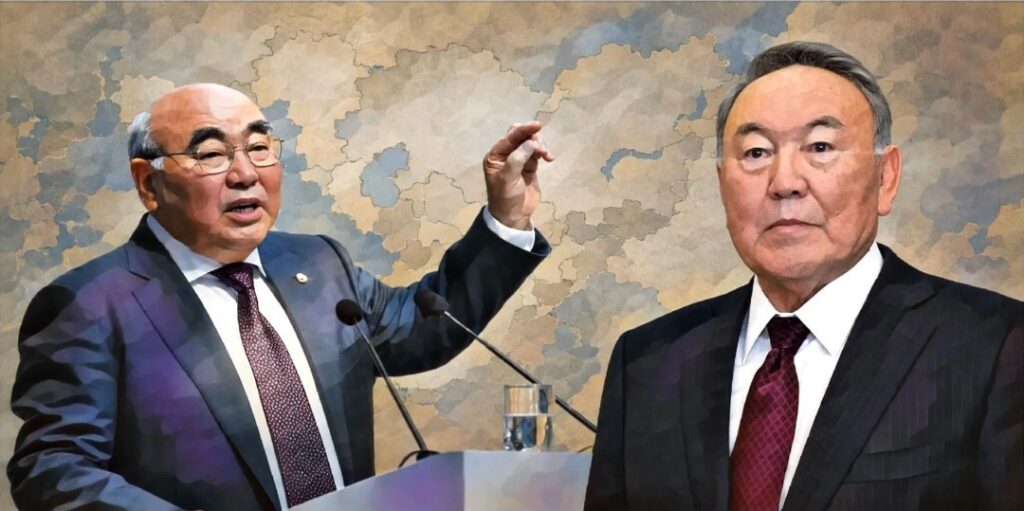
What Do Former Presidents Do? From Akayev to Nazarbayev, the Fates of Central Asia’s Ex-Leaders

Central Asia has produced remarkably few former presidents who simply retired from public life. In Kyrgyzstan, former leaders have been driven from office, prosecuted, imprisoned, or forced into exile. Kazakhstan’s Nursultan Nazarbayev has followed a different path, largely withdrawing from public view after losing much of his political influence. Elsewhere, some of the region’s founding presidents died in office, leaving no post-presidential career to examine. The Times of Central Asia has previously examined how political succession has developed across the region. The fate of leaders after they leave office reveals another side of that political tradition. The architect of Kyrgyzstan’s early post-Soviet political model was its first president, Askar Akayev, who remained in office until 2005. Akayev introduced democratic institutions in Kyrgyzstan, but gradually tightened the pressure on his opponents as his presidency progressed. His rule was badly shaken by the Aksy shootings in 2002, which followed the prosecution of opposition lawmaker Azimbek Beknazarov and a territorial dispute with China. Akayev’s government had agreed to transfer disputed border territory to China, a decision fiercely criticized by the opposition. In March 2002, demonstrators in southern Kyrgyzstan demanded Akayev’s impeachment. Security forces opened fire during the unrest, killing several people. The shootings became one of the defining political crises of his presidency. In a 2003 referendum, Akayev significantly strengthened presidential powers at parliament’s expense. Economic hardship, unemployment, widespread corruption, and allegations of fraud in the 2005 parliamentary elections eventually helped trigger the Tulip Revolution in March of that year. Akayev had to flee, with rumors at the time claiming that he was smuggled out in the trunk of an official car, wrapped in a carpet. Criminal cases involving corruption were opened against him and members of his family in Kyrgyzstan. The authorities repeatedly sought his extradition from Russia, but were unsuccessful. After leaving Kyrgyzstan, Akayev lived in Moscow and taught at Moscow State University. In 2006, he became a foreign member of the Russian Academy of Sciences. In August 2021, Akayev reappeared in Bishkek. He unexpectedly flew into the country and was immediately questioned as part of the criminal investigation into corruption surrounding the Kumtor gold mine. Afterward, he said he had come to Bishkek for a week and was prepared to assist investigators. “I came to speak honestly and sincerely about how we built Kumtor, why we built it, and what mistakes may have been made. The investigation will continue,” he said. In 2023, Kyrgyzstan’s Prosecutor General’s Office announced that the criminal prosecution of Akayev had been terminated because the statute of limitations had expired. Tajikistan’s former president Rahmon Nabiyev was also forced from power. The former Soviet politician lost power amid the country’s civil war in 1992. He died at his home in Khujand the following year, at the age of 62, reportedly from a heart attack. According to his wife, Nabiyev spent his final months in Khujand in conditions resembling house arrest and received a pension of just five rubles. While Tajikistan did not repeat the experiment of violently...
Old Kazakhstan in Retreat: The Fate of Nazarbayev’s Allies

Since early 2022, the influence of the so-called “Old Kazakhstan” - the political and business circle that once surrounded former President Nursultan Nazarbayev — has been steadily eroded. Institutions have been reshaped, loyalties tested, and the once-untouchable elite has found itself under unprecedented scrutiny. Yet the names of Nazarbayev and his closest allies still surface regularly in courtrooms, parliament debates, and media headlines. Are these prosecutions and investigations an attempt to build President Kassym-Jomart Tokayev’s vision of a “Fair Kazakhstan,” or do they mark a new phase of elite score-settling under the banner of reform? The Times of Central Asia examined the fortunes of six figures from Nazarbayev’s inner circle to trace the shifting balance of power. Nurbоl Nazarbayev Recent headlines have revived scrutiny of Nazarbayev's nephew Nurbоl Nazarbayev, the son of his late brother Bolat. Authorities have launched bankruptcy proceedings against him, citing debts of approximately 58 billion tenge ($107 million). His assets and bank accounts have been frozen, and he is subject to travel restrictions. Under the current law, Nurbоl will be barred from taking out loans for five years, registering as an individual entrepreneur, or conducting major financial transactions without notifying the relevant authorities. His assets may be liquidated to repay creditors, with the exception of his primary residence. Once listed as Kazakhstan’s 57th richest businessman by Forbes Kazakhstan, he held ownership stakes in Prime Capital Invest and Prime Capital Holding, was a co-owner of PLS Construction Company and PLS-TM, and the majority shareholder of the Almaty Heavy Machinery Plant. This legal action follows a parliamentary inquiry into a previously sealed court case initiated by the General Prosecutor’s Office. The court ordered the confiscation of assets worth 57 billion tenge ($105.5 million) and imposed a fine of 925 million tenge ($1.7 million), along with penalties totaling 230.4 million tenge ($425,000). Members of parliament, Rinat Zaitov and Ermurat Bapi, have both demanded transparency in the case. Zaitov called for a comprehensive audit of Nurbоl’s assets, including those linked to the Altyn Orda market and land plots in Almaty and its surrounding areas. Shortly afterward, Bapi echoed the call, referencing a complaint from a Karaganda businessman who claimed his company was seized in a raid involving Nazarbayev’s circle. Bapi criticized law enforcement for closing the case, calling it “a betrayal of the President’s vision of a Fair Kazakhstan.” Zhomart Ertayev Zhomart Ertayev, a flamboyant banker once sentenced to 11 years for embezzling 144 billion tenge ($266 million) from Bank RBK, was unexpectedly released earlier this year under an amnesty, according to the Committee of the Penal System. However, a month later, parliament deputy Abzal Kuspan announced that the court’s decision had been overturned, and a formal appeal to the Prosecutor General’s Office led to Ertayev’s re-arrest. Ertayev previously held refugee status and a Russian residence permit, both of which were revoked after Kazakhstan issued an international warrant for his arrest. Kairat Boranbayev Kairat Boranbayev, a prominent businessman and former in-law of the Nazarbayev family, was arrested in 2022 and...

Nazarbayev Agrees to Meet Belarusian President Lukashenko

Former Kazakh President Nursultan Nazarbayev has agreed to meet with Belarusian President Alexander Lukashenko, according to a statement released by the Belarusian leader’s press service. “Today, there was a very warm, friendly conversation between the President of Belarus and the First President of Kazakhstan. Nursultan Nazarbayev cordially congratulated Alexander Lukashenko on his election victory and conveyed his sincere congratulations and greetings to the Belarusian people. Alexander Lukashenko also warmly thanked Nursultan Nazarbayev for his kind words and wishes. The Belarusian leader and the First President of Kazakhstan agreed to find an opportunity to meet and talk in the near future,” the statement read. The meeting is part of a series of diplomatic engagements Nazarbayev has undertaken recently. In December 2024, he held a high-profile meeting with Russian President Vladimir Putin at the Novo-Ogaryovo residence. That visit sparked considerable public attention in Kazakhstan, with some parliamentarians expressing concern. Mazhilis Deputy Samat Nurtaza stated that such meetings cause him “internal anxiety.” Meanwhile, Deputy Yermurat Bapi suggested that Nazarbayev’s visit to Russia might be linked to the “Kazakhgate-2” case currently under review in the United States. Lukashenko, who has ruled Belarus since 1994, has faced significant international criticism following his re-election on January 26, a process widely dismissed in the West as neither free nor fair. While the Belarusian Central Election Commission reported that Lukashenko secured 87.6% of the vote, the European Union and other international organizations denounced the results as “fictitious” and criticized the election for failing to meet democratic standards. Despite the controversy, Lukashenko has received congratulations from various world leaders, including Kazakh President Kassym-Jomart Tokayev, who reportedly congratulated Lukashenko during a phone call. According to the state-run BelTA news agency, the election was monitored by 486 international observers from 52 countries, as well as over 44,000 national representatives. However, independent observers and western governments have cast doubt on the credibility of these reports. The forthcoming Nazarbayev-Lukashenko meeting is expected to further discussions on regional and bilateral issues, though no specific details have been released.

Nursultan Nazarbayev Poses for the Cameras – in Uzbekistan

Nursultan Nazarbayev, the former longtime president of Kazakhstan whose legacy was tarnished by accusations of autocracy and corruption, has made a rare public appearance, visiting several sites in the historic Uzbek city of Bukhara.   Uzbekistan24 television showed Nazarbayev with Uzbek President Shavkat Mirziyoyev as the pair walked, prayed and posed for cameras together on Friday. Local media reports said they discussed the preservation of cultural heritage and the education of young people. Mirziyoyev returned to Tashkent on Saturday and was in Astana, Kazakhstan on Sunday to attend the opening of the World Nomad Games, an international event celebrating traditional sports in Central Asia.   Nazarbayev’s appearance resembled more of a stroll with an old friend than a formal event. But it was unusual to see the 84-year-old former leader out and about because he has tended to keep a low profile in recent years. The government of his successor, President Kassym-Jomart Tokayev, has distanced itself from parts of Nazarbayev’s legacy, promising to be more responsive to people’s concerns and launching corruption investigations of some of the former leader’s relatives in order to recover state assets.  Nazarbayev had ruled Kazakhstan since the collapse of the Soviet Union in 1991, burnishing his reputation with the help of the young country’s massive oil wealth and skilled outreach to foreign investors and governments.  However, as inequality and economic pressures grew, he resigned in 2019 while retaining some powerful roles in government. He was stripped of those posts as Tokayev grappled with fallout from protests and riots in January 2022 in which Nazarbayev was condemned as an authoritarian holdover. More than 200 people were killed in the violence, which ended after troops from Russia and other regional countries intervened.

Nazarbayev’s Nephew Returns $1.6 Billion to Kazakhstan Following Embezzlement Conviction

Kazakhstan's Anti-Corruption Service has completed an investigation into the case of Kairat Satybaldyuly, the nephew of former president Nursultan Nazarbayev. Following the investigation, around 733 billion KZT ($1.6 billion) worth of assets have been returned to the state. In September 2022, Satybaldyuly was sentenced to six years in prison for embezzling funds, and causing damage to companies such as Kazakhtelecom and CTC. In 2023, the investigation was expanded to look into into other crimes that he committed. The full investigation revealed numerous cases of legalization of illegal income and evasion of customs duties. Satybaldyuly pleaded guilty and cooperated with the investigation, allowing the return of assets in Kazakhstan and abroad. Most assets were found in Austria, Liechtenstein, the UAE, and Turkey. The recovered assets included 28.8% of shares of the national telecom operator Kazakhtelecom, assets of CTC JSC, and stakes in four companies. The state has also recovered 115 real estate objects in Kazakhstan, including buildings, apartments, and land plots. The returned assets include luxury real estate and jewellery confiscated in various countries.
