• KZT/USD = 0.00220
  • TJS/USD = 0.10860
  • UZS/USD = 0.00008
  • TMT/USD = 0.29850
  • KZT/USD = 0.00220
  • TJS/USD = 0.10860
  • UZS/USD = 0.00008
  • TMT/USD = 0.29850
  • KZT/USD = 0.00220
  • TJS/USD = 0.10860
  • UZS/USD = 0.00008
  • TMT/USD = 0.29850
  • KZT/USD = 0.00220
  • TJS/USD = 0.10860
  • UZS/USD = 0.00008
  • TMT/USD = 0.29850
  • KZT/USD = 0.00220
  • TJS/USD = 0.10860
  • UZS/USD = 0.00008
  • TMT/USD = 0.29850
  • KZT/USD = 0.00220
  • TJS/USD = 0.10860
  • UZS/USD = 0.00008
  • TMT/USD = 0.29850
  • KZT/USD = 0.00220
  • TJS/USD = 0.10860
  • UZS/USD = 0.00008
  • TMT/USD = 0.29850
  • KZT/USD = 0.00220
  • TJS/USD = 0.10860
  • UZS/USD = 0.00008
  • TMT/USD = 0.29850
03 November 2026

Viewing results 1 - 6 of 3

OTS Summit in Ankara: Türkiye Looks to Strengthen Its Position as Central Asia Competes for Transit Routes

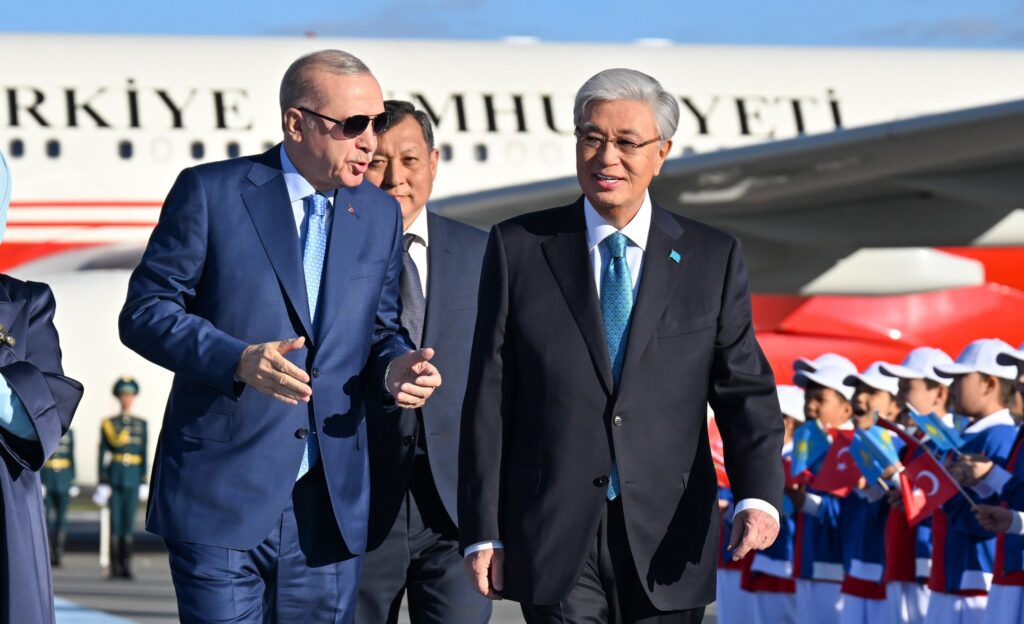
Kazakh President Kassym-Jomart Tokayev arrived in Ankara on October 28, the day he delivered his annual State of the Nation Address, in which he announced plans to expand transport routes between China and Europe. On October 30, he will attend the 13th summit of the Organization of Turkic States (OTS). Turkey is preparing to take over the organization's chairmanship from Azerbaijan, and Central Asian countries are seeking to accelerate freight transportation across the Caspian Sea. Behind the shared rhetoric of Turkic unity lie specific economic interests. Kazakhstan is building railways and expanding its capacity to handle transit cargo from China. Azerbaijan is developing Caspian ports and transport infrastructure in the South Caucasus. Turkey wants to attract more freight moving between China and Europe through Central Asia, increasing its role as a transit hub. A unified route looks much simpler on a political map than it does in the daily operations of transport companies. Between China and Europe, cargo crosses several borders, is transferred from trains to ships and back, undergoes customs clearance, and is subject to tariffs set by different operators. Interest in alternative Eurasian transport routes has grown since Russia launched its full-scale invasion of Ukraine, but the competition extends beyond freight. Ankara is looking to strengthen its political presence in Central Asia, where Russia and China retain considerable influence. Summit events begin on October 29 with a meeting of the Council of Foreign Ministers, chaired by Turkish Foreign Minister Hakan Fidan. The nation’s presidents will meet on the following day. Participants are expected to adopt the Ankara Declaration, discuss investment, energy, digitalization, security, and appoint a new OTS secretary-general. Tokayev and Kazakhstan's Route to Europe Tokayev's visit to Turkey follows directly after his State of the Nation Address, much of which focused on infrastructure, including plans to open the 272-kilometer Bakhty–Ayagoz railway in 2027. The line is expected to add 20 million metric tons of annual freight capacity between Kazakhstan and China. Tokayev also discussed construction of the Aral–Caspian highway. The project would establish a new transport connection between western and central Kazakhstan. According to government estimates, it could shorten certain freight routes between China and Europe by approximately 1,000 kilometers and reduce delivery times by up to three days. Both projects are part of a broader effort to increase Kazakhstan's revenue from international logistics. The country currently earns a substantial share of its transit revenue directly from freight transportation. Developing warehouses, terminals, processing facilities, and distribution centers could generate additional income. Turkey occupies an important position in this network. An overland branch of the Middle Corridor passes through its territory en route to European markets; the Baku–Tbilisi–Kars railway connects Azerbaijan to Turkey's rail network through Georgia. On the sidelines of the Ankara summit, Turkish business associations plan to discuss border crossing operations, transportation costs, and the development of the Middle Corridor. Transport geography, however, does not fit neatly within the OTS's political boundaries. Georgia, through which the railway connecting Azerbaijan and Turkey passes, is not a member...
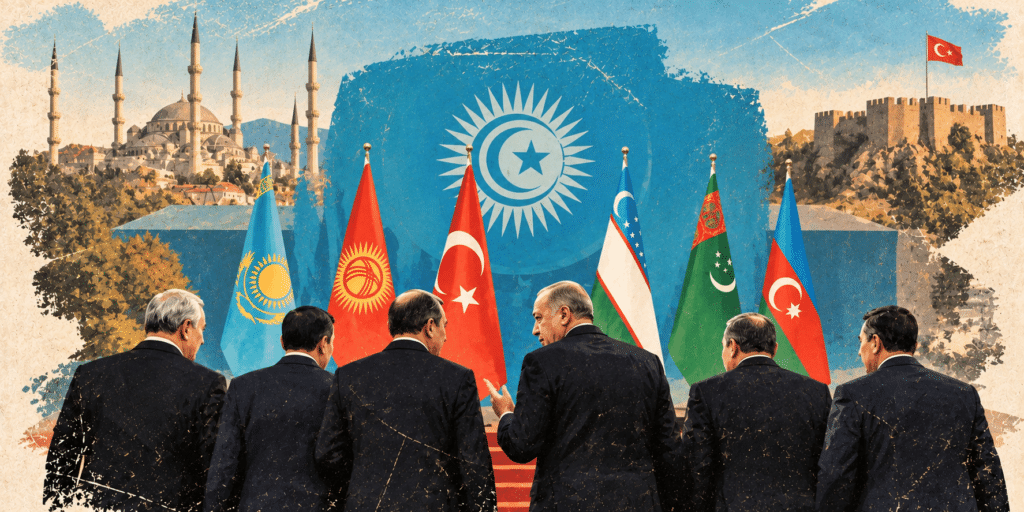
OTS Summit in Turkistan Reveals Strains Beneath Turkic Unity

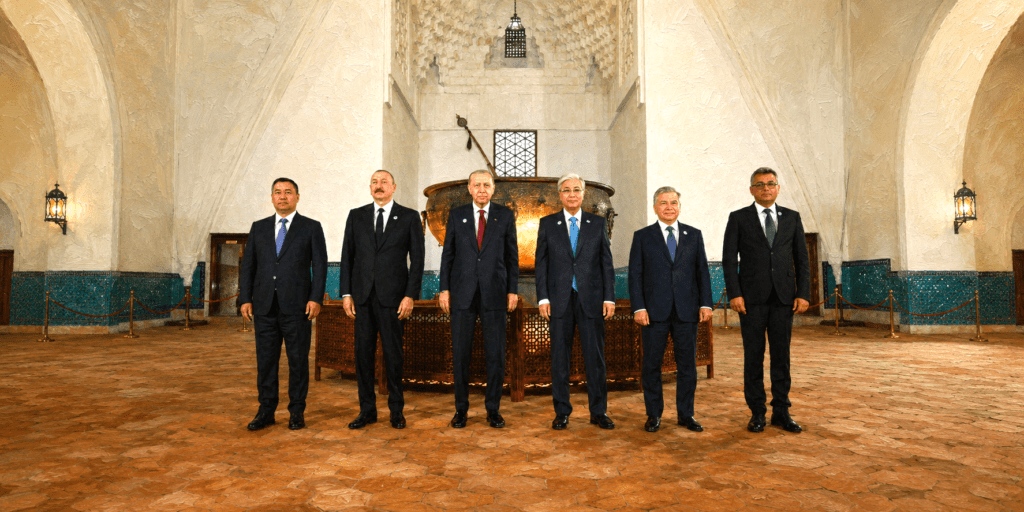
Last Friday, the Kazakh city of Turkistan, officially promoted as the “spiritual capital” of the Turkic world, hosted an informal summit of the Organization of Turkic States (OTS). The official theme was artificial intelligence and digital development, but the meeting also highlighted older questions about the OTS’s political identity, its relationship with Russia, and Ankara’s influence within the Turkic world. Because the gathering was informal, much of what took place remained behind closed doors. Yet public statements, official readouts, and subsequent commentary offered clues about the tensions and competing agendas within the organization. The summit brought together the presidents of Turkey, Azerbaijan, Kyrgyzstan, and Uzbekistan, as well as Tufan Erhurman, president of the Turkish Republic of Northern Cyprus, which is recognized only by Turkey. The meeting followed Turkish President Recep Tayyip Erdoğan’s state visit to Kazakhstan, during which the two countries signed 15 agreements, including a Declaration on Eternal Friendship and an Enhanced Strategic Partnership between Kazakhstan and Turkey. In Turkistan, summit participants visited the mausoleum of Khoja Ahmed Yasawi, where Erdoğan donated a handwritten Quran manuscript to the historic site. Leaders also launched the construction of a Center for Turkic Civilization. The presidents of Kazakhstan and Uzbekistan separately visited a newly built mosque donated to Turkistan by Tashkent. Despite the atmosphere of symbolism and fraternity, however, the summit also exposed clear differences between Ankara’s wide-ranging vision for the OTS and Astana’s insistence that the organization should remain a practical cooperation platform. Those differences became especially visible in President Kassym-Jomart Tokayev’s speech at the summit. “Recently, opinions have been voiced portraying our organization as a military alliance. It is obvious that those spreading such speculation pursue malicious goals and seek to sow discord. Kazakhstan considers it necessary to reject such positions,” Tokayev said. “The Organization of Turkic States is neither a geopolitical project nor a military organization. It is a unique platform aimed at strengthening trade, economic, technological, digital, cultural, and humanitarian cooperation among brotherly nations.” Kazakh political analyst Daniyar Ashimbayev argued that Tokayev’s remarks reflected a growing internal debate within the OTS. “On the one hand, some media interpreted his words as a response to foreign experts warning about the emergence of a ‘Turanic NATO.’ On the other hand, it should be noted that some fellow presidents within the OTS persistently promote the development of military cooperation. Kazakhstan is equally persistent in defining which forms of interaction it considers acceptable within the organization,” Ashimbayev wrote. Another analyst, Andrei Chebotarev, also argued that the core message of Tokayev’s speech was to frame the OTS primarily as a platform for economic, technological, digital, cultural, and humanitarian cooperation. “In this context, he rejected the idea of transforming the organization into a military-political bloc. This sent a signal both to pan-Turkic political forces interested in such a transformation and to political elites in countries that view the organization’s activities with caution,” Chebotarev said. Chebotarev also noted that Tokayev referenced the “OTS+” format launched at the organization’s previous summit in Azerbaijan and voiced support...

Turkic States to Focus on Artificial Intelligence at Kazakhstan Summit

Kazakhstan will host an informal summit of the Council of Heads of State of the Organization of Turkic States (OTS) in the city of Turkistan on May 15, where participating leaders are expected to focus on artificial intelligence, digitalization, and expanding economic cooperation. Held under the theme “Artificial Intelligence and Digital Development,” the summit is expected to become one of the largest regional gatherings of Turkic states in 2026. Heads of state and government from member and observer countries, along with the OTS secretary-general, are expected to attend. According to the organization, participants will discuss the use of AI and digital innovation to stimulate economic growth, modernize public services, and improve regional connectivity. The agenda also includes joint initiatives involving Turkic digital platforms. Ahead of the summit, President Recep Tayyip Erdoğan of Turkey will make a state visit to Astana at the invitation of President Kassym-Jomart Tokayev. The leaders of Kazakhstan and Turkey are scheduled to hold the sixth meeting of the High-Level Strategic Cooperation Council and discuss the development of bilateral relations. In recent years, the OTS has gradually expanded cooperation beyond its traditional political and cultural agenda to include transport corridors, energy, and the digital economy. The summit in Turkistan is expected to represent an effort to shape a common regional agenda in the field of artificial intelligence. The OTS said holding the meeting in Turkistan, described by the organization as the “spiritual capital of the Turkic world”, symbolizes an attempt to combine shared historical heritage with technological modernization across the region. The organization’s members include Kazakhstan, Turkey, Azerbaijan, Uzbekistan, and Kyrgyzstan. Observer status is held by Turkmenistan, Hungary, and the Turkish Republic of Northern Cyprus. The economic dimension of the summit also remains central. According to Turkish sources, annual trade turnover between Turkey and OTS member states has approached $17 billion. Turkish exports to Kazakhstan, Azerbaijan, Kyrgyzstan, and Uzbekistan increased from $6.2 billion in 2021 to $10 billion in 2024. During the same period, imports rose from $4.2 billion to $6.5 billion. In 2025, Turkish exports to OTS countries totaled $9.6 billion, while imports reached $7.3 billion. Kazakhstan remains Turkey’s largest export destination among OTS member states, with Turkish exports to the country reaching $3.2 billion. During the first three months of 2026 alone, Turkish exports to Kazakhstan amounted to approximately $700 million. A Turkish-Kazakh business forum is also expected to take place during Erdoğan’s visit to Astana, with participation from business representatives from both countries and Turkey's Trade Minister Ömer Bolat. The forum is expected to focus on expanding trade and investment ties. As preparations for the summit intensify, Kazakhstan has increased security measures. Additional police forces from neighboring regions have reportedly been deployed to Turkistan, while military aviation training flights began in Astana on May 10 ahead of an aerial demonstration scheduled for May 15. Kazakhstan’s Defense Ministry said the flights would be conducted at safe altitudes and should not significantly affect daily life in the capital.
