
• KGS/USD = 0.01144 0%
  • KZT/USD = 0.00208 0%
  • TJS/USD = 0.10440 0%
  • UZS/USD = 0.00008 0%
  • TMT/USD = 0.28571 0%
  • KGS/USD = 0.01144 0%
  • KZT/USD = 0.00208 0%
  • TJS/USD = 0.10440 0%
  • UZS/USD = 0.00008 0%
  • TMT/USD = 0.28571 0%
  • KGS/USD = 0.01144 0%
  • KZT/USD = 0.00208 0%
  • TJS/USD = 0.10440 0%
  • UZS/USD = 0.00008 0%
  • TMT/USD = 0.28571 0%
  • KGS/USD = 0.01144 0%
  • KZT/USD = 0.00208 0%
  • TJS/USD = 0.10440 0%
  • UZS/USD = 0.00008 0%
  • TMT/USD = 0.28571 0%
  • KGS/USD = 0.01144 0%
  • KZT/USD = 0.00208 0%
  • TJS/USD = 0.10440 0%
  • UZS/USD = 0.00008 0%
  • TMT/USD = 0.28571 0%
  • KGS/USD = 0.01144 0%
  • KZT/USD = 0.00208 0%
  • TJS/USD = 0.10440 0%
  • UZS/USD = 0.00008 0%
  • TMT/USD = 0.28571 0%
  • KGS/USD = 0.01144 0%
  • KZT/USD = 0.00208 0%
  • TJS/USD = 0.10440 0%
  • UZS/USD = 0.00008 0%
  • TMT/USD = 0.28571 0%
  • KGS/USD = 0.01144 0%
  • KZT/USD = 0.00208 0%
  • TJS/USD = 0.10440 0%
  • UZS/USD = 0.00008 0%
  • TMT/USD = 0.28571 0%

Viewing results 1 - 6 of 4

Central Asia and the Global Water Crisis: A Test of Governance and Cooperation

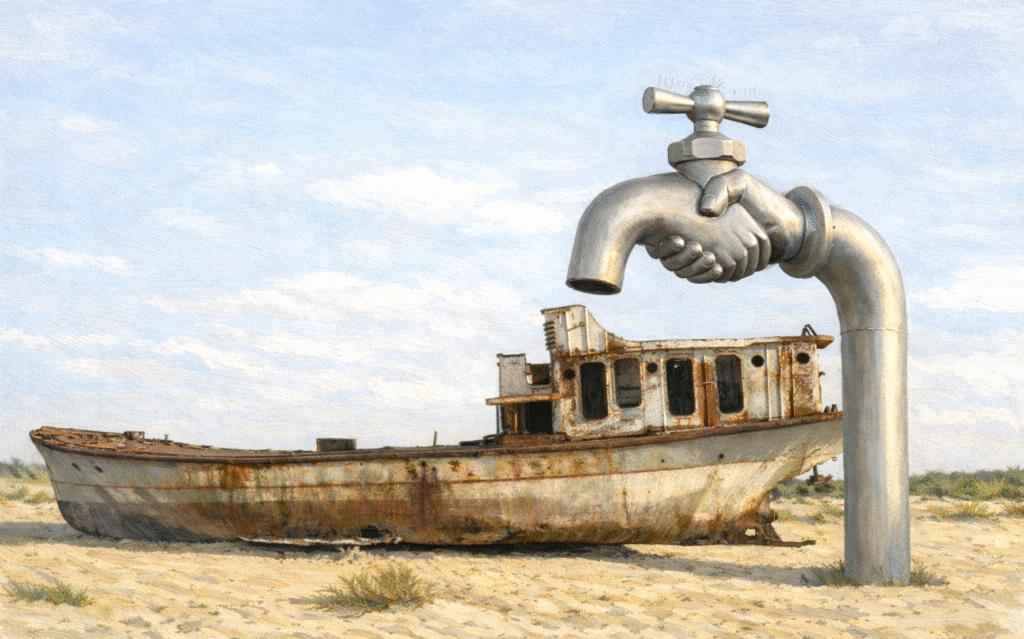
Water scarcity is rapidly transforming from a regional environmental concern into one of the defining global security challenges of the 21st century. UN-linked assessments estimate that around four billion people experience severe water scarcity for at least one month each year, and nearly three-quarters of the global population lives in countries facing water insecurity. Against this backdrop, Central Asia is not an exception but rather a concentrated example of global dynamics: climate pressure, population growth, and inefficient resource management. Regional initiatives, including proposals put forward by Kazakhstan, therefore have the potential to contribute not only to stability in Central Asia but to the development of a more coherent global water governance architecture. The Water Crisis as a Global Reality Water is increasingly regarded as a strategic resource on par with energy and food. Climate change is intensifying droughts, floods, and the degradation of aquatic ecosystems across all regions, from Africa and the Middle East to South Asia, Europe, and North America. Recent mapping and analysis by investigative groups and international media indicate that half of the world’s 100 largest cities experience high levels of water stress, with dozens classified as facing extremely high levels. Major urban centers, including Beijing, New York, Los Angeles, Rio de Janeiro, and Delhi, are among those under acute pressure, while cities such as London, Bangkok, and Jakarta are also categorized as highly stressed. In this context, Central Asia is not an outlier. It is confronting today what may soon become the global norm. Central Asia: Where Global Trends Converge A defining feature of the current environmental situation is that factors beyond natural ones drive the water crisis. Experts increasingly stress that shortages are often less about absolute physical scarcity and more about outdated management systems, infrastructure losses, and inefficient consumption patterns. In this respect, Central Asia can be seen as a testing ground for global water challenges, where multiple stress factors converge. The region, with mountain peaks exceeding 7,000 meters, contains some of the largest ice reserves outside the polar regions. The Pamir and Hindu Kush ranges, together with the Tibetan Plateau, the Himalayas, and the Tien Shan, form part of what is sometimes referred to as the “Third Pole,” the largest concentration of ice after the Arctic and Antarctic. [caption id="attachment_13410" align="aligncenter" width="2560"] The White Horse Pass, Tajikistan; image: TCA, Stephen M. Bland[/caption] However, the pace of change is alarming. By 2030-2040, water scarcity in Central Asia risks becoming chronic. Glaciers in the Western Tien Shan, for example, have reportedly shrunk by roughly 27% over the past two decades and continue to retreat, posing a direct threat to the flow of the Amu Darya and Syr Darya rivers. These rivers increasingly fail to reach the Aral Sea in sufficient volume, while the exposed seabed has become a major source of salt and dust storms. [caption id="attachment_21928" align="aligncenter" width="2560"] Moynaq, Karakalpakstan; image: TCA, Stephen M. Bland[/caption] Infrastructure inefficiencies compound the problem. Estimates suggest that in some systems, 40-50% of water can be lost in deteriorating...

Pamir Loses Its “Ice Shield”: Scientists Confirm End of Glacier Stability Anomaly

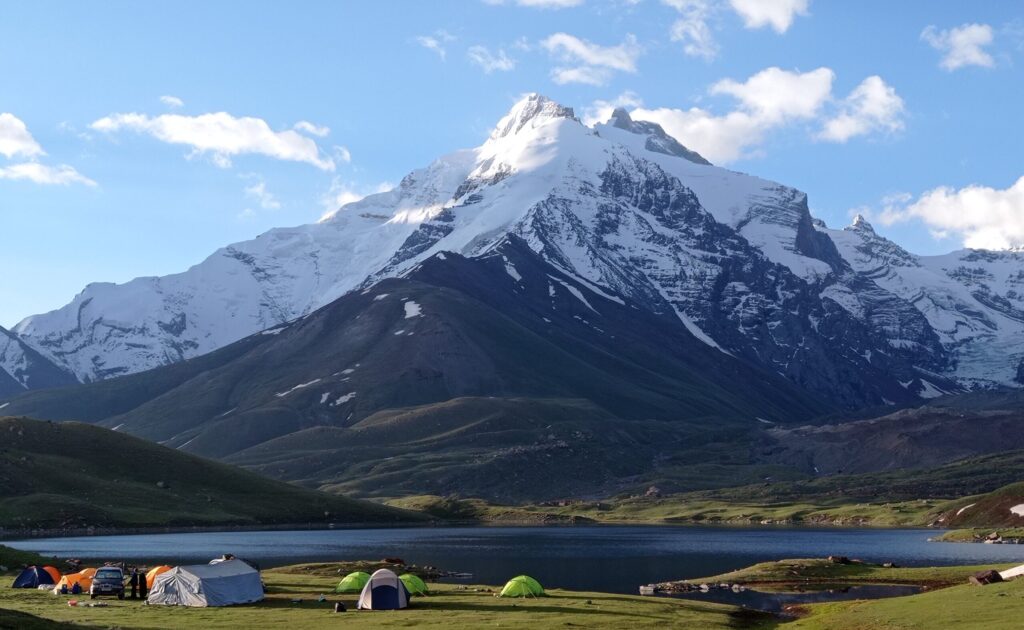
For years, the Pamir-Karakoram anomaly stood as a rare outlier in global climate trends: a region where glaciers remained relatively stable despite accelerating global warming. Now, new research from the Institute of Science and Technology Austria (ISTA) confirms that even these “last strongholds” have begun to lose mass at an alarming rate. Snow Deficit and Rising Heat Data collected from a climate monitoring station on the Kyzylsu glacier in the northwestern Pamirs, active from 1999 to 2023, reveals a sharp shift. According to an international research team led by Francesca Pelliccotti, the tipping point came in 2018, when a significant decline in snow cover and precipitation irreversibly altered the glaciers’ mass balance. Once past this "point of no return," glaciers began rapidly depleting their own reserves to compensate for the lack of new snowfall, a process accelerating their melt. Since 2018, the region has experienced a persistent snow deficit. Snow depth has fallen by approximately 40 cm, and annual precipitation has declined by 328 mm, about one-third of the historical average. Seasonal snow melts earlier, is less stable in spring, and is no longer sufficient to replenish glacier mass. July 2022 was the hottest month on record, and during this period, the Kyzylsu glacier recorded unprecedented mass loss, melting at a rate eight times faster than the 1999-2018 average. Scientists identify increasingly hot summers and a lack of precipitation as the primary causes. Even the intensified ice melt has not made up for reduced snowfall: water inflow into rivers dropped by roughly 189 mm in water equivalent. The contribution of glacial runoff to total river flow rose from 19% to 31%, but this increase was still insufficient to offset the overall decline in water volume. The situation is most severe at altitudes above 4,000 meters, where solid precipitation has declined sharply. Snow from avalanches, which previously helped sustain the glaciers, has dropped nearly threefold from 0.21 to 0.08 m per year. Implications for Central Asia Experts warn that this is not a localized issue. The Pamir and Karakoram glaciers feed the Amu Darya and Syr Darya rivers, lifelines for millions across Central Asia. Diminishing glacial mass threatens freshwater availability, agriculture, hydropower generation, and overall socio-economic stability. “Due to the lack of accurate forecasts, we cannot yet say definitively whether the Pamir glaciers have passed the point of no return. However, since 2018, the processes have changed dramatically, and the reduction in precipitation has had a critical impact on their stability,” said ISTA researcher Achille Joubert. Data Gaps and New Monitoring Efforts Following the collapse of the Soviet Union, glacier monitoring in the region was largely suspended for nearly two decades. Systematic observations resumed only in 2021, when international researchers reinstalled instruments on the Kyzylsu glacier, one of the Vakhsh River’s primary sources. These new measurements confirmed a drastic drop in precipitation and snow thickness starting in 2018, with consistently unfavorable conditions persisting since. Compared to the late 1990s, spring and summer snow now melts much faster, and the "cold reserves"...