
• KGS/USD = 0.01144 0%
  • KZT/USD = 0.00208 0%
  • TJS/USD = 0.10429 0.1%
  • UZS/USD = 0.00008 0%
  • TMT/USD = 0.28530 0%
  • KGS/USD = 0.01144 0%
  • KZT/USD = 0.00208 0%
  • TJS/USD = 0.10429 0.1%
  • UZS/USD = 0.00008 0%
  • TMT/USD = 0.28530 0%
  • KGS/USD = 0.01144 0%
  • KZT/USD = 0.00208 0%
  • TJS/USD = 0.10429 0.1%
  • UZS/USD = 0.00008 0%
  • TMT/USD = 0.28530 0%
  • KGS/USD = 0.01144 0%
  • KZT/USD = 0.00208 0%
  • TJS/USD = 0.10429 0.1%
  • UZS/USD = 0.00008 0%
  • TMT/USD = 0.28530 0%
  • KGS/USD = 0.01144 0%
  • KZT/USD = 0.00208 0%
  • TJS/USD = 0.10429 0.1%
  • UZS/USD = 0.00008 0%
  • TMT/USD = 0.28530 0%
  • KGS/USD = 0.01144 0%
  • KZT/USD = 0.00208 0%
  • TJS/USD = 0.10429 0.1%
  • UZS/USD = 0.00008 0%
  • TMT/USD = 0.28530 0%
  • KGS/USD = 0.01144 0%
  • KZT/USD = 0.00208 0%
  • TJS/USD = 0.10429 0.1%
  • UZS/USD = 0.00008 0%
  • TMT/USD = 0.28530 0%
  • KGS/USD = 0.01144 0%
  • KZT/USD = 0.00208 0%
  • TJS/USD = 0.10429 0.1%
  • UZS/USD = 0.00008 0%
  • TMT/USD = 0.28530 0%

Viewing results 1 - 6 of 145

Kazakhstan Weighs a Unicameral Future: Tokayev’s Call to Scrap the Senate

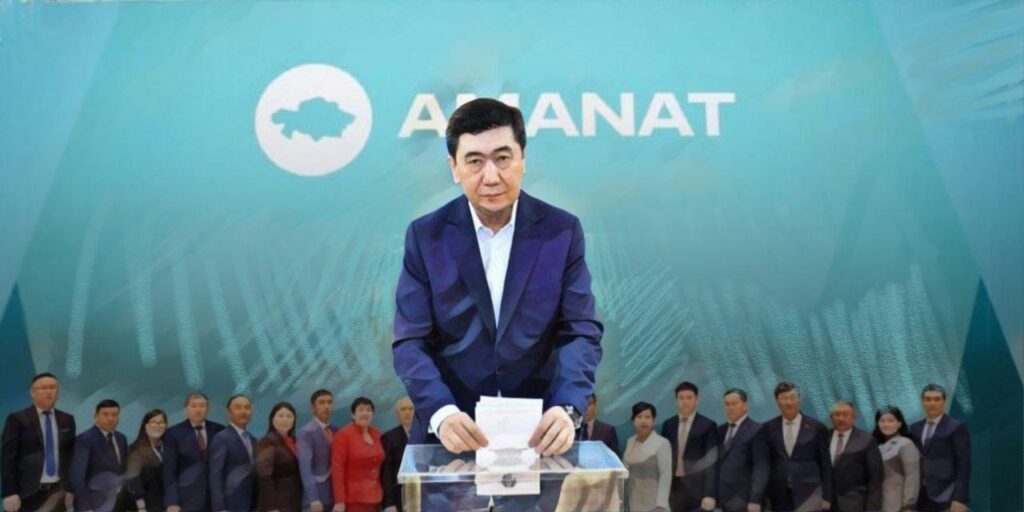
One of the most debated elements of President Kassym-Jomart Tokayev’s annual address to the nation was his proposal for sweeping parliamentary reform. Tokayev suggested a return to a unicameral legislature, mirroring the single-chamber Supreme Council of the early post-independence years. “I personally had the honor of leading the Senate for ten years, and I have always regarded this work as a great privilege and responsibility,” Tokayev stated. “That’s why it is not easy for me to speak about parliamentary reform from this podium. Nevertheless, today I propose that in the foreseeable future, Kazakhstan consider creating a unicameral Parliament.” Tokayev went on to propose holding a national referendum on the issue in 2027. From Supreme Council to Bicameralism: Lessons of a Political Crisis The Supreme Council of the 13th convocation, elected in March 1994, quickly fell into conflict with then-President Nursultan Nazarbayev. Citing a constitutional discrepancy, Nazarbayev dissolved the council in March 1995, leaving Kazakhstan without a legislative body until December of that year. Kazakhstan’s current bicameral system, comprising the Mazhilis (lower house) and the Senate (upper house), emerged as a response to that political crisis. Initially, the Mazhilis included both party-list and independent candidates, though the system later shifted toward proportional representation. In 2022, the mixed system was reinstated, allowing for majority candidates once again. The Senate, meanwhile, has historically served to counterbalance the more agile Mazhilis. Senators are chosen through regional maslikhat voting or appointed directly by the president, a practice introduced under Nazarbayev. Critics argue this has enabled the central government to neutralize local dissent or sideline bureaucrats by sending them to a largely ceremonial upper chamber. The Senate’s inertia became especially problematic during past confrontations between the executive branch and parts of the Mazhilis. In 2001-2002, then Prime Minister Tokayev even threatened to resign unless Nazarbayev dismissed several cabinet members linked to the reformist Democratic Choice of Kazakhstan (QDT). Facing mounting political pressure, Nazarbayev promptly removed officials, including Deputy Prime Minister Oraz Jandosov and Deputy Defense Minister Jannat Ertlesova, among others. That political standoff, clearly not forgotten by Tokayev, may explain his desire to simplify the legislative structure and reduce expenses tied to maintaining the Senate. Reform Proposal Met with Mixed Reactions Kazakh media and political experts were quick to weigh in on the announcement. Most agreed on two points: the Senate has long been criticized, and Tokayev remains committed to opening up major reforms to public debate. Still, the initial wave of enthusiasm quickly gave way to more cautious analyses. Political scientist Daniyar Ashimbayev expressed concerns on his Telegram channel about regional representation in a purely party-list system. He noted that bicameralism is not exclusive to federal states and pointed out that Kazakhstan’s diverse regions have varying interests requiring nuanced representation. According to Ashimbayev, the Senate has functioned as a "collective lobbyist" and as a "social elevator" for regional elites. Single-mandate deputies, he argued, have also served similar functions. This critique highlights a less-discussed element of Tokayev’s reform: eliminating majority-elected deputies, a key feature of the...

Kyrgyz Parliament Resumes Work After Summer Recess

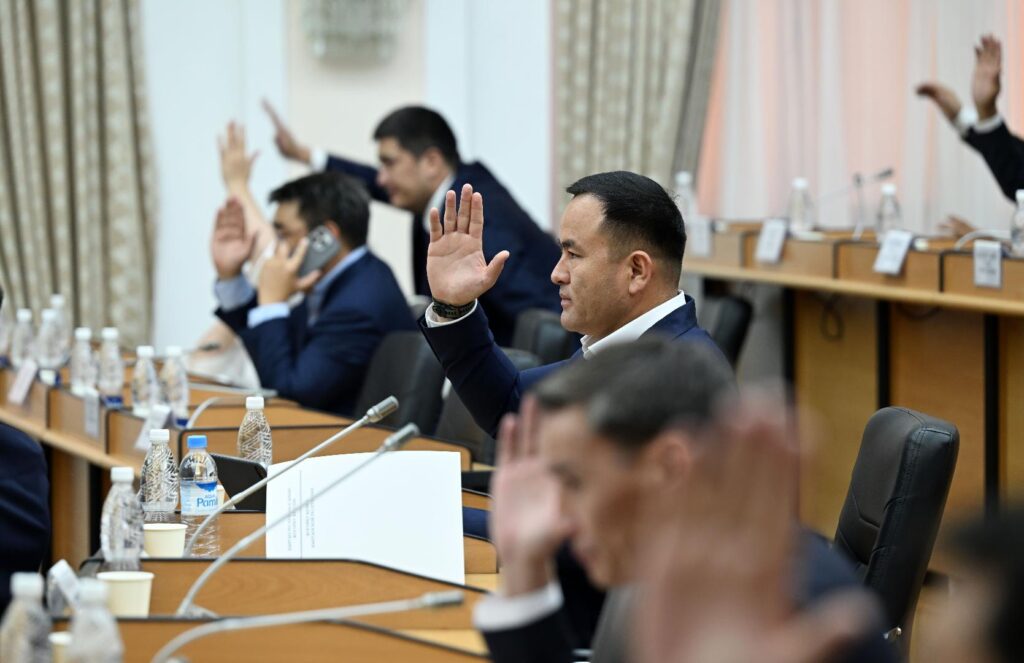
Members of Kyrgyzstan's parliament, the Jogorku Kenesh, have returned to work following a two-month summer recess, during which they engaged with constituents across the country. The new session began in the recently renovated parliament building, which reopened after three years of reconstruction. “I am confident that this chamber will make the right and fair decisions that our country needs,” said Speaker of Parliament Nurlanbek Turgunbek uulu. On the first day of the session, deputies approved the appointment of a new Minister of Labor, Social Security, and Migration. Lawmakers also proposed the establishment of a separate agency focused on migrant affairs, discussed a housing renovation initiative, and allocated additional funds for the CASA-1000 energy infrastructure project. Additionally, amendments to the Criminal Procedure Code were passed to strengthen protections for citizens during investigative procedures. However, some public expectations remain unmet, particularly concerning the discussion of pressing regional issues. Speculation about the early dissolution of parliament continues to circulate, though deputies have dismissed these claims. “This will only happen if parliament itself decides so,” said Deputy Mirlan Samykozho. Kyrgyzstan is scheduled to hold its next parliamentary elections next year.

Kyrgyzstan Parliament’s Secret Polygamy Law Repeal Blocked by President Japarov

On June 25, 2025, Kyrgyzstan’s parliament, the Jogorku Kenesh, voted to repeal Article 176 of the Criminal Code, which criminalizes polygamy. The initiative was debated behind closed doors, without public hearings, and only came to light after the bill was submitted to President Sadyr Japarov for approval. According to the presidential administration, Japarov returned the bill for further revision. Before doing so, he sought official assessments from several key state bodies, including the Ombudsman’s Office, the Prosecutor General’s Office, the National Agency for Religious Affairs, the National Academy of Sciences, the Ministry of Justice, and the Constitutional Court. These institutions concluded that the proposal was incompatible with Kyrgyzstan’s Constitution and its international commitments, including the Convention on the Elimination of All Forms of Discrimination against Women (CEDAW) and the Convention on the Rights of the Child (CRC). In an explanatory note, the president stated that retaining criminal liability for polygamy "demonstrates a commitment to the principles of gender equality and the rule of law, protects women and children from legal and social inequality, and contributes to strengthening the institution of the family.” Under the current law, polygamy in Kyrgyzstan is classified as a minor offense. It is punishable by a fine ranging from 50,000 to 100,000 KGS (approximately $570 - $1,140), and criminal proceedings can only be initiated at the request of the victim. The Family Code permits only one officially registered marriage, and the civil registry office is not authorized to record second or subsequent unions.

Tajikistan Announces Preliminary Parliamentary Election Results; OSCE Absent

Bakhtiyor Khudoyorzoda, the chairman of Tajikistan's Central Commission for Elections and Referenda (CCER), has announced the preliminary results of the March 2 parliamentary elections to the Assembly of Representatives. According to Khudoyorzoda, 4.71 million of the 5.52 million registered voters participated in the election, representing an 85.3% turnout. The election results for party-list voting were as follows: The People's Democratic Party of Tajikistan secured the most support, receiving 2,435,541 votes (51.9%). The Agrarian Party of Tajikistan garnered 986,887 votes (21%). The Economic Reform Party of Tajikistan received 595,281 votes (12.7%). The Socialist Party of Tajikistan obtained 248,064 votes (5.3%). The Democratic Party of Tajikistan received 237,536 votes (5.1%). The Communist Party of Tajikistan received 89,738 votes (1.9%), failing to meet the 5% threshold required for parliamentary representation. Additionally, 50,895 voters chose the "against all" option. As a result of the party-list vote count, the 22 parliamentary seats allocated through the national proportional system were distributed as follows: People's Democratic Party of Tajikistan - 12 seats Agrarian Party of Tajikistan - 5 seats Economic Reform Party of Tajikistan - 3 seats Socialist Party of Tajikistan - 1 seat Democratic Party of Tajikistan - 1 seat The Communist Party of Tajikistan did not secure any seats. In total, five of the six registered parties gained representation in the Majlisi Oli, Tajikistan’s parliament. The remaining parliamentary seats were allocated through single-mandate districts. On February 6, 2025, the OSCE/ODIHR canceled a planned election observer mission, stating that the Tajik authorities' failure to accredit the observers had "denied the people of Tajikistan an impartial and independent assessment of the elections." A mission from the Shanghai Cooperation Organization, meanwhile, characterized the election as "transparent, credible and democratic." In the latest presidential elections, held in 2020, incumbent Emomali Rahmon won a fifth consecutive term, securing a purported 92.08% of the vote. Rahmon has been president since 1994, having previously led the country as Chairman of the Supreme Assembly from 1992 to 1994. TCA has previously reported on long prison sentences for Tajik opposition figures. Elections to the National Assembly will be held on March 28, 2025.

Kyrgyzstan Proposes Salary Cuts for Underperforming Officials

The Kyrgyz presidential administration is developing new mechanisms to penalize officials for repeated disciplinary offenses, including salary reductions and forfeiture of bonuses. The initiative, aimed at improving accountability in the civil service, was announced by Azamat Osmonov, Head of the Department of Control of Execution of Decisions of the President and Cabinet of Ministers. According to Osmonov, 56 civil servants were disciplined in 2024 for misconduct. Among them: 7 officials, including akims (local governors), their deputies, and senior government officials, were dismissed. 27 officials, including one minister, received reprimands. 22 officials faced additional disciplinary actions. The presidential administration and the Cabinet of Ministers are set to convene a board meeting to review the performance of state agency heads for 2024. “Unfortunately, current regulations allow the same official to be reprimanded repeatedly without serious consequences. We intend to change this practice: if an official has already been disciplined, a repeated offense should lead to dismissal,” Osmonov stated. In addition to stricter dismissal policies, the government is considering financial penalties as an alternative punishment. “We are introducing the monetization of disciplinary measures: after receiving a reprimand, an official will be ineligible for bonuses, and their salary will be reduced. This should create additional motivation to comply with discipline,” Osmonov explained. The proposed mechanism is currently under development and will be integrated into the Code of Administrative Violations. Kyrgyzstan already enforces financial penalties for civil servants who fail to meet deadlines for addressing citizens' appeals. The current fine stands at 100 calculation indices (a fixed monetary unit used for penalties and state fees). “We will further refine this approach by drafting new legal regulations to enhance officials' accountability and improve the quality of work within state institutions,” Osmonov added.

U.S. Suspends Enforcement of Foreign Bribery Law: Should Kazakhstan Be Worried?

U.S. President Donald Trump has issued an executive order suspending enforcement of the Foreign Corrupt Practices Act (FCPA), effectively allowing U.S. companies to offer bribes to foreign officials and politicians. This decision is expected to prompt tighter scrutiny of potential corruption among officials in Kazakhstan. On February 12, 2025, Trump signed an executive order pausing enforcement of the FCPA, a landmark anti-bribery law that has regulated U.S. business practices abroad since 1977. The order directs the U.S. Department of Justice to suspend enforcement of the law, which previously criminalized bribery of foreign officials by American companies. Trump argued that the FCPA puts U.S. businesses at a competitive disadvantage internationally. “The law looks good on paper, but in practice, it's a disaster,” Trump stated, emphasizing that excessive regulatory oversight harms U.S. economic and national security interests. Under the FCPA, companies and individuals could face up to 15 years in prison and fines of up to $250,000 for offering or coordinating bribes. The law was enforced in 24 cases in 2024 and 17 cases in 2023. Trump’s executive order tasks the attorney general with reviewing the law’s provisions. U.S. companies have previously been linked to corruption scandals involving high-ranking Kazakhstani officials. The most infamous case, known as Kazakhgate, dates back to the late 1990s. American businessman James Giffen was accused of funneling tens of millions of dollars in bribes, along with luxury gifts, to secure access to Kazakhstan’s vast oil reserves. The investigation implicated former President Nursultan Nazarbayev and ex-Prime Minister Nurlan Balgimbayev, who allegedly received payments through offshore accounts in exchange for favorable investment conditions. However, Kazakhstani officials were never formally charged, and Giffen ultimately received a minor fine. In December 2024, Mazhilis deputy Yermurat Bapi warned that a similar scandal — dubbed Kazakhgate-2 — could soon unfold. “According to my information, a new grandiose scandal is brewing in the United States,” Bapi stated in an interview with Elmedia. “The U.S. Department of Justice is preparing a new criminal case against global kleptocrats who previously relied on American companies, insurers, and consultants. If they used these services, they will face prosecution.” Speculation surrounding Kazakhgate-2 intensified after Nazarbayev’s December 2024 trip to Moscow to meet with Russian President Vladimir Putin. However, Trump’s decree has now cast doubt on whether the case will proceed. Another major corruption-related dispute involving Kazakhstan is the Stati case. Since 2010, the Kazakhstani government has been embroiled in legal battles with Moldovan oligarchs Anatol and Gabriel Stati over the early termination of their subsoil use contracts. The dispute has led to litigation across multiple jurisdictions, including the U.S., U.K., and EU countries, with Kazakhstan's National Fund assets being temporarily frozen. Some sources suggest that Timur Kulibayev, Nazarbayev’s son-in-law, played a role in the case. Corruption concerns are not limited to Kazakhstan. In late January 2025, Russian Prime Minister Mikhail Mishustin publicly criticized Kyrgyz authorities for allegedly extorting Russian businesses operating in Kyrgyzstan. “We urge the Kyrgyz leadership to cease administrative pressure on our companies and ensure the protection...
