• KGS/USD = 0.01144 0%
  • KZT/USD = 0.00208 0%
  • TJS/USD = 0.10442 0.19%
  • UZS/USD = 0.00008 0%
  • TMT/USD = 0.28530 0%
  • KGS/USD = 0.01144 0%
  • KZT/USD = 0.00208 0%
  • TJS/USD = 0.10442 0.19%
  • UZS/USD = 0.00008 0%
  • TMT/USD = 0.28530 0%
  • KGS/USD = 0.01144 0%
  • KZT/USD = 0.00208 0%
  • TJS/USD = 0.10442 0.19%
  • UZS/USD = 0.00008 0%
  • TMT/USD = 0.28530 0%
  • KGS/USD = 0.01144 0%
  • KZT/USD = 0.00208 0%
  • TJS/USD = 0.10442 0.19%
  • UZS/USD = 0.00008 0%
  • TMT/USD = 0.28530 0%
  • KGS/USD = 0.01144 0%
  • KZT/USD = 0.00208 0%
  • TJS/USD = 0.10442 0.19%
  • UZS/USD = 0.00008 0%
  • TMT/USD = 0.28530 0%
  • KGS/USD = 0.01144 0%
  • KZT/USD = 0.00208 0%
  • TJS/USD = 0.10442 0.19%
  • UZS/USD = 0.00008 0%
  • TMT/USD = 0.28530 0%
  • KGS/USD = 0.01144 0%
  • KZT/USD = 0.00208 0%
  • TJS/USD = 0.10442 0.19%
  • UZS/USD = 0.00008 0%
  • TMT/USD = 0.28530 0%
  • KGS/USD = 0.01144 0%
  • KZT/USD = 0.00208 0%
  • TJS/USD = 0.10442 0.19%
  • UZS/USD = 0.00008 0%
  • TMT/USD = 0.28530 0%

Viewing results 1 - 6 of 145

Citizens of Kyrgyzstan Can Now Choose Traditional Surnames Under New Law

Kyrgyzstan’s parliament has approved a bill allowing citizens to adopt surname spellings that reflect national traditions and historical heritage, rather than the conventional Russian-style endings. The legislation passed its third and final reading. MP Mirlan Samyakozho, one of the bill’s authors, explained that the changes will allow citizens to choose surnames without Russian endings while retaining the option to keep them. According to amendments to the Family Code and the Law on Civil Status Acts, new naming formats can now be used in official documents. Specifically: The suffix "uulu" (meaning "son of") may be added to male names. The suffix "kyzy" (meaning "daughter of") may be used for female names. Other variations using the genitive and initial case endings will also be permitted, such as "dyn/tyn," "din/tin," "dүn/tүn" for boys and "dan/tan," "den/ten," "dөn/tөn" for girls. In these cases, a patronymic name will no longer be required. Under the new law, a name like Baktybekov Uson Zhakshylykovich could now be recorded as: Baktybekov tegi Uson Baktybektegi Uson Zhakshylyktyn Baktybek Uson Baktybek Uson Zhakshylyk uulu Similarly, Baktybektegi Nurgul Zhakshylykovna could now be recorded as: Baktybektegi Nurgul Baktybektegi Nurgul Zhakshylyktan Baktybek Nurgul Baktybek Nurgul Zhakshylyk kyzy Following Kyrgyzstan’s independence in the 1990s, many citizens adopted traditional Kyrgyz surnames incorporating "uulu" and "kyzy." However, in the 2000s, a mass return to Russian-style surnames occurred, which authorities attributed to increasing external migration. The new law is intended to restore the option for Kyrgyz citizens to preserve their historical naming traditions in official documents.

Abenov Among Kazakh Deputies Targeting Bride Kidnapping

Kazakhstani parliamentarian Murat Abenov has proposed introducing a specific article in the Criminal Code to criminalize bride theft, suggesting prison terms of up to ten years. While some lawmakers support his initiative, others believe existing laws are sufficient to address such crimes. Proposal to Address Bride Theft According to Abenov, three crimes against women have been recorded this year under Article 125 of the Criminal Code, which covers “Kidnapping.” However, Abenov believes the actual number of such cases is significantly higher. For instance, over the past three years, 214 women filed complaints related to bride theft, but only ten cases went to trial. Abenov has proposed a separate article in the Criminal Code to specifically address bride theft, with penalties designed to reflect the severity of the crime. His proposal includes: A minimum sentence of two years in prison or a fine of 2,000 monthly calculation indices (MCI), equivalent to 7.8 million KZT ($15,000), for kidnapping a woman to force her into marriage; If the abducted woman is under 18, if force is used, or if the crime involves multiple perpetrators, the penalty would increase to a fine of 5,000 MCI (19.6 million KZT or $37,800) or three to five years in prison; and In cases where unintentional harm to the victim’s health occurs during the abduction, the sentence could be up to ten years in prison. "If a woman is held against her will and subjected to psychological or physical pressure, the law must protect the victim," Abenov emphasized, confirming that the proposal has already been submitted to a working group for consideration. Debate Among Lawmakers This is not the first time the issue of bride theft has been raised in Kazakhstan’s parliament. In December 2023, another Mazhilis deputy, Yedil Zhanbyrshin, introduced a similar initiative, which was supported by Mazhilis Speaker Yerlan Koshanov. However, that proposal was not formalized into legislation. Some deputies argue that existing laws, such as Article 125, are sufficient. This article provides for imprisonment of four to seven years for kidnapping, regardless of the victim’s identity. "We already have articles in the Criminal Code addressing illegal detention and kidnapping. I’m not convinced we need to specify that it’s a fiancée. What’s the difference? Whether I kidnap a child, an adult, or a senior citizen, it is already a criminal offense," said MP Aidos Sarim. Bride Theft in Central Asia As The Times of Central Asia previously reported, 18 criminal cases of bride theft were initiated in Kazakhstan in 2023. Six of these cases occurred in the country’s largest city, Almaty, while one was recorded in the capital, Astana. Circumventing the bride price, alyp qashu – “take and flee” - is a ritual form of bride-snatching endemic throughout much of Central Asia. With the Soviets having destroyed swathes of local identity, debate rages as to the ethnographic roots of the practice, but what is certain is that it was on the increase in the 2010s. Most prevalent regionally in Kyrgyzstan, where it is known as Ala...

Kazakhstan’s Parliament Approves Regulations for the Central Asia International Industrial Cooperation Center with Uzbekistan

On February 5, the Mazhilis, the lower house of Kazakhstan’s parliament, approved an agreement between the governments of Kazakhstan and Uzbekistan on regulations for the Central Asia International Center for Industrial Cooperation. According to Kazakhstan’s Ministry of Trade and Integration, the industrial center will be built along the border of the two countries, near the Gulistan checkpoint in Uzbekistan and the Atameken checkpoint in Kazakhstan. The complex will include: Industrial production facilities Warehouses Transport infrastructure The center aims to: Accelerate cargo transportation Reduce logistics costs Streamline supply chains Lower product costs for consumers Enhance industrial cooperation between Kazakhstan and Uzbekistan as part of the North-South corridor Kazakhstan’s Minister of Trade and Integration, Arman Shakkaliyev, informed parliament that the industrial center will cover 100 hectares, with 50 hectares on each country’s side. Part of the center will receive regional industrial zone status. Construction is expected to be completed by the fourth quarter of 2026, with an official opening planned for the first half of 2027. Uzbekistan is one of Kazakhstan’s largest economic and trading partners, and both countries aim to increase bilateral trade to $10 billion annually in the medium term.

Criticism of Kazakhstan’s Health Insurance System Reaches Parliament

Members of Kazakhstan's Mazhilis (lower house of parliament) have voiced strong criticism of the country’s healthcare system, particularly the Social Health Insurance Fund, which they argue has lost public trust. Many citizens reportedly view the quality of medical services as unsatisfactory. Kazakhstan operates a system of compulsory social medical insurance, wherein doctors' services are funded through a combination of contributions from working citizens, their employers, and the state budget. These financial contributions are collected by the Social Health Insurance Fund, which then allocates the funds to medical institutions based on the volume of services provided to the population. Speaking in Parliament, Health Minister Akmaral Alnazarova defended the system, claiming that it has led to improvements in key health and demographic indicators since its introduction. “Today, 83% of Kazakhstanis are connected to the compulsory social health insurance system, 72% of whom are from vulnerable segments of the population. This demonstrates the availability of medical care in the country,” Alnazarova stated. However, Mazhilis Deputy Chairman Dania Yespayeva pointed out that despite increasing healthcare budgets, public satisfaction with medical services continues to decline. According to surveys, up to 47% of Kazakhstanis consider the quality of domestic healthcare to be poor. Deputy Askhat Aimagambetov echoed these concerns, accusing medical institutions of manipulating service statistics to secure additional funding from the Social Health Insurance Fund. He cited a case where a five-month-old child, who had not yet developed teeth, was recorded as having received dental services. Aimagambetov also claimed that hospitals sometimes charge the insurance fund for dozens of services provided to the same patient in a single day - an impossibility. “The financing system encourages such behavior because payments are based on the quantity of services rendered, not on the effectiveness of treatment. As a result, the [Social Health Insurance Fund] has become a de facto bank for the Ministry of Health. Citizens and doctors alike have become hostages of inconsistent and poorly planned reforms, while the availability and quality of care have deteriorated. The system remains underfunded, and the resources it does have are spent inefficiently,” Aimagambetov stated. He emphasized the need for stricter oversight of the reports submitted by medical institutions to the insurance fund for reimbursement. Currently, inspections cover only about 1% of these reports, a figure Aimagambetov described as insufficient. Public dissatisfaction with health care is also reflected in broader trends. As previously reported by The Times of Central Asia, approximately 5% of Kazakhstanis considering emigration cite access to better medical services abroad as a primary reason.

Kyrgyzstan to Ban Frog Imports to Combat Drug Trafficking

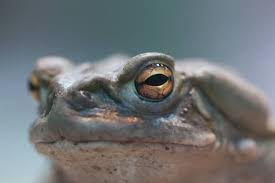
On January 23, Kyrgyzstan’s parliament discussed amendments to the law on combating the illicit trafficking of narcotics and psychotropic substances. Among the proposed changes is a ban on the import of frogs and toads, which can contain psychoactive substances. Psychoactive Risks of Amphibians During the parliamentary session, MP Iskhak Masaliyev questioned the use of the term “living organisms” in the text of the bill and asked for clarification. Deputy Health Minister Kaarmanbek Baidavletov explained that certain species of toads, whose skin and venom have narcotic effects, are prevalent in some countries. The amendment aims to prevent the import of such amphibians into Kyrgyzstan. Nurbek Abdiyev, Deputy Head of the Interior Ministry, elaborated that the term “living organisms” encompasses both plants and animals, including dried toads that are used as sources of banned substances. Unusual Laws and Global Context The bill’s sponsor, Meder Aliyev, referenced examples of foreign legislation to highlight the necessity of such laws, even if they may seem unusual. “For instance, in one U.S. state, teenagers are forbidden to kiss frogs because some frogs secrete psychoactive substances,” Aliyev said. While MP Iskhak Masaliyev supported the bill, he criticized its wording. “It turns out that now our young people are forbidden to kiss frogs! I’m not against this initiative, but it should have been analyzed in more detail when drafting. A frog is not just a living organism - it is an animal, an amphibian,” he said. The Danger of 5-MeO-DMT Some amphibians, such as the Bufo alvarius toad, secrete the psychoactive substance 5-MeO-DMT (5-methoxy-N,N-dimethyltryptamine). This powerful alkaloid, belonging to the class of tryptamines, can cause intense hallucinations, euphoria, and a sensation of warmth when its vapors are inhaled. The compound is known for its use in shamanic rituals in South America and poses risks of misuse in other contexts. Legislative Context The proposed amendment aims to address concerns about the potential for these amphibians, or their derivatives, to be trafficked for illegal drug use. By banning their import, Kyrgyzstan seeks to prevent the introduction of new psychoactive substances into the country, reinforcing its broader fight against drug trafficking. The debate over the bill underscores Kyrgyzstan's ongoing efforts to strengthen its drug policies while also illustrating the challenges of crafting precise legislative language. While some aspects of the law may seem peculiar, the government views it as a necessary step to curb the risks posed by psychoactive substances derived from amphibians.

Kyrgyz Deputy Maripov Proposes Moving Capital Away From Bishkek

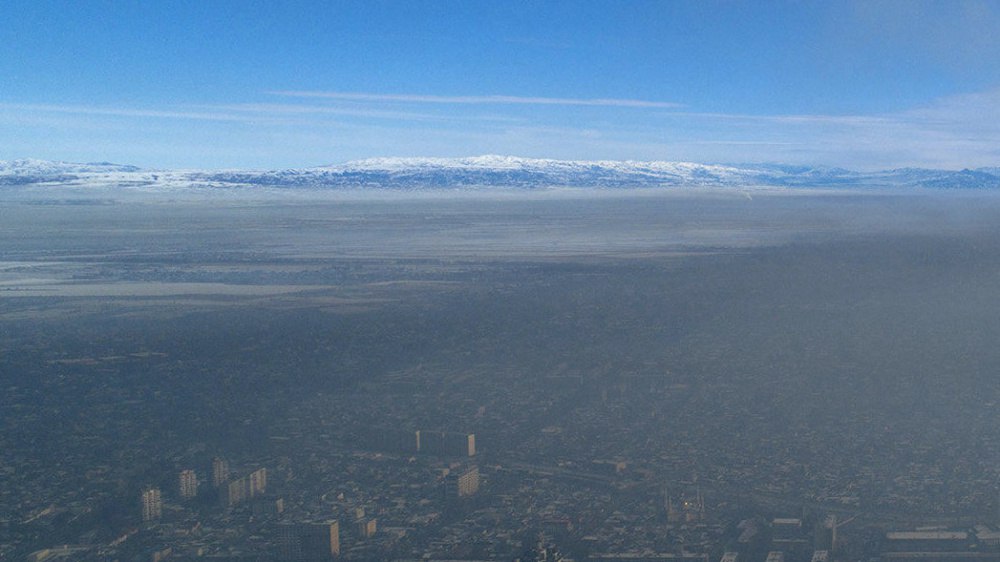
Jogorku Kenesh (Parliament) deputy Bakytbek Maripov has proposed moving Kyrgyzstan’s capital away from Bishkek, presenting the idea during a parliamentary session on January 22. Maripov argued that even radical measures to improve Bishkek’s infrastructure - such as reforming the city’s management system or developing transportation networks - would be insufficient to solve its persistent issues with smog and traffic congestion. The deputy suggested that relocating the capital could offer an effective long-term solution, particularly when viewed in the context of large-scale investment opportunities. He cited a comparison of major infrastructure costs: for instance, the construction of the planned city of Asman on the coast of Issyk-Kul is already drawing $10 billion in investments. Meanwhile, relocating Bishkek’s railroad infrastructure would cost $550 million, and building a ring road around the city would require approximately $1 billion. “If the capital were moved, the problems of traffic congestion and air pollution could be avoided,” Maripov emphasized. Although the proposal to move the capital remains at an early stage, it has sparked significant debate among lawmakers and the public. Bishkek’s Challenges: Traffic and Smog Bishkek is grappling with severe traffic congestion and air pollution, which are fueling calls for drastic action. According to data from the 2GIS navigation service, residents spent 777 hours stuck in traffic during July, August, and September of 2024. In October, congestion levels in the city reached nine out of 10 points. The primary factors contributing to traffic jams include a surge in the number of vehicles, insufficient road capacity, and inefficient traffic light management. The city’s air pollution problem is equally pressing. In November 2024, Bishkek ranked among the top 10 most polluted cities in the world. Key sources of pollution include emissions from motor vehicles, the use of low-quality fuels for heating private homes, and unfavorable meteorological conditions that trap pollutants. Government Efforts and Public Concerns Authorities have introduced several initiatives to address Bishkek’s environmental and transportation challenges. In January 2025, the Jogorku Kenesh discussed measures aimed at reducing smog and alleviating traffic congestion in both Bishkek and Osh. However, despite ongoing efforts, the situation remains critical, underscoring the need for a comprehensive and systemic approach to improving urban infrastructure and environmental conditions. While the idea of relocating Kyrgyzstan’s capital is far from finalized, it has already opened up discussions about long-term solutions to Bishkek’s chronic problems. For now, the debate continues as the city’s residents and lawmakers consider the potential benefits and challenges of such a monumental shift.