Pasture Gives Way to Solar Power in Uzbekistan as Audit Remains Unpublished
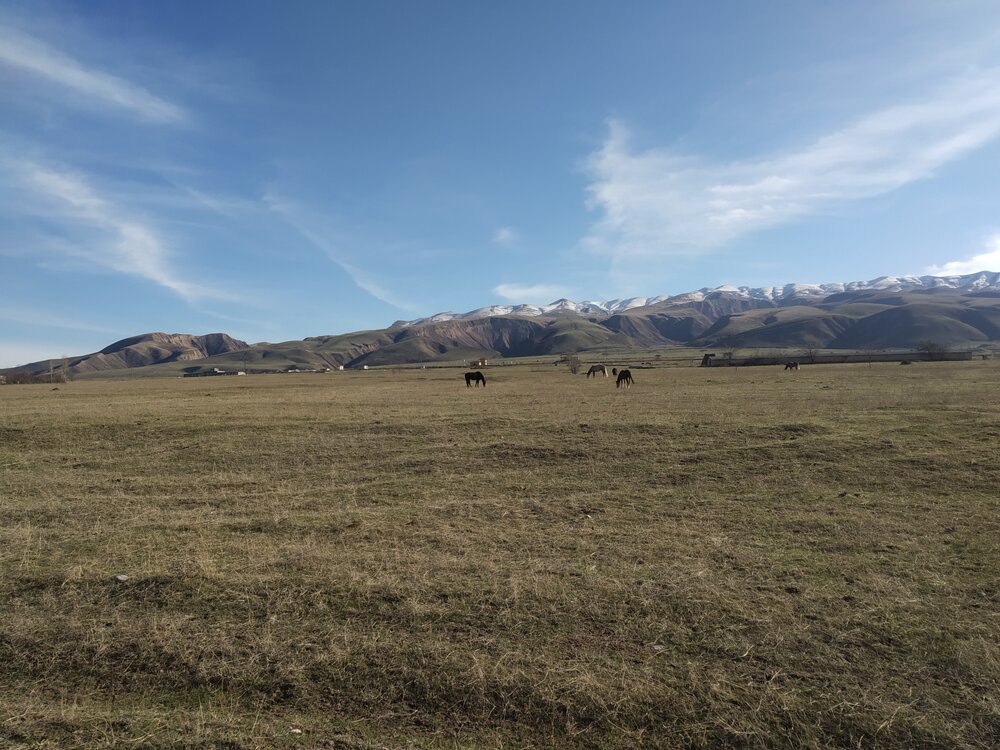
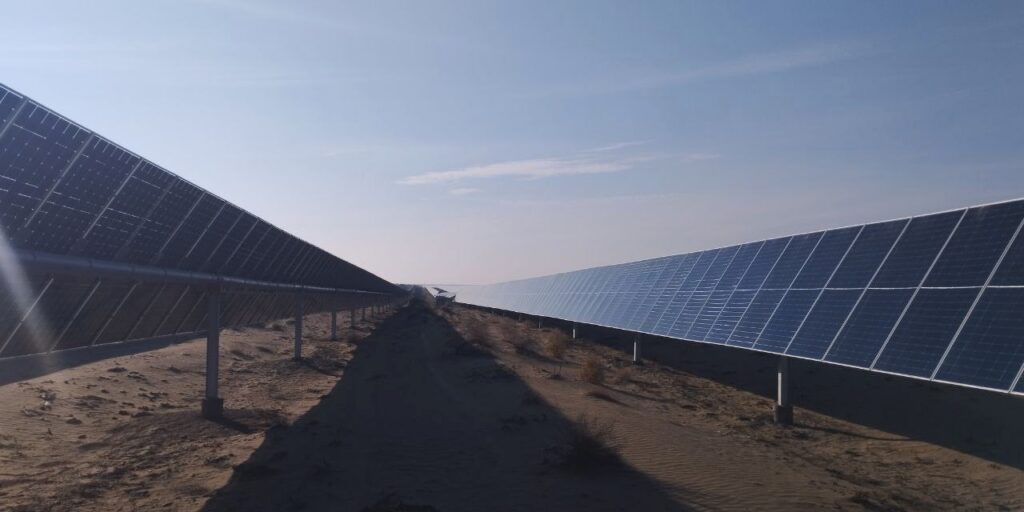
Each spring, nine households grazed livestock on a stretch of desert pasture in Uzbekistan’s Bukhara Region. The land is now the site of the Nur Bukhara solar and battery plant, but an audit intended to show whether promised livelihood protections worked remains unpublished. Seven of the households came from the nearby settlement of Kirilishon and used the state-owned pasture without permits or formal agreements. A herder and his partner, identified publicly only as H1 and H2, grazed animals there through a short-term agreement with Alat Qorakolchilik LLC, a local livestock company holding a sublease on the land. The nine households included 43 people. The plant began operating in September 2025 and was inaugurated that December. The Uzbek government awarded the project to Masdar, an Abu Dhabi-based renewable energy developer that built the facility and now operates it. Nur Bukhara combines a 250-megawatt solar plant with a 63-megawatt battery system capable of storing 126 megawatt-hours of electricity. Masdar says it can supply more than 55,000 homes, while the World Bank described it as Central Asia’s first utility-scale renewable energy project to combine solar generation with battery storage. During a consultation on May 7, 2023, Kirilishon residents asked for the solar plant to be moved. If construction went ahead, they wanted replacement grazing land near the village and priority consideration for project jobs. H1 and H2 had a documented right to use the pasture, while the seven Kirilishon households did not. However, the safeguards required by Nur Bukhara’s international lenders covered both formal and informal users whose livelihoods would be disrupted by the project. Masdar commissioned a livelihood restoration plan setting out the assistance the households were to receive before construction cut off access to the site. It identified about 260 hectares of replacement pasture, equivalent to one square mile, for H1 and H2. Alat Qorakolchilik also identified approximately 1,000 hectares, or 3.9 square miles, of additional land available to herders. The seven informal households were to be allowed to use replacement pasture without obtaining formal agreements. The larger tract was not described as land reserved exclusively for those households. The published map did not record which final area each household would receive. The livelihood measures also included priority access to project employment and additional support for households considered vulnerable. In an official statement to The Times of Central Asia, a Masdar spokesperson said replacement grazing arrangements were provided before access to the project site was restricted, “maintaining equivalent grazing conditions,” and that “several members of affected households obtained project-related employment opportunities.” The statement cited monitoring by international lenders and an independent third-party review, with the completion audit finalized in September 2025. It reported no related complaints from affected households through the project’s grievance mechanism. The completion audit was not included with Masdar’s response. As of August 20, 2026, it was also absent from Masdar’s Nur Bukhara page and the International Finance Corporation’s project disclosure. Simonyan Consulting, which says it was engaged by the project company to conduct the audit, lists the assignment as “2025–ongoing.” Without the audit,...