• KGS/USD = 0.01144 0%
  • KZT/USD = 0.00202 0%
  • TJS/USD = 0.10676 -0.09%
  • UZS/USD = 0.00008 0%
  • TMT/USD = 0.28530 0%
  • KGS/USD = 0.01144 0%
  • KZT/USD = 0.00202 0%
  • TJS/USD = 0.10676 -0.09%
  • UZS/USD = 0.00008 0%
  • TMT/USD = 0.28530 0%
  • KGS/USD = 0.01144 0%
  • KZT/USD = 0.00202 0%
  • TJS/USD = 0.10676 -0.09%
  • UZS/USD = 0.00008 0%
  • TMT/USD = 0.28530 0%
  • KGS/USD = 0.01144 0%
  • KZT/USD = 0.00202 0%
  • TJS/USD = 0.10676 -0.09%
  • UZS/USD = 0.00008 0%
  • TMT/USD = 0.28530 0%
  • KGS/USD = 0.01144 0%
  • KZT/USD = 0.00202 0%
  • TJS/USD = 0.10676 -0.09%
  • UZS/USD = 0.00008 0%
  • TMT/USD = 0.28530 0%
  • KGS/USD = 0.01144 0%
  • KZT/USD = 0.00202 0%
  • TJS/USD = 0.10676 -0.09%
  • UZS/USD = 0.00008 0%
  • TMT/USD = 0.28530 0%
  • KGS/USD = 0.01144 0%
  • KZT/USD = 0.00202 0%
  • TJS/USD = 0.10676 -0.09%
  • UZS/USD = 0.00008 0%
  • TMT/USD = 0.28530 0%
  • KGS/USD = 0.01144 0%
  • KZT/USD = 0.00202 0%
  • TJS/USD = 0.10676 -0.09%
  • UZS/USD = 0.00008 0%
  • TMT/USD = 0.28530 0%
06 February 2026

Viewing results 1 - 6 of 8

Opinion: After the UN Gaza Resolution – Kazakhstan’s Potential Role

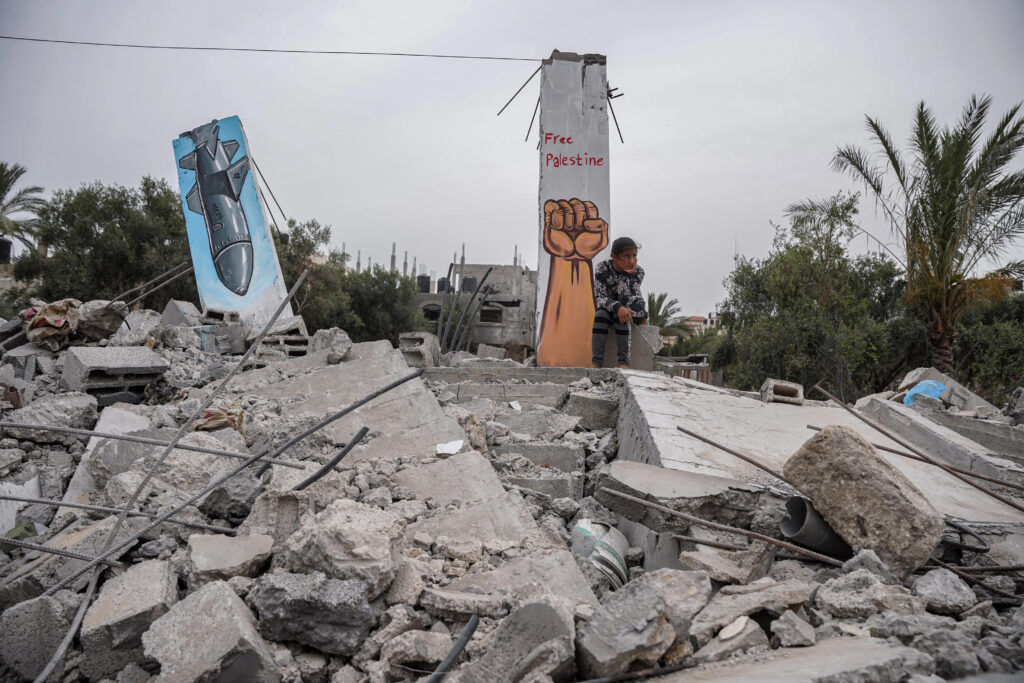
The implementation of any new approaches aimed at a rapid, peaceful resolution of the Middle East conflict, including the latest UN Security Council resolution, which authorizes the deployment of International Stabilization Forces (ISF), shows that the international community is once again reaching the limits of tools that rely solely on security measures, temporary control, and external administration. Even the most carefully calibrated political or administrative frameworks cannot produce sustainable results unless the ideological nature of the conflict, including its spiritual, historical, and value-based foundations, is changed. It is increasingly clear today that peace in the Holy Land requires not only diplomatic and humanitarian efforts, but also a deep dialogue between the religious and civilizational traditions of the region. In this context, the experience of Kazakhstan, which initiated the creation of a unique collective mechanism for religious reconciliation, deserves particular attention. After lengthy discussions, the UN Security Council approved the U.S.-proposed resolution to form an international stabilization force in Gaza. That means authorizing external actors - for the first time through a UN-mandated transitional authority - to participate in Gaza’s administrative and security arrangements. Thirteen countries supported the resolution, with only Russia and China abstaining. This step creates a new legal reality: the international community now holds a formal mandate to support Gaza’s security, humanitarian access, and reconstruction. Yet the resolution raises another question: will this become the foundation for lasting peace, or merely another temporary structure that keeps the situation under control without changing its essence? The U.S.-Israeli planning model - widely discussed in reporting - proposing dividing Gaza into "green" and "red" zones, reflects an approach in which security replaces reconciliation. Historical cases, such as Bosnia and Lebanon, suggest to many analysts that such strategies rarely lead to sustainable stability. Territorial divisions, from Bosnia to Lebanon, tend to freeze conflicts rather than resolve them. The Palestinian enclave risks becoming an example of a “permanent transitional zone,” where military stability exists without political resolution or trust. In the future, a divided Gaza could face humanitarian collapse, intensified radicalization, and deep fractures in how the Islamic world perceives the West, especially if European troops are deployed. All this underscores a key point: without addressing the ideological and religious dimensions of the conflict - as many experts argue - territorial schemes remain temporary. The conflict in the Holy Land cannot be resolved solely with demarcation maps and international mandates. Breaking the deadlock requires more than another control mechanism; it requires a new architecture of reconciliation. And it must engage the roots of the conflict, including religious thinking, historical grievances, and cultural trauma, rather than its surface-level manifestations. Kazakhstan can play a unique role here. It is not just a new participant in the Abraham Accords, but a country with remarkable political, diplomatic, and spiritual legitimacy. It enjoys the trust of the Islamic world, maintains stable relations with Israel, is perceived by the West as a neutral partner, and has a successful record of coordinating great-power and regional actor efforts, such as the Astana process on...

Despite War’s Challenges, Kazakhstan Says Trump-Putin Meeting Was “The Beginning”

Kazakhstan has praised Russian President Vladimir Putin and U.S. President Donald Trump for their meeting in Alaska, describing it as “the beginning of high-level negotiations on the situation in Ukraine.” President Kassym-Jomart Tokayev “regards the summit as a historic event, made possible by the political will and sincere determination of both leaders to seek common approaches to resolving contemporary global challenges, including the cessation of hostilities in Ukraine,” Tokayev´s press secretary, Ruslan Zheldibay, said on X on Saturday. Tokayev’s statement generally aligned with the positive statements made by Putin and Trump after their meeting on Friday, even though the two leaders provided few details about how they envisioned resolving the conflict when they spoke briefly to the media after their discussion. Ukraine and its European allies have been concerned that Trump could favor Putin’s terms for ending the war, leaving Ukraine vulnerable to renewed Russian pressure in the future. Ukrainian President Volodymyr Zelenskyy is expected to meet Trump at the White House on Monday. In a Truth Social post on Saturday, Trump appeared to back away from his previous demand for a Ukraine-supported ceasefire, saying it was better to “go directly to a Peace Agreement, which would end the war, and not a mere Ceasefire Agreement, which often times do not hold up.” Despite their concerns, European leaders have welcomed Trump’s negotiation efforts, noting a statement by the U.S. president that the United States “is prepared to give security guarantees” so that Ukraine can defend its sovereignty. “It will be up to Ukraine to make decisions on its territory. International borders must not be changed by force,” a joint statement by European leaders said. Kazakhstan is not directly involved in negotiations over Ukraine, but it has become an intermittent venue for international diplomacy and has offered to assist as needed since it maintains ties with both Russia and Ukraine. Tokayev has spoken in support of Ukraine’s sovereignty and territorial integrity. But in a phone call a week ago, Tokayev told Zelenskyy that “A bad peace is better than a good war,” possibly a pitch to the Ukrainian leader to consider concessions such as giving up territory in order to preserve the country’s independence. Russia occupies an estimated 20% of Ukraine and has made gains in eastern Ukraine in recent days. At least publicly, Zelenskyy has opposed the idea of giving up territory, saying the Ukrainian constitution prevents him from doing so. On Saturday, he said on X: “A real peace must be achieved, one that will be lasting, not just another pause between Russian invasions.” Kazakhstan, which has sought neutrality over the war, shares a long land border with Russia and has closer trade and diplomatic ties with Moscow than Kyiv. Since Russia’s full-scale invasion of Ukraine in February 2022, Tokayev has spoken to Zelenskyy several times in phone calls that, according to Kazakhstan’s presidency, were initiated by the Ukrainian side. Tokayev has spoken to Putin by phone on more than twice as many occasions and has also met the Russian...

Trump-Putin Alaska Summit Ends Without Ceasefire

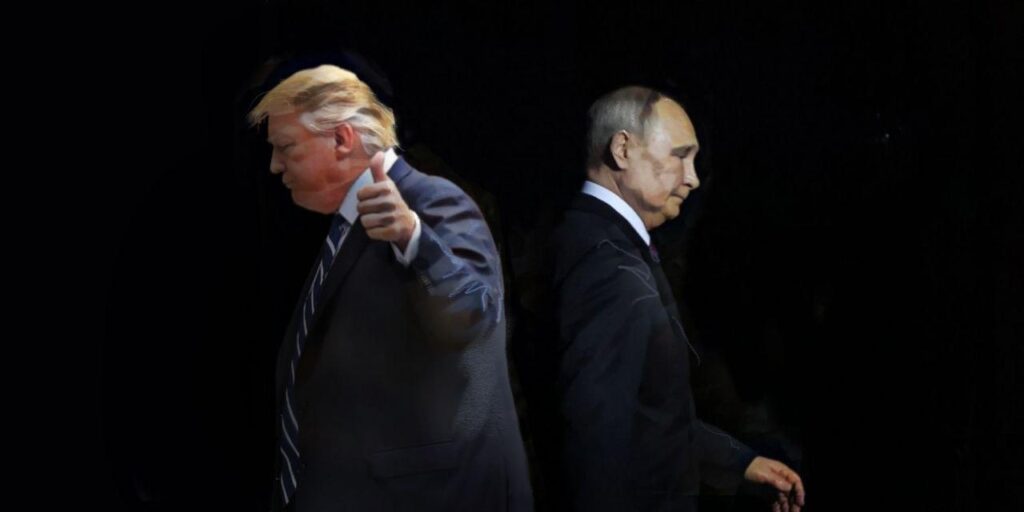
U.S. President Donald Trump and Russian President Vladimir Putin met on Friday in Alaska for their first face-to-face summit since the start of the Ukraine war. Despite optimism from the U.S. side, the talks ended without an agreement on a ceasefire. The leaders met for nearly three hours at Joint Base Elmendorf-Richardson in Anchorage, following a red-carpet welcome and military flyover. Only a handful of aides joined the private session. Afterward, Trump called the exchange “extremely productive” and said “some headway” had been made, but stressed that “there’s no deal until there’s a deal.” Putin described “progress” and “agreements,” though neither leader offered specifics, and neither took questions. No Ceasefire, Continued Dialogue Ending Russia’s invasion of Ukraine dominated the agenda. Trump had vowed to bring the war to a close quickly, but the Alaska talks produced no ceasefire. Ukrainian officials noted that Putin appeared to have “bought more time” as fighting continues. Air raid sirens sounded in Ukraine, and Russian border regions came under drone attack even as the summit unfolded. Having previously said on the way to his summit with Russian President Vladimir Putin that he wouldn’t “be happy if I walk away without some form of a ceasefire,” U.S. President Donald Trump walked away from the talks with no agreement in place, instead urging Ukrainian President Volodymyr Zelenskyy to “make a deal.” “I believe we had a very productive meeting,” Trump stated. “There were many, many points that we agreed on… I will call up NATO… I’ll of course call up President Zelenskyy and tell him about today’s meeting… We really made some great progress… I’ve always had a fantastic relationship with President Putin – with Vladimir…We were interfered with by the ‘Russia, Russia, Russia’ hoax,” he added. “Again, Mr. President, I’d like to thank you very much, and we’ll speak to you very soon and probably see you again very soon,” Trump said. “Thank you very much, Vladimir.” “Next time in Moscow,” Putin replied, chuckling, with a rare use of English, before Trump abruptly ended his press event, refusing to take any questions. Both leaders said the dialogue would continue. Trump claimed he and Putin agreed on “most things” and floated the idea of joining a future meeting between Putin and Ukrainian President Volodymyr Zelenskyy. Putin, while not referencing direct talks with Kyiv, urged Ukraine and its allies not to “derail” what he called constructive progress. Signals from Washington and Moscow Trump emphasized his desire to stop the fighting, stating, “I want the killing to stop,” and suggested he believed Putin wanted peace as well. He also said he would hold off on imposing new “severe” measures on Russia, a shift from earlier rhetoric. Trump also revealed that he would pause plans to levy tariffs on Chinese imports over Beijing’s purchases of Russian oil, saying progress in Alaska made that step unnecessary for now. Putin, meanwhile, repeated his long-standing demands that NATO expansion and other “root causes” be addressed before peace can be achieved. He warned that...

Trump–Putin Talks in Alaska: What Could They Mean for Central Asia?

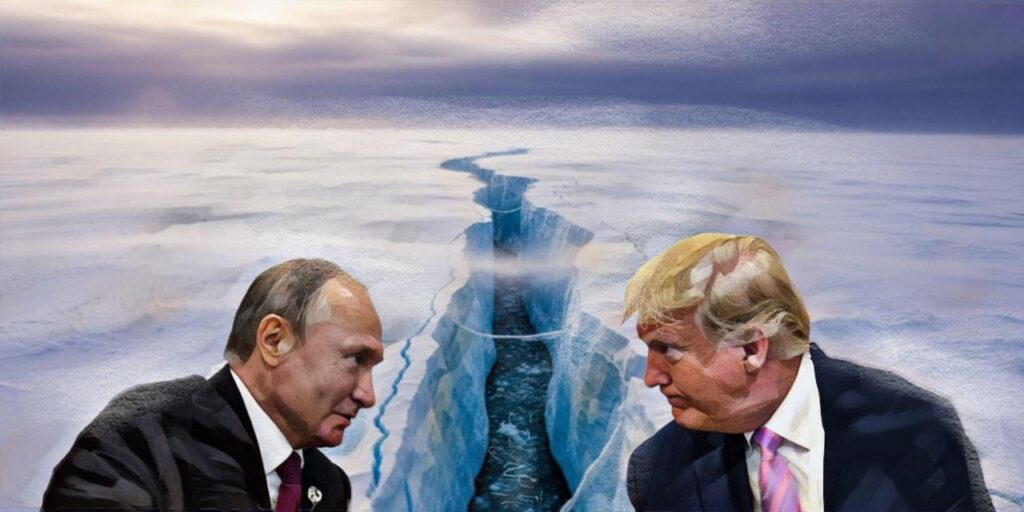
As U.S. President Donald Trump prepares to meet Russian President Vladimir Putin at the Joint Base Elmendorf-Richardson, located just outside of Anchorage, Alaska, hopes and anxieties are reverberating across Central Asia. Trump has signaled that securing a ceasefire in Ukraine is his top priority, warning of “very severe consequences” for Moscow if Putin refuses to halt the war. For the five former Soviet republics of Central Asia, these peace talks carry high stakes. Any truce or breakdown could ripple into their economies and strategic calculus. The war has already fundamentally changed Central Asia’s strategic positioning, accelerating diversification away from Russian dependence. With Trump and Putin poised to negotiate, Central Asian leaders are mindful that all possible outcomes - a ceasefire, a prolonged conflict, or a major power realignment - could each reshape the region’s economic fortunes and foreign policy choices. Central Asian Stances on the Ukraine War All five Central Asian governments have officially maintained neutrality on the Ukraine conflict. On the first UN General Assembly resolution of March 2, 2022, Kazakhstan, Kyrgyzstan, and Tajikistan abstained, while Uzbekistan and Turkmenistan did not vote. On subsequent resolutions, Uzbekistan abstained alongside Kazakhstan, Kyrgyzstan, and Tajikistan; Turkmenistan continued not to vote. None has recognized Russia’s claims to Ukrainian territory. Seated beside Putin at a plenary session of the St. Petersburg International Economic Forum in June 2022, referring to them as “quasi-state territories,” President Kassym-Jomart Tokayev of Kazakhstan refused to recognize the independence of the so-called Donetsk and Lugansk People’s Republics. “Modern international law is the United Nations Charter,” Tokayev stated. Despite maintaining ties with Russia, Kazakhstan has boosted its engagement with China, Turkey, and Europe during the conflict. Whilst publicly affirming that it will comply with Western sanctions on Russia, Kazakhstan has stated that it will continue to prioritize its economic interests, vowing not to “blindly follow” such measures when they harm its domestic industries. “Kazakhstan will continue to comply with the sanctions but will pursue a balanced policy to minimize the impact on its own economy,” Deputy Prime Minister Serik Zhumangarin said in August 2024. Uzbekistan has adopted a similar “balanced and neutral” approach to the war in Ukraine. In March 2022, then-Foreign Minister Abdulaziz Kamilov stated that Uzbekistan “recognizes the independence, sovereignty and territorial integrity of Ukraine, and does not recognize the Luhansk and Donetsk People’s Republics.” Despite Kamilov leaving his position shortly after making this statement, the nation’s position appears largely unchanged. Calling for an immediate end to “hostilities and violence,” Tashkent has expanded links with Turkey, China, and the EU. According to a U.S. State Department report from 2024, “Uzbekistan formally committed to adhering to U.S. and EU sanctions and trade restrictions on Russia.” Kyrgyzstan has continued to maintain a close economic relationship with Moscow while abstaining from all key United Nations resolutions concerning the Ukraine war. President Sadyr Japarov has said the country “adheres to a neutral position” and that exports to Russia are civilian in nature. In January 2025, Kyrgyzstan’s Keremet Bank was designated by the U.S....

Armenia, Azerbaijan Invited to Sign Peace Deal in Kyrgyzstan

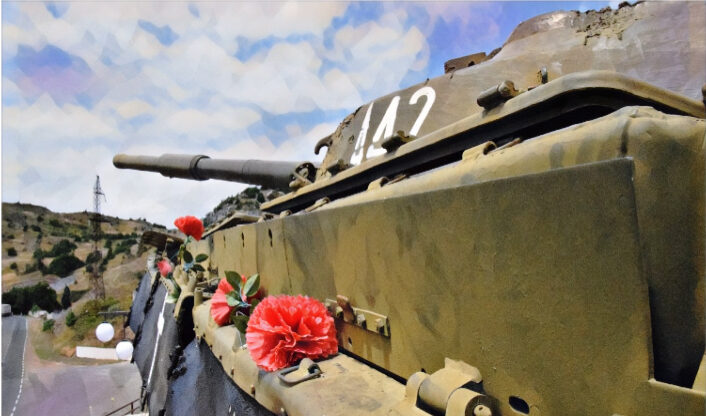
Kyrgyzstan has offered to host the signing of a peace agreement between Armenia and Azerbaijan, though tensions persist between the two longtime adversaries and a date for signing has not been set. Nurlanbek Turgunbek uulu, the parliamentary speaker of Kyrgyzstan, made the offer during a meeting in Armenia with Alen Simonyan, leader of that country’s National Assembly. The news was reported on Monday by Aravot, a publication based in Armenia. “Alen Simonyan touched upon the already completed draft of the Peace Agreement between Armenia and Azerbaijan, mentioning that the Armenian side is ready to sign it,” Aravot reported. “In response to this, the Head of the Kyrgyz Parliament noted that Kyrgyzstan is ready to provide a platform for the signing” of the peace deal. Kyrgyzstan’s parliamentary speaker was accompanied by several other parliamentarians on the May 25-27 trip to Armenia. Armenia and Azerbaijan said in March that they had agreed on the text of a peace deal after decades of conflict and Azerbaijan´s military seizure of the disputed Nagorno-Karabakh region in 2023. However, Azerbaijan says Armenia must change its constitution to remove language that allegedly lays claim to Azerbaijani territory, while Armenia says Azerbaijan is using the issue as an excuse to undermine the peace deal. Kazakhstan has also sought to assist in peace efforts between Armenia and Azerbaijan, hosting a meeting of the foreign ministers of the two rivals in Almaty last year.

Opinion: The Ukraine-Russia Peace Talks Need Multiple Platforms for Negotiations

The proposed Istanbul meeting between Zelensky and Putin on May 15 did not take place, with no Russian ministers attending the talks Putin himself had called for, leading Zelensky to describe the Russian delegation as "phony". Hopes for peace remain, however, as other stakeholders have expressed their eagerness to support a resolution. With its unique geopolitical position as a bridge between Europe and Asia, Turkey was an obvious choice to host the negotiations. While Turkey has sought to maintain balanced relations throughout the conflict, its provision of military support to Ukraine, including drones, has complicated its image as a neutral party. Despite this, as a NATO member with significant energy partnerships with Russia, Turkey serves as a crucial intermediary. Furthermore, its active role in initiatives like the Black Sea Grain Agreement has reinforced its credibility in international diplomacy. Turkey’s continued involvement, therefore, benefits not only the peace process but also its own economic and strategic interests. Turkey is not the only stakeholder on the periphery of Russia, however; Kazakhstan is also well-positioned to contribute to the peace negotiations. Kazakhstan’s shared history with Russia and Ukraine as former Soviet republics has shaped mutual economic and security frameworks, rooted in decades of centralized governance and cooperation. The continued use of the Russian language as one medium of communication across these nations underscores intertwined cultural and historical links. Kazakhstan’s relationship with Russia spans centuries, marked by alliances, trade, and cultural exchange, further deepening ties beyond the Soviet era. In recent years, Kazakhstan has diversified its alliances through its multi-vector foreign policy. It has forged strong relationships with China, the U.S., the EU, and organizations like the SCO and EAEU while cultivating robust economic ties. Its energy sector has attracted major foreign investors such as Chevron, ExxonMobil, and Shell. By hosting peace talks and global summits, Kazakhstan has established itself as a neutral mediator, balancing traditional ties with Russia while expanding its global influence. Kazakhstan also has an impressive record in terms of peace negotiations. President Kassym-Jomart Tokayev hosted pivotal talks in Almaty in 2024 between Armenia and Azerbaijan, addressing over three decades of conflict in Nagorno-Karabakh. Kazakhstan also played a key role in facilitating the 2018 agreement on the Caspian Sea’s legal status, which resolved disputes over resources and territorial boundaries. The country hosted multiple rounds of Syrian peace talks starting in Astana in 2017, bringing together the Syrian government, opposition groups, and international stakeholders, including Russia and Turkey. Similarly, it provided a platform for the Iran nuclear talks in 2013 and supported the 2015 Iran nuclear deal. Kazakhstan’s neutrality and commitment to diplomacy have earned it credibility as a Middle Power in fostering agreements on contentious issues. Additionally, Kazakhstan hosted the 2010 OSCE Summit that led to the adoption of the Astana Declaration. This reaffirmed the Helsinki Principles on peace, security, and cooperation from Vancouver to Vladivostok. It represented a critical collective commitment to territorial integrity, sovereignty, and human rights since the dissolution of the USSR. The summit underscored Kazakhstan’s role in...