• KGS/USD = 0.01144 0%
  • KZT/USD = 0.00218 0%
  • TJS/USD = 0.10610 -0.09%
  • UZS/USD = 0.00008 0%
  • TMT/USD = 0.28530 0%
  • KGS/USD = 0.01144 0%
  • KZT/USD = 0.00218 0%
  • TJS/USD = 0.10610 -0.09%
  • UZS/USD = 0.00008 0%
  • TMT/USD = 0.28530 0%
  • KGS/USD = 0.01144 0%
  • KZT/USD = 0.00218 0%
  • TJS/USD = 0.10610 -0.09%
  • UZS/USD = 0.00008 0%
  • TMT/USD = 0.28530 0%
  • KGS/USD = 0.01144 0%
  • KZT/USD = 0.00218 0%
  • TJS/USD = 0.10610 -0.09%
  • UZS/USD = 0.00008 0%
  • TMT/USD = 0.28530 0%
  • KGS/USD = 0.01144 0%
  • KZT/USD = 0.00218 0%
  • TJS/USD = 0.10610 -0.09%
  • UZS/USD = 0.00008 0%
  • TMT/USD = 0.28530 0%
  • KGS/USD = 0.01144 0%
  • KZT/USD = 0.00218 0%
  • TJS/USD = 0.10610 -0.09%
  • UZS/USD = 0.00008 0%
  • TMT/USD = 0.28530 0%
  • KGS/USD = 0.01144 0%
  • KZT/USD = 0.00218 0%
  • TJS/USD = 0.10610 -0.09%
  • UZS/USD = 0.00008 0%
  • TMT/USD = 0.28530 0%
  • KGS/USD = 0.01144 0%
  • KZT/USD = 0.00218 0%
  • TJS/USD = 0.10610 -0.09%
  • UZS/USD = 0.00008 0%
  • TMT/USD = 0.28530 0%

Viewing results 1 - 6 of 76

Tokayev Proposes Employing Top Foreign Graduates in Kazakhstan

President Kassym-Jomart Tokayev has proposed launching a program to employ the most talented foreign graduates of Kazakh universities, allowing them to begin their professional careers within the country. He announced the initiative during the Strategic Partners Forum, Kazakhstan - Territory of Academic Education. According to Tokayev, over 31,000 foreign students are currently studying at Kazakh universities, a national record. The government aims to increase this figure to 100,000 by 2029 through visa liberalization and improved learning conditions. The employment program will enable top-performing international graduates to stay in Kazakhstan, contributing to the national economy. Simultaneously, the country plans to expand the number of foreign university branches in Kazakhstan, with a particular focus on technical disciplines. “The opening of branches of foreign universities is fully in line with our goal of developing engineering and IT education,” Tokayev said. Kazakhstan currently hosts three Lu Ban workshops, which serve as centers for applied engineering training. Special emphasis is being placed on preparing skilled personnel for the nuclear energy sector. “Our task is to ensure a direct link between education and science and the real sector of the economy. There are already successful examples: the partnership between Kozybayev University and the University of Arizona has led to the development of a technology to convert sulfur into innovative polymers. This is a vital project for our country, which has significant sulfur reserves. It will spur growth in the chemical industry and contribute to solving environmental challenges,” Tokayev noted. Since 2019, Kazakhstan has tripled its investment in education and science. Five Kazakh universities have been included in the Times Higher Education global rankings, and higher education institutions now enjoy greater autonomy. Tokayev emphasized that investment in education is an investment in Kazakhstan’s future. He said the country sees the demographic potential of Central Asia and neighboring regions as an opportunity to grow its higher education sector and attract international students. “Kazakhstan has set itself the ambitious goal of becoming part of the global knowledge market. To this end, we have partnered with 40 leading universities worldwide and opened 33 foreign university branches. Many of these institutions offer courses in English, Russian, and Chinese. Multilingualism is the key to openness and competitiveness for both universities and nations,” he said. To help foreign students better understand local culture, all foreign university branches are required to offer mandatory courses in the Kazakh language and the history of Kazakhstan. Tokayev also named digital state development and the integration of artificial intelligence (AI) technologies among the country's top priorities. He noted that by 2030, AI is projected to contribute over $15 trillion to global GDP, and Kazakhstan intends to play an active role in this transformation. “Since the beginning of the year, we have launched the AI-Sana program, completed by more than 540,000 students. Courses on artificial intelligence have become mandatory in all schools and universities. An AI university is currently in development,” Tokayev said. He cited agreements reached with OpenAI during his September visit to the United States, under which...

Tokayev Proposes Regional Nuclear Council in Kazakhstan

At the second Central Asia-Russia summit in Dushanbe, Kazakh President Kassym-Jomart Tokayev proposed establishing a regional council in Kazakhstan focused on nuclear fuel cycle expertise and radioactive waste management. The proposal follows last year’s national referendum in which over 70% of voters supported building a nuclear power plant (NPP) in Kazakhstan. Since then, the government has selected a site for the first plant and announced plans to construct at least two additional facilities. This summer, Rosatom began construction of the first NPP in the Almaty region in southern Kazakhstan. Tokayev has previously emphasized the need for Kazakhstan to develop domestic expertise in the peaceful use of nuclear energy, citing international best practices. He expanded on this vision during the Dushanbe summit. “Cooperation in the nuclear industry will ensure the development of a number of related industries, which is critically important for us,” Tokayev stated. “We propose to establish a Regional Council of Competencies in the field of the nuclear fuel cycle and radioactive waste management in Kazakhstan. It is important to strengthen the modern research base and the system for training qualified personnel. The first step in this direction has already been taken: a branch of the National Research Nuclear University MEPhI has opened in Almaty,” Tokayev said, referring to the Moscow-based institute that has conducted nuclear research since 1953. He added that Kazakhstan intends to continue developing this sector in cooperation with research institutions from both countries. Tokayev also highlighted recent progress in regional energy integration, citing the trilateral gas union between Russia, Kazakhstan, and Uzbekistan as a key development in ensuring stable gas supplies for both citizens and industry. “An important document on cooperation in the gas sector between Kazakhstan and Russia was signed recently in St. Petersburg,” he said, referencing a memorandum with Gazprom on the construction of a new gas pipeline from Russia to Kazakhstan to support domestic gasification. The president also underscored the strategic role of the Caspian Pipeline Consortium, which transported approximately 63 million tons of Kazakh oil to Europe in 2024. He noted the increasing significance of the so-called eastern vector for hydrocarbon exports. “Kazakhstan serves as a transit corridor for Russian oil to China, with volumes reaching up to 10 million tons per year. In 2024, deliveries have already surpassed this level. Given this momentum, there is potential to further increase capacity,” Tokayev said. As previously reported by The Times of Central Asia, the China National Nuclear Corporation (CNNC) has been awarded contracts to build the second and third nuclear power plants in Kazakhstan.

Kazakhstan Plans Artificial Intelligence University for 2025 Launch

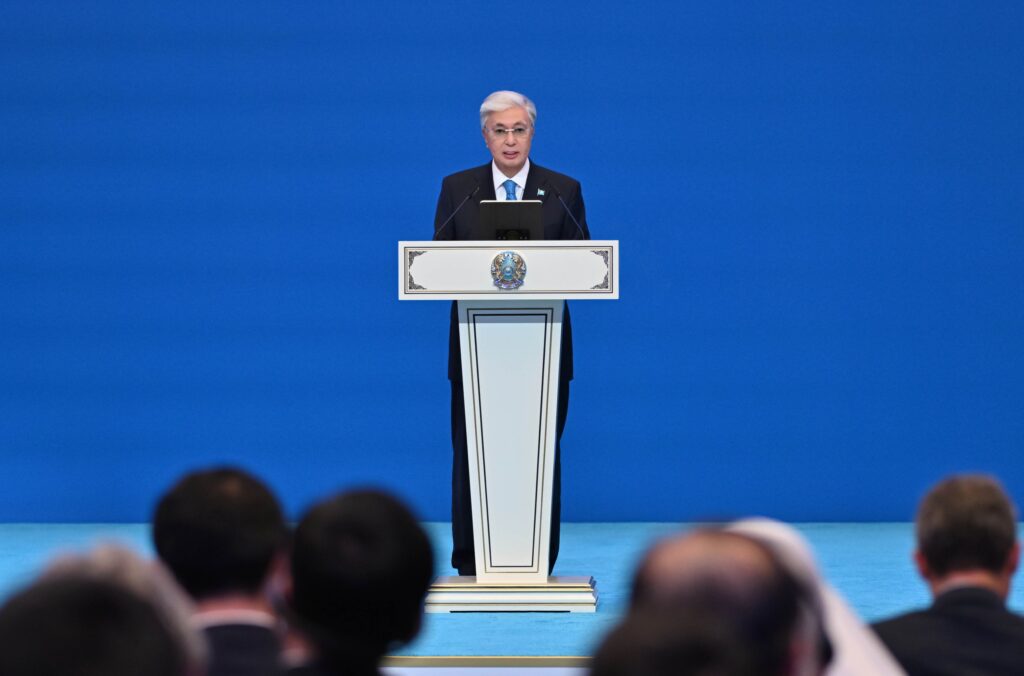
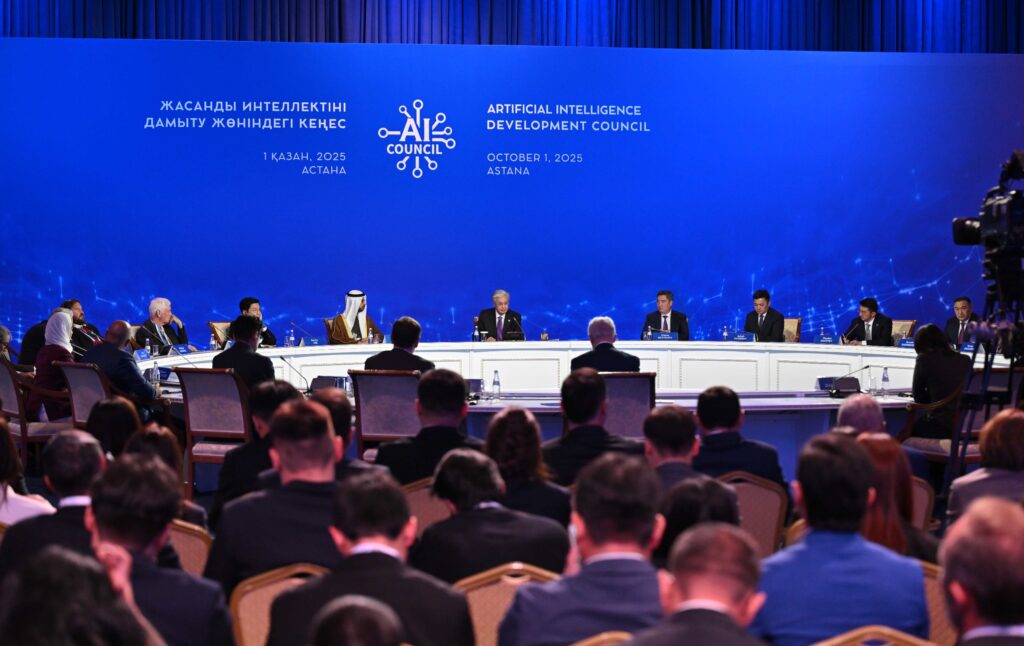
Kazakhstan will develop proposals by the end of 2025 to establish a dedicated research university focused on artificial intelligence (AI), President Kassym-Jomart Tokayev announced during the inaugural meeting of the Artificial Intelligence Development Council in Astana. Tokayev said AI is becoming a decisive force in shaping the economy, governance, science, and education, factors that directly affect national competitiveness and sovereignty. He added that Kazakhstan needs a specialized scientific institution to systematically address all aspects of AI application. “This institution should be granted special status, and it is important to attract leading global universities as partners. I instruct the government to prepare concrete proposals by the end of this year,” Tokayev stated. The president noted that the university’s primary mission will be to train highly qualified specialists capable of applying AI technologies across all sectors of the economy. The institution is expected to serve as a hub for science, education, innovation, and international cooperation, giving talented young people the opportunity to receive world-class education within Kazakhstan rather than abroad. Tokayev also urged existing universities to intensify efforts to train a new generation of engineers, researchers, and entrepreneurs skilled in advanced technologies. He highlighted the AI-Sana program, launched earlier this year, through which more than 440,000 students have already received AI certification. According to Tokayev, such platforms can help transform student projects into startups with access to international markets. Currently, more than 63,000 students are enrolled in IT-related disciplines at 79 universities across Kazakhstan. AI has been introduced as a separate subject, and last year local researchers developed KazLLM, a large language model for the Kazakh language. However, Tokayev said a central coordinating body is still needed, citing institutions such as the Mohamed bin Zayed University of Artificial Intelligence in the UAE as examples. The president also pointed to AI’s transformative potential in education, particularly through personalized learning systems that can move beyond the “one-size-fits-all” model. These systems offer tailored programs based on individual students’ strengths and weaknesses and are already being used in countries such as the United States and South Korea. Tokayev said such approaches could help narrow the gap between urban and rural schools, including small rural institutions, and better support students with special educational needs. At the same time, he cautioned against overreliance on AI. “Relying too heavily on neural networks, students may lose skills in critical thinking and independent analysis. AI should enhance the learning process, not replace its fundamentals,” Tokayev said, calling for government safeguards to preserve academic integrity. He also outlined plans to develop digital student profiles that record academic performance, achievements, and aptitudes. These profiles would support personalized education pathways, optimize university curricula, and streamline career planning. Tokayev instructed the government to design a national digital profile system integrated with the future AI university. Tokayev has previously called for the creation of an international regulatory body to oversee the ethical dimensions of AI and establish universal legislation governing its use. Kazakhstan recently launched a Ministry for Artificial Intelligence Development, and several government ministries are...

After New York, a Shake-Up in Astana: Tokayev Resets His Foreign Policy Team

At the end of last week, the most talked-about news in Kazakhstan was the latest reshuffle in the upper echelons of government. Just one day after returning from New York, where he participated in the UN General Assembly, President Kassym-Jomart Tokayev began issuing personnel decrees resulting in the dismissals and appointments of high-level foreign and trade policy officials. Murat Nurtleu left his position of Deputy Prime Minister and Minister of Foreign Affairs and was reassigned as Assistant to the President for International Investment and Trade Cooperation. Nurtleu navigated a turbulent regional environment marked by the Russia–Ukraine war, which destabilized trade routes and supply chains, and emphasized building broader alliances with China while balancing ties with Russia, the U.S., and other partners. In his new post, the president has tasked Nurtleu with advancing Kazakhstan’s foreign investment and trade cooperation, refocusing his mandate squarely on securing economic gains from diplomacy. Yermek Kosherbayev was appointed as the incoming Foreign Minister. He was most recently Deputy Prime Minister and is a career diplomat and administrator, having also held senior posts in the Foreign Affairs and Agriculture ministries. President Tokayev has tasked him with reinforcing a balanced foreign policy, expanding economic diplomacy, deepening multilateral engagement, and strengthening the protection of citizens abroad. The former Assistant to the President for International Affairs, Yerzhan Kazykhan, was reappointed as Kazakhstan’s Permanent Representative to the UN in Geneva. A seasoned diplomat and ex–foreign minister, Kazykhan coordinated Tokayev’s international outreach with the U.S., EU, and OSCE. His posting to Geneva - where debates on human rights, trade, and security are shaped - signals Astana’s trust in a heavyweight envoy. He succeeds Yerlan Alimbayev, who has been in the post since 2022. Yerzhan Ashikbayev was recalled as Ambassador to the United States after more than four years in Washington. His tenure was defined by efforts to deepen political and economic ties, including advancing the U.S.–Kazakhstan Enhanced Strategic Partnership Dialogue, supporting the first C5+1 leaders’ summit and Critical Minerals Dialogue, and expanding cooperation through the U.S.–Kazakhstan Strategic Energy Dialogue. Beyond the personnel changes themselves, observers quickly began parsing what the reshuffle reveals about Tokayev’s foreign policy priorities. As is customary in Kazakhstan, no official comments were offered on the reshuffle in Akorda. Nevertheless, speculation quickly spread across social media, with journalists and bloggers debating the implications throughout the weekend. Political scientist Gaziz Abishev framed Murat Nurtleu’s reassignment as shifting him from foreign policy towards the execution of the investment–trade agenda. Abishev noted that the “additional responsibilities for working with the investment bloc… which Nurtleu held as deputy prime minister, will go with him to the Presidential Administration,” narrowing his focus to delivery rather than strategy. This interpretation was later reinforced in more formal terms by the Presidential Administration’s spokesman, who explained that in his new post, Nurtleu “will develop contacts with representatives of foreign states at the highest level, as well as heads of major foreign companies, in order to accelerate the promotion of international investment and trade cooperation.” Analyst Andrei Chebotarev suggested...

Tokayev’s Visit to New York: UN Speech, Investment Talks, Nuclear Power, and Digital Cooperation

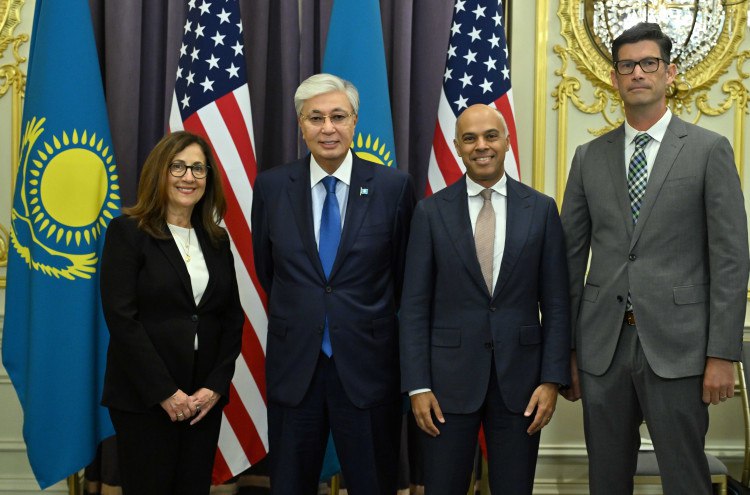
Kazakh President Kassym-Jomart Tokayev arrived in New York on September 21 for a working visit scheduled to last until September 23. Diplomatic and Business Engagements According to the presidential press service, Tokayev is set to deliver a speech during the general debate of the 80th anniversary session of the UN General Assembly. His agenda includes bilateral meetings with foreign leaders and heads of international organizations, as well as a roundtable discussion and a series of engagements with representatives of transnational companies. These meetings aim to highlight Kazakhstan’s investment opportunities. Expanding Cooperation with Cameco Tokayev’s first official meeting was with Tim Gitzel, President and CEO of Canada’s Cameco Corporation. The discussion focused on prospects for expanding cooperation in the uranium sector, particularly through the Inkai joint venture, which has been developing the Inkai deposit in the Turkestan region for over 25 years. The president commended Cameco’s long-standing partnership with Kazatomprom, noting over $500 million in investments and the successful transfer of nuclear technologies. “Kazakhstan is entering a new stage of energy development, with plans to build three nuclear power plants. Our country is interested in the innovative methods used in the nuclear industry,” Tokayev stated. Focus on Education and Testing Reform A major component of the visit centered on human capital development. In talks with Amit Sevak, President of Educational Testing Service (ETS), Kazakhstan expressed interest in updating its national assessment systems. Sevak emphasized the importance of tailoring solutions to Kazakhstan’s specific needs and highlighted the role of artificial intelligence in this transformation. Kazakhstan’s Minister of Science and Higher Education Sayasat Nurbek confirmed the country’s intention to elevate national exams to international standards. “GRE, SAT, and TOEFL are globally recognized, and they were developed in this scientific environment. Our goal is not to replace the Unified National Testing system but to enhance its quality. A large team of ETS researchers will arrive in Kazakhstan next month,” he said. Cultural Cooperation with the Smithsonian Institution Tokayev also met with representatives of the Smithsonian Institution, the largest scientific and cultural complex in the United States. Discussions focused on academic exchanges and the international promotion of Kazakhstan’s cultural heritage. Beginning next year, Kazakh researchers will be able to undertake internships and conduct studies at the institution. Helle Bjetvin, Head of Folk Art Programs, expressed personal admiration for Kazakh applied arts: “I truly admire Kazakh ornaments and design. They beautifully combine tradition and craftsmanship. For me, it’s something very special.” Digital Transformation and Artificial Intelligence Digital development was another key topic of the visit. Joint projects involving data centers, infrastructure expansion, and the establishment of agencies for artificial intelligence implementation were explored. Minister of Digital Development Zhaslan Madiev noted that Kazakhstan is steadily transitioning to a digital state model and seeks robust technological and financial partnerships. “We are discussing major joint projects in digital infrastructure and AI development. Kazakhstan’s market is attractive to global investors, and Goldman Sachs is being considered as a potential partner,” he said.

Kipling and Code: Tokayev Advocates Global AI Ethics Principles

Kazakhstan’s President Kassym-Jomart Tokayev has called for the creation of an international body to address the ethical dimensions of artificial intelligence (AI) and to draft universal legislation regulating its development and application. Speaking at the VIII Congress of Leaders of World and Traditional Religions in Astana, Tokayev emphasized that technologies such as AI, big data, and bioengineering are transforming societies at a pace that outstrips the development of ethical and legal frameworks. “New challenges arise, freedom of choice and privacy, digital equality and security, the use of artificial intelligence and many other technologies. Universal moral values and ideals must be included in the discussion of humanity’s digital future. Any technology should work for the benefit of people,” Tokayev said. He proposed the creation of an international commission on AI ethics to draft a set of universal principles for responsible AI use. “We are talking about a kind of ‘commandments for algorithms’ that imply respect for human dignity and the inadmissibility of discrimination when making life-defining decisions,” he explained. Tokayev said such “commandments” would require ongoing dialogue among spiritual leaders, scientists, and technology developers. Expanding beyond AI, Tokayev underlined the growing importance of spiritual diplomacy at both regional and global levels. He reiterated his previous proposal for a global peace movement under the auspices of the Congress, with religious leaders forming its moral foundation. “This initiative could unite not only the broader community of believers, but also politicians, representatives of international organizations, state institutions, experts, and, of course, youth,” Tokayev said. He also warned of mounting risks of global conflict, including the increasing threat of nuclear escalation and what experts have described as a “civilizational crisis”, a worldwide inability to reconcile opposing political ideologies. Citing Kipling, Tokayev noted that divisions between East and West may seem irreconcilable but argued that responsible statecraft and political leadership can bridge cultural and religious divides. Tokayev further expressed concern over the growing convergence of ultranationalism and patriotism, which he said may confuse younger generations. He also pointed to intensifying clashes between conservative and liberal ideologies, warning that such polarization is driving political instability in numerous countries. “In such complex realities, constructive diplomacy must play a key role as the main instrument for dialogue, overcoming alienation, and building trust at the international level,” he concluded.