• KGS/USD = 0.01144 0%
  • KZT/USD = 0.00208 0%
  • TJS/USD = 0.10407 -0.29%
  • UZS/USD = 0.00008 0%
  • TMT/USD = 0.28571 0%
  • KGS/USD = 0.01144 0%
  • KZT/USD = 0.00208 0%
  • TJS/USD = 0.10407 -0.29%
  • UZS/USD = 0.00008 0%
  • TMT/USD = 0.28571 0%
  • KGS/USD = 0.01144 0%
  • KZT/USD = 0.00208 0%
  • TJS/USD = 0.10407 -0.29%
  • UZS/USD = 0.00008 0%
  • TMT/USD = 0.28571 0%
  • KGS/USD = 0.01144 0%
  • KZT/USD = 0.00208 0%
  • TJS/USD = 0.10407 -0.29%
  • UZS/USD = 0.00008 0%
  • TMT/USD = 0.28571 0%
  • KGS/USD = 0.01144 0%
  • KZT/USD = 0.00208 0%
  • TJS/USD = 0.10407 -0.29%
  • UZS/USD = 0.00008 0%
  • TMT/USD = 0.28571 0%
  • KGS/USD = 0.01144 0%
  • KZT/USD = 0.00208 0%
  • TJS/USD = 0.10407 -0.29%
  • UZS/USD = 0.00008 0%
  • TMT/USD = 0.28571 0%
  • KGS/USD = 0.01144 0%
  • KZT/USD = 0.00208 0%
  • TJS/USD = 0.10407 -0.29%
  • UZS/USD = 0.00008 0%
  • TMT/USD = 0.28571 0%
  • KGS/USD = 0.01144 0%
  • KZT/USD = 0.00208 0%
  • TJS/USD = 0.10407 -0.29%
  • UZS/USD = 0.00008 0%
  • TMT/USD = 0.28571 0%

Viewing results 1 - 6 of 68

Trump Invites Tokayev to Miami G20 Summit

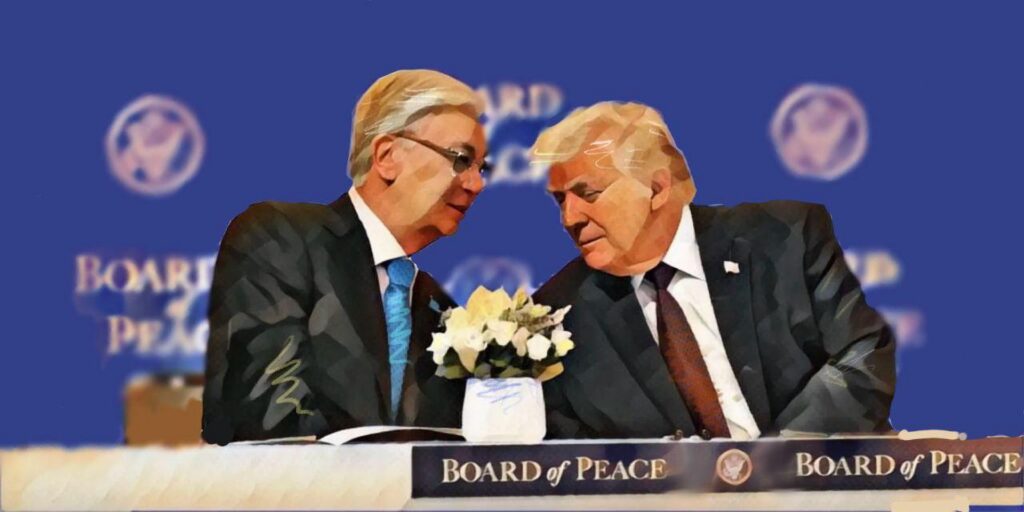
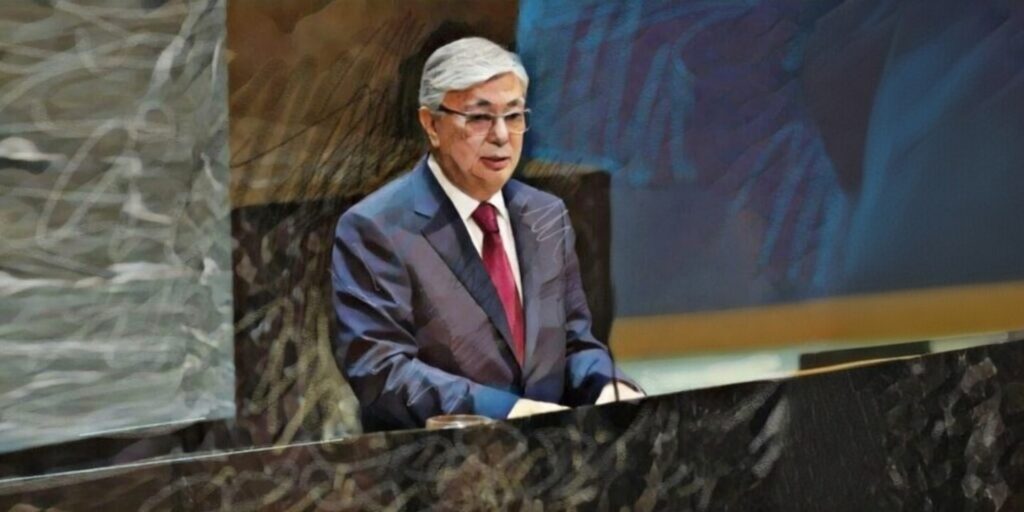
U.S. President Donald Trump has invited Kazakhstan’s President Kassym-Jomart Tokayev to visit Miami for the G20 Summit later this year, according to an official statement released by Tokayev’s press secretary, Aibek Smadiyarov. The invitation was reportedly conveyed in a personal letter following the two leaders’ recent meeting in Washington in February, which took place during the inaugural session of the Board of Peace – a platform described by participants as combining diplomatic dialogue with business initiatives aimed at addressing global security and development challenges. According to Smadiyarov, Trump expressed appreciation for Tokayev’s participation in the Washington meeting, and said he would be pleased to welcome him again at the next session of the Board of Peace. Trump also indicated that he hopes Tokayev will attend the G20 Summit scheduled to be held in Miami later this year. The proposed visit reflects continued communication between the United States and Kazakhstan on multilateral initiatives. Tokayev has previously voiced support for the Board of Peace initiative, commenting that it could mobilize investment and diplomatic cooperation to address instability in parts of the Middle East. Kazakh officials have framed participation in such formats as consistent with the country’s long-standing multi-vector foreign policy, which seeks to balance the country's relations with major global powers while promoting regional stability and economic development. Kazakhstan has been seeking to expand economic ties with Western partners while maintaining its role as a key regional transit hub linking Europe and Asia. No official confirmation has yet been issued by the White House regarding the timing or format of the G20 Summit in Miami. Tokayev’s relationship with Trump has so far appeared practical rather than ideological. In 2020, Trump sent Tokayev a letter praising his reform agenda and expressing support for a stronger U.S.-Kazakhstan strategic partnership. Contacts intensified after Trump’s return to office: Tokayev visited Washington in November 2025, later held an extended phone call with Trump in December, and in January 2026 signed the charter of the Board of Peace. Kazakhstan has presented these relations as part of a broader push to turn political access into economic results. During the Washington visit, Tokayev's press service said companies from the two countries signed deals worth more than $17 billion, while Tokayev also highlighted sectors such as energy, critical minerals, transport, finance, education, and AI as areas for potential deeper cooperation. This approach fits Kazakhstan’s long-standing multi-vector foreign policy, a principle Tokayev has described as constructive, balanced, and designed to defend national interests while bringing practical benefits to the country. Kazakhstan tries to keep productive relations with all major centers of power, rather than tying itself too closely to any one of them. For Kazakhstan, that means preserving room for maneuver with neighbors such as Russia and China while also deepening ties with the United States, Europe, Turkey, the Gulf states, and other partners that can provide investment, technology, and market access. Kazakhstan places emphasis on transit routes, diplomacy, and middle-power initiatives. The policy is meant to protect sovereignty, reduce overdependence, and keep...

Tokayev Criticizes Banks Over Slow Adoption of Kazakhstan’s Digital Financial Infrastructure

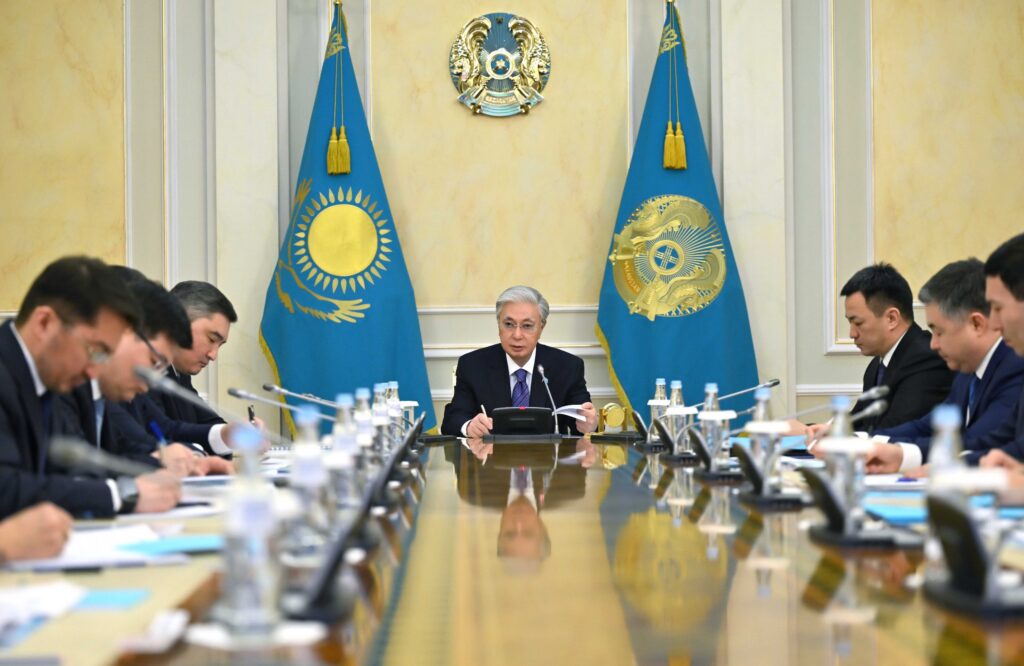
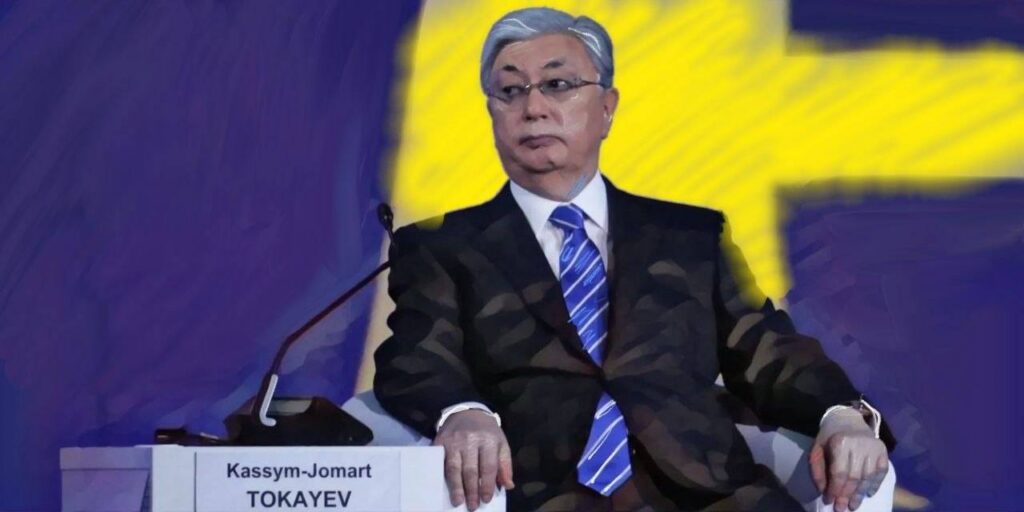
Kazakhstan’s President Kassym-Jomart Tokayev has criticized the country’s banks for their slow adoption of state-developed digital financial infrastructure. He made the remarks during a meeting on the implementation of the Digital Qazaqstan project. During the meeting, the heads of ministries and government agencies presented reports on the rollout of digital solutions in public administration and the economy. In his comments, the president stressed the need for more active deployment of artificial intelligence in industry, as well as progress in developing digital payment infrastructure. According to Tokayev, the National Bank has already created a digital financial ecosystem that includes interbank QR payments and transfers, as well as settlements using the digital tenge. “This significantly reduces costs by shortening the chain of payment intermediaries. The requirement for all banks to connect to this infrastructure is enshrined in law, but the largest banks are delaying compliance,” the president said. Since September 2025, a unified QR code system for interbank payments has been operating in Kazakhstan. The service allows users to pay for goods and services through mobile banking applications. Customers simply scan a QR code at a merchant’s terminal and confirm the transaction. Initially, the service was available to clients of three banks. At present, 15 banks have signed participation agreements, although only six have completed technical integration with the system. The remaining institutions are required to connect by July 18, 2026. Speaking in November 2025, National Bank Chairman Timur Suleimenov said the rollout had been slowed by both technical and market issues, adding that large financial ecosystems were reluctant to share payment traffic. He also described the digital tenge as a tool for transparency and control in public spending rather than a competitor to commercial banks’ own payment products. Tokayev also emphasized that the widespread adoption of artificial intelligence technologies in the real economy is a strategic priority. He linked this goal to the country’s technological sovereignty and called for accelerating the digitalization of the state apparatus. According to the president, more than 90% of public services in Kazakhstan have already been moved online, yet many government information systems remain insufficiently integrated. “Speed and quality must be the priority at every stage. It is data that needs to flow, not people,” Tokayev said. He added that digital transformation is incompatible with outdated bureaucratic practices. “Digitalization and bureaucracy are as incompatible as ice and fire. We cannot force modern technologies to fit into old administrative models,” the president stated. Tokayev also expressed concern about the pace of Kazakhstan’s digital transformation. “I read news about the development of artificial intelligence; it is advancing so rapidly that I am becoming anxious about Kazakhstan’s digital future. It seems to me that the digitalization process is slowing down,” he noted. The Times of Central Asia previously reported that the adoption of artificial intelligence technologies in the financial sector across Central Asia remains uneven, although Kazakhstan is currently regarded as the regional leader.

President Tokayev Reaffirms Support for Gulf States During Regional Crisis

Updated March 1 - President Kassym-Jomart Tokayev sent messages of support to the leaders of the United Arab Emirates, Saudi Arabia, Qatar, Bahrain, Kuwait, and Jordan reaffirming Kazakhstan’s solidarity with their peoples during what he described as a “difficult period of profound challenges.” Messages were conveyed on Saturday to the leaders of the United Arab Emirates, Saudi Arabia, Qatar, Bahrain and Kuwait, underscoring Kazakhstan’s commitment to the sovereignty and security of its partners in the Arab world. The information was confirmed by presidential adviser and press secretary Aibek Smadyarov, according to Qazinform. On Sunday, Tokayev sent a similar message to Jordan’s leadership, extending the same assurances of solidarity and support. In addition, Tokayev held a phone call with the Amir of Qatar, Sheikh Tamim bin Hamad Al Thani, during which the sides discussed the evolving situation in the Middle East and emphasized the importance of diplomatic efforts to prevent further escalation. In the messages, Tokayev condemned any military action aimed at undermining the sovereignty and security of states that Kazakhstan regards as friendly partners. “Our country consistently advocates the resolution of all complex international issues and armed conflicts exclusively through diplomatic means,” Tokayev said. He added that Kazakhstan stands ready to provide any assistance it can and expressed hope for continued regular contact with the senior leadership of those countries, signaling Astana’s intention to maintain close political dialogue amid regional tensions. The messages are consistent with Kazakhstan’s long-standing foreign policy emphasis on multilateralism, non-interference, and the peaceful settlement of disputes. As Central Asia’s largest economy, Kazakhstan has sought to position itself as a constructive diplomatic actor while maintaining balanced relations across the Middle East and beyond.

Tokayev’s U.S. Visit Advances Kazakhstan’s Economic Agenda

The visit of Kazakh President Kassym-Jomart Tokayev to the United States provided an opportunity for targeted negotiations with major international corporations and financial institutions, centered on long-term investment, production localization, and Kazakhstan’s integration into global value chains. One of the key outcomes was the signing of an investment agreement worth approximately $180 million between Kazakhstan’s Ministry of Agriculture and Mars, Incorporated. The company plans to build a pet food production plant in the city of Alatau. The project will focus on the deep processing of agricultural raw materials and the production of high-value-added goods. Mars CEO Poul Weihrauch noted that the Kazakhstan facility will serve as a base for expanding the company’s presence in Central Asia and neighboring regions. A separate round of negotiations focused on healthcare. During talks with Ashmore Group, discussions centered on a proposal to build an international clinic in partnership with Ashmore Healthcare International and Samruk-Kazyna Invest, with the involvement of the Mount Sinai Health System as the operator. The initiative aligns with Kazakhstan’s strategy to develop medical infrastructure and medical tourism, as well as the Open Investment Partnership program targeting high-tech sectors of the economy. Aviation was another major component of the visit. At a meeting with Boeing executives, Tokayev confirmed the interest of Kazakh carriers Air Astana, SCAT Airlines, and VietJet Qazaqstan in expanding cooperation. Air Astana expects to receive Boeing 787 Dreamliner aircraft in the second half of 2026, which could pave the way for the launch of direct flights between Kazakhstan and the U.S. SCAT, meanwhile, is considering both the acquisition of additional aircraft and the establishment of its first maintenance and repair center at Shymkent Airport in partnership with an American company. The visit concluded with negotiations involving the U.S. International Development Finance Corporation (DFC). Its CEO, Ben Black, said Washington views Kazakhstan as a key partner in Eurasia. The discussions focused on projects in the mining sector and the development of transport and transit infrastructure critical for regional and interregional trade. According to the World Investment Report 2025 (UNCTAD), Kazakhstan overwhelmingly dominates foreign direct investment (FDI) in Central Asia. In 2024, Kazakhstan’s inward FDI stock stood at about $151 billion, far exceeding Turkmenistan (about $45 billion), Uzbekistan (about $17 billion), and Kyrgyzstan and Tajikistan (around $4 billion each). The negotiations in Washington point to Kazakhstan’s focus on building long-term institutional partnerships rather than pursuing isolated investment deals, a signal intended to reassure international investors about the stability and openness of the market. As previously reported by The Times of Central Asia, Tokayev also took part in the inaugural meeting of the Board of Peace in Washington, where Kazakhstan signaled its willingness to contribute to Gaza’s reconstruction and broader stabilization efforts, including potential financial support and participation in peacekeeping initiatives.

Tokayev Calls Nuclear Power a Correction of Kazakhstan’s “Historical Absurdity”

President Kassym-Jomart Tokayev has described Kazakhstan’s push to build nuclear power plants as a correction of a “historical absurdity”, namely, that a nation which ranks among the world’s top producers and exporters of uranium has yet to harness this resource for domestic electricity generation. In October 2024, a nationwide referendum showed broad public support for the development of nuclear energy. Following the vote, Tokayev announced plans to construct at least two nuclear power plants, with a third to follow. In June 2025, Russian state corporation Rosatom was selected to build the country’s first nuclear power plant near the village of Ulken, on the western shore of Lake Balkhash, about 400 kilometers northwest of Almaty. Contracts for the second and third plants were later signed with the China National Nuclear Corporation (CNNC). “The construction of several nuclear power plants is, on the one hand, a correction of the historical absurdity – to be a world leader in the production of uranium and not to build any nuclear power plants, on the other, it is the prestige of Kazakhstan,” Tokayev said in an interview with Turkistan newspaper, published on the official Akorda website. According to Tokayev, reliable electricity generation is essential for Kazakhstan’s transition to a new technological model of the economy. He emphasized that the development of supercomputers, data centers, and automated industrial systems requires substantial energy resources. “This is the reality of the new global technological order,” he stated. Tokayev has consistently argued that Kazakhstan must become a digital power, framing digitalization as a matter of national survival. He believes society is mentally prepared for innovation, citing the success of fintech companies and the expansion of digital government services. “We have good starting conditions and have made progress in the digitalization of public services, fintech, and several sectors of the economy. The ecosystem supporting IT startups is functioning effectively,” the president noted. He added that for continued progress, Kazakhstan requires stable, environmentally friendly, and high-capacity energy sources, needs best met by nuclear power. Tokayev also highlighted the importance of personnel in building a nuclear energy sector. He said the development of nuclear power will contribute to the emergence of a new class of technical intelligentsia, which could ultimately influence state policy. “Qualified specialists are needed to create modern energy sources. The head of NVIDIA, the world's largest company by market capitalization, predicts that in the near future, multimillionaires will include representatives of technical professions, the so-called ‘blue-collar workers’,” Tokayev said. As previously reported by The Times of Central Asia, Kazakhstan plans to train nuclear energy specialists abroad through the Bolashak state program.

Tokayev, Mirziyoyev Have Telephone Conversations with Trump

According to Akorda, a phone conversation took place today between Kazakhstan's President Kassym-Jomart Tokayev and U.S. President Donald Trump. The leaders spoke about their bilateral agenda and the current international situation, including in Ukraine. Tokayev confirmed his commitment to implementing the agreements reached during his visit to Washington in November of this year. He emphasized the complexity of resolving the war in Ukraine. Tokayev also invited Trump to visit Kazakhstan. Almost at the same time, Trump wrote on his social media site, Truth Social: "This morning, I had two wonderful phone conversations with Kassym-Jomart Tokayev, President of the Republic of Kazakhstan, and Shavkat Mirziyoyev, President of the Republic of Uzbekistan. We discussed the importance of establishing peace in ongoing conflicts, as well as expanding trade and cooperation between our countries. Relations with both countries are impressive. The United States will host the G20 summit next year, and we will invite both of these leaders to join us as guests at this very important event, which will take place in Miami!"