• KGS/USD = 0.01143 0%
  • KZT/USD = 0.00202 0%
  • TJS/USD = 0.10661 -0.19%
  • UZS/USD = 0.00008 0%
  • TMT/USD = 0.28575 0%
  • KGS/USD = 0.01143 0%
  • KZT/USD = 0.00202 0%
  • TJS/USD = 0.10661 -0.19%
  • UZS/USD = 0.00008 0%
  • TMT/USD = 0.28575 0%
  • KGS/USD = 0.01143 0%
  • KZT/USD = 0.00202 0%
  • TJS/USD = 0.10661 -0.19%
  • UZS/USD = 0.00008 0%
  • TMT/USD = 0.28575 0%
  • KGS/USD = 0.01143 0%
  • KZT/USD = 0.00202 0%
  • TJS/USD = 0.10661 -0.19%
  • UZS/USD = 0.00008 0%
  • TMT/USD = 0.28575 0%
  • KGS/USD = 0.01143 0%
  • KZT/USD = 0.00202 0%
  • TJS/USD = 0.10661 -0.19%
  • UZS/USD = 0.00008 0%
  • TMT/USD = 0.28575 0%
  • KGS/USD = 0.01143 0%
  • KZT/USD = 0.00202 0%
  • TJS/USD = 0.10661 -0.19%
  • UZS/USD = 0.00008 0%
  • TMT/USD = 0.28575 0%
  • KGS/USD = 0.01143 0%
  • KZT/USD = 0.00202 0%
  • TJS/USD = 0.10661 -0.19%
  • UZS/USD = 0.00008 0%
  • TMT/USD = 0.28575 0%
  • KGS/USD = 0.01143 0%
  • KZT/USD = 0.00202 0%
  • TJS/USD = 0.10661 -0.19%
  • UZS/USD = 0.00008 0%
  • TMT/USD = 0.28575 0%
08 February 2026

Viewing results 1 - 6 of 8

From Rupture to Resilience: Kazakhstan’s Political Recalibration After January 2022

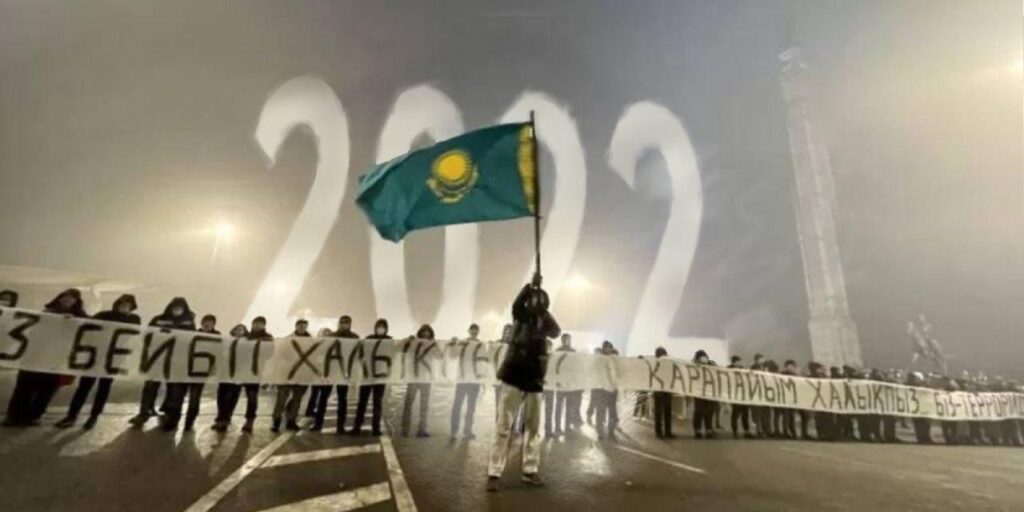
The upcoming anniversary of the events that started on 2 January 2022 in Kazakhstan invites a measured reflection rather than simple retrospection. The protests and subsequent violence marked a decisive turning point in the country’s recent history, exposing deep structural challenges and forcing a reassessment of the relationship between state and society.  More than merely presenting an occasion to recall a time of crisis, this anniversary should also serve as an opportunity to assess how Kazakhstan has since evolved — specifically, whether the lessons of that rupture have been translated into durable political reforms and have created a more resilient path forward. Remembering the onset and evolution of the events The January 2022 protests were triggered by a sudden surge in liquefied petroleum gas prices, a critical cost for many households, particularly in western regions of Kazakhstan. The immediate economic shock quickly gave rise to broader demands rooted in long-standing grievances over rising living costs, inequality, corruption, and the concentration of political power. The violent escalation also unfolded against resistance from some political elites to President Kassym-Jomart Tokayev’s emerging reform agenda. As Svante E. Cornell of the Washington D.C.-based Central Asia Caucasus Institute notes, efforts to curb entrenched patronage networks and rebalance authority had already generated opposition within the ruling elite, and the January crisis exposed these internal fractures. This context helps explain why the unrest moved beyond socioeconomic protests to a direct challenge to constitutional order. Initially peaceful, the demonstrations deteriorated as state authority weakened and organized groups linked to the old political elite exploited the unrest, transforming socioeconomic protest into coordinated violence. While the relative roles of spontaneous escalation, elite manipulation, and institutional failure remain contested, armories were raided, government buildings set ablaze, and security forces attacked in a coordinated manner, most notably in Almaty. Official figures put the death toll at at least 238, including 19 law-enforcement officers, marking a clear rupture between legitimate protest and armed unrest driven by criminal networks, intra-elite contestation, and failures of command and control. Had the violent seizure of power by non-constitutional means succeeded, it would likely have entrenched authority through force, foreclosed institutional reform, and plunged Kazakhstan into prolonged instability and isolation. Investigations followed the January 2022 violence, but key aspects—including the sequence of events and responsibility for deaths of peaceful civilians—have not been fully clarified in a comprehensive public account. While the state restored order and proceeded with reforms, dissatisfaction persists, particularly from some of the families of the deceased. Subsequent reforms and policy shifts After January 2022, President Tokayev moved quickly to stabilize the country and initiate a series of political and constitutional reforms. The unrest exposed longstanding structural imbalances in governance and state–society relations, reinforcing the rationale for a reform agenda centered on a “Fair and Just Kazakhstan” and a state more responsive to citizens’ needs.  Significant constitutional changes adopted by referendum in June of 2022 were a key part of this process. These reforms reduced the concentration of presidential power, strengthened parliament, limited presidential terms, eased...

The Contested Legacy of Kazakhstan’s Independence Day: From Sovereignty to Unrest and Reinvention

On December 16, 2025, Kazakhstan marks the 34th anniversary of its independence. The story of this national holiday mirrors the nation’s own complex path toward sovereignty and statehood. A Difficult Legacy On December 16, 1991, Kazakhstan adopted the Law “On State Independence of the Republic of Kazakhstan,” officially becoming the last Soviet republic to leave the USSR. The date came at the tail end of the so-called “parade of sovereignties,” when other republics had already declared independence. This delay led to a popular saying: “Kazakhstan turned off the lights in the USSR.” In the early years of independence, the holiday was celebrated widely, often with several days off. Yet the date also evokes painful memories. Just five years earlier, in December 1986, the capital city of Alma-Ata (now Almaty) witnessed what are now known as Jeltoqsan köterılısı - the December Events. On December 16, 1986, the Communist Party of Kazakhstan abruptly dismissed First Secretary Dinmukhamed Konaev and replaced him with Gennady Kolbin, a party official from the Russian city of Ulyanovsk with no ties to the republic. This Moscow-imposed decision sparked protests by students and young people that turned violent. While the full causes and consequences remain partially unexplored, the uprising is widely seen as an early expression of resistance to Soviet central control and the imposition of non-Kazakh leadership. The protests were brutally suppressed. For several days, unrest continued in the city, with some incidents fueled by ethnic tensions. In the years since, the December Events have become symbolic of both state repression and the early stirrings of Kazakh nationalism. Because of the proximity of dates, many citizens continue to conflate the date of independence with the December Events. For years, the national holiday was therefore overshadowed by grief and division. Unrest in the Oil Region Independence Day was further marred in 2011 by violent unrest in the oil-rich Mangistau region after months of unresolved labor disputes. On December 16 of that year, striking workers from the OzenMunaiGas company in the town of Zhanaozen clashed with police after demanding higher wages. The protests escalated into riots, with government buildings, hotels, and vehicles set ablaze. ATMs were looted, and a state of emergency was declared. Official figures state that about 20 people were killed and over 100 were injured. The Zhanaozen tragedy underscored deep socioeconomic disparities, particularly in regions rich in resources but lacking infrastructure and basic services. From Old to New Kazakhstan Over time, Independence Day became closely associated with unrest and national trauma. Analysts suggest that full investigations into the December 1986 and 2011 events were hindered by the political legacy of Nursultan Nazarbayev, Kazakhstan’s first president. Nazarbayev held senior posts during the Soviet period and later presided over the country during the Zhanaozen crackdown. In June 2019, Kassym-Jomart Tokayev succeeded Nazarbayev as president and launched a platform of gradual political reform. However, his efforts were reportedly obstructed by entrenched elites aligned with the Nazarbayev era, often referred to as “Old Kazakhstan.” Public discontent boiled over again in January...

Wild Arman Sentenced: From Thief-In-Law to Coup Plotter

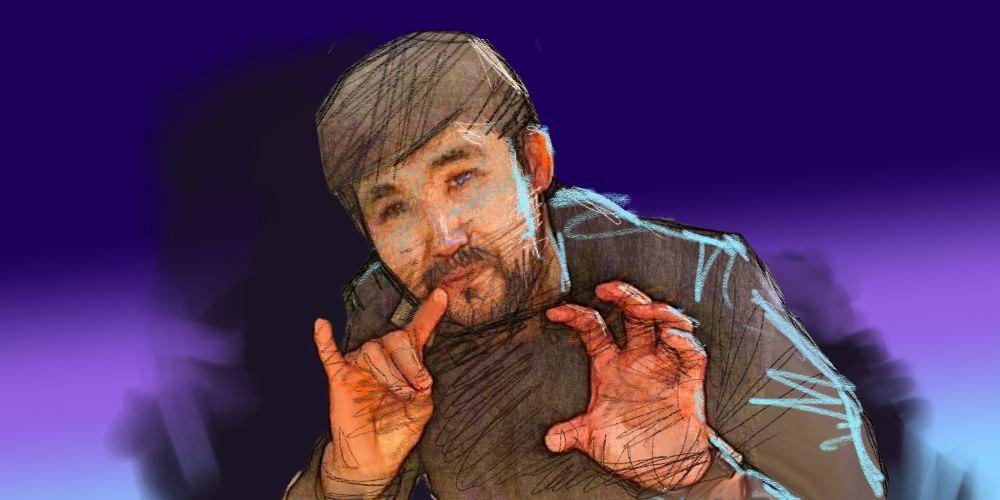
On January 27, another high-profile trial related to the January 2022 events concluded in Almaty. More than 40 individuals were in the dock, but the main figures in the proceedings were three individuals: former Almaty city council deputy and popular blogger Kairat Kudaibergen, former head of the Fifth Department of Kazakhstan’s National Security Committee Ruslan Iskakov, and crime boss Arman Jumageldiev, better known by his criminal nickname, 'Wild Arman.' Harsh Sentences Most of the defendants received short sentences and were released due to time already served. However, for the main figures in the case, the court handed down the following punishments: Kairat Kudaibergen, former deputy and entrepreneur, received eight years in prison. He was also banned from appearing on social media, organizing rallies, debates, and events, and publishing in the media. Ruslan Iskakov, the former head of the Fifth Department of the National Security Committee, was sentenced to 15 and a half years in prison. Arman Jumageldiev (Wild Arman) was sentenced to 20 years in prison. He was prohibited from participating in organizations, organizing events, and publishing in the media or on social networks. In addition to this trio, two other lengthy sentences were handed down: former financial police agent Talgat Makhatov received 15 years, whilst journalist Berdakh Berdymuratov was sentenced to seven years. During the trial, two of the four charges initially brought against Kairat Kudaibergen were dropped. Meanwhile, Arman Jumageldiev, who was originally charged under eleven articles of the Criminal Code of Kazakhstan, faced eight charges by the end of the trial. The 40-year-old crime boss, who along with his defense team has long denied his ties to organized crime, will be released close to the age of retirement should his sentence remain unchanged after his appeal. Under Surveillance Senior Prosecutor of the Almaty Regional Transport Prosecutor’s Office, Mukhit Rysbekov, provided detailed comments on the verdict for Wild Arman (Arman Jumageldiev), revealing the defense’s strategy during the trial. "The court deliberated on the case for about a year. During this time, Jumageldiev’s defenders tried to present him to the court and the public as a patriot, a national hero who helped and protected citizens during the tragic January events. Despite the active campaign organized by Jumageldiev and his defense to rehabilitate his image, we managed to prove the opposite. We proved that back in 2016, long before those events, Jumageldiev led a criminal organization, an armed gang, which included the same representatives of the criminal world,” said Rysbekov. Commenting on Jumageldiev’s sentencing, political analyst Daniyar Ashimbaev noted that the trial had addressed one of the key facets in a broader scheme. "It is clear that the National Security Committee (KNB) was ‘tracking’ this organized criminal group (OCG), which during the January events was supposed to take on the role of establishing 'public governance,' subduing looters, presenting 20 pre-captured individuals as instigators, and ultimately calling for power to be handed over to a 'people’s government' led by the coup organizers," Ashimbaev stated. "This was evident as early as the...

Kazakhstan: Convicted Former Security Chief Massimov Faces New Charges

New charges of money laundering and taking a bribe have been levelled at the imprisoned former chief of Kazakhstan’s National Security Committee (KNB), Karim Massimov. On November 14th, the KNB's press service said that Massimov is currently in a pretrial detention center in Astana awaiting trial on the new charges. No further details regarding the charges were provided. In April, Massimov, a close ally of former President Nursultan Nazarbayev, was sentenced to 18 years over his role in the deadly events which followed unprecedented anti-government protests in January 2022. His deputies, Anuar Sadyqulov and Daulet Erghozhin, were sentenced to 16 years and 15 years in prison in respectively. A court in Astana found all three men guilty of high treason, attempting to seize power by force, and the abuse of their offices and power. Another former deputy of Massimov, Marat Osipov, was sentenced to three years in prison on a charge of abuse of office at the same trial. Massimov's first deputy, Samat Abish, a nephew of Nazarbayev, was dismissed from his post, but did not face any charges. The 58-year-old Massimov was arrested days after the initially peaceful protests turned into widespread violent unrest and coordinated attacks on government installations which left at least 238 people, including 19 law enforcement officers, dead. The protests began in the southwestern town of Zhanaozen early January 2022 over a sudden hike in the price of fuel, before demonstrations quickly spread into broader unrest against corruption, and perceived injustice.