• KGS/USD = 0.01144 0%
  • KZT/USD = 0.00213 0%
  • TJS/USD = 0.10848 0.09%
  • UZS/USD = 0.00008 0%
  • TMT/USD = 0.28571 0%
  • KGS/USD = 0.01144 0%
  • KZT/USD = 0.00213 0%
  • TJS/USD = 0.10848 0.09%
  • UZS/USD = 0.00008 0%
  • TMT/USD = 0.28571 0%
  • KGS/USD = 0.01144 0%
  • KZT/USD = 0.00213 0%
  • TJS/USD = 0.10848 0.09%
  • UZS/USD = 0.00008 0%
  • TMT/USD = 0.28571 0%
  • KGS/USD = 0.01144 0%
  • KZT/USD = 0.00213 0%
  • TJS/USD = 0.10848 0.09%
  • UZS/USD = 0.00008 0%
  • TMT/USD = 0.28571 0%
  • KGS/USD = 0.01144 0%
  • KZT/USD = 0.00213 0%
  • TJS/USD = 0.10848 0.09%
  • UZS/USD = 0.00008 0%
  • TMT/USD = 0.28571 0%
  • KGS/USD = 0.01144 0%
  • KZT/USD = 0.00213 0%
  • TJS/USD = 0.10848 0.09%
  • UZS/USD = 0.00008 0%
  • TMT/USD = 0.28571 0%
  • KGS/USD = 0.01144 0%
  • KZT/USD = 0.00213 0%
  • TJS/USD = 0.10848 0.09%
  • UZS/USD = 0.00008 0%
  • TMT/USD = 0.28571 0%
  • KGS/USD = 0.01144 0%
  • KZT/USD = 0.00213 0%
  • TJS/USD = 0.10848 0.09%
  • UZS/USD = 0.00008 0%
  • TMT/USD = 0.28571 0%

Viewing results 1 - 6 of 3

New Study Finds Sharp Decline in Amu Darya Flows

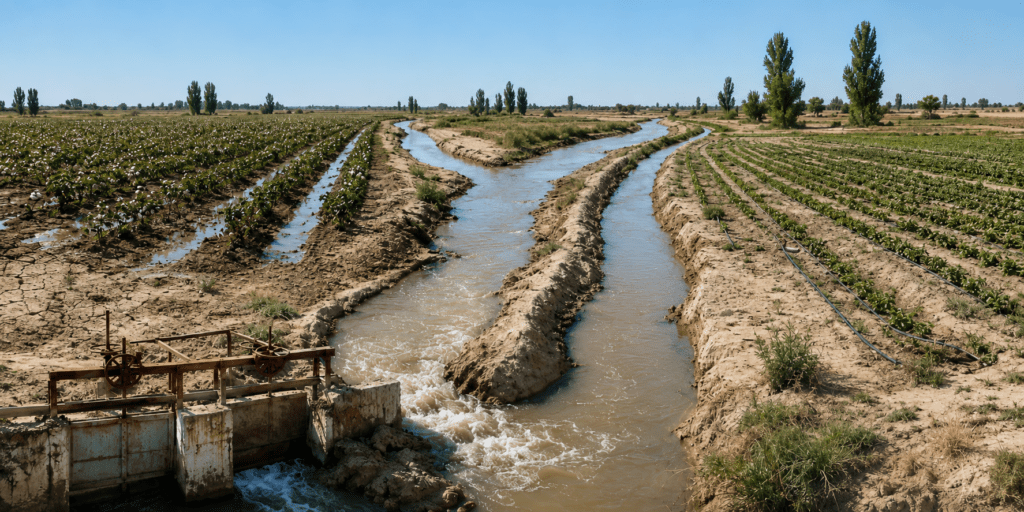
Central Asia’s water woes continue to grow worse. The water flow in the Amu Darya, one of Central Asia’s two great rivers, is slowly but significantly diminishing in Tajikistan, where the river originates. A recently released report shows the Amu Darya’s water flow in the middle and lower reaches in Tajikistan has fallen over the course of recent decades by 54-77%. And the report lays the blame firmly on human activity, not climate change. Up In the Mountains of Tajikistan The study published on ScienceDirect looked at data collected over 90 years and concludes that “streamflow decreased by 54–77% in the middle and lower reaches” of the Amu Darya in Tajikistan. Interestingly, the report mentions that precipitation in the mountains of Tajikistan has actually increased between 6 and 13%, but the Amu Darya’s water level is falling because people are using more water. The expansion of agriculture is the reason, accounting for 92% of the water reduction in Tajikistan, but the recent construction of water reservoirs is also playing a role. Lower flows of water were noted on many of the tributaries in Tajikistan that feed into the Amu Darya, including the “Vakhsh, Kunduz, Kofirnihon, Surkhandarya, Zeravshan, and Kashkadarya (rivers),” which showed streamflow reductions of 4–34%. The report said that areas in the upper reaches of the Amu Darya should see increased water levels, but this is mainly due to climate change hastening the melting of snow and glaciers. Once the glaciers are gone, the water will rapidly decrease. Bad News Downstream Water problems upstream in Tajikistan translate to bigger problems downstream in Uzbekistan and Turkmenistan. Both have already noticed a reduction in the amount of water in the Amu Darya, most visibly that the river has not reached the Aral Sea for about two decades now, contributing to the sea shrinking by some 90% since the 1960s. Every year the river recedes further south, forcing downstream communities suddenly without water to relocate. Climate change is now hastening this process in the arid, desert lands along the Uzbek-Turkmen border, but both countries are preparing for a bigger, impending shock. The Taliban started construction of the Qosh Tepa Canal in 2022, with the project scheduled to be completed in 2028. While Central Asia was liberally taking water from the Amu Darya for agricultural use, Afghanistan was in no position to claim its share until now. The canal will draw water from the Amu Darya at an area across from Uzbekistan and open up new agricultural land in northern Afghanistan, where food has long been in short supply. The 280-kilometer canal is expected to take some 16-20% of the water left in the Amu Darya after it leaves Tajikistan. Upstream Tajikistan’s falling water levels, of course, mean the Qosh Tepa Canal will also be receiving less and less water. The Combination For most of the 2020s, large areas of Central Asia have been experiencing droughts, prompting the governments there to implement water conservation measures. But as they find more ways to save...

Opinion: The Amu Darya Stress Test – Uzbekistan, Turkmenistan, and the Politics of Agricultural Adaptation

Central Asia’s water crisis is usually discussed as a problem of rivers, reservoirs, and diplomacy. But in 2026, the Amu Darya is also becoming something else: a test of state adaptation. The river basin entered the irrigation season under acute pressure. According to data cited by Kabar, the flow of the Amu Darya stood at only 66.8% of its normal level as of February 11, compared with 101.8% a year earlier. The Times of Central Asia previously reported that the river’s flow could fall to around 65% of its historical norm, raising risks for food security and agriculture across downstream states. Meanwhile, Afghanistan’s Qosh-Tepa Canal is advancing. The canal, one of the Taliban government’s most ambitious infrastructure projects, is designed to divert water from the Amu Darya to irrigate large areas of northern Afghanistan. Carnegie Politika has estimated that, once fully operational by 2028, it could take up to 10 cubic kilometers of water annually from the river. For Uzbekistan and Turkmenistan, the implications are direct. Both rely heavily on Amu Darya water. Both inherited agricultural systems shaped by Soviet-era irrigation, cotton production, and centralized planning, and both are now facing a combination of climate stress, upstream extraction, and aging water infrastructure. Yet their responses are increasingly different. The emerging contrast is not simply between two agricultural policies; it is between two institutional logics: adaptation and control. Uzbekistan’s Adjustment Strategy Uzbekistan is one of the most exposed countries in the region. Its population is large, its agriculture remains water-intensive, and some of its most vulnerable regions, including Khorezm and Karakalpakstan, sit near the lower reaches of the Amu Darya. For decades, the old model relied on large-scale irrigation, cotton, rice, and the assumption that water would continue to move through the regional system much as it had before. That assumption is now weakening. Tashkent’s response remains costly and far from complete. Uzbekistan still faces serious water losses, degraded land, salinization, and uneven implementation of reform. But the direction of travel is visible: the state is trying to reduce exposure by changing crops, infrastructure, and diplomatic behavior. Rice is one example. Traditional flooded rice cultivation is extremely water-intensive, and water shortages have already pushed some Uzbek rice farmers away from traditional Amu Darya regions toward areas with more stable access to water. Uzbekistan has also begun experimenting with less water-intensive methods. In Karakalpakstan, UNDP has supported the introduction of upland rice, which can reduce water consumption by up to 40% compared with traditional rice cultivation. Separately, Uzbekistan has announced plans to expand resource-efficient rice cultivation, including drip irrigation and drought-resilient rice varieties. The state is no longer treating the old water-intensive model as untouchable. In 2026, Uzbekistan allocated significant public financing for water-saving technologies. Government-linked reporting has described plans to expand drip irrigation, sprinkler systems, and laser land leveling across hundreds of thousands of hectares, with a broader target of expanding water-saving technologies to 3.5 million hectares by 2028. Laser leveling may sound technical, but its use reflects a shift from simply demanding more...

Megaprojects Instead of Quotas: How Central Asia’s Water Diplomacy Is Changing

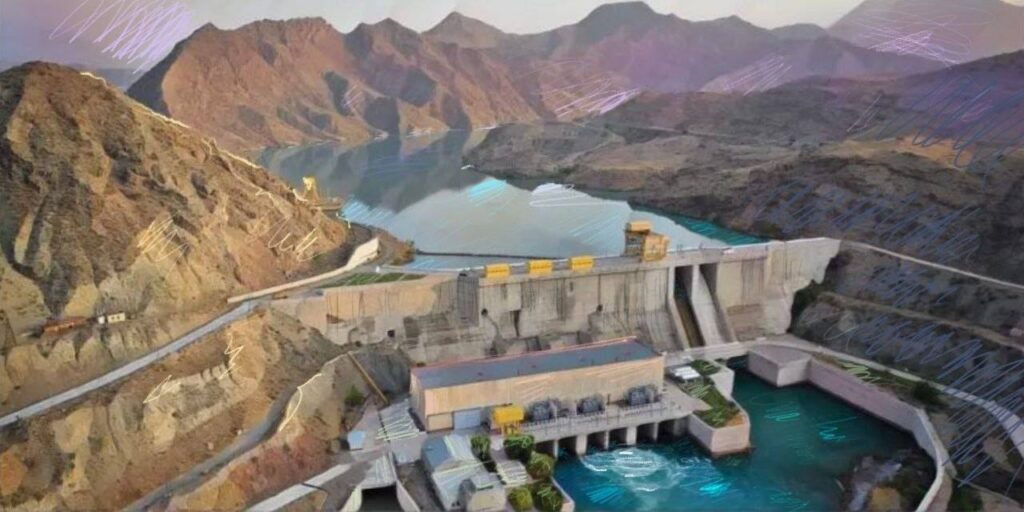
Central Asia’s water politics are moving beyond Soviet-era quotas. As glaciers in the Tien Shan retreat and climate pressure increases, river management has become a question of energy security, food production, and regional stability. The Soviet-era system of river-water allocation has reached its limits, forcing Central Asian states to look beyond traditional negotiations and toward joint ownership of strategic water infrastructure. Even as regional governments learn to cooperate more closely, a new challenge is emerging on Central Asia’s southern frontier, one that could disrupt the region’s hydrological balance. The Illusion of Control Formally, Central Asia’s water resources are governed through a network of interstate institutions. The principal mechanisms are the Interstate Commission for Water Coordination (ICWC) and the International Fund for Saving the Aral Sea (IFAS). On paper, the system appears effective. Twice a year, ahead of the spring-summer irrigation season and the autumn-winter period, representatives of the region’s countries meet to approve water-withdrawal quotas from the Syr Darya and Amu Darya river basins. At the end of 2025, for example, officials meeting in Ashgabat agreed on water allocations for 2026, setting total withdrawals from the Amu Darya at nearly 55.4 billion cubic meters. This framework has helped prevent open interstate conflicts by providing a permanent forum for dialogue. However, its foundation remains the 1992 Almaty Agreement, which essentially preserved a Soviet-era quota system designed for a single centrally planned state rather than a group of independent countries with competing interests. The greatest weakness of the system is the absence of any meaningful enforcement mechanism. If one country exceeds its agreed allocation during a drought year, there are no legal or economic penalties. Disputes are instead resolved through emergency negotiations between ministries or, in some cases, direct interventions by heads of state. A system dependent on political goodwill and personal relationships is increasingly fragile in an era of climate stress. Turning Water Disputes Into Joint Investments As the quota system shows signs of strain, Central Asian countries have begun experimenting with a more pragmatic approach: shared ownership of infrastructure. The central paradox of the Syr Darya basin is that upstream and downstream countries need water at different times of the year. Kyrgyzstan and Tajikistan, which control the river’s headwaters, require releases in the winter to generate electricity and heat their cities. Kazakhstan and Uzbekistan, meanwhile, need that same water in summer to irrigate millions of hectares of farmland. Winter releases often flow downstream when demand is low, while shortages emerge during the peak agricultural season. The proposed solution is the Kambarata-1 hydropower plant on Kyrgyzstan’s Naryn River, a project now estimated to cost around $4.2 billion. What makes the project unusual is its ownership structure. Under a 2024 agreement, Kyrgyzstan will hold a 34% stake, while Kazakhstan and Uzbekistan will each own 33%. By investing billions of dollars in infrastructure located outside their territory, Kazakhstan and Uzbekistan are effectively purchasing seats at the decision-making table. As shareholders, they gain a direct role in determining reservoir operations, helping ensure water is...