• KGS/USD = 0.01144 0%
  • KZT/USD = 0.00203 0%
  • TJS/USD = 0.10576 -0.28%
  • UZS/USD = 0.00008 0%
  • TMT/USD = 0.28571 0%
  • KGS/USD = 0.01144 0%
  • KZT/USD = 0.00203 0%
  • TJS/USD = 0.10576 -0.28%
  • UZS/USD = 0.00008 0%
  • TMT/USD = 0.28571 0%
  • KGS/USD = 0.01144 0%
  • KZT/USD = 0.00203 0%
  • TJS/USD = 0.10576 -0.28%
  • UZS/USD = 0.00008 0%
  • TMT/USD = 0.28571 0%
  • KGS/USD = 0.01144 0%
  • KZT/USD = 0.00203 0%
  • TJS/USD = 0.10576 -0.28%
  • UZS/USD = 0.00008 0%
  • TMT/USD = 0.28571 0%
  • KGS/USD = 0.01144 0%
  • KZT/USD = 0.00203 0%
  • TJS/USD = 0.10576 -0.28%
  • UZS/USD = 0.00008 0%
  • TMT/USD = 0.28571 0%
  • KGS/USD = 0.01144 0%
  • KZT/USD = 0.00203 0%
  • TJS/USD = 0.10576 -0.28%
  • UZS/USD = 0.00008 0%
  • TMT/USD = 0.28571 0%
  • KGS/USD = 0.01144 0%
  • KZT/USD = 0.00203 0%
  • TJS/USD = 0.10576 -0.28%
  • UZS/USD = 0.00008 0%
  • TMT/USD = 0.28571 0%
  • KGS/USD = 0.01144 0%
  • KZT/USD = 0.00203 0%
  • TJS/USD = 0.10576 -0.28%
  • UZS/USD = 0.00008 0%
  • TMT/USD = 0.28571 0%
19 February 2026

Viewing results 1 - 6 of 10

Car and Real Estate Sellers in Kazakhstan to Receive Payment Only After Buyer Rights Registered

Kazakhstan is preparing to introduce a new payment system for vehicle and real estate transactions, in which funds deposited via banks will be temporarily blocked until ownership rights are officially registered in the buyer’s name. The initiative, known as the “Safe Transaction” system, is being developed jointly by the Ministry of Internal Affairs and the Ministry of Artificial Intelligence and Digital Development. A pilot launch is expected soon, with a full-scale rollout planned for April next year. The system was discussed during the first meeting of the working group on the integration of the digital tenge into public finance operations. The digital tenge (national currency) refers to marked digital budget funds designated for specific contractual purposes. These funds cannot be converted into cash or conventional non-cash forms and are unblocked only after work or services are completed and verified or once contract terms are fully met. The mechanism aims to automate oversight of targeted budget spending and mitigate embezzlement risks. Pilot projects involving digital tenge have already revealed several technical challenges. For example, in the road construction sector, the absence of a unified methodology for standardizing goods, services, and materials complicates implementation. Additional requirements include digitizing design and estimate documentation, integrating the platform with verified supplier databases, and introducing transaction verification protocols and cost reconciliation tools. Binur Zhalenov, advisor to the chairman of the National Bank, noted that the pilot phase exposed significant discrepancies in pricing for some materials and services, which require industry-specific evaluation to assess properly. The digital tenge is technically prepared for certain types of public procurement and is expected to improve transparency in financial transactions. Authorities anticipate that it will enhance budget revenue collection, reduce tax-related risks, and curb the use of fictitious financial schemes. Over the medium term, the digital tenge is projected to be used in the implementation of at least 100 government projects. The National Bank officially announced its launch just over a year ago.

Uzbekistan Emerges as Key Market for China’s Real Estate Giants

Since 2021, China’s property sector has been navigating one of the most severe downturns in its history. A combination of mounting developer debt, strict government lending rules, and a large stock of unsold housing has pushed the country’s real estate giants into prolonged distress. As speculative construction slows at home, Chinese companies are increasingly turning outward. Similar to firms in renewable energy, waste-to-energy, and electric vehicle industries, real estate developers now see foreign markets as essential for restoring balance and sustaining growth. In this broader search for new opportunities, Uzbekistan has emerged as a highly compelling destination for Chinese investment. The country offers a rare mix of rapid demographic growth and urgent housing needs that few markets can match. Uzbekistan’s population is expanding at a fast pace, and more than 60,000 new households form every year. This demographic surge is placing enormous strain on the country’s already limited housing stock. Official data shows that around 85,000 families are waiting for housing, yet annual construction increases the existing stock by only one to two percent. The result is a persistent shortage that cannot be resolved without sustained and large-scale capital investment. If this deficit remains unaddressed, it risks creating long-term social frustration. Against this backdrop, the interests of Chinese real estate developers and Uzbekistan’s housing priorities are beginning to align. Chinese firms looking for stable and high-demand markets increasingly view Uzbekistan as an attractive place to expand. Tashkent, in particular, has become a center of growing cooperation with Chinese partners. Several recent agreements illustrate this momentum. The Chinese firm TSC HK Investment is preparing a $340 million project for a residential complex and business center in the Chilanzar district of Tashkent. The city authorities have also signed agreements worth about $1 billion with CSCEC, including a major housing development valued at $440 million. Beyond the capital, another Chinese investor plans to allocate $250 million to build a modern complex covering 55 hectares in the city of Babur in the Andijan region. For Chinese companies, Uzbekistan offers a large and expanding market that helps absorb China’s massive overcapacity in construction services, heavy machinery, and industrial materials such as steel and cement. Investing in Uzbekistan not only eases domestic economic pressure but also allows Chinese firms to demonstrate their capabilities in shaping the daily lives of Uzbek families. Large residential projects provide opportunities to familiarize local communities with Chinese standards, technologies, and urban design practices. When these projects are executed successfully, they can contribute to a positive image of China and strengthen its soft power presence in the country. For Uzbekistan, China’s growing involvement brings several advantages. Chinese investment can help meet the country’s rapidly rising demand for housing and reduce the likelihood of long-term social frustration linked to shortages. Chinese developers often work with integrated models that go beyond simple residential blocks. They build high-density and multi-functional complexes combining housing, business centers, educational facilities, and public services. This approach aligns closely with Uzbekistan’s strategy to encourage sustainable urbanization, improve living conditions, and...

Uzbek Citizen Purchases Luxury Apartment in Seoul for Over $5 Million in Cash

An Uzbek citizen has purchased a high-end apartment in Seoul, South Korea, for 7.4 billion won (approximately $5.09 million), according to a report by the Korean publication Choson Biz. The property is located in Banpo Xi, a prestigious residential complex in Banpo-dong, Seocho-gu, Seoul. With a dedicated area of 244 square meters, the apartment was sold at the highest recorded price for the complex, surpassing the previous record by 300 million won. The transaction took place in November last year. The buyer, a 41-year-old Uzbek national whose given address is in Tashkent and is identified only as "A", is registered under the “Korea-Uzbekistan Traditional Medicine Clinic” in Tashkent, a center that promotes traditional medicine and provides acupuncture training for Uzbek doctors. Official records indicate that the property transfer was registered on the 28th. Reports suggest that the buyer paid the full amount in cash, as no mortgage was listed on the property deed. Banpo Xi, a large residential complex with 3,410 units, is also home to several South Korean celebrities, including comedian Park Jun-hyung, Kim Ji-hye, and actress Yeo Jeong-a. The purchase comes amid a rising trend of foreign real estate investment in South Korea. As of June 2023, nearly 100,000 housing units in the country were owned by foreigners, according to the Ministry of Land, Infrastructure, and Transport. Chinese buyers lead the list, owning 52,798 units (55.5%), followed by U.S. nationals with 21,360 units (22.5%). Canadians hold 6,225 units (6.5%), while Taiwanese and Australians own 3,307 (3.5%) and 1,894 (2.0%) units, respectively.

Turkmenistan: officials, entrepreneurs buy elite property to save capitals

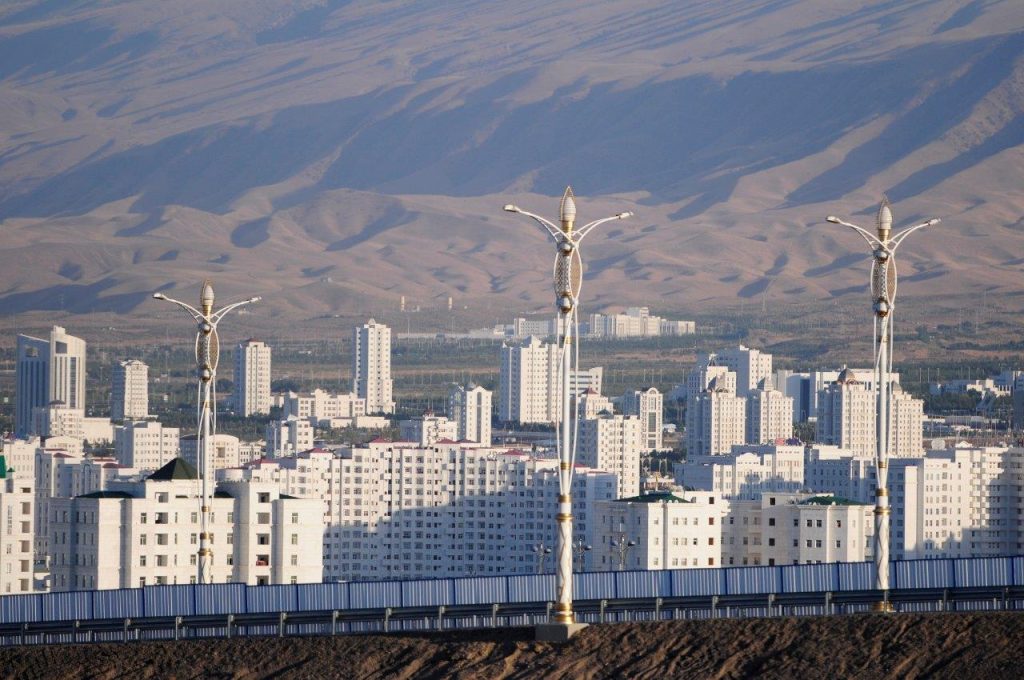
ASHGABAT (TCA) — Apartments are now being sold in new residential houses located in the Olympic village in Turkmenistan’s capital Ashgabat, and Turkmen government officials and wealthy entrepreneurs are buying this elite residential property in an attempt to save their capitals by investing in real estate amid the ongoing depreciation of the national currency, the manat, the independent foreign-based news website Chronicles of Turkmenistan reports. Apartments cost from 780 thousand to 1.3 million manats ($223–$376 thousand using the official rate or $39–$66 thousand at the black market rate). Thirty-year mortgage loans are allocated to purchase apartments but 10% of the total amount needs to be paid straightaway. The website ATN reports that the priority is given to families with many children who share apartments with other families as well as residents who have dependent disabled relatives. Yet, according to the estimates of the news outlet, depending on the loan terms and conditions, an employee will have to make a monthly payment of about 2900 manats. With the average monthly salary of 1000-1500 manats, the majority of Turkmenistan’s population cannot afford to purchase the aforementioned accommodation. However, according to correspondents of Chronicles of Turkmenistan apartments are selling quite quickly. As of late October, 22 apartments out of 118 have been left in one of the apartment blocks. Turkmenistan’s officials and wealthy entrepreneurs are reported to be buying elite residential property not only for themselves, but for their children, grandchildren and even close family members. Moreover, many purchase the accommodation with manats, which are depreciating in their value, in an attempt to save their capitals by investing in real estate and for this reason the majority of apartments in elite houses are vacant. Apart from apartments in high-rise buildings, standard two-story cottages are sold in the suburbs. For instance, a new section of cottages located in the village of Choganly is under construction for the time being. These cottages cost much cheaper – 412 thousand manats ($118 thousand using the official rate or $20.6 thousand at the black market rate).

‘Affordable housing’ unaffordable for most public sector employees in Kyrgyzstan

BISHKEK (TCA) — On February 25, Prime Minister of Kyrgyzstan Sooronbai Jeenbekov congratulated a Bishkek secondary school teacher, Saiqal Sadirova, who is a participant of the Government’s Affordable Housing 2015-2020 program. Continue reading

New World Bank project to strengthen property market in Tajikistan

DUSHANBE (TCA) — The World Bank Board of Executive Directors has approved the financing of US$10 million from the International Development Association for the Tajikistan Real Estate Registration Project, which will support the implementation of a unified registration system for immovable property, which should contribute toward the development of property market in Tajikistan, the World Bank said. Continue reading