• KGS/USD = 0.01143 0%
  • KZT/USD = 0.00213 0%
  • TJS/USD = 0.10593 0.47%
  • UZS/USD = 0.00008 0%
  • TMT/USD = 0.28571 0%
  • KGS/USD = 0.01143 0%
  • KZT/USD = 0.00213 0%
  • TJS/USD = 0.10593 0.47%
  • UZS/USD = 0.00008 0%
  • TMT/USD = 0.28571 0%
  • KGS/USD = 0.01143 0%
  • KZT/USD = 0.00213 0%
  • TJS/USD = 0.10593 0.47%
  • UZS/USD = 0.00008 0%
  • TMT/USD = 0.28571 0%
  • KGS/USD = 0.01143 0%
  • KZT/USD = 0.00213 0%
  • TJS/USD = 0.10593 0.47%
  • UZS/USD = 0.00008 0%
  • TMT/USD = 0.28571 0%
  • KGS/USD = 0.01143 0%
  • KZT/USD = 0.00213 0%
  • TJS/USD = 0.10593 0.47%
  • UZS/USD = 0.00008 0%
  • TMT/USD = 0.28571 0%
  • KGS/USD = 0.01143 0%
  • KZT/USD = 0.00213 0%
  • TJS/USD = 0.10593 0.47%
  • UZS/USD = 0.00008 0%
  • TMT/USD = 0.28571 0%
  • KGS/USD = 0.01143 0%
  • KZT/USD = 0.00213 0%
  • TJS/USD = 0.10593 0.47%
  • UZS/USD = 0.00008 0%
  • TMT/USD = 0.28571 0%
  • KGS/USD = 0.01143 0%
  • KZT/USD = 0.00213 0%
  • TJS/USD = 0.10593 0.47%
  • UZS/USD = 0.00008 0%
  • TMT/USD = 0.28571 0%

Viewing results 1 - 6 of 37

Opinion: Central Asia Is Consolidating Its Role as a Full-Fledged Actor in Global Processes

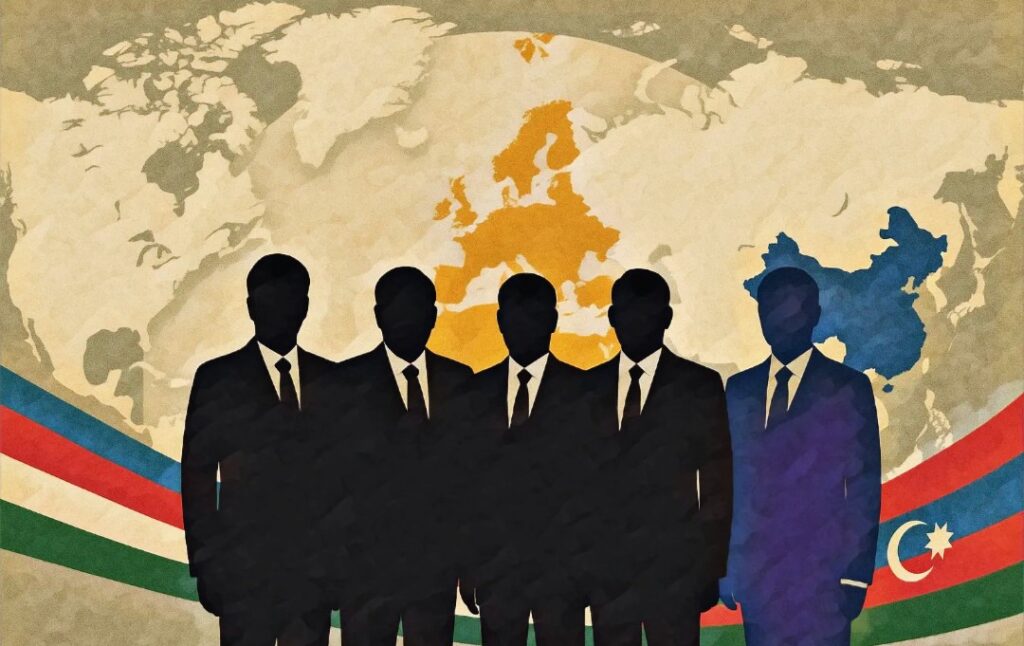
The seventh Consultative Meeting of the Heads of State of Central Asia, held in Tashkent, was far more than a routine regional gathering. It marked a pivotal moment with the potential to shape the political and economic architecture of the region for the next decade or two. President Shavkat Mirziyoyev’s keynote address stood out for articulating a forward-looking and comprehensive strategic vision. Notably, he proposed redefining the format itself from a loose “consultative mechanism” into a more cohesive and institutionalized “Central Asian Community.” At the summit, leaders endorsed several landmark documents: the Concept for Regional Security and Stability in Central Asia, the Catalogue of Threats to Central Asia’s Security and measures for their prevention for 2026-2028 and its implementation plan, a joint appeal supporting the Kyrgyz Republic’s candidacy for the UN Security Council, and the decision to admit Azerbaijan as a full-fledged participant. Taken together, these steps signal that Central Asia increasingly sees itself not as a passive bystander amid global geopolitical turbulence, but as an emerging regional actor capable of shaping its own trajectory. Two broader trends deserve special emphasis. First, the region is moving beyond reactive engagement with external initiatives and power blocs. Rather than relying solely on structures created by outside actors, Central Asia is beginning to develop its own institutions. This shift mirrors a global pattern: as the international order becomes more fragmented and unpredictable, regional communities are strengthening their internal mechanisms as a means of resilience. Second, the format envisioned in Tashkent diverges from “Brussels-style integration.” It does not require the transfer or dilution of sovereignty. Instead, it relies on soft integration, consultation, consensus-building, and phased convergence. As President Mirziyoyev noted, having a shared and realistic sense of “what we want our region to look like in 10-20 years” is essential. Without such a vision, Central Asia risks remaining the object of great-power competition rather than an autonomous participant in it. One of the summit’s most consequential developments was the decision to welcome Azerbaijan as a full-fledged member of the format. The emerging political and economic bridge between Central Asia and the South Caucasus is quickly becoming not only a transit nexus but also a cornerstone of a broader geopolitical space. The strengthening of Trans-Caspian corridors, the advancement of the “China – Kyrgyzstan – Uzbekistan” railway, the Trans-Afghan corridor, and the alignment of Caspian Sea transport routes will significantly expand the region’s strategic and economic potential. A further nuance is worth highlighting: Azerbaijan’s long-standing ties with the Western political and security architecture, through NATO partnership mechanisms and energy corridors, as well as its membership in the Organization of Turkic States, introduce new layers of connectivity. Its inclusion repositions the “Central Asian Community” from a post-Soviet platform into a wider geopolitical constellation spanning Eurasia, the South Caucasus, and the Middle East. For Central Asian states, this new configuration opens additional room for multi-vector diplomacy and reduces the risks of unilateral dependence.   The views expressed in this article are those of the author and do not...
Central Asian Leaders Welcome Azerbaijan’s Accession at Tashkent Summit

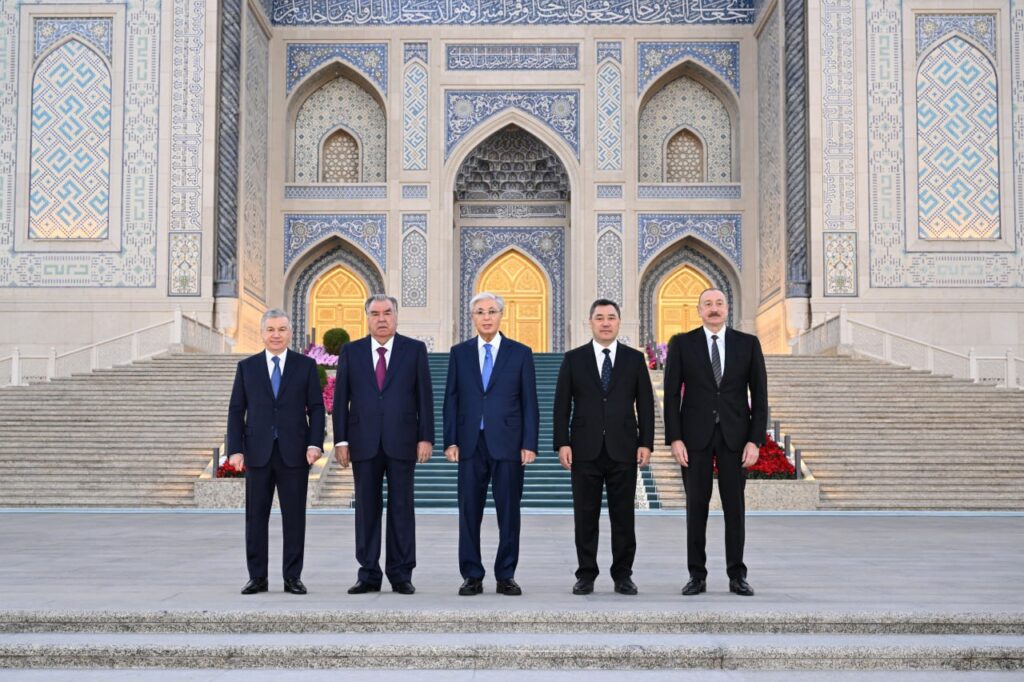
The leaders of Central Asia convened in Tashkent on November 16 for a high-level Consultative Meeting, marking a significant step toward deeper regional integration. The summit welcomed Azerbaijan as a full participant and endorsed a roadmap to formalize cooperation in trade, infrastructure, security, and water management. Hosted by Uzbekistan’s President Shavkat Mirziyoyev, the summit brought together the presidents of Kazakhstan, Kyrgyzstan, Tajikistan, Turkmenistan, and Azerbaijan, alongside a United Nations representative. Ahead of the meeting, Tashkent’s central streets were adorned with national flags and floral installations, underscoring the political and symbolic significance the Uzbek government placed on the event. Mirziyoyev hailed Azerbaijan’s accession as “a truly historic day,” as the country became a full member of the Consultative Meeting of the Heads of State of Central Asia. He proposed forming a “Community of Central Asia,” establishing a rotating Secretariat, appointing special presidential envoys for coordination, and creating a Council of Elders to promote cultural and humanitarian dialogue. [caption id="attachment_39410" align="aligncenter" width="1280"] Image: president.uz[/caption] Regional Economic and Connectivity Agenda Economic cooperation dominated the multilateral agenda. Leaders agreed to develop a Comprehensive Regional Program for Trade and Economic Cooperation through 2035 and to draft a Declaration on a Common Investment Space. “In essence, we will build a strong bridge between Central Asia and the South Caucasus and pave the way for the formation of a single space of cooperation, which will undoubtedly strengthen the strategic interconnectedness and stability of both regions,” said Mirziyoyev. Kazakhstan’s President Kassym-Jomart Tokayev also highlighted deepening bilateral ties with Uzbekistan. Trade between the two countries has reached $4 billion in 2025, with plans to increase it to $10 billion through expanded industrial cooperation and import substitution. Over 6,500 joint enterprises now operate between the two countries, with new projects worth more than $8 billion under development. Several initiatives, such as the Silkway Central Asia logistics center, new industrial facilities, and cultural programs, were launched in Tashkent during the visit. [caption id="attachment_39411" align="aligncenter" width="1280"] Image: president.uz[/caption] Tajikistan’s President Emomali Rahmon met with Mirziyoyev on the sidelines of the summit. The two leaders noted the steady growth in political dialogue and agreed to expand cooperation in energy, industry, agriculture, and innovation. Bilateral trade surpassed $440 million in the first nine months of 2025. They also discussed regional security, including collaboration against terrorism, extremism, cybercrime, and drug trafficking. Security, Water, and Cultural Cooperation To advance regional integration, Tashkent also hosted the first meeting of the Council of Ministers of Trade and Investment of Central Asian countries and Azerbaijan on November 13. Ministers discussed boosting trade, investment, and industrial cooperation, with the goal of increasing regional trade turnover to $20 billion. Plans were also made to develop joint production platforms under a “Made in Central Asia” label. Uzbekistan’s trade with Central Asian partners rose from $3.2 billion in 2017 to $6.9 billion in 2024, while trade with Azerbaijan has grown by 13% this year. Connectivity remained a focal point. Participants reaffirmed their commitment to the China-Kyrgyzstan-Uzbekistan railway and the Trans-Afghan corridor. Azerbaijan’s President...

Opinion: The Integration of Afghanistan into Central Asia

Shared rivers and joint water management can shape a new regional partnership Central Asia and Afghanistan sit on the same rivers, yet often behave as if they belong to different regions. Water ties them together more firmly than any border, but the politics of the past have kept Afghanistan outside the regional system. Today, as climate pressures intensify and development accelerates on both sides of the Amu Darya, the case for integrating Afghanistan into Central Asia has never been stronger. And the path to that integration begins with water. The debate around the Qosh Tepa Canal makes this evident. Afghanistan was never part of the agreements that govern the Amu Darya River (Protocol 566 of the Soviet Union and the Almaty 1992 agreement). It did not sign allocation protocols and never joined regional basin institutions. Still, it was expected to follow rules it had no hand in shaping. Now, that old arrangement has reached its limit. The canal will bring new agriculture to the north of Afghanistan, but downstream states depend on the same river. The real question is not whether Afghanistan should develop, but how to shape that development jointly so the river can sustain all sides. Central Asia already has cooperative models that Afghanistan could join. Uzbekistan and Tajikistan have shown how two neighbors can jointly manage a transboundary river through their collaboration in hydropower on the Zarafshan. Kyrgyzstan, Uzbekistan, and Kazakhstan have signed a similar mechanism with the KambarAta-1 project, which will generate energy and regulate seasonal flows for downstream agriculture. These experiences show that once countries share responsibility for a river, trust can grow and benefits expand. Afghanistan can become part of this regional architecture. The 161-meter-high planned dam on the Kokcha River, set to generate 445 megawatts of electricity, offers a clear entry point. A jointly governed dam on this river would give Afghanistan energy, while downstream states would benefit from its flow in terms of agriculture. When operations are transparent and agreed upon, water becomes a field of cooperation rather than tension. Energy trade adds another layer of opportunity. Central Asia has a long record of exchanging electricity and gas in return for upstream releases. Uzbekistan and Kazakhstan have done this with Kyrgyzstan for many years through a joint water and energy agreement. The same model can work with Afghanistan. The country needs power, and it can offer coordinated water management in return. A structured energy for water arrangement would give Afghanistan an incentive to cooperate and offer Central Asia predictability. Agriculture is another arena where cooperation promises immediate gains. Uzbekistan’s policies on water-saving technologies offer a strong example. They subsidize drip, sprinkler systems, canal improvement, land levelling, efficient pumps, and even solar-powered irrigation. These investments reduce water losses while increasing yields only if their rebound effect, such as further expansion of agriculture, is controlled. The same approach could be applied in the northern provinces of Afghanistan, including in the area under the Qosh Tepa Canal. With similar financial support and technical guidance, Afghan...

Mirziyoyev Bets on the SCO to Boost Uzbekistan’s Security and Economy

Tianjin, China - The recent Shanghai Cooperation Organization (SCO) summit drew wide attention as leaders from across Eurasia convened to emphasize the Organization’s growing importance. For smaller members, the meeting was a chance to show commitment to regional cooperation and alignment with the bloc’s major powers. Uzbekistan, under President Shavkat Mirziyoyev, stood out by using the platform to outline his intention to strengthen engagement within the SCO to advance both economic development and security. Mirziyoyev’s speech stressed solidarity in the face of global uncertainty, institutional renewal to improve effectiveness, and deeper cooperation in areas such as security and nuclear policy. He also endorsed expanding membership, particularly from the Global South, while presenting proposals to boost trade, logistics, and investment. These priorities are consistent with Uzbekistan’s ongoing strategy of aligning its national agenda with the SCO’s broader evolution into a forum with Eurasian and global relevance. Reinforcing Multilateral Solidarity Uzbekistan’s solidarity with the SCO has been in the making for years, as Tashkent aligns parts of its security and economic strategy with the Organization’s framework. In his latest address, Mirziyoyev emphasized the role of solidarity amid rising instability: “A systemic crisis of trust, the escalation of conflicts, the weakening of multilateral institutions, and the fragmentation of the global trading system are undermining the foundations of the international architecture of security and stability. In these circumstances, mutual understanding and solidarity among the SCO member-states are not only a valuable asset, but also the key to preserving peace in our vast region.” While Russia emphasizes the SCO’s role in fostering multipolarity and China focuses on resilient supply chains, Uzbekistan is leveraging the principle of solidarity to safeguard its national interests - reducing dependence on any single power. Uzbekistan is positioning itself within the SCO to align its domestic priorities with broader SCO agendas shaped by Russia’s focus on security and China’s emphasis on economic initiatives. Expanding Membership and External Engagement Mirziyoyev underscored the SCO’s “openness,” identifying expansion as central to its continued development. He welcomed greater engagement with new members and partners, though he did not specify particular regions. Uzbekistan’s growing cooperation with countries such as Iran and Saudi Arabia demonstrates how this vision of openness is taking shape in practice. Tashkent has actively supported Iran’s accession to the SCO and recently signed agreements on transport corridors that connect Central Asia to Iranian ports on the Persian Gulf, facilitating greater trade with Iran. In parallel, deepening ties with Saudi Arabia - particularly through ACWA Power’s renewable energy projects, now among Uzbekistan’s largest foreign-funded ventures - illustrate Uzbekistan’s broader engagement with the Global South in the areas of connectivity and investment. These moves parallel Russia’s and China’s efforts to expand the SCO’s influence beyond its founding region. For Uzbekistan, expansion offers new avenues for trade, energy cooperation, and investment partnerships, while reinforcing its image as a bridge-builder. By publicly supporting this process, Mirziyoyev signaled that Uzbekistan expects wider membership to enhance both the Organization’s and its own standing. Institutional Alignment with the SCO A...

Tokayev Calls for Global Action at UN LLDC3 Summit in Turkmenistan

At the Third United Nations Conference on the Landlocked Developing Countries (LLDC3), held from August 5-8 in the Turkmen resort town of Awaza, Kazakhstan’s President Kassym-Jomart Tokayev urged the international community to deepen cooperation, enhance regional connectivity, and take decisive collective action in support of the 32 countries that lack direct access to the sea and remain on the periphery of global trade. A Global Call for Equality and Interconnectedness Speaking at the plenary session, Tokayev highlighted Kazakhstan’s leadership in advancing the LLDC agenda. In 2003, Almaty hosted the first UN conference on landlocked countries, which culminated in the Almaty Programme of Action (APoA). Two decades later, the president noted, structural barriers, such as limited market access, underdeveloped infrastructure, and high exposure to geopolitical shocks, remain largely unchanged. “Landlocked countries should be seen as equal and promising partners in global development,” Tokayev said. “Our voice must be louder and our cooperation deeper.” [caption id="attachment_34680" align="alignnone" width="300"] @akorda[/caption] The Awaza Action Programme: A Roadmap for 2024-2034 The centerpiece of LLDC3 was the adoption of the Awaza Action Programme for the coming decade, structured around five strategic priorities: structural transformation of economies, development of sustainable infrastructure, trade facilitation, regional integration, and resilience. Kazakhstan endorsed the plan and called for stronger political and financial support from transit countries, international institutions, and private investors. Tokayev emphasized the need for innovative financing tools to mobilize investment in transport, energy, and digital infrastructure. Addressing the Climate Challenge The president also highlighted the disproportionate climate-related vulnerabilities faced by LLDCs, including water scarcity, glacial melt, and desertification. He called for a balanced and inclusive approach to climate policy and invited participants to the Regional Environmental Summit, scheduled for April 2026 in Astana, to be co-hosted with the United Nations. Tokayev also pointed to Kazakhstan’s recent achievements in digital innovation and sustainability, citing the launch of the Alem.AI Artificial Intelligence Center and the commissioning of a new national supercomputer. “We are open to international scientific cooperation,” he said. [caption id="attachment_34681" align="alignnone" width="300"] @akorda[/caption] Central Asia as a Model of Regional Resilience Despite geographic constraints, Tokayev presented Central Asia as a case study in overcoming isolation through cooperation. “Geography does not determine destiny,” he said. “With political will, strategic investment, and international partnership, lack of access to the sea can become not a barrier but a source of growth.” Kazakhstan is investing heavily in transport corridors such as the Middle Corridor (Trans-Caspian International Route) and the North-South Corridor, strengthening its role in the Eurasian logistics network. Energy Diplomacy and Regional Projects On the sidelines of the conference, Central Asian leaders convened for informal talks, where they discussed priority areas of cooperation, including energy. Topics included development of Turkmenistan’s Galkynysh Gas Field, one of the world’s largest, and ongoing transport projects such as the Kazakhstan-Turkmenistan-Iran railway and the Turkmenbashi-Garabogaz-Kazakhstan border highway. According to the UN, trade costs in LLDCs are 74% higher than in coastal states, and cross-border shipping takes twice as long. Collectively, these countries account for only 1.2% of...

Halyk Bank Buys 49% Stake in Uzbekistan’s Click in Landmark Fintech Deal

Almaty - Kazakhstan’s Halyk Bank has announced it will acquire a 49% stake in Uzbek digital payments company Click for $176.4 million, marking one of the largest cross-border banking investments in Central Asia to date. The deal values Click at approximately $360 million, highlighting the growing importance of digital finance in the region’s rapidly evolving financial landscape. With over 20 million customers, Click is one of Uzbekistan’s most widely used payment providers. As part of the agreement, Click will also take a 49% stake in Tenge Bank, Halyk’s Uzbek subsidiary, for $60.76 million. The reciprocal structure of the deal is designed to foster tighter operational integration and shared technological infrastructure between the two institutions – a significant step toward regional financial harmonization. “This is a historic moment for Click. Partnering with Halyk Bank and expanding our capabilities through Tenge Bank represents a major step forward in delivering world-class digital financial services to millions of users,” said Ulugbek Rustamov, CEO of Click. “At the same time, the structure of the deal ensures Click retains its independence, continues to shape its strategic vision, and remains a proud national brand.” Strategic Push Toward Integration The announcement comes as both Kazakhstan and Uzbekistan continue efforts to modernize their financial systems and ease cross-border payments. Regional trade between the two nations has grown steadily in recent years, with bilateral trade turnover reaching $4.22 billion in 2024, up from $2.9 billion in 2020. Halyk Bank, already Kazakhstan’s dominant financial institution with a 29% market share and more than 10.9 million active retail clients, views the investment as a strategic step towards capturing Uzbekistan’s booming digital economy. Click, meanwhile, gains regulatory grounding via Tenge Bank and access to Halyk’s technology and ability to raise capital from its public listing on the London Stock Exchange. Uzbekistan, whose GDP grew by 7.2% in the first half of 2025, continues to open its financial sector to foreign capital – a key pillar of President Shavkat Mirziyoyev’s economic reform program. Competing Power Structures? This fintech alliance also throws an intriguing light on Central Asia’s most influential business families. Halyk Bank is majority-owned by Timur Kulibayev and his wife Dinara, the daughter of former Kazakh president Nursultan Nazarbayev, widely viewed as Kazakhstan’s most powerful couple. Their expanding presence in Uzbekistan via Click and Tenge Bank may once have had the potential to ruffle feathers amongst Uzbekistan’s elite. The fact that the deal has been allowed to proceed this far is in itself an acknowledgement of the shared interests of regional powerbrokers. A Shift in Regional Strategy The deal represents a strategic reversal for Halyk Bank. In recent years, the bank has divested from its Kyrgyz and Tajik operations, selling 100% of its Kyrgyz subsidiary to oligarch Aidan Karibzhanov in 2024 and liquidating its Tajik entity in 2022. The Click acquisition signals a renewed focus on Uzbekistan, with the potential to make the country Halyk’s primary external growth market. This renewed push comes as Halyk cements its dominance in Kazakhstan, where it controls...